


There’s something almost ceremonial about cooking with saffron. Those delicate crimson threads, so precious they’re sold by the pinch, transforming a pot of ordinary basmati into something luminous and fragrant. If you’ve ever wondered how restaurants achieve that stunning golden rice that tastes both earthy and slightly sweet, you’re about to discover it’s simpler than you think—and absolutely worth making at home.
Quick Summary:
Authentic Indian saffron rice (kesar chawal) requires just a handful of ingredients: basmati rice, saffron threads bloomed in warm milk, whole spices like cardamom and cinnamon, and ghee. The key is soaking your rice, infusing the saffron properly, and using gentle heat to achieve fluffy, aromatic grains with an even golden hue.
Table of Contents
What Makes Saffron Rice So Special in Indian Cuisine
Saffron rice isn’t everyday food in Indian households—it’s what you make when something matters. Weddings, festivals, special guests, celebrations that deserve more than just plain rice. The saffron itself carries that weight of occasion, partly because of its price tag (it’s literally the world’s most expensive spice), but mostly because of what it does to a dish.
When you cook with saffron, you’re not just adding color. You’re layering in this mysterious flavor that’s simultaneously floral, earthy, and faintly honeyed. It’s the kind of taste you can’t quite name but recognize instantly—the same aromatic complexity that makes biryani unforgettable or transforms a simple rice pulao into something you’d serve at a shaadi.
What makes this dish particularly beautiful for home cooks is its versatility. You can serve saffron rice as the star of a simple meal with just yogurt raita and pickles, or let it play supporting role to an elaborate curry spread. Either way, that golden hue and haunting aroma elevate everything on the table.
Understanding Saffron: Why This Spice Costs More Than Gold
Before we get to the cooking, it helps to understand what you’re working with. Saffron threads are actually the dried stigmas of Crocus sativus flowers—and each tiny flower produces only three delicate strands. Harvest happens at dawn before the sun can damage the precious threads, and every single stigma must be hand-picked and carefully dried.
This labor-intensive process explains why saffron commands astronomical prices, sometimes exceeding the cost of gold by weight. It takes roughly 75,000 flowers to produce just one pound of saffron. Most of us buy it in containers holding maybe a gram or two, and even those small amounts can feel like an investment.
The best saffron comes from Iran, Kashmir, and Spain, with Kashmiri saffron (Kong Posh) particularly prized for its deep color and intense aroma. When buying saffron, look for deep red threads with minimal yellow or orange parts (those are lower-quality). The threads should be dry but not brittle, and they should release their color readily when soaked in liquid.
If you’re wondering whether saffron powder works as a substitute, it can—but whole threads give you more control and are harder to adulterate. Plus, there’s something satisfying about watching those crimson strands unfurl and release their golden essence into warm milk, the first small magic trick before the rice even touches the pot.
Essential Ingredients for Perfect Kesar Chawal
The ingredient list for saffron rice reads short, but each component plays a specific role in building that characteristic flavor and texture. Starting with the rice itself, you absolutely want white basmati—not just any long-grain rice, but specifically aged basmati if you can find it. The aging process reduces moisture content, which means the grains elongate beautifully when cooked and stay separate rather than clumping into a sticky mass.
For the base rice (serves 4):
- 1½ cups white basmati rice, thoroughly washed
- 2½ cups water for cooking (less than the standard 2:1 ratio because we’re soaking the rice first)
- 1½ teaspoons salt
The saffron gets its own special treatment. You’ll need about 3 generous pinches—roughly 15-20 threads, though saffron isn’t something you measure with scientific precision. Quarter cup of whole milk (or non-dairy alternative if that’s your preference) warmed just enough to be comfortable to the touch. Some cooks use hot water instead of milk, but the fat in milk helps carry and distribute saffron’s flavor compounds more effectively throughout the rice.
For the aromatic tempering:
- 2 tablespoons ghee (or neutral vegetable oil, though ghee’s nutty richness really does make a difference)
- 1 teaspoon kala jeera (black cumin seed, also called nigella or black seed)
- 1½-inch cinnamon stick
- 4 green cardamom pods
- 2 bay leaves
- 6 whole cloves
That combination of whole spices might seem elaborate, but it’s these warm, aromatic elements that give the rice its subtle complexity. The kala jeera specifically brings a slightly more delicate, floral note than regular cumin—if you can’t find it, regular cumin seeds work perfectly well. Most Indian grocery stores stock it, and once you taste the difference, you’ll find yourself reaching for it in other rice dishes too.
The Critical First Step: Properly Blooming Your Saffron
This is where many home cooks skip ahead and rob themselves of saffron’s full potential. You can’t just toss dry saffron threads into your rice and hope for the best—they need time to release their color, flavor, and aroma into a liquid medium that will then distribute evenly throughout the dish.
Take your mortar and pestle and gently tap (not grind) the saffron strands until they break down into a rough powder. You don’t need to pulverize them completely, just bruise and fragment them enough to increase their surface area. This step makes a noticeable difference in how quickly and thoroughly the saffron releases its essence.
Meanwhile, you’re also soaking your basmati rice in room-temperature water for those same 30 minutes. This step serves multiple purposes: it hydrates the grains so they cook more evenly, it reduces cooking time, and critically, it means you need less water during the actual cooking process. Rice that hasn’t been soaked absorbs more cooking liquid and often turns out mushier—not the fluffy, separate-grained texture you want in proper saffron rice.
Some cooks add a tiny pinch of sugar to the saffron milk, which they claim intensifies the color. Others swear by adding just a drop or two of rose water. These are optional flourishes rather than necessities, but they speak to how much care and variation exists in even this seemingly simple dish across different Indian households.
CHECK MORE ON:Roasted Sweet Potato Chaat Recipe – Easy Shakarkandi Ki Chaat in 30 Minutes
Building Flavor: The Whole Spice Tempering Technique
Now comes the tempering (tadka) that forms the aromatic foundation of your rice. Add the kala jeera first—it sizzles immediately, releasing a toasty, almost nutty fragrance. Follow with the cinnamon stick, which you’ll break slightly to expose more surface area, then the cardamom pods (give them a light crush with the flat of your knife first), bay leaves, and cloves.
Let these spices sizzle and bloom in the hot ghee for about two minutes. You’ll smell the transformation as the heat activates the essential oils in each spice—cardamom’s eucalyptus notes, cinnamon’s sweet warmth, cloves’ penetrating intensity. This is blooming whole spices, one of the fundamental techniques in Indian cooking that builds complex flavor from the ground up.
The temptation here is to rush, but give the spices their full two minutes. You want them toasted and fragrant, their aromatics infused into the ghee, which will then coat every grain of rice. This is how you create depth of flavor without long cooking times or complicated steps.
The Cooking Process: Achieving Perfectly Fluffy Grains
Add your drained rice to the spice-infused ghee and return the pot to the heat. Stir gently—and when I say gently, I mean it—until every grain glistens with ghee and the rice is evenly coated. You’ll notice the rice starting to turn from translucent to a slightly opaque white as it toasts in the ghee. This step takes maybe two to three minutes and adds another subtle layer of flavor while also helping the grains stay separate during cooking.
Sprinkle in your salt and stir once more, then add your 2½ cups of cooking water. This is less than the standard 1:2 rice-to-water ratio you might be used to, but remember—your rice has already absorbed water during soaking. Using the full 3 cups would leave you with mushy, overcooked rice that clumps together instead of falling into fluffy, individual grains.
Set a timer for six minutes and resist the urge to peek or stir. Stirring rice while it cooks is the fastest route to mushiness—you break the grains and release their starches, turning what should be fluffy into gummy. The rice is gently steaming, the grains expanding and softening, absorbing the aromatic cooking liquid with all those dissolved spice flavors.
After six minutes, the rice should be about 90% cooked and most of the visible liquid should be gone. Turn off the heat but leave the pot on the same burner so it benefits from residual warmth.
Traditional Variations: Nuts, Onions, and Regional Touches
The recipe we’ve walked through represents a clean, versatile base—saffron rice that works beautifully as an everyday-special (if that makes sense) preparation. But across India, cooks dress this dish up in various ways depending on region, occasion, and personal preference.
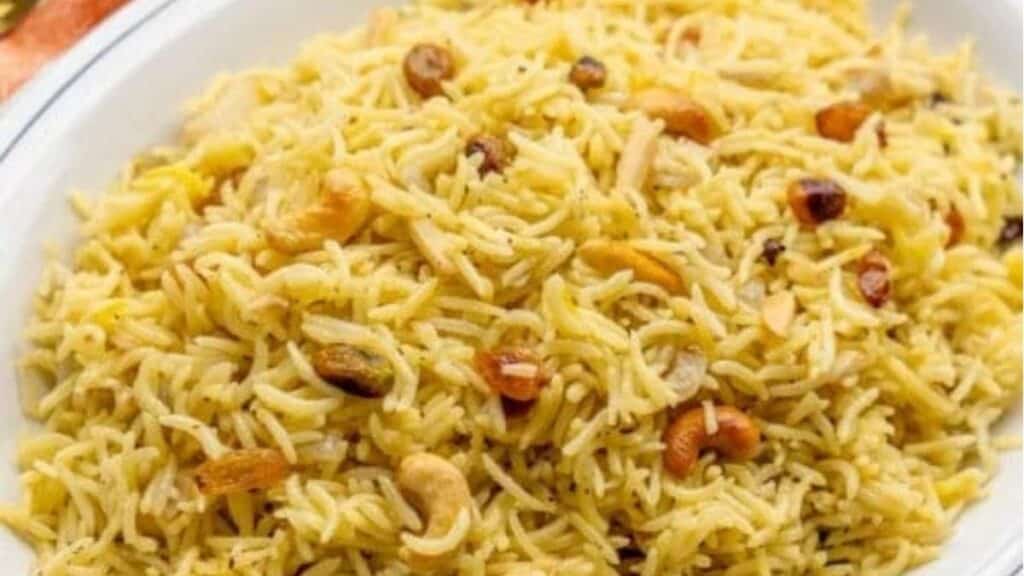
The most common elevation involves adding caramelized onions and toasted nuts. Slice a medium yellow onion very thinly and cook it low and slow in a tablespoon of ghee until deeply golden-brown, almost jammy in texture. This takes patience—fifteen to twenty minutes of occasional stirring—but gives you sweet, complex fried onions that add both visual appeal and savory depth.
You can fold these additions into your rice at the very end, right when you’re gently mixing in the saffron milk, or save them as a garnish to sprinkle over the top just before serving. The latter approach gives you more visual impact—that scatter of golden nuts and dark caramelized onions against the saffron rice makes for an undeniably impressive presentation.
Some regional variations add dried fruits like raisins or chopped dried apricots for pops of sweetness. In Kashmir, cooks sometimes include a pinch of nutmeg or mace along with the other whole spices. Hyderabadi preparations might layer in fried curry leaves for an herbal note, or a whisper of rose water folded in at the end for floral fragrance.
Serving Suggestions: What Pairs Best with Kesar Chawal
Saffron rice walks an interesting line between rich enough to be special and subtle enough to pair with nearly anything. For a simple meal that lets the rice shine, serve it with cooling yogurt raita—maybe cucumber raita or boondi raita—and a selection of Indian pickles (achaar). The tangy, spicy contrast of pickles against the delicate, aromatic rice is genuinely satisfying.
For vegetarian meals, pair it with mixed vegetable korma, palak paneer, or even a simple dal tadka. The rice adds enough festive presence that even a straightforward lentil preparation feels like a proper meal. Add some papad (crispy lentil wafers) and a fresh salad for textural variety.
During special occasions, saffron rice often appears as part of a larger spread—maybe alongside kebabs, tikkas, or tandoori preparations. It’s also traditional at weddings and festivals, sometimes served with a rich meat curry like rogan josh or lamb korma.
One serving tip that makes a difference: transfer your saffron rice to a beautiful serving bowl rather than scooping it directly from the cooking pot. The rice looks more vibrant and appetizing when presented with care, and the uniform golden color really pops against white or dark-colored serveware.
Storage and Reheating: Making Saffron Rice Ahead
Saffron rice keeps reasonably well, which makes it practical for meal prep or for making ahead when you’re hosting. Once the rice has cooled to room temperature, transfer it to an airtight container and refrigerate for up to three days. The saffron flavor actually intensifies slightly as the rice sits, though the texture will firm up in the cold.
For reheating, you have several options depending on your equipment and timeline. The microwave works quickly—transfer a portion to a microwave-safe bowl, sprinkle with a tablespoon or two of water to create steam, cover with a damp paper towel, and heat in 30-second intervals, fluffing between each burst until warmed through.
Stovetop reheating gives you more control over texture. Add the rice to a pan with a tablespoon of ghee or oil and a splash of water, cover with a lid, and warm over low heat, stirring occasionally, until hot throughout. The added fat helps refresh the rice and restore some of that just-cooked silkiness.
One note: leftover saffron rice makes exceptional fried rice. Heat a wok with oil, add vegetables and/or protein of choice, toss in the cold rice (cold rice fries better than fresh), and season simply with soy sauce and white pepper. The saffron adds an unexpected aromatic twist to the Indo-Chinese fusion that honestly works better than it has any right to.
Common Mistakes and How to Avoid Them
The most frequent error with saffron rice is getting the water ratio wrong, usually by using too much. Even experienced cooks sometimes default to the standard 1:2 rice-to-water ratio without accounting for the moisture the rice absorbed during soaking. This results in rice that’s soft and mushy rather than fluffy with distinct grains. Stick to the 1½ cups rice to 2½ cups water ratio after soaking, and your texture will be right.
Another common mistake is over-stirring the rice during cooking. Indian rice dishes like pulao and biryani depend on gentle handling—excessive stirring breaks the grains and releases starch, creating a gummy, clumped texture instead of loose, separate grains. Stir only when the recipe specifically calls for it, and use a light touch even then.
Using low-quality or fake saffron is heartbreaking—you go through all the steps only to end up with rice that’s vaguely yellow but lacks that characteristic aroma and complex flavor. If your saffron seems suspiciously cheap or the threads look uniform and orange-yellow rather than deep red, you might have adulterated product. Buy from reputable sources and expect to pay premium prices for the real thing.
Finally, cooking at too high heat can burn the bottom layer of rice while leaving the top undercooked. Once your rice comes to a boil, the heat should drop to low—barely a simmer, with just gentle steam escaping from under that slightly ajar lid. Patient, gentle heat is what gives you evenly cooked rice from top to bottom.
The Cultural Significance of Saffron in Indian Cooking
Beyond its culinary applications, saffron holds deep cultural and religious significance across India. The golden-orange color itself is considered auspicious, associated with purity, prosperity, and spirituality. You see this in everything from the saffron stripe on the Indian flag to the traditional saffron tilak applied to foreheads during religious ceremonies.
The spice also appears in traditional Ayurvedic medicine, valued for its supposed ability to improve digestion, enhance mood, and promote overall wellness. Whether these benefits hold up to modern scientific scrutiny is debatable, but the cultural belief in saffron as both delicious and medicinal runs deep.
For Indian families living abroad, cooking with saffron often becomes a way to maintain connection with heritage and tradition. Yes, it’s expensive and requires a special trip to the Indian grocery store, but making saffron rice for a celebration or festival recreates sensory memories of home—the same aroma that filled your grandmother’s kitchen during Diwali, the same golden glow on the plate at wedding feasts.
This emotional resonance explains why so many of us continue cooking with saffron despite the price and the effort required to source good quality threads. We’re not just making rice; we’re preserving tradition, creating occasion, transforming ordinary meals into something worth remembering.
