


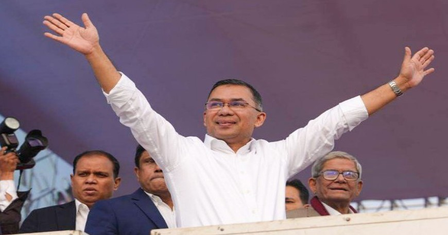
The Bangladesh Nationalist Party (BNP) has declared a significant win in the nation’s initial general election following the 2024 student-led uprising that ousted former Prime Minister Sheikh Hasina’s Awami League government. In a statement, the BNP emphasized its enduring struggle to restore democratic voting rights, recognizing the sacrifices made by leaders and activists who faced repression under past administrations.
The BNP hailed February 12 as the awaited Election Day, where citizens exercised their voting rights with strong support, resulting in what the party termed a decisive triumph. Thankful to the people of Bangladesh, the BNP vowed to diligently work towards rebuilding the nation, underlining the motto “Bangladesh first, always.”
Unofficial reports from the Election Commission suggest that the BNP-led alliance has clinched a landslide victory, securing approximately 209 to 212 seats in the 300-member Jatiya Sangsad, well above the 151 seats required for a clear majority. The opposing alliance, led by Jamaat-e-Islami, trailed with around 68-77 seats. The BNP, with its leader Tarique Rahman likely to assume the role of the next prime minister, is poised to swiftly form the government.
This election signifies a crucial juncture in Bangladesh’s political landscape, following the 2024 protests that led to Hasina’s exile and an interim administration under Muhammad Yunus. Voters also endorsed constitutional amendments in a parallel referendum, including prime minister term limits, a bicameral parliament, and increased women’s representation, aligning with demands from the youth movement. Prime Minister Narendra Modi extended congratulations to Tarique Rahman and pledged support for a democratic Bangladesh.
The BNP, critical of the previous government’s autocratic tendencies and electoral discrepancies, views this victory as a restoration of people’s authority. With celebrations unfolding outside BNP offices in Dhaka, the focus now shifts to governance challenges, such as economic recovery, institutional reforms, and addressing the aspirations of Gen Z participants in the uprising.
