


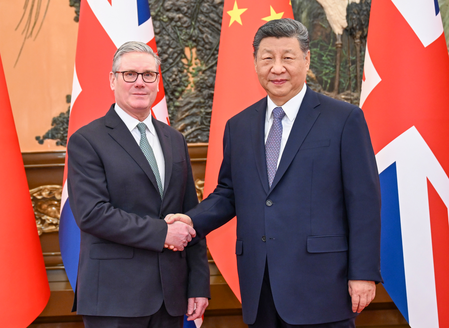
During UK Prime Minister Keir Starmer’s recent visit to China, discussions with Chinese President Xi Jinping reportedly avoided addressing Beijing’s significant nuclear weapons buildup and other contentious topics like human rights abuses, espionage, and Taiwan. A report highlighted that China, with an estimated 600 warheads, is rapidly expanding its nuclear arsenal, adding about 100 new warheads annually since 2023. The Stockholm International Peace Research Institute (Sipri) warned that China could potentially match Russia or the US in intercontinental ballistic missiles (ICBMs) by the end of the decade.
Beijing has not provided any clear explanation for this substantial increase in its nuclear capabilities and has refused to engage in multilateral arms control negotiations. China’s official white paper in November reiterated its stance that major nuclear powers should take the lead in reducing arsenals, while maintaining its own nuclear capabilities at a level necessary for national security without specifying that level. Despite the US expressing concerns about China’s military expansion, including a Pentagon warning of increased vulnerability to the US homeland, China continues to enhance its nuclear readiness, with recent reports of ICBM installations in northern China.
The Pentagon also raised alarms about China’s aggressive military posture, with a focus on Taiwan, stating that China aims to be prepared for a potential conflict with Taiwan by 2027. The report underscored the global apprehension surrounding the proliferation of nuclear weapons and the implications for international security. Despite the gravity of the situation, UK PM Starmer’s discussions with President Xi did not address the looming nuclear threat posed by China, including potential risks to UK national security.
