


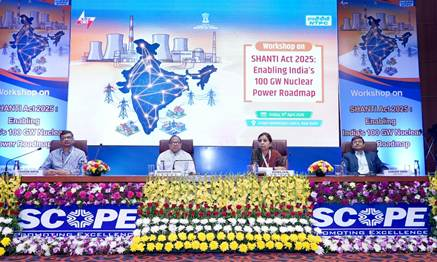
The government organized a workshop to discuss the operationalization of the SHANTI Act, 2025, aiming to increase India’s nuclear capacity to 100 GW for long-term energy security and Net Zero goals. Gurdeep Singh from NTPC highlighted the significance of nuclear energy in the energy mix and stressed the need for swift preparatory actions like land identification for timely construction of new nuclear plants. He also emphasized the importance of partnerships in technology and the supply chain.
The SHANTI Act has paved the way for private sector involvement in the nuclear energy domain, encouraging industries to view nuclear energy as a viable clean power source. Singh emphasized the necessity of early formulation of rules and guidelines to expedite progress, ensuring long-term fuel availability, safety, and broader energy security objectives. The workshop, organized by the Central Electricity Authority (CEA) in collaboration with the Ministry of Power, Department of Atomic Energy (DAE), and NTPC Limited, aimed to address these critical aspects.
Seema Jain, from the Department of Atomic Energy, highlighted the importance of financial readiness, robust risk-sharing mechanisms, and the evolution of institutional frameworks to support large-scale nuclear deployment. She emphasized the need for global technological partnerships and innovative financing mechanisms to accelerate the growth of the nuclear sector. Ghanshyam Prasad, Chairperson of CEA, stressed the significance of nuclear power in providing reliable, 24/7 clean energy to meet India’s increasing demand and international climate commitments.
Prasad emphasized the importance of ensuring a secure and uninterrupted supply of nuclear fuel through source diversification and long-term procurement arrangements. Discussions at the workshop focused on various aspects of the SHANTI Act, 2025, including private sector participation, liability frameworks, and alignment with the Electricity Act, 2003. The event saw participation from over 150 delegates representing state ministries, central ministries, regulators, developers, engineering consultancy firms, academic institutions, and industry associations.
