


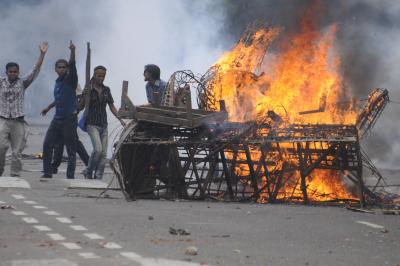
Thousands of Indian medical students in Bangladesh are grappling with fear on a daily basis due to political unrest and rising anti-India sentiments, altering the once secure and cost-effective higher education destination. Currently, over 9,000 Indian students are pursuing medical studies in Bangladesh, attracted by the country’s comparatively lower tuition fees in contrast to India’s expensive private colleges. The situation took a turn for the worse after the removal of Prime Minister Sheikh Hasina in August 2024 following a student-led protest and subsequent violent crackdown.
The sense of security among Indian students was shattered when an incident in December involved the assault of an Indian student by local gangs, leading to the theft of his phone and wallet, captured on CCTV. This event reverberated across campuses, reinforcing the notion that vulnerability is now associated with nationality. Students have resorted to self-imposed curfews, hushed conversations, and heightened vigilance in response to the escalating tensions.
The current period is particularly tense due to the upcoming national election in Bangladesh amid escalating political violence. Despite official claims of maintaining order and stable crime levels, concerns persist among students. The anxiety is compounded for Indian Hindu students as attacks on religious minorities, especially Hindus, have reportedly surged since Hasina’s removal. The distinction between politically motivated and communal attacks offers little solace to students facing discrimination based on their identity, emphasizing the impact over intent.
Amidst these challenges, Indian students play a significant role in contributing to tuition revenue, fostering academic exchange, and promoting goodwill within Bangladeshi educational institutions. However, the prevailing political climate has begun to seep into the educational sphere, disrupting academic pursuits, delaying degrees, and fostering uncertainty among students.
