


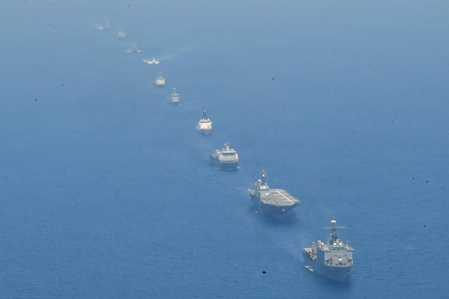
Eleven ships from the Philippines, Japan, Australia, Canada, and the USA participated in Exercise Balikatan in the South China Sea. The exercise, involving the Armed Forces of the Philippines, Japan Maritime Self-Defence Force, Royal Australian Navy, Royal Canadian Navy, US Coast Guard, and US Navy, aims to enhance regional peace and security. Balikatan, a yearly event between the Philippines and the US military, showcases the alliance’s strength and commitment to maritime security.
The US Navy emphasized the exercise’s importance in ensuring maritime security in the Indo-Pacific region. With a total of 17,000 personnel from seven countries, including Canada, France, Australia, and New Zealand, the Balikatan exercise focuses on improving defense interoperability among the participants. Japan’s Self-Defence Force has also joined the drill to enhance cooperation with the Philippines and the United States.
Japan’s leading Kyodo news agency reported that the Japan Maritime Self-Defence Force (JSDF) has been involved in the disaster response aspect of the annual exercise since 2012. The JSDF’s participation in the exercise has expanded following a defense pact between Japan and the Philippines, allowing reciprocal visits of their forces. The JS Ikazuchi destroyer from the Japanese Maritime Self-Defence Force is actively participating in the Balikatan exercise until May 8, demonstrating the growing cooperation between the two nations.
Tokyo’s decision to send MSDF vessels through the Taiwan Strait, including the JS Ikazuchi, marks a shift in Japan’s previous avoidance of such actions to avoid tensions with Beijing. The destroyer Sazanami was the first MSDF vessel to pass through the strait in September 2024, followed by two more ships in February and June 2025. This strategic move signifies Japan’s evolving approach to regional security challenges.
