


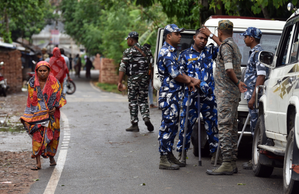
Monday’s violence in Barrackpore, West Bengal, has sparked concern as it occurred before PM Modi’s upcoming rally. Supporters of the BJP and Trinamool Congress clashed, leading to arrests and escalating political tensions before the state’s Assembly elections. The clash involved crude bombs thrown at the residence of BJP’s nominee for Bhatpara constituency, Pawan Kumar Singh, followed by stone-throwing and physical fights between the two parties.
The situation worsened as both sides engaged in violent confrontations, making it challenging for local police to control the unrest. Pawan, who has held the seat since a 2019 by-election, is defending it after his father, Arjun Singh, vacated it to contest the Barrackpur Lok Sabha constituency. Arjun defeated Trinamool Congress candidate Dinesh Trivedi, who later joined the BJP and was appointed High Commissioner to Bangladesh. Arjun, now contesting from the Noapara Assembly seat, has been a key figure in the area, known for switching political allegiances.
Election-related violence in Barrackpore, particularly in Bhatpara, is not uncommon during poll times, according to local journalist Raju Bhattacharjee. He mentioned that clashes and volatility are frequent in the region, with the most intense violence witnessed in 2019 during clashes between Trinamool Congress and BJP supporters. The violence, resulting in deaths and injuries, was attributed to political tensions and communal conflicts, reflecting the complex political landscape of West Bengal.
The Bhatpara riots in 2019 were a significant event in the region’s history, showcasing the deep-rooted issues of identity and politics. Both major parties blamed each other for the unrest, with BJP leaders accusing Trinamool Congress of instigating violence, while the ruling party alleged BJP’s involvement in orchestrating clashes. The violence, fueled by political dynamics, led to police intervention and casualties, highlighting the ongoing challenges of political discord in the area.
