


JioHotstar premiere | TVF brings ISRO’s historic Chandrayaan-3 triumph to screens with Shriya Saran and Nakuul Mehta
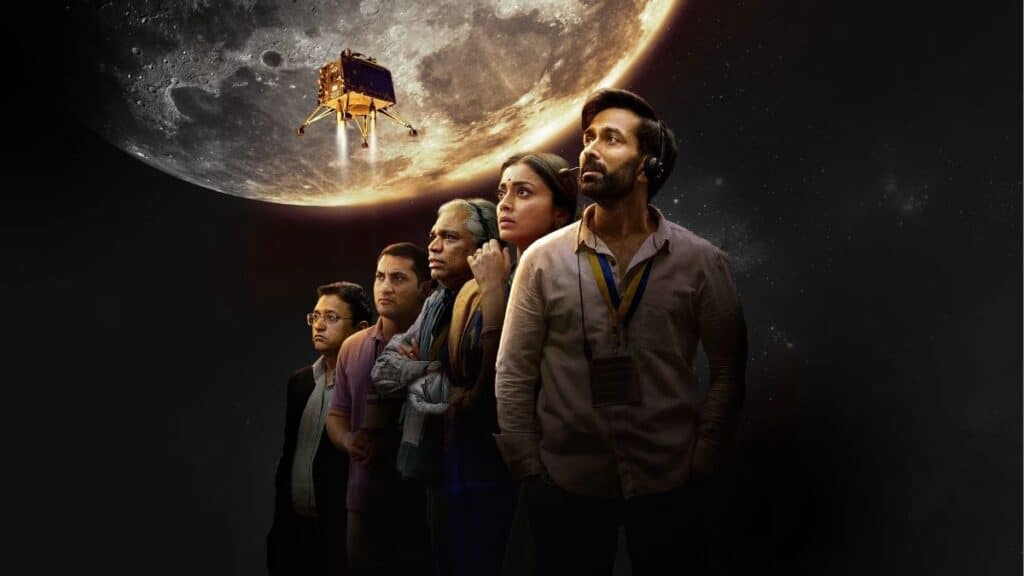
When India planted its flag on the Moon’s south pole on August 23, 2023, millions watched screens with held breath as the Vikram lander touched down at what ISRO named Statio Shiv Shakti. Now that triumph—and the failures, pressure, and sleepless nights that preceded it—becomes a drama series. Space Gen Chandrayaan premieres on JioHotstar January 23, 2026, offering the first major fictional dramatization of one of India’s proudest technological achievements.
Quick Summary:
Space Gen Chandrayaan streams on JioHotstar January 23, 2026, dramatizing ISRO’s Chandrayaan-3 mission that made India the first nation to land on the Moon’s south pole. Created by TVF’s Arunabh Kumar, the series stars Shriya Saran, Nakuul Mehta, and Prakash Belawadi, focusing on the team’s resilience after Chandrayaan-2’s failure and their redemption through Chandrayaan-3’s historic success.
What Space Gen Chandrayaan Is About
The series doesn’t start with victory. It starts with the moment that still stings—September 7, 2019, when Chandrayaan-2’s Vikram lander lost communication just 2.1 kilometers above the lunar surface and crash-landed. ISRO scientists watched their years of work shatter in minutes. Former chairman K. Sivan’s emotional response became national news, humanizing the scientists behind India’s space ambitions.
Space Gen Chandrayaan picks up that thread, following the ISRO team as they analyze what went wrong, rebuild their approach, and mount Chandrayaan-3. The series dramatizes the technical challenges, interpersonal tensions, and sheer determination required to turn national disappointment into historic achievement.
The core narrative spans:
- The aftermath of Chandrayaan-2’s failure and the team’s emotional reckoning
- Four years of redesigning systems, testing relentlessly, securing funding
- The buildup to Chandrayaan-3’s July 14, 2023 launch from Sriharikota
- The nail-biting descent on August 23, 2023, when India became the fourth country to land on the Moon
- The moment ISRO planted the Indian flag at Statio Shiv Shakti, the lunar south pole landing site
What makes this compelling isn’t just the destination—we all know India succeeded—but the journey. The series promises to show the human cost of achievement, the scientists who sacrificed personal lives for national glory, the political pressure when billions are invested in missions that might fail, the technical brilliance required to solve problems no one’s solved before.
Why the Chandrayaan-3 Story Matters Now
India’s lunar landing wasn’t just a scientific milestone. It was a cultural watershed moment that redefined how the nation sees itself on the global stage.
By reaching the Moon’s south pole first—beating established space powers including Russia, whose Luna-25 crashed just days before Chandrayaan-3’s landing—India demonstrated technological capability that decades of Western narratives had dismissed or underestimated. The landing happened on a budget of approximately $75 million, less than the production cost of many Hollywood blockbusters, proving Indian engineering could achieve more with less.
The timing of Space Gen Chandrayaan‘s release is deliberate. We’re far enough from the event to dramatize it without feeling exploitative, but close enough that the pride and emotion remain fresh. For the diaspora especially, this series offers a way to relive that moment when your parents called from India at odd hours, when your WhatsApp groups exploded with tricolor emojis, when you refreshed ISRO’s live stream every few seconds during the descent.
The series arrives as India’s space ambitions accelerate:
- Gaganyaan, India’s first crewed space mission, planned for 2025-2026
- Chandrayaan-4, a sample-return mission from the lunar south pole, in development
- Mars Orbiter Mission (Mangalyaan) established India’s interplanetary capabilities
- Growing private space sector with startups launching satellites and developing launch vehicles
Space Gen Chandrayaan positions ISRO’s achievements within this larger narrative of India becoming a major space power. It’s not just historical drama—it’s context for understanding where India’s headed next.
Creator Arunabh Kumar’s involvement signals:
- Character-driven narrative where scientists aren’t cardboard heroes but real people with families, doubts, egos
- Technical accuracy balanced with accessibility—explaining complex concepts without dumbing them down
- Humor in unexpected places, because scientists working 18-hour days absolutely crack jokes to survive
- Institutional politics shown honestly, acknowledging bureaucracy and funding battles without reducing them to villains
Director Anant Singh has less name recognition than Kumar, but the pairing of TVF’s production muscle with JioHotstar’s resources suggests significant production values. Space missions demand convincing VFX for launch sequences, orbital mechanics, lunar surface landing—areas where Indian web series have historically struggled.
The question is whether they’ve invested enough to make the technical sequences feel authentic or whether budget constraints force most drama into conference rooms and control centers. Given JioHotstar’s involvement from the start, there’s hope for proper visual execution.
The Cast: Shriya Saran, Nakuul Mehta Lead ISRO Scientists
Shriya Saran bringing star power to a TVF production is unexpected. Known for films like Drishyam and southern cinema work, she’s not typically associated with web series or ensemble casts. Her presence suggests the series aims for broader appeal beyond TVF’s usual youth demographic, targeting families and older viewers who remember Chandrayaan-3 vividly.
Nakuul Mehta crosses over from television, where he built a strong following through shows like Ishqbaaaz. His casting indicates an effort to pull TV audiences toward OTT, especially viewers who might not typically watch space dramas but will follow actors they’ve invested in for years.
The ensemble includes:
- Gopal Datt: Character actor known for supporting roles in films like Article 15, bringing gravitas
- Prakash Belawadi: Veteran performer whose presence often signals quality—he’s appeared in Talvar, Airlift, Byomkesh Bakshi
- Danish Sait: Comedian-actor primarily known for Kannada content and standup, suggesting lighter moments amid tension
The casting mix—film stars, TV actors, character performers, regional talent—reflects TVF’s democratic approach to assembling casts based on fit rather than hierarchy. It also creates multiple entry points for diverse audiences.
What we don’t know yet is who’s playing whom. Are these fictionalized versions of real ISRO scientists like K. Sivan, S. Somnath, or Ritu Karidhal? Or are they composite characters blending multiple real people to serve dramatic needs? The latter approach offers more creative freedom but risks frustrating viewers who want to see specific heroes acknowledged.
The Chandrayaan-2 Failure: Where the Drama Begins
You can’t understand Chandrayaan-3’s triumph without feeling Chandrayaan-2’s heartbreak. That September 2019 failure wasn’t just a technical setback—it was public, watched live by millions, including then-Prime Minister Narendra Modi who’d traveled to Bangalore specifically for the landing.
The Vikram lander’s descent went perfectly until the final moments. Velocity reduction worked as planned. Horizontal-to-vertical maneuver executed cleanly. Then, 2.1 km above the surface, telemetry data started showing anomalies. Engineers watched velocities that should’ve been slowing instead staying too high. Communication dropped. Silence.
Days later, ISRO located Vikram on the lunar surface—crashed, but in one piece, suggesting it hit hard rather than exploding. The orbiter portion of Chandrayaan-2 remained functional and continues collecting data years later, but that offered cold comfort when the landing—the mission’s centerpiece—had failed.
What made the failure particularly difficult:
- Near-success made it worse than outright failure; they’d gotten so close
- Global media coverage meant the world watched India’s setback in real-time
- Political dimensions after significant government investment and PM’s personal attention
- The emotional toll on scientists who’d devoted years to the mission
Space Gen Chandrayaan reportedly dedicates significant runtime to this period. Not just the failure itself but its aftermath—the team regrouping, analyzing what went wrong (software glitch during braking phase), deciding whether to try again or abandon lunar landing ambitions.
For Indian viewers, especially those who watched ISRO chairman K. Sivan’s tears as PM Modi consoled him, this will be the emotionally heaviest section. The series has an opportunity to show resilience isn’t about never failing—it’s about what you do after failure breaks you.
The Chandrayaan-3 Mission: Technical Marvel Simplified
Chandrayaan-3 learned from Chandrayaan-2’s mistakes. The mission eliminated the orbiter, focusing entirely on perfecting the landing. ISRO strengthened landing legs, improved sensors, expanded the landing zone to give software more options if the primary site proved problematic.
Launched July 14, 2023, aboard GSLV Mark III (nicknamed “Bahubali”), Chandrayaan-3 took a fuel-efficient trajectory to the Moon, entering lunar orbit August 5. Then came the waiting—engineers checking systems, running simulations, choosing the precise moment for descent.
August 23, 2023, changed everything:
- 5:45 PM IST: Powered descent began from 30 km altitude
- Rough braking phase: Velocity reduced from 1.68 km/s to 358 m/s in 11.5 minutes
- Fine braking: Horizontal velocity eliminated, vertical descent controlled
- 6:04 PM IST: Vikram lander touched down at 69.37°S latitude on the lunar south pole
- India became the fourth nation to land on the Moon (after USSR, USA, China)
- First nation to land on the lunar south pole, a region with potential water ice deposits
The series will likely dramatize the powered descent phase intensely—19 minutes where everything could still go wrong, where scientists who’d rebuilt from Chandrayaan-2’s ashes faced the ultimate test.
Statio Shiv Shakti: What the Landing Site Represents
ISRO naming the landing site “Statio Shiv Shakti” wasn’t random symbolism. Shiv represents Shiva, the transformer/destroyer in Hindu tradition. Shakti represents feminine divine energy, creative power. Together, the name honors both masculine and feminine principles, destruction and creation, the duality inherent in transformation.
The lunar south pole itself holds scientific significance beyond national pride. Permanently shadowed craters there may contain water ice preserved for billions of years—crucial for future lunar bases since water means drinking supply, oxygen production, and rocket fuel ingredients. By proving landing capability there, India positioned itself as essential partner for international lunar exploration.
Prime Minister Modi’s attendance at the landing, his naming of the site and the lunar impact point (Point Tiranga), brought inevitable political dimensions. Space Gen Chandrayaan will have to navigate this carefully—acknowledging political realities without becoming propaganda, showing Modi’s role without making him the hero over ISRO scientists.
The Women of ISRO: Ritu Karidhal and Project Directors
One aspect the series must handle is women’s significant role in Chandrayaan missions. Ritu Karidhal, Mission Director for Chandrayaan-2 and Deputy Operations Director for Chandrayaan-3, became known as the “Rocket Woman of India.” Vanitha Muthayya served as Project Director for Chandrayaan-2. Kalpana K. was Associate Project Director for Chandrayaan-3.
These aren’t token positions or diversity hires—these women led mission-critical decisions, supervised teams of hundreds, solved problems in real-time during crises. Their stories deserve prominence not as “women in STEM inspiration” asides but as central narrative threads.
What makes their contributions particularly significant:
- They excelled in a field where gender barriers remain significant in India
- Many came from modest backgrounds, reached senior positions through merit alone
- They balanced demanding careers with family expectations that still fall disproportionately on Indian women
- Their visibility inspired countless girls to consider careers in space science and engineering
Whether Shriya Saran is playing a character based on Karidhal or a composite female scientist, the series has an opportunity to show these women as fully realized people—brilliant and tough, capable of both technical mastery and emotional vulnerability, leading with authority while navigating institutional sexism.
For young Indian women watching, especially diaspora daughters whose parents still push toward “safer” careers like medicine or law, seeing women leading lunar missions could be genuinely transformative.
TVF Meets JioHotstar: The Production Partnership
The Viral Fever partnering with JioHotstar from inception rather than producing independently and selling rights signals evolving OTT economics. JioHotstar gets exclusive, high-profile content to compete with Netflix, Prime Video, and Disney+ Hotstar. TVF gets production funding and guaranteed platform visibility.
This arrangement affects creative decisions. JioHotstar needs prestige content that justifies subscription costs while appealing broadly enough to attract viewers beyond TVF’s young, urban base. That might push the series toward bigger production values, star casting, and more accessible storytelling than typical TVF offerings.
The JioHotstar platform context matters:
- Smaller subscriber base than competitors means each major release carries weight
- Pricing strategy targets value-conscious consumers, not just premium viewers
- Growing library needs distinctive content that differentiates from rivals
- Jio’s ecosystem integration allows cross-promotion across telecom, retail, and entertainment
The January 23 release date is strategic—Republic Day weekend proximity creates natural tie-in to nationalism and Indian achievement themes. Families gathering for the holiday might watch together, schools might assign it for Republic Day discussions, media coverage will naturally pair it with patriotic programming.
Whether JioHotstar’s platform can handle high-traffic premieres without technical issues remains questionable—they’ve had mixed success with big releases. Nothing kills momentum like buffering during emotional climaxes.
What We Don’t Know Yet: The Gaps and Questions
Space Gen Chandrayaan arrives without standard pre-release buzz. There’s no trailer yet, no extended cast interviews, limited production stills, no critical previews. That either indicates confidence that the subject matter will drive viewership regardless, or concern that the series might not meet expectations.
Key unknowns as premiere approaches:
- Episode count and runtime: Is this a tight 4-episode miniseries or sprawling 8-10 episode deep dive? Length determines pacing and depth.
- How much is dramatized: Are conversations and personal dynamics invented for dramatic purposes, or based on documented accounts from ISRO insiders?
- Visual effects quality: Space missions demand convincing VFX. Can a streaming series budget deliver theatrical-quality launch, orbital, and landing sequences?
- Political handling: How much does the series engage with Modi’s role versus focusing solely on scientists? Either choice carries implications.
- Language and accessibility: Is this Hindi-only or multi-language? Does it assume technical knowledge or explain concepts for general audiences?
- Actual runtime per episode: Are these 30-minute episodes or hour-long installments? Structure affects storytelling significantly.
The lack of IMDb rating is meaningless—the series hasn’t released yet. What matters is whether early reviews from critics and initial viewer reactions suggest TVF delivered on the premise or whether the execution falls short of ambition.
Why Diaspora Audiences Might Connect Deeply
For Indians abroad, Chandrayaan-3’s success hit differently than for those in India. When you’re constantly navigating stereotypes about India—poverty, bureaucracy, corruption—seeing ISRO achieve what wealthier nations couldn’t offers profound vindication.
The diaspora relationship with Indian achievement is complicated. Pride in India’s progress mixes with defensiveness about criticism, nostalgia for cultural identity, and sometimes disconnect from current realities. Space missions offer uncomplicated pride—no caste politics, no religious tensions, just engineering excellence.
The series might resonate because:
- It dramatizes a moment many watched from abroad, calling family in India for real-time updates
- ISRO’s success confronts the “brain drain” narrative—brilliant engineers chose to stay in India and achieved global firsts
- The underdog element appeals to immigrant experiences of being underestimated then exceeding expectations
- Watching with kids becomes way to transmit pride in Indian capability and heritage
There’s also the simple pleasure of seeing your culture’s achievement taken seriously as entertainment. Hollywood’s made dozens of space dramas about NASA. Russia’s produced films about their space program. India finally gets its own prestige space drama, telling our story our way.
For second-generation diaspora kids who’ve grown up with “The Martian” and “First Man,” Space Gen Chandrayaan offers the first major space drama where the scientists, the mission control chatter, the cultural context all reflect Indian reality. That representation matters.
The Bigger Picture: India’s Space Narrative
Space Gen Chandrayaan is the first but likely not the last dramatization of India’s space achievements. ISRO’s Mangalyaan Mars mission deserves its own series. The Gaganyaan crewed mission, when it happens, will generate films. India’s space program is becoming cultural narrative, not just technical achievement.
This shift matters for how India sees itself and how the world sees India. Space capability signals technological sophistication, project management excellence, long-term strategic thinking. It positions India not as emerging economy playing catch-up but as established power setting new standards.
The series arrives as space exploration globally enters a new phase. NASA’s Artemis program aims to return humans to the Moon. China’s building a lunar research station. Private companies like SpaceX and Blue Origin commercialize space access. India’s participation in this new space age isn’t as junior partner but as nation with proven capability and unique expertise in frugal innovation.
What this means for the narrative:
- Chandrayaan-3 isn’t endpoint but beginning of India’s lunar ambitions
- The series can position ISRO as underdog-turned-contender rather than just celebrating past glory
- Future missions gain public support and talent recruitment through cultural visibility
- International collaborations become easier when global audiences understand Indian space capability
If Space Gen Chandrayaan succeeds creatively and commercially, it establishes template for more ISRO stories. The institutional knowledge, personal sacrifices, technical innovations, and national significance are inexhaustible material for compelling drama.
Should You Watch on January 23?
If you remember where you were when Chandrayaan-3 landed, if you felt that surge of pride when ISRO confirmed touchdown, if you’ve ever defended India’s space budget against critics who say money should go to poverty relief—this series is for you.
If you’re raising kids abroad and want them to see Indian scientists as heroes equal to any astronaut they’ve heard about in school, if you want to understand what made that landing so difficult and significant, if you’re simply curious about India’s space program beyond headlines—it’s worth your time.
