
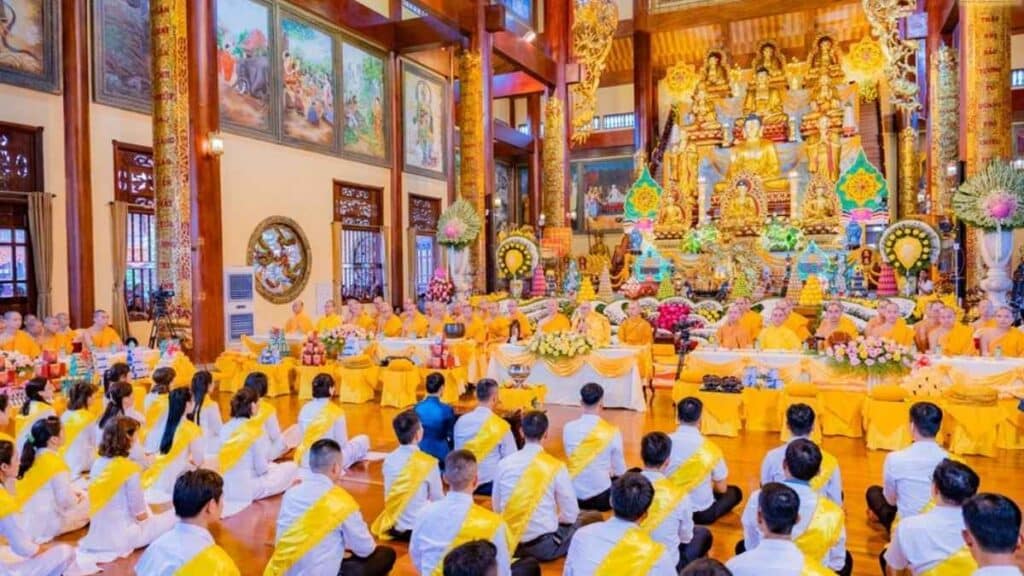
Ullambana, also known as the Ghost Festival or Hungry Ghost Festival, is one of the most significant festivals in the Buddhist calendar. Observed on the 15th day of the 7th lunar month, Ullambana is a sacred occasion centered on filial piety, compassion, and the liberation of ancestral souls. Rooted in ancient Indian Buddhist scripture, the festival honors the bond between the living and the deceased, encouraging acts of generosity, merit-making, and devotion.
The spiritual heart of Ullambana is the story of Maudgalyayana, one of the Buddha’s chief disciples, who used his extraordinary powers to discover his mother suffering in the realm of hungry ghosts. Unable to ease her suffering alone, he sought the Buddha’s guidance and, through offerings to the monastic community, liberated her soul. This act of compassionate filial devotion became the foundation of the festival.
Ullambana is primarily observed by Mahayana Buddhists across China, Japan, Vietnam, Korea, Singapore, Malaysia, and in diaspora communities worldwide. In India, Buddhist communities in Maharashtra, Sikkim, Ladakh, and West Bengal honor the occasion with prayers, Sangha offerings, and sutra chanting. Over centuries, the festival has spread across Asia, taking on local names and customs while preserving its universal message of love, gratitude, and spiritual liberation.
When Is Ullambana Celebrated in 2026?
Ullambana is observed on the 15th day of the 7th month of the Chinese lunisolar calendar, which typically falls in August or September each year.
Ullambana Festival 2026 Date in India: Thursday, August 27, 2026
The broader Ghost Month — the entire 7th lunar month during which ancestral spirits are believed to roam the earth — runs from August 13 to September 10, 2026.
| Event | 2026 Date |
|---|---|
| Ghost Month Begins | August 13, 2026 |
| Ullambana / Ghost Festival Day | August 27, 2026 (Thursday) |
| Ghost Month Ends | September 10, 2026 |
| Ksitigarbha Bodhisattva’s Birthday | September 10, 2026 |
Table of Contents
Ullambana In USA, Canada, Australia, New Zealand, UK, UAE, Singapore 2026 Dates
Ullambana Festival : Thursday, August 27, 2026
Ullambana Festival : Thursday, August 27, 2026
Ullambana Festival : Thursday, August 27, 2026
Ullambana Festival : Thursday, August 27, 2026
Ullambana Festival : Thursday, August 27, 2026
Ullambana Festival : Thursday, August 27, 2026
Why Does the Ullambana Date Change Every Year?
Ullambana is calculated according to the traditional Chinese lunisolar calendar, which combines solar and lunar cycles and periodically adds intercalary (leap) months to stay aligned with the solar year. Because this calendar shifts relative to the Gregorian calendar, Ullambana’s date falls somewhere between late August and early September each year — in 2025 it was September 6, in 2026 it is August 27, and in 2027 it will be August 16.
Ullambana: Other Names and Regional Identities
Ullambana is known by many names across cultures, reflecting the same foundational story and spiritual purpose:
- Standard / Sanskrit: Ullambana (उल्लम्बन) — meaning “deliverance from suffering” or “hanging upside down,” symbolizing the extreme suffering of souls in the spirit realm
- Taoism (Chinese): Zhongyuan Festival (中元節)
- Buddhism (Chinese): Yulanpen Festival (盂蘭盆節)
- Colloquial Chinese: Qiyueben / Ghost Month (七月半)
- Japan: Obon / Bon (お盆) Vietnam: Vu Lan / Tết Trung Nguyên
- Korea: Baekjung (백중)
- Cambodia: Pchum Ben
- Laos: Boun Khao Padap Din
- Thailand: Sat Thai
- Sri Lanka: Mataka Dānēs
- Taiwan: Pudu (普渡)
- Indonesia (Hokkien): Chit Gwee Pua (七月半)
In Indian Buddhist communities, the festival is referred to as Ullambana, reflecting its Sanskrit origins and close thematic connection to the Hindu tradition of Pitru Paksha.
The Origins, History, and Legends of Ullambana
Ullambana is one of Buddhism’s oldest festival traditions, with roots traceable to ancient India. Its origin story is found in the Ullambana Sutra (Yulanpen Sutra), a key Mahayana Buddhist scripture.
The legend centers on Maudgalyayana (Moggallana), one of Gautama Buddha’s ten principal disciples, renowned for his supernatural powers. One day, meditating deeply, he discovered that his deceased mother had been reborn in the Realm of Hungry Ghosts (Preta) — tormented by unceasing hunger, unable to eat any food he sent her, as it transformed into burning coals before reaching her.
Maudgalyayana sought the Buddha’s help. The Buddha explained that no individual’s power, however great, could alone release a soul from such deep karmic suffering. Instead, he instructed Maudgalyayana to prepare offerings — food, incense, lamps, robes — and offer them to the entire Sangha (monastic community) on the 15th day of the 7th lunar month, marking the conclusion of the monsoon retreat. Through the collective merit of the assembled monks and nuns, his mother was liberated and reborn in the heavens.
Maudgalyayana himself was of Brahmin origin from India, and ancient texts record that King Bimbisara of Magadha performed similar rituals for ancestral liberation. The festival grew in prominence as Buddhism spread to China, flourishing during the Tang Dynasty (618–907 CE) with imperial patronage. It later spread to Japan, Vietnam, Korea, and Southeast Asia, each culture adapting its practices while preserving the core story. A closely related tradition also exists in Theravada Buddhism through the Petavatthu, a Pali scripture dating to approximately the 3rd century BCE.
Ullambana: Cultural and Spiritual Significance
Ullambana is a festival of filial piety, compassion, and spiritual liberation. The Sanskrit word “Ullambana” — meaning “hanging upside down” — captures the extreme suffering of souls trapped in lower realms due to past negative karma. The festival’s purpose is to reverse this suffering through merit, prayer, and generosity.
Culturally, Ullambana reinforces one of Buddhism’s deepest values: that our actions in this life extend beyond ourselves, reaching those who have gone before us and those yet to come. By making offerings to the Sangha, performing acts of charity, and dedicating merit to ancestors, observers affirm the interconnectedness of all life.
The festival also coincides with the end of the Vassa (monastic Rains Retreat), a three-month period of intensive spiritual cultivation. The 15th of the 7th lunar month is therefore known as “Buddha’s Joyful Day” — the day the Buddha rejoiced at the virtue achieved by the Sangha, making their accumulated merit available for the liberation of all suffering beings..
Ullambana: Prayers and Religious Observances
Ullambana prayers and rituals are performed to generate merit, honor ancestors, and liberate suffering souls across the spirit realm.
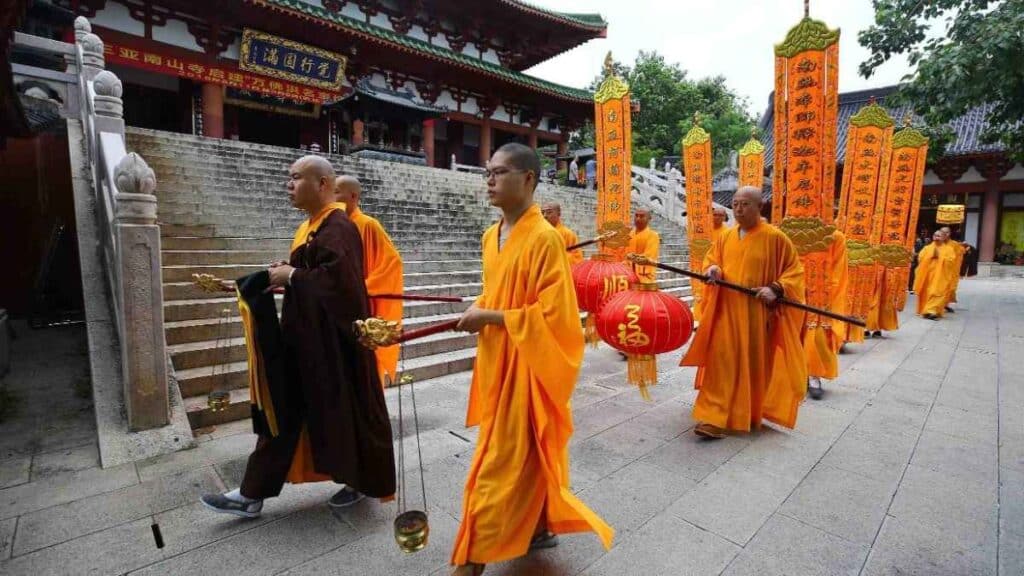
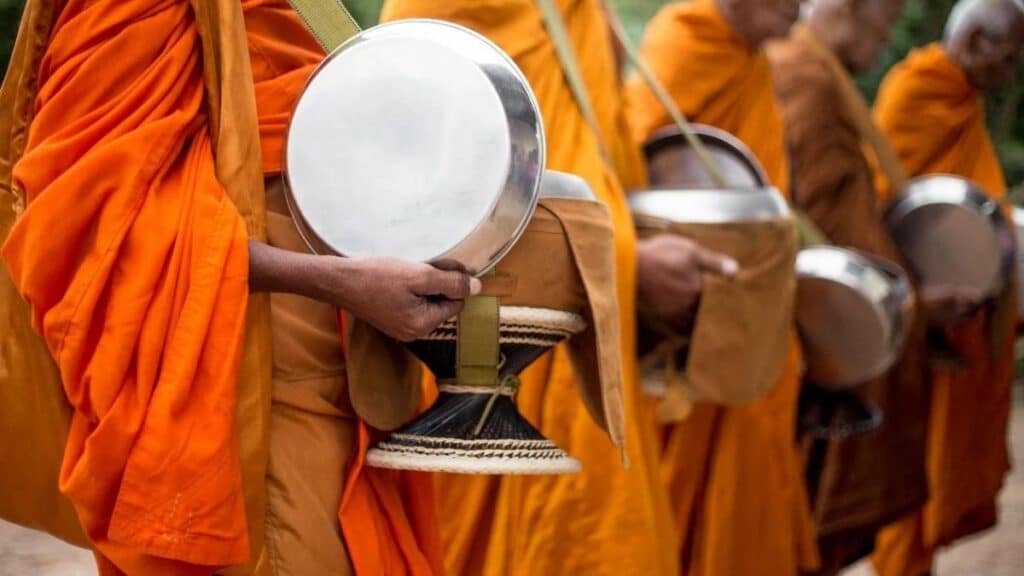
Sangha Offering Ceremony: The central act of Ullambana. Lay devotees offer food, robes, medicine, and daily necessities to Buddhist monks and nuns on behalf of their ancestors — the collective merit of the Sangha being considered most powerful for liberating souls.
Sutra Chanting: Continuous recitation of the Ullambana Sutra, Amitabha Sutra, and other scriptures. Many temples conduct multiple consecutive evenings of chanting, followed by a Filial Piety Dharma Assembly.
Altar Offerings at Home: Families set up a clean altar with photographs of ancestors, fresh fruits, flowers, incense, and candles. Prayers are offered and merit is verbally dedicated to named ancestors across seven generations.
Water Lantern Release: Lotus-shaped lanterns are floated on rivers or lakes to guide wandering spirits back to the afterlife. When the lanterns extinguish, it symbolizes souls finding their way to liberation.
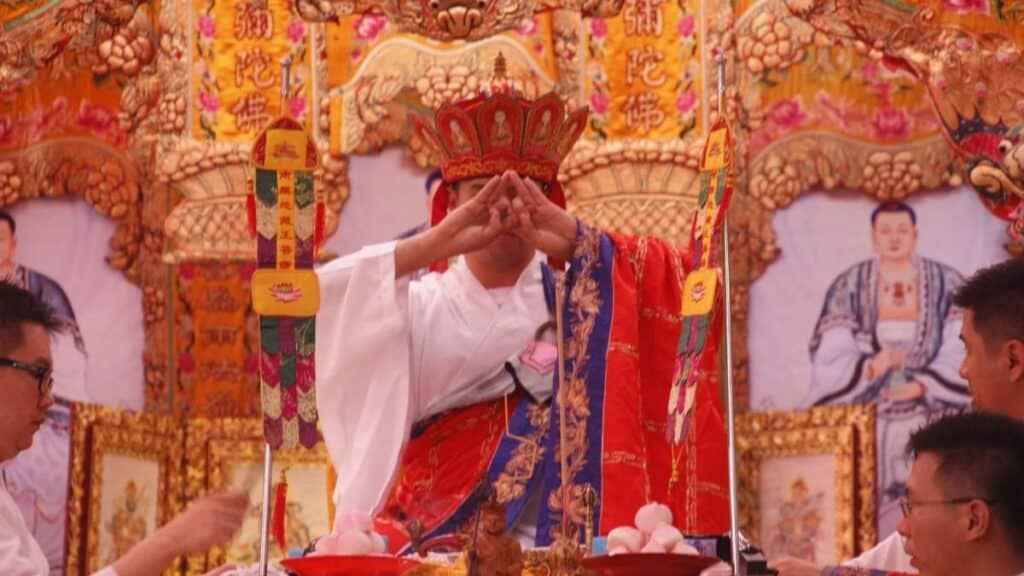
Yujia Yankou Rite: A Chinese Buddhist ceremony in which priests distribute food and merit to hungry ghosts across the spirit realm, nourishing all suffering beings in saṃsāra.
Community Free Meals: Many temples organize open vegetarian community meals, reflecting the spirit of universal compassion and the Buddha’s instruction to offer freely to all.
How Ullambana Is Celebrated Across India
While Ullambana is primarily associated with East and Southeast Asian Buddhism, India’s diverse Buddhist communities observe the festival with deep reverence:
In Maharashtra, Buddhist viharas and Ambedkarite centers conduct sutra chanting, ancestral prayers, and community gatherings during the 7th lunar month.
In Sikkim and Arunachal Pradesh, Mahayana Buddhist communities offer prayers to monks and conduct temple pujas for the liberation of deceased family members.
In Ladakh, Tibetan Buddhist monasteries mark the period with intensive rituals and butter lamp offerings.
In West Bengal, the Chinese-Indian community in Kolkata’s historic Chinatown observes traditional Ghost Festival rites with incense offerings and temple ceremonies. At major pilgrimage centers like Bodh Gaya and Sarnath, international Buddhist pilgrims from China, Japan, Vietnam, and Sri Lanka gather for shared prayers, making these sites vibrant hubs of Ullambana observance..
Participation Across Religions in India
Ullambana’s themes of honoring ancestors resonate across religious communities in India. Hindus observing Pitru Paksha (Shradh) — which falls in the same lunar season — share virtually identical themes: offering food and water to ancestral spirits and generating merit for seven generations. The parallel is so close that many scholars view the two as complementary expressions of the same ancient pan-Indian ancestral reverence.
Jain communities, whose festival of Paryushana falls in this season, share the spirit of compassion and spiritual renewal. Many Buddhist centers in urban India also welcome non-Buddhists to Ullambana ceremonies, framing the festival as a universal moment of gratitude to parents and ancestors — a message that resonates across all traditions.
How Ullambana Is Celebrated Outside India
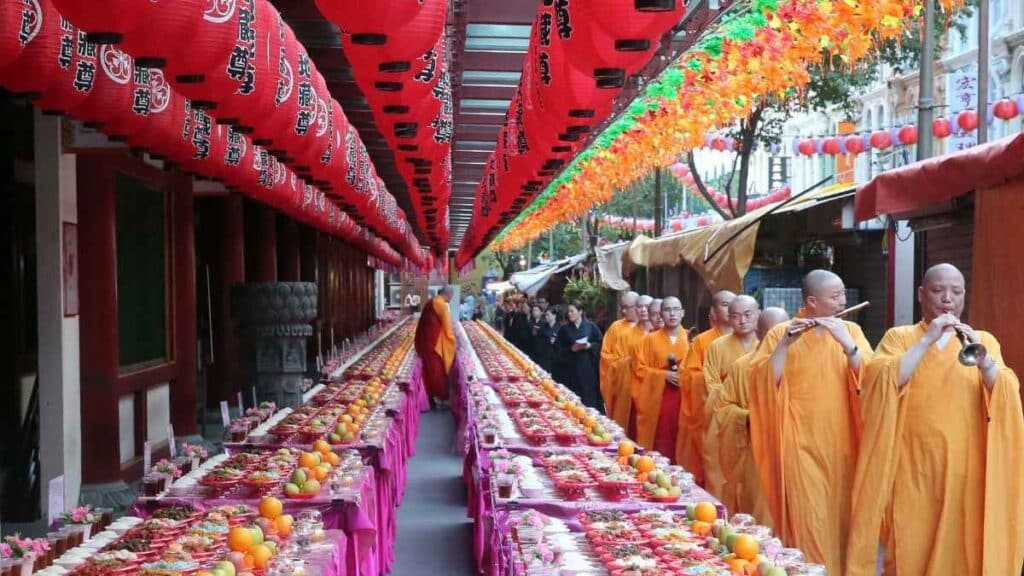
Indian diaspora and Buddhist communities across the world celebrate Ullambana through:
- Temple Sangha offering ceremonies and sutra chanting sessions
- Getai (歌台) concerts and community cultural programs (Singapore, Malaysia)
- Tōrō Nagashi (floating lantern) ceremonies and Bon Odori dances (Japan, Japanese diaspora)
- Ancestor memorial services and cemetery visits
- Online livestreamed dharma assemblies for diaspora communities unable to attend in person
- Charitable donations in the name of ancestors as modern merit-making
These celebrations help Buddhist and Indian diaspora communities maintain connection to their spiritual roots while introducing the festival’s universal values to wider audiences.
Ullambana Gifting Traditions
Ullambana gifting centers on spiritual generosity rather than material exchange. The most meaningful offering is a donation to the Buddhist Sangha — food, robes, or necessities — presented in the name of one’s ancestors to accumulate merit on their behalf.
In Chinese and Vietnamese traditions, families prepare joss paper offerings — paper money, paper houses, clothing, and symbolic goods — burned so that ancestral spirits receive their equivalent in the spirit realm. Gifting fresh fruit, flowers, or vegetarian food to temples and monks is also a valued practice.
In modern diaspora communities, charitable donations to humanitarian causes made in memory of ancestors have become a meaningful contemporary expression of the festival’s spirit of giving. Gifting incense sets, lotus lanterns, or Buddhist prayer beads to fellow observers is also a thoughtful gesture that aligns with the festival’s values.
Ullambana Festival Foods and Culinary Traditions
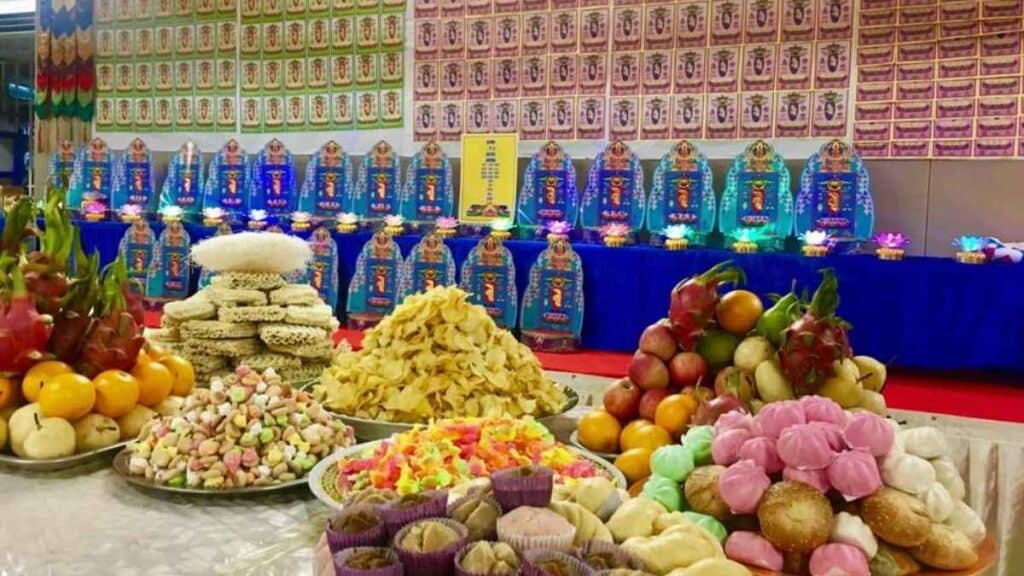
Food is central to Ullambana, both as an offering to spirits and as communal celebration. The emphasis is universally on vegetarian cuisine, reflecting Buddhist principles of non-violence and compassion.
Common Ullambana foods include:
- Five Fruits (Pañcaphala): Seasonal fruits — bananas, mangoes, pomegranates, coconuts, and oranges — offered on altars as symbolic nourishment for ancestral spirits
- Vegetarian Feast Dishes: Elaborate meals without meat or pungent vegetables, prepared for both temple offerings and community dining
- Rice and Congee: Plain steamed rice or rice porridge, echoing the rice bowl in Maudgalyayana’s legend and offered as primary nourishment
- Lotus Root Dishes: Stir-fried or braised lotus root, symbolic of Buddhist purity and widely offered across traditions
- Tang Yuan (Sweet Rice Balls): Round glutinous rice balls filled with sesame or sweet bean paste, representing family unity and the full moon
- Buddhist Zhai Cai (斋菜): A rich Chinese vegetarian cuisine developed for Buddhist festivals — tofu preparations, mushroom dishes, braised greens, and gluten-based mock meats
- Incense-Fragrant Rice: Specially cooked aromatic rice, offered ceremonially at temple altars
Many temples also organize free community vegetarian meals, open to all, as a direct expression of the generosity that lies at the festival’s heart.
Music, Art, and Cultural Expression
Music and performance are vibrant parts of Ullambana across Asia. Getai (歌台) concerts — uniquely Singaporean and Malaysian — feature open-air stages with singers, dancers, and entertainers performing for both the living and the visiting spirits. The front row is always left empty for spirit guests.
Chinese opera remains the classical expression of the festival, with performances depicting themes of filial piety, loyalty, and spiritual devotion. In Japan, Bon Odori — a communal circle dance performed during Obon — is one of Asia’s most beloved cultural traditions, now celebrated in Japanese communities across the world.
Tōrō Nagashi (floating lanterns on water) is both a spiritual practice and a breathtaking visual art — thousands of glowing lotus lanterns drifting on dark rivers, now an iconic image in global photography and film. The crafting of intricate joss paper offerings — paper mansions, clothing, and symbolic goods — is a recognized folk art form in Chinese communities. In the Himalayan Buddhist world, thangka paintings depicting Maudgalyayana saving his mother are displayed in monasteries during this season.
gUllambana has also influenced East Asian cinema, literature, and storytelling, making the festival’s themes of love, sacrifice, and spiritual liberation enduring motifs in pan-Asian popular culture. .
Ullambana in the Modern World
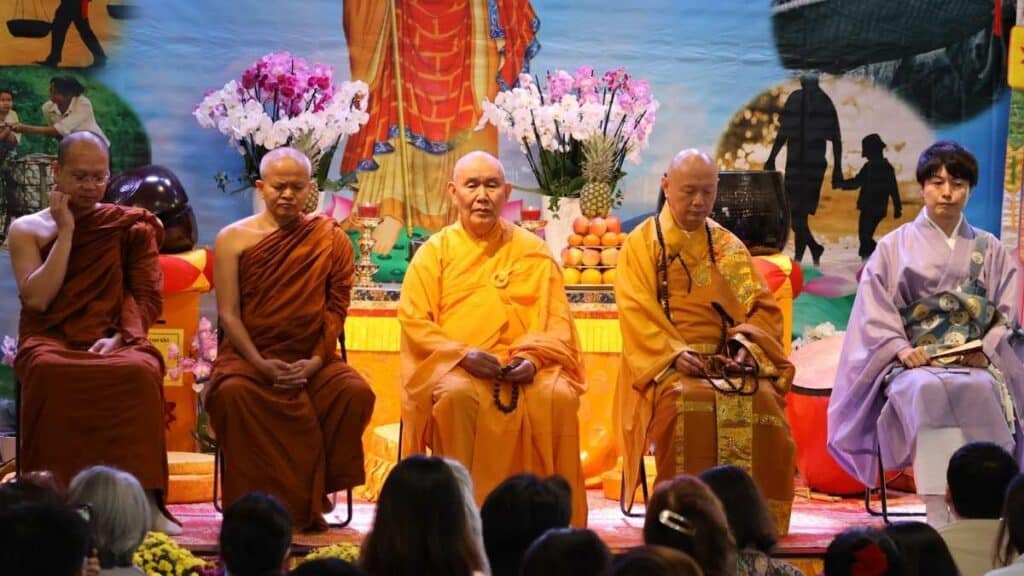
Ullambana has adapted gracefully to contemporary life while preserving its spiritual essence. Many Buddhist temples now livestream ceremonies — sutra chanting, Sangha offerings, and lantern releases — allowing diaspora communities worldwide to participate without traveling.
Growing environmental awareness has led many communities to reduce large-scale joss paper burning, replacing it with smaller symbolic amounts, electronic offerings, or charitable donations in the name of ancestors. Eco-friendly lotus lanterns made from biodegradable materials are increasingly used in water lantern ceremonies.
Following Vietnam’s model, several Buddhist organizations globally now frame Ullambana as a Parents’ Appreciation Day — a universally accessible expression of the festival’s message of filial gratitude, welcoming participation from non-Buddhists.
How to wish someone on Ullambana: The occasion calls for sincerity and reverence rather than exuberant celebration. You may say “Wishing peace and liberation to your ancestors” or in Chinese: 祝先人安息 (May the ancestors rest in peace). In Vietnamese: Chúc mừng lễ Vu Lan (Blessings on Vu Lan).
Ullambana: Modern Relevance and Cultural Continuity
In today’s fast-changing world, Ullambana continues to hold deep relevance as a festival that asks us to pause, remember, and give. While forms of celebration have evolved, the festival’s core message remains unchanged — that compassion extends beyond the boundaries of life and death, that our actions ripple outward through generations, and that the merit of kindness, generosity, and gratitude is never wasted.
For Indian diaspora and Buddhist communities worldwide, Ullambana 2026 on August 27 is an opportunity to honor those who came before, support the living Sangha, and carry forward one of humanity’s oldest and most loving traditions.