
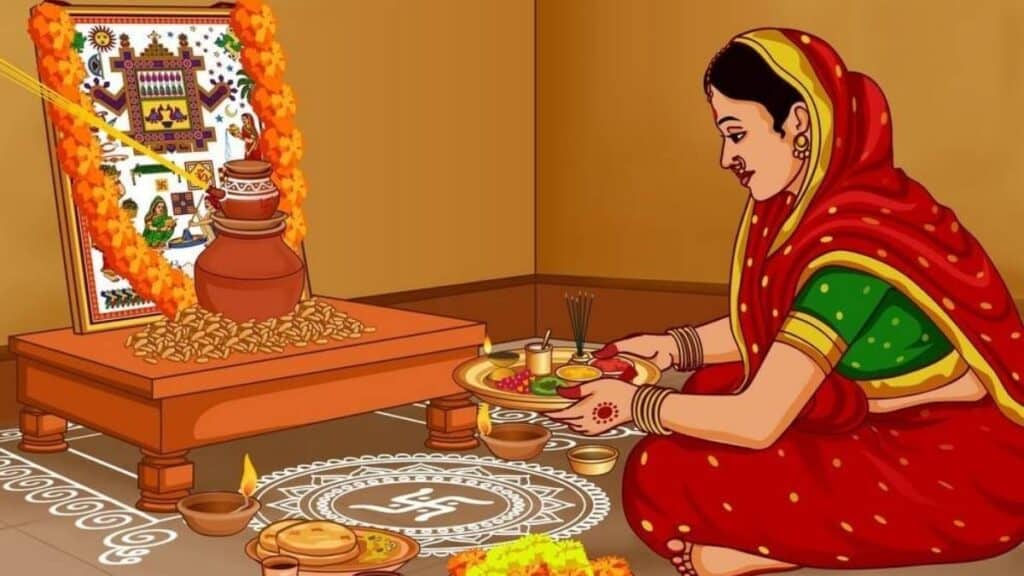
Ahoi Ashtami is a deeply cherished Indian festival where mothers observe a strict day-long fast for the health, prosperity, and long life of their children. Celebrated approximately eight days before Diwali, this sacred vrat reflects the profound bond between mother and child, symbolizing unconditional love and devotion.
Traditionally observed for sons, modern practice extends blessings to all children regardless of gender. Mothers abstain from food and water throughout the day, breaking their fast only after sighting stars in the evening sky. The festival centers on worshiping Mata Ahoi, a form of Goddess Lakshmi, seeking her divine protection for offspring.
When Is Ahoi Ashtami Celebrated in 2026?
Ahoi Ashtami is celebrated on Krishna Paksha Ashtami (eighth day of the waning moon) in the Hindu lunar month of Kartik, falling approximately eight days before Diwali and four days after Karva Chauth.
Ahoi Ashtami In India 2026 Dates
Date: Sunday, November 1, 2026
- Ahoi Ashtami Puja Muhurat: 05:36 PM to 06:54 PM (Duration: 01 Hour 18 Mins)
- Ashtami Tithi Begins: 02:51 PM on November 1, 2026
- Ashtami Tithi Ends: 1:10 PM on November 2, 2026
- Evening Time for Sighting Stars: 06:00 PM
- Moonrise: 11:35 PM on November 2, 2026
Table of Contents
Ahoi Ashtami In USA, Canada, Australia, New Zealand, UK, UAE, Singapore 2026 Dates
Ahoi Ashtami on Sunday, November 1, 2026
- Ahoi Ashtami Puja Muhurat – 04:52 PM to 06:14 PM
- Sanjh (evening) time for sighting Stars – 05:21 PM
Ahoi Ashtami on Sunday, November 1, 2026
- Ahoi Ashtami Puja Muhurat – 05:08 PM to 06:31 PM
- Sanjh (evening) time for sighting Stars – 05:38 PM
Ahoi Ashtami on Sunday, November 1, 2026
- Ahoi Ashtami Puja Muhurat – 07:33 PM to 08:36 PM
- Sanjh (evening) time for sighting Stars – 08:00 PM
Ahoi Ashtami on Sunday, November 1, 2026
- Ahoi Ashtami Puja Muhurat – 04:33 PM to 06:00 PM
- Sanjh (evening) time for sighting Stars – 05:09 PM
Ahoi Ashtami on Sunday, November 1, 2026
- Ahoi Ashtami Puja Muhurat – 05:39 PM to 06:56 PM
- Sanjh (evening) time for sighting Stars – 06:02 PM
Ahoi Ashtami on Sunday, November 1, 2026
- Ahoi Ashtami Puja Muhurat – 06:50 PM to 08:02 PM
- Sanjh (evening) time for sighting Stars – 07:12 PM
Why Ahoi Ashtami Dates Change Every Year?
Ahoi Ashtami is celebrated based on the Hindu lunar calendar, not the Gregorian calendar. It falls on the eighth day of Krishna Paksha (waning moon phase) in Kartik month, which usually occurs in October or November.
Since lunar months are shorter than solar months:
- Ahoi Ashtami’s date shifts every year
- Timing depends on moon position and local sunrise
- The festival always maintains its position relative to Diwali (8 days before)
Ahoi Ashtami Other Names & Regional Identities
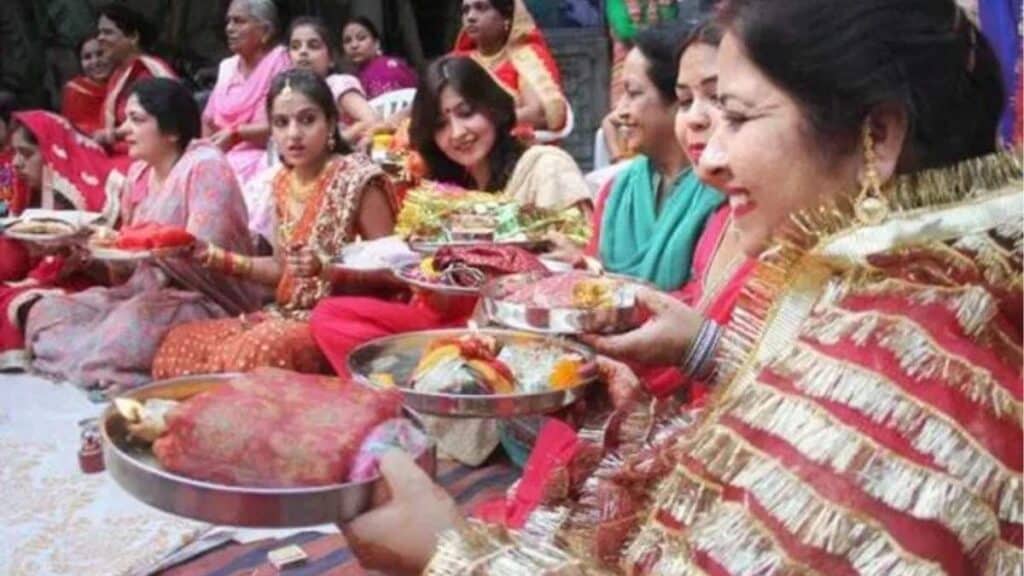
Standard Names:
- Ahoi Ashtami — Primary name in Hindi and across North India
- Ahoi Aathe — Emphasizes the eighth day (Ashtami Tithi) observance
North India
- Karak Ashtami — Alternative name in several regions
- Avahi Aathein — Awadhi language variant
West India
- Karāshatmi — Marathi name used in Maharashtra
Punjab
- Chakri — Punjabi regional name
Alternative Religious Observance
- Krishnashtami — When observed by women seeking children like Lord Krishna, with special rituals at Radha Kund in Mathura
The Origins, History, and Legends of Ahoi Ashtami
The most popular legend associated with Ahoi Ashtami tells the story of a moneylender’s wife and her seven sons.
The Legend of the Moneylender’s Wife
Once upon a time, a moneylender’s wife went to the forest to collect soil for Diwali renovations. While digging, she accidentally killed a lion cub with her spade. The grieving lioness cursed her, and within a year, all seven of her sons died.
Consumed by unbearable grief, the couple set out on a final pilgrimage but collapsed from sorrow. Moved by their suffering, divine intervention occurred through an Akashvani (heavenly voice), instructing them to worship Goddess Ahoi and serve the holy cow.
On the day of Ashtami, the wife drew the image of the lion cub, observed a strict fast, and sincerely repented for her unintentional sin. Pleased by her devotion and honesty, Goddess Ahoi appeared before her and blessed her with the restoration of her sons’ lives and future fertility.
This legend emphasizes the power of sincere devotion, repentance, and a mother’s unconditional love for her children.
Regional Variation (Punjab)
In Punjab, the story features a baby porcupine (porcupette) instead of a lion cub, reflecting local wildlife and cultural adaptation while maintaining the same spiritual message.
Krishnashtami Connection
Women desiring children blessed like Lord Krishna observe this vrat on Krishnashtami, taking sacred pre-dawn baths at Radha Kund in Mathura district of Uttar Pradesh. They worship Goddess Kushmanda for fertility blessings during Arunodaya (before sunrise).
Ahoi Ashtami: Cultural and Spiritual Significance

Ahoi Ashtami celebrates the sacred bond between mother and child, representing one of the most profound expressions of maternal devotion in Hindu tradition. The strict nirjala (waterless) fast symbolizes a mother’s willingness to endure hardship for her children’s welfare.
Spiritual Significance:
- Maternal Sacrifice: Ultimate expression of selfless love and devotion
- Karmic Redemption: Atonement through sincere repentance and prayer
- Divine Protection: Seeking Mata Ahoi’s blessings for children’s longevity and prosperity
- Purification: Burning away negativity and seeking spiritual renewal
Cultural Importance:
- Family Bonds: Strengthening intergenerational connections and values
- Cultural Continuity: Passing down traditions of sacrifice and devotion
- Community Unity: Shared observance creating bonds among mothers
The octagonal (Ashtha Koshthak) imagery used in Ahoi Mata representations symbolizes the eighth lunar day and cosmic completeness, connecting earthly motherhood with divine feminine energy.
More than a religious observance, Ahoi Ashtami honors the timeless relationship between mother and child, celebrating values that transcend time and geography.
Ahoi Ashtami Prayers and Religious Observances
Ahoi Ashtami rituals are performed at home, emphasizing personal devotion and family traditions rather than temple ceremonies.
Morning Sankalp (Sacred Pledge)
After bathing, mothers take a solemn vow (Sankalp) to observe a strict fast without food or water for their children’s well-being. The pledge includes the commitment to break the fast only after sighting stars or the moon, according to family tradition.
Ahoi Ashtami Mantra
In Hindi
- मुख्य मंत्र (108 बार जपें): ॐ पार्वतीप्रिय-नंदनाय नमः
- अहोई माता पूजा मंत्र: अहोई माता नमः
- प्रार्थना मंत्र: अहोई माता सर्वदुख नाशिनि, सुख-समृद्धि प्रदायिनी नमः
In English
- Main Mantra (Chant 108 times): Om Parvatipriya-Nandanaya Namah
- Ahoi Mata Puja Mantra: Ahoi Mata Namah
- Prayer Mantra: Ahoi Mata Sarvadukh Nashini, Sukh-Samridhi Pradayini Namah
Puja Preparations (Before Sunset)
Creating Ahoi Mata Image:
- Draw Goddess Ahoi on walls using geru (red ochre), or embroider on cloth
- Image must include Ashtha Koshthak (eight corners) representing Ashtami Tithi
- Depicted elements: Goddess Ahoi, young children, and a lion
Altar Setup:
- Sanctify worship area with holy water
- Draw Alpana (sacred floor designs)
- Spread wheat on floor or wooden stool
- Place water-filled Kalash (pot) covered with earthen lid
- Set small earthen Karwa pot atop Kalash
- Block Karwa nozzle with seven Sarai Seenka (willow grass shoots) or cotton buds
- Offer seven grass shoots to Ahoi Mata and lion
Prasad Offerings:
- 8 Puris (fried bread)
- 8 Puas (sweet pancakes)
- Halwa (sweet pudding)
- Donations to Brahmins (food and money)
Vrat Katha Recitation
The origin legend is narrated after puja as an essential ritual, reinforcing lessons of devotion, repentance, and divine grace.
Evening Fast-Breaking
The fast concludes at twilight after sighting stars. Some families wait for moonrise, though this occurs very late at night on Ahoi Ashtami, making star-sighting the more practical tradition.
Ahoi Ashtami Vrat Katha (अहोई अष्टमी व्रत कथा)
In Hindi
प्राचीन काल में एक साहूकार था, जिसके सात बेटे और सात बहुएँ थीं। साहूकार की एक बेटी भी थी जो दीपावली के अवसर पर ससुराल से मायके आई हुई थी। दीपावली पर घर को लीपने के लिए सातों बहुएँ मिट्टी लाने जंगल गईं, तो ननद भी उनके साथ चल पड़ी। जहाँ से साहूकार की बेटी मिट्टी खोद रही थी, उसी स्थान पर स्याहु (साही) अपने सात बच्चों के साथ रहती थी। मिट्टी खोदते समय अनजाने में साहूकार की बेटी की खुरपी से स्याहु का एक बच्चा मर गया। स्याहु ने क्रोधित होकर कहा, “मैं तुम्हारी कोख बाँधूँगी।”
यह सुनकर साहूकार की बेटी ने अपनी सातों भाभियों से एक-एक कर विनती की कि वे उसके बदले अपनी कोख बंधवा लें। सबसे छोटी भाभी ननद की रक्षा के लिए तैयार हो गई। इसके बाद छोटी भाभी के जो भी बच्चे हुए, वे सातवें दिन चल बसते। इस प्रकार सात पुत्रों की मृत्यु हो गई। तब उसने पंडित को बुलाकर कारण पूछा। पंडित ने सुरही गाय की सेवा करने की सलाह दी।
सुरही गाय छोटी बहू की सेवा से प्रसन्न हो गई और उसे स्याहु के पास ले चली। रास्ते में दोनों थककर विश्राम कर रहे थे, तभी छोटी बहू ने देखा कि एक सांप गरुड़ पंखनी के बच्चे को डंसने जा रहा है। उसने तुरंत सांप को मार दिया और बच्चे की जान बचाई। गरुड़ पंखनी वहाँ आई और बिखरा हुआ खून देख छोटी बहू को दोषी समझ चोंच मारने लगी। छोटी बहू ने सच्चाई बताई कि उसने बच्चे की जान बचाई है। गरुड़ पंखनी प्रसन्न हो गई और उन दोनों को स्याहु के पास पहुँचा दिया।
स्याहु छोटी बहू की निःस्वार्थ सेवा और साहस से प्रसन्न हो गई और उसे सात पुत्र व सात बहुएँ होने का आशीर्वाद दिया। स्याहु के आशीर्वाद से छोटी बहू का घर पुत्र और पुत्रवधुओं से हरा-भरा हो गया। अहोई अष्टमी का अर्थ इसीलिए “अनहोनी को होनी बनाना” भी माना जाता है।
In English
In ancient times, there lived a prosperous merchant who had seven sons and seven daughters-in-law. He also had a daughter who had come home from her in-laws’ house for Diwali. As was the custom, all seven daughters-in-law went to the forest to collect mud for whitewashing the house before Diwali, and the merchant’s daughter accompanied them.
At the very spot where the merchant’s daughter was digging, a Syahu (porcupine) lived with her seven young ones. While digging, the merchant’s daughter accidentally struck and killed one of the Syahu’s babies with her trowel. Enraged, the Syahu cursed her: “I shall bind your womb.”
Frightened, the merchant’s daughter went to each of her seven sisters-in-law, pleading with them to bear the curse in her place. The youngest sister-in-law, out of compassion and selflessness, agreed to take the curse upon herself. From then on, every child born to the youngest daughter-in-law would die on the seventh day. In this way, she lost all seven of her sons. Grief-stricken, the family consulted a learned pandit, who advised the youngest daughter-in-law to serve the Surahi cow with devotion.
Pleased by her sincere devotion, the Surahi cow agreed to take her to the Syahu. On the way, they stopped to rest. While resting, the daughter-in-law noticed a snake about to bite the chick of a Garud Pankhni (eagle). Without hesitation, she killed the snake and saved the chick. When the Garud Pankhni returned and saw blood scattered around, she assumed the daughter-in-law had harmed her chick and began to attack her. The daughter-in-law calmly explained that she had in fact saved the chick’s life. The Garud Pankhni was overjoyed and, in gratitude, carried them both safely to the Syahu.
Moved by the selfless courage and devotion of the youngest daughter-in-law, the Syahu lifted her curse and blessed her with seven sons and seven daughters-in-law. Her home, which had been filled with sorrow, was now blessed with the joy of a large and thriving family. This is why Ahoi Ashtami is said to mean turning the impossible into the possible — just as the youngest daughter-in-law did.
Ahoi Ashtami Aarti (अहोई अष्टमी आरती)
In Hindi
जय अहोई माता, जय अहोई माता।
तुमको निसदिन ध्यावत हरी विष्णु धाता।।
ब्रम्हाणी रुद्राणी कमला तू ही है जग दाता।
जो कोई तुमको ध्यावत नित मंगल पाता।।
तू ही है पाताल बसंती तू ही है सुख दाता।
कर्म प्रभाव प्रकाशक जगनिधि से त्राता।।
जिस घर थारो वास वही में गुण आता।
कर न सके सोई कर ले मन नहीं घबराता।।
तुम बिन सुख न होवे पुत्र न कोई पता।
खान पान का वैभव तुम बिन नहीं आता।।
शुभ गुण सुन्दर युक्ता क्षीर निधि जाता।
रतन चतुर्दश तोंकू कोई नहीं पाता।।
श्री अहोई माँ की आरती जो कोई गाता।
उर उमंग अति उपजे पाप उतर जाता।।
In Hinglish
Jai Ahoi Mata, Jai Ahoi Mata, Tumko nisdin dhyavat Hari Vishnu Dhata.
Brahmani Rudrani Kamala tu hi hai jag data, Jo koi tumko dhyavat nit mangal pata.
Tu hi hai paatal basanti tu hi hai sukh data, Karm prabhav prakashak jagnidhi se trata.
Jis ghar tharo vaas wahi mein gun aata, Kar na sake soi kar le man nahin ghabrata.
Tum bin sukh na hove putra na koi pata, Khaan paan ka vaibhav tum bin nahin aata.
Shubh gun sundar yukta ksheer nidhi jaata, Ratan chaturdash tonku koi nahin paata.
Shri Ahoi Maa ki aarti jo koi gaata, Ur umang ati upje paap utar jaata.
How Ahoi Ashtami Is Celebrated Across India
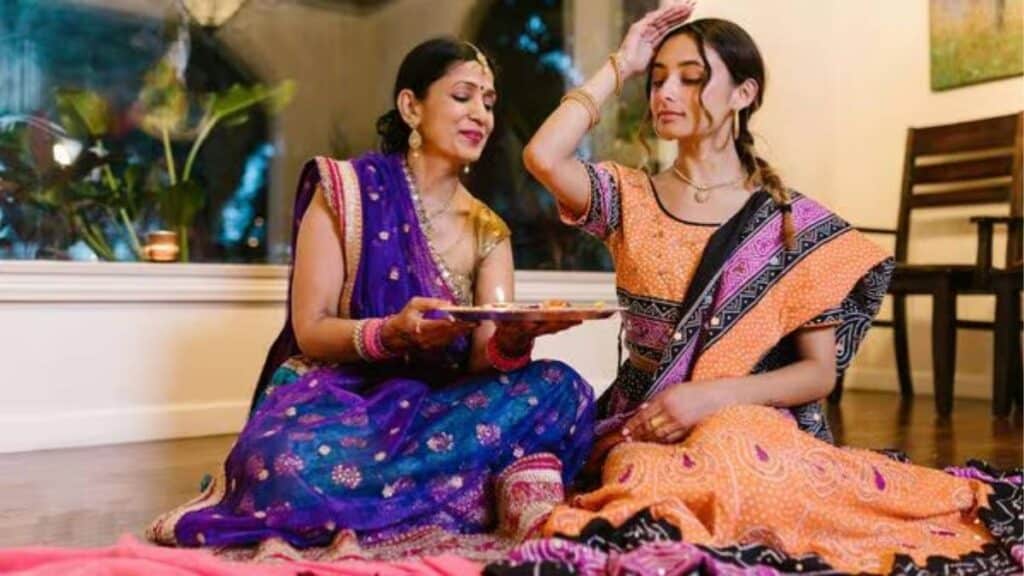
While the core observance remains consistent, regional traditions add local flavor to Ahoi Ashtami celebrations.
North India (Uttar Pradesh, Bihar, Rajasthan, Delhi, Haryana)
Most prominent observance with strict nirjala fasting. Women gather for collective pujas, share traditional foods, and exchange blessings. Markets sell special Ahoi Mata images and Sarai grass shoots during the festival season.
Punjab
Known as Chakri, featuring the porcupine variation in Vrat Katha. Strong community participation with elaborate family gatherings and traditional Punjabi prasad.
Maharashtra and Gujarat
Called Karāshatmi, observed during Ashvin month per Amanta calendar (same astronomical day). Integrated with broader Diwali preparations, featuring regional sweet varieties.
Madhya Pradesh and Chhattisgarh
Traditional observance with regional prasad variations and local folk songs during evening gatherings when women break their fasts together.
Uttar Pradesh (Mathura – Radha Kund)
Special significance for Krishnashtami observance. Women seeking fertility blessings take pre-dawn sacred baths at Radha Kund and visit Ahoi Mata Temple.
Despite regional variations, the essence remains unchanged: mothers’ devoted fasting for children’s well-being, puja rituals, Vrat Katha storytelling, and community celebration.
Participation Across Religions in India
Ahoi Ashtami is primarily a Hindu observance centered on maternal devotion. However, its universal theme of a mother’s love for her children resonates across religious boundaries.
In multicultural neighborhoods, the festival’s focus on children’s welfare and family bonds inspires appreciation from diverse communities. Non-Hindu neighbors often participate in evening celebrations, recognizing the beautiful expression of motherhood that transcends religious lines.
The festival occasionally inspires interfaith mothers’ gatherings where women of different faiths share stories of maternal sacrifice and devotion, finding common ground in their shared experiences of motherhood.
How Ahoi Ashtami Is Celebrated Outside India
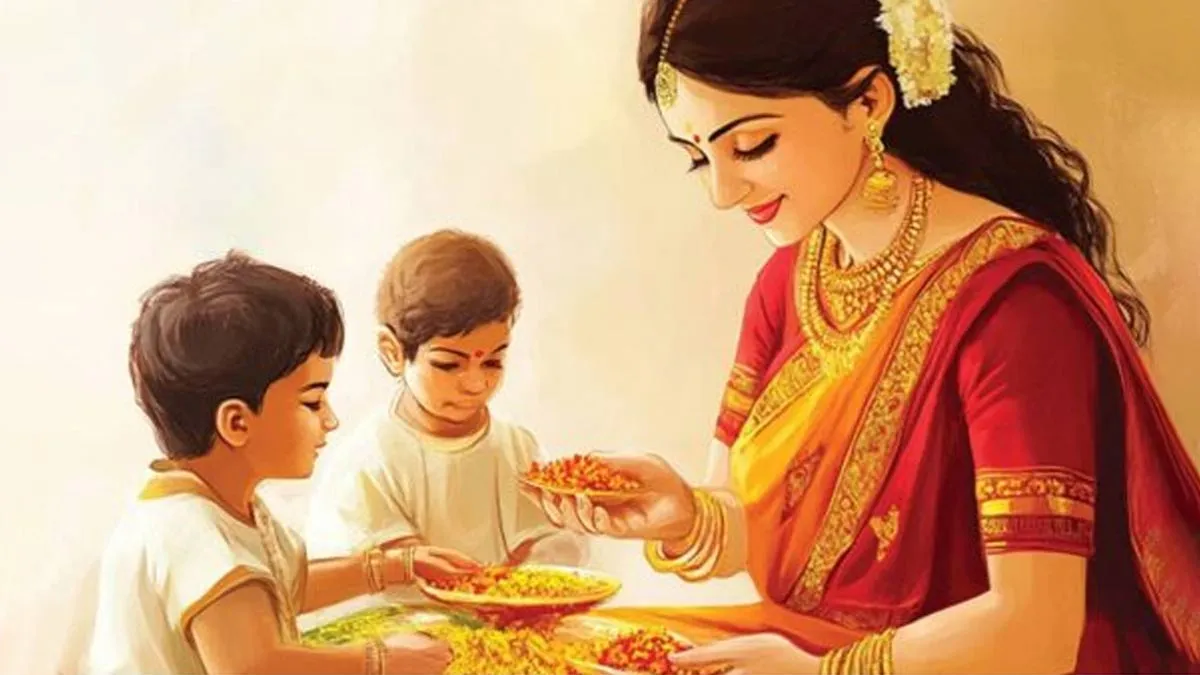
Indian diaspora communities worldwide maintain Ahoi Ashtami traditions, adapting practices to their local contexts while preserving spiritual essence.
United States and Canada
Mothers observe the vrat at home, often adjusting timing to weekends for working women. Hindu temples and cultural centers organize community pujas with Vrat Katha storytelling. Ahoi Mata images are hand-drawn or digitally printed when traditional supplies are unavailable.
United Kingdom
Active celebrations in Leicester, London, and Birmingham with temple programs. Many families livestream pujas to connect with relatives in India, creating virtual family gatherings across continents.
UAE (Dubai, Abu Dhabi)
Large Indian communities maintain traditional observances. The geographic location allows earlier star appearance, enabling earlier fast-breaking compared to India.
Australia and New Zealand
Weekend adjustments are common due to weekday work schedules. Community centers facilitate group celebrations, helping maintain traditions for second-generation immigrants and creating cultural continuity.
Singapore
Strong observance among Indian diaspora with culturally adapted prasad using locally available ingredients while maintaining ritual authenticity and traditional significance.
Germany
Smaller but devoted observances with families connecting virtually for shared prayers across time zones, demonstrating the festival’s adaptability to modern technology.
These celebrations help second-generation Indians stay connected to their cultural roots while passing down values of maternal devotion, sacrifice, and family bonds.
Ahoi Ashtami Gifting Traditions
While not a major gifting festival, meaningful exchanges honor the occasion and maternal devotion:
Traditional Gifts:
- Mother-in-law gifts clothes, jewelry, or money to daughter-in-law observing first Ahoi Ashtami
- Sacred items: Kalash, puja thali, or beautifully crafted Ahoi Mata images
- Sargi-like pre-dawn meal items for those following certain family traditions
Modern and Diaspora Practices:
- Wellness gifts honoring mothers’ sacrifices and health
- Children surprise mothers with handmade cards, flowers, or thoughtful tokens
- Digital gift cards for working mothers balancing tradition with modern lifestyles
- Charitable donations in mothers’ names supporting children’s welfare causes
Traditional Ahoi Ashtami Foods and Sweets
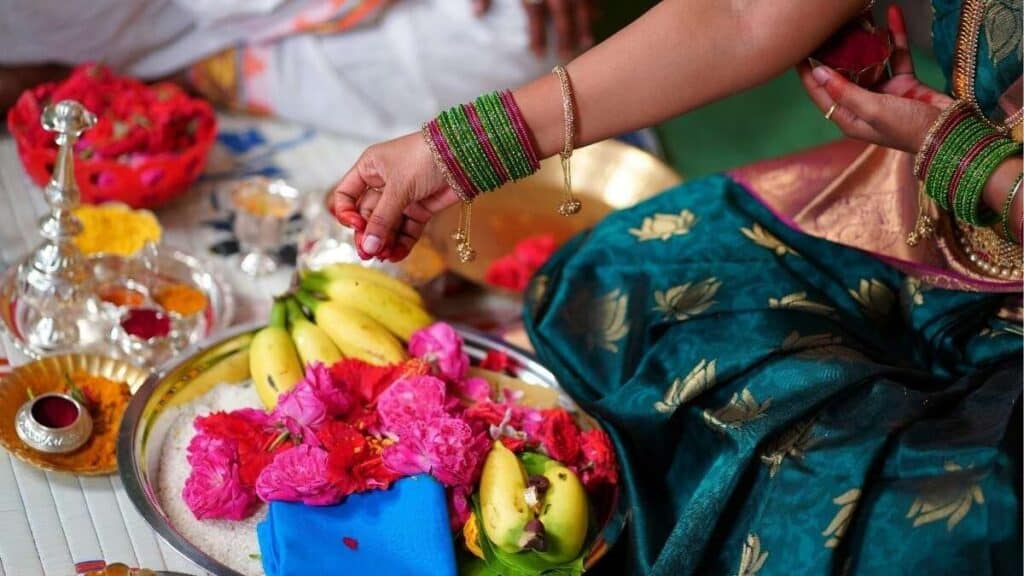
Food plays an essential role in Ahoi Ashtami, both as prasad offerings and for post-fast meals.
Prasad Essentials:
- 8 Puris — Symbolizing completeness and the eighth lunar day
- 8 Puas — Sweet wheat flour pancakes, often made with jaggery
- Halwa — Typically sooji (semolina) or moong dal halwa
Regional Variations:
- North India: Aloo puri, sweet rice, seasonal fruits, traditional sweets
- Punjab: Kheer, makki ki roti with sarson ka saag for post-fast meal
- Maharashtra: Puran poli, shrikhand, traditional Maharashtrian sweets
- Mathura Region: Special kheer prasad offered at temples
Fast-Breaking Foods:
Light, easily digestible items like fruits, milk, sweet dishes, and mild savory preparations to gently end the strict waterless fast.
These foods are often prepared in advance and shared with family, neighbors, and the community, symbolizing abundance and maternal generosity.
Ahoi Ashtami: Music, Art, and Cultural Expression
Music and art play meaningful roles in Ahoi Ashtami celebrations, creating sacred atmosphere and cultural continuity.
Traditional bhajans and devotional songs dedicated to Mata Ahoi fill homes during puja. Regional folk songs narrate the Vrat Katha through melodious storytelling, passing down the legend through oral tradition.
The artistic creation of Ahoi Mata images—whether drawn with geru, embroidered on cloth, or painted—represents living folk art. The octagonal design connects geometric symbolism with spiritual concepts, while the inclusion of children and lions tells the festival’s story visually.
In modern times, digital art, animated Vrat Katha videos, and social media posts share the festival’s beauty with global audiences. Online platforms help diaspora families access traditional songs, puja procedures, and cultural content, ensuring transmission to younger generations growing up far from India.
Together, these cultural expressions make Ahoi Ashtami both a deeply personal maternal observance and a shared cultural celebration.
Ahoi Ashtami’s Modern Relevance and Cultural Continuity
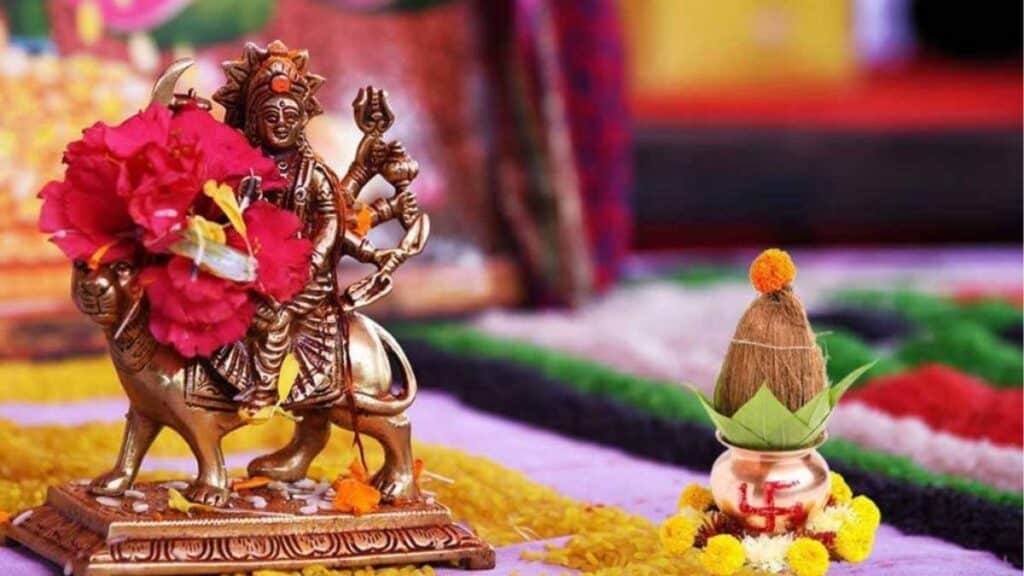
In today’s fast-changing world, Ahoi Ashtami continues to hold deep relevance as a festival honoring the sacred mother-child bond. While lifestyles and work patterns have evolved, the core spirit remains unchanged—a mother’s unconditional love and willingness to sacrifice for her children’s welfare.
The festival plays an important role in preserving cultural continuity across generations and geographies. For diaspora communities, Ahoi Ashtami serves as a powerful link to heritage, helping pass down values of devotion, sacrifice, and family bonds to children growing up in multicultural environments.
Modern adaptations—from virtual pujas to health-conscious modifications—demonstrate that tradition can evolve without losing its essence. The shift toward inclusive observance for all children reflects changing social values while maintaining spiritual depth.
Beyond rituals and fasting, Ahoi Ashtami carries timeless messages: the power of maternal love, the importance of sincere devotion, and the belief that divine grace protects those who act with pure hearts. In an increasingly individualistic world, the festival reminds us that some bonds—between mother and child, between human and divine—remain eternally sacred.
As mothers worldwide observe this vrat, they participate in an unbroken chain of love stretching across centuries, affirming that while the world changes, a mother’s love remains humanity’s most enduring force.
Ahoi Mata ki Jai!