


Your feed has probably turned into a time machine this week. Big hair, denim jackets, warm filmy lighting, that unmistakable old-Bollywood glow — everyone from your college friend to Shashi Tharoor is posting an AI-generated version of themselves living in 1980s India. It’s fun, it’s nostalgic, and it takes about thirty seconds to make. But behind that thirty seconds sits a data centre somewhere, quietly burning electricity and water to give you cheekbones straight out of a Yash Chopra film. Nobody’s saying don’t post the photo. The question worth sitting with is simpler: do we actually know what it costs to make one?
The AI 80s photo trend uses tools like ChatGPT to turn ordinary photos into retro, film-style portraits while keeping the person’s real face intact. Each image generated draws real electricity, and the data centres behind them need water for cooling — though the widely shared “500ml per prompt” claim is a misreading of the original research, not an exact figure for today’s tools. The bigger concern isn’t one photo; it’s what happens when a trend like this multiplies across millions of users at once, adding to a global data-centre demand projected to more than double by 2030.
How Everyone’s Actually Making These Photos
The mechanics are simple enough that anyone can do it in one go. You upload a clear photo of yourself to an AI image-generation tool, and instead of applying a filter the way Instagram used to, you write a prompt describing what you want changed — voluminous hair, a denim jacket, gold jhumkas, a sun-faded film-camera finish, maybe a backdrop lifted straight from an old VHS cover.
The AI doesn’t tweak your existing photo; it builds an entirely new image from scratch, keeping your face recognisable while reimagining everything else around it. You can keep refining it too, asking for a different outfit or a warmer tone, much like the Ghibli-style trend from a while back. It feels a lot like editing, but technically, it’s generation — and that distinction is exactly where the environmental story begins.

The Part That Happens Behind the Screen
Here’s the thing about the word “generate” — it sounds instant, but it isn’t free. Every image you create runs through a data centre packed with specialised processors, and that processing draws real electricity.
The electricity math nobody thinks about
Research cited by GQ India puts the cost of generating a single AI image somewhere between 0.01 and 0.29 kilowatt-hours, depending on the tool and the complexity of the task. On its own, that number is easy to shrug off — one photo isn’t going to tip any scales.
But most of us don’t stop at one. You generate a version, don’t love the hairstyle, ask for another, try a different background, land on your favourite after the fifth attempt. Multiply that by millions of people doing the same thing over a single viral week, and the electricity bill for “just for fun” stops looking so small. The International Energy Agency projects global data-centre electricity use could jump from around 460 TWh in 2024 to nearly 945 TWh by 2030, with AI named as one of the biggest reasons why.

The Water Cost Nobody’s Talking About Correctly
Data centres run hot, and cooling them takes water — either directly, through cooling systems, or indirectly, through the water footprint of the electricity generation itself.
A 2023 study out of the University of California, Riverside and the University of Texas at Arlington estimated that training GPT-3 alone consumed close to 700,000 litres of freshwater. That’s training, not everyday use, and it’s specific to one model — but it’s the number that kicked off a much bigger, messier conversation online.
Setting the record straight on the “500ml” claim
You’ve probably seen the claim that a single ChatGPT prompt uses 500ml of water, roughly a bottle’s worth. That’s not actually what the study found. The real estimate was closer to 500ml across 10 to 50 medium-length responses, and even that range shifts depending on the data centre’s location, its cooling setup, and its electricity source. It’s a meaningful number, just not the neat, shareable one that went viral — which is a pretty familiar pattern for anything involving statistics and Instagram.
It Starts Long Before You Hit “Generate”
There’s a part of this footprint that’s easy to miss entirely because it happens before any of us even open the app. The processors powering these data centres are built from semiconductors and rare materials, and getting those materials into a chip involves mining, manufacturing, and heavy chemical processing.
GQ India points out that the hardware behind AI infrastructure carries its own substantial material cost, tied to a global supply chain for critical minerals and semiconductor production. So the environmental story of your retro portrait doesn’t start when you type your prompt. It starts years earlier, in a mine or a fabrication plant, long before the idea of an “80s AI trend” existed.
When Bollywood Join the Same Trend
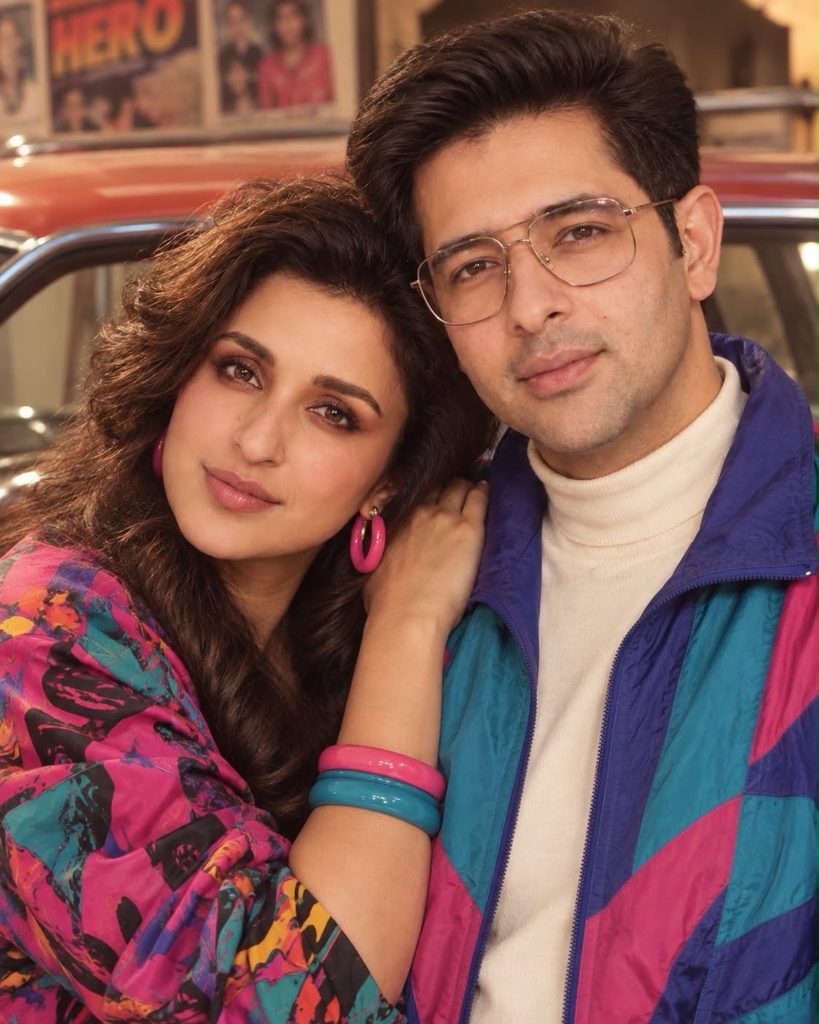
What’s made this particular wave impossible to ignore is just how far it’s travelled beyond regular Instagram users. Kiara Advani, Sidharth Malhotra, Parineeti Chopra, Adah Sharma, Lin Laishram and Randeep Hooda have all posted their own AI-generated retro versions.



So What’s the Real Question Here?
AI models are genuinely getting more efficient — the energy needed per task keeps dropping as the technology improves. But efficiency gains don’t mean much when usage is growing this fast and applications are getting more energy-intensive at the same time.
That’s really the tension at the centre of this whole trend. It was never really about whether one retro photo is going to harm the planet. It’s about what it means when an activity this low-stakes, this “just for fun,” gets repeated by millions of people within days, adding real weight to an infrastructure most of us never think about.
This particular trend will fade the way the Ghibli one did. Another will replace it soon enough. The more useful habit might just be pausing, even for a second, to remember that nothing generated is actually free — someone, somewhere, is paying for the electricity that gave you that perfect 80s jawline.
What is the AI 80s photo trend?
It’s a viral trend where people upload their photos to AI tools like ChatGPT and generate retro, 1980s-style portraits — complete with vintage clothing, voluminous hairstyles and a film-camera look — while keeping their actual face recognisable.
Does making one AI image really hurt the environment?
Not meaningfully on its own. The concern is cumulative — when millions of people generate multiple versions of the same image within days, the combined electricity and water use adds up to a significant load on data-centre infrastructure.
Is it true that one ChatGPT prompt uses 500ml of water?
Not exactly. That figure is often misquoted. The original research estimated around 500ml of water across 10 to 50 medium-length responses, not per single prompt, and the exact number varies by data centre location and cooling method.
Why are Bollywood celebrities and politicians part of this trend too?
The trend crossed over from everyday social media users to public figures because of how visually striking and easy to create the images are. Several Bollywood actors and Indian politicians have shared their own AI-generated versions, amplifying its reach.
Is AI becoming more environmentally friendly over time?
Efficiency per task is improving, but overall demand is growing even faster due to rising usage and more energy-intensive applications, so total environmental impact continues to climb despite these efficiency gains.
