
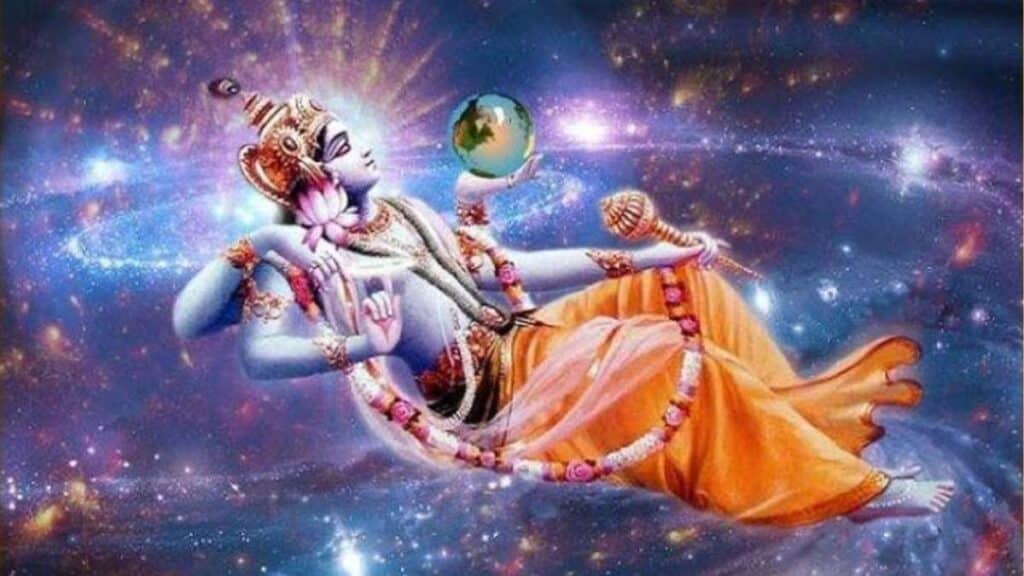
Ashadhi Ekadashi, also known as Devshayani Ekadashi or Shayani Ekadashi, is one of the most spiritually significant observances in the Hindu calendar. Celebrated on the 11th day (Ekadashi) of the bright fortnight (Shukla Paksha) of the Hindu month of Ashadha (June–July), this sacred day marks the beginning of Lord Vishnu’s four-month cosmic slumber — a divine state known as Yoga Nidra.
The word “Devshayani” comes from Sanskrit: “Dev” (gods) and “Shayani” (sleeping), meaning the day the gods go to rest. This day holds profound significance for Vaishnava Hindus — devotees of Lord Vishnu — as it marks the commencement of Chaturmas, a four-month period of spiritual austerity, fasting, and religious devotion coinciding with India’s monsoon season.
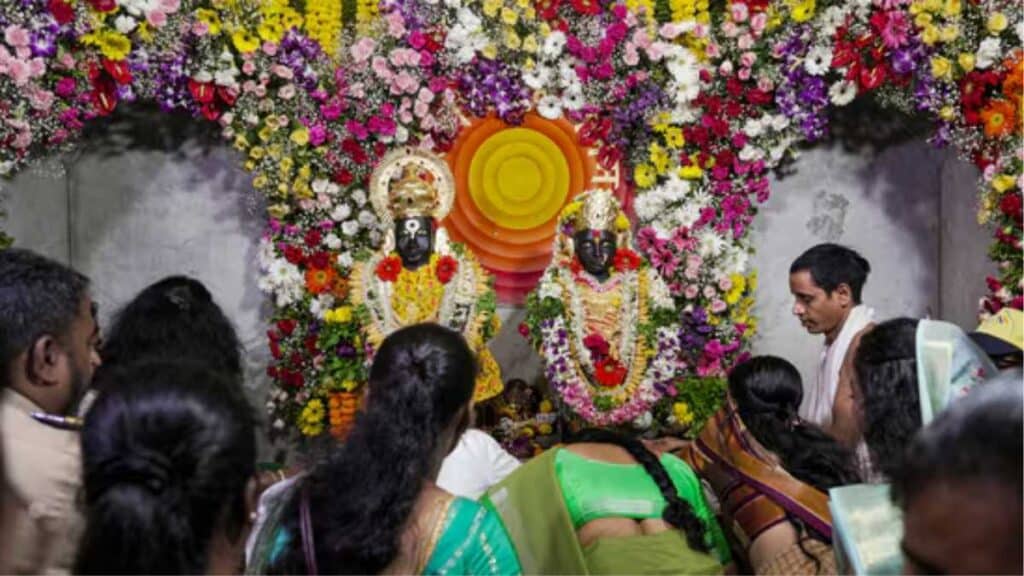
Ashadhi Ekadashi is also celebrated as the grand culmination of the Pandharpur Wari Yatra — one of India’s most spectacular religious pilgrimages — where hundreds of thousands of Warkari devotees walk to the Vitthal-Rukmini temple in Pandharpur, Maharashtra, singing devotional Abhangas composed by beloved saints like Tukaram and Dnyaneshwar.
Primarily observed by Hindus across Maharashtra, Gujarat, and other Indian states, Ashadhi Ekadashi is also celebrated by the Indian diaspora worldwide in countries such as the USA, UK, Canada, Australia, UAE, and Singapore.
When Is Ashadhi Ekadashi Celebrated in 2026?
Ashadhi Ekadashi falls on the Ekadashi Tithi (11th lunar day) of Ashadha Shukla Paksha, which typically occurs in June or July.
Ashadhi Ekadashi 2026 Dates (India)
Main Fasting Day: Saturday, July 25, 2026 — the primary day of fasting, puja, and the Pandharpur Yatra culmination.
Parana (Fast-Breaking) Time: Sunday, July 26, 2026 — 5:39 AM to 8:22 AM IST. Dwadashi End Moment on Parana Day: 1:57 PM IST.
The Ekadashi Tithi begins on Friday, July 24, 2026 at 9:12 AM IST and ends on Saturday, July 25, 2026 at 11:34 AM IST. Since the Tithi prevails during sunrise on July 25, the fasting day is observed on Saturday, July 25, 2026.
Table of Contents
Ashadhi Ekadashi In USA, Canada, Australia, New Zealand, UK, UAE, Singapore 2026 Dates
Devshayani Ekadashi on Friday, July 24, 2026
- On 25th Jul, Parana Time – 08:40 AM to 08:41 AM
- On Parana Day Hari Vasara End Moment – 08:40 AM
Devshayani Ekadashi on Friday, July 24, 2026
- On 25th Jul, Parana Time – 08:40 AM to 08:57 AM
- On Parana Day Hari Vasara End Moment – 08:40 AM
Devshayani Ekadashi on Saturday, July 25, 2026
- On 26th Jul, Parana Time – 07:04 AM to 09:06 AM
- On Parana Day Dwadashi End Moment – 06:27 PM
Devshayani Ekadashi on Saturday, July 25, 2026
- On 26th Jul, Parana Time – 05:15 AM to 08:24 AM
- On Parana Day Dwadashi End Moment – 09:27 AM
Devshayani Ekadashi on Saturday, July 25, 2026
- On 26th Jul, Parana Time – 05:44 AM to 08:25 AM
- On Parana Day Dwadashi End Moment – 12:27 PM
Devshayani Ekadashi on Saturday, July 25, 2026
- On 26th Jul, Parana Time – 07:06 AM to 09:32 AM
- On Parana Day Dwadashi End Moment – 04:27 PM
Why Do Ashadhi Ekadashi Dates Change Every Year?
Ashadhi Ekadashi is calculated according to the Hindu lunar calendar, not the Gregorian calendar. It always falls on the Ekadashi Tithi of Ashadha Shukla Paksha, which means its Gregorian date shifts each year as the lunar and solar calendars align differently. In 2025 it fell on July 6; in 2026 it falls on July 25; in 2027 it will fall on July 14.
Ashadhi Ekadashi Other Names and Regional Identities
Ashadhi Ekadashi is known by many names across India’s diverse linguistic regions, each reflecting local tradition and devotion.
Pan-India / Sanskrit Names Devshayani Ekadashi — the most widely used pan-Indian Sanskrit name, meaning “the Ekadashi when the gods sleep.” Shayani Ekadashi — the Ekadashi of slumber. Hari Shayani Ekadashi — Lord Hari’s (Vishnu’s) sleep Ekadashi. Padma Ekadashi — Puranic name for this Ekadashi. Maha Ekadashi — the great Ekadashi.
Regional Names Ashadi Ekadashi / Ashadhi Ekadashi — Marathi (Maharashtra), the most popular regional name. Tholi Ekadashi / Toli Ekadashi — Telugu (Andhra Pradesh, Telangana); “Tholi” means “the first.” Devpodhi Ekadashi — Gujarati; meaning “the Ekadashi when gods go to sleep.” Pradhama Ekadashi — Kannada; meaning “the primary or first Ekadashi.” Sarvapaaphaari Ekadashi — Sanskrit; meaning “the Ekadashi that destroys all sins.”
Diaspora / International Naming In Indian diaspora communities worldwide, the festival is most commonly referred to as Ashadhi Ekadashi or Devshayani Ekadashi, with Maharashtrian communities continuing the traditional name Ashadi Ekadashi, especially in connection with live-streamed Pandharpur Yatra coverage.
The Origins, History, and Legends of Ashadhi Ekadashi
Ashadhi Ekadashi is among the most ancient Vaishnava observances, with its significance recorded in the Bhavishyottara Purana, Padma Purana, Narada Purana, and Brahma Purana. In the Bhavishyottara Purana, Lord Krishna himself narrates the glory of this Ekadashi to King Yudhishthira, drawing on the account Lord Brahma originally shared with Narada.
The most celebrated legend associated with Ashadhi Ekadashi is the story of the righteous king Mandata. Despite being a just and benevolent ruler, his kingdom was struck by a devastating three-year drought. Seeking help, the king travelled deep into the forest and met the sage Angiras, son of Lord Brahma, at his ashram. The sage advised the king to observe the vrata (vow) of Devshayani Ekadashi and worship Lord Vishnu with sincere devotion. The king followed the counsel faithfully, and by the grace of Vishnu, rains returned to his kingdom, ending the suffering of his people.
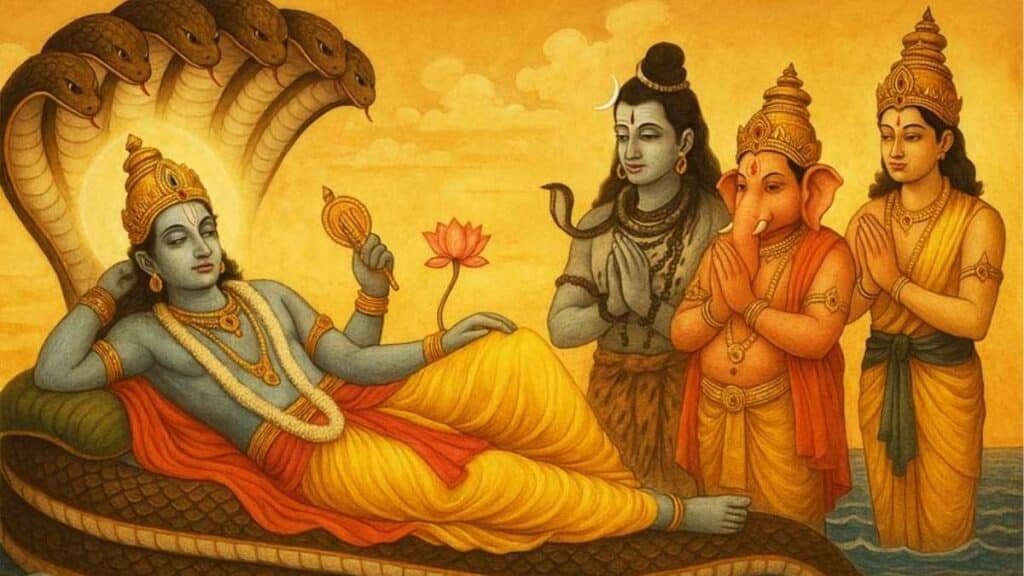
At a deeper cosmic level, Ashadhi Ekadashi marks the day Lord Vishnu begins Yoga Nidra — his transcendent state of conscious rest — reclining on the cosmic serpent Shesha upon the Kshira Sagara (Ocean of Milk). He remains in this divine slumber for four months — the Chaturmas — until Prabodhini Ekadashi in October–November, when he awakens to resume his active role as the cosmic preserver.
Scripturally, Ashadhi Ekadashi represents purification, surrender, and spiritual renewal. Over centuries, it has grown from a Vaishnava observance into a vast cultural and communal festival, most magnificently expressed through Maharashtra’s Pandharpur Wari Yatra — a living tradition of devotion that has walked the same sacred roads for over eight hundred years.
Ashadhi Ekadashi: Cultural and Spiritual Significance
Ashadhi Ekadashi is a festival of stillness, surrender, and inner renewal. Spiritually, it represents the cosmic principle of rest and restoration — as Lord Vishnu pauses in Yoga Nidra, devotees are invited to mirror this inward turn through fasting, prayer, and austerity. It is believed that observing the fast on this day with sincere devotion destroys accumulated sins, brings emotional stability, and opens the path toward moksha (liberation).
Culturally, Ashadhi Ekadashi marks the beginning of Chaturmas — four sacred months during which ascetics traditionally halt their travels to engage in deep study and practice, and householders observe additional spiritual disciplines. Auspicious ceremonies such as weddings and griha pravesh are generally not performed during Chaturmas, making Ashadhi Ekadashi a significant calendrical pivot.
More than a religious observance, Ashadhi Ekadashi through the Pandharpur Wari stands as one of the most powerful expressions of collective devotion in human history — a tradition that dissolves distinctions of caste, class, and age, uniting hundreds of thousands in shared song, shared steps, and shared love of Vitthal.
Ashadhi Ekadashi Prayers and Religious Observances
Ashadhi Ekadashi observance spans three days, each with its own spiritual purpose.
On Dashami (the day before, July 24), devotees take a single, light, sattvic meal in the afternoon and avoid grains and beans from the evening onward, preparing the body for the fast.
On Ekadashi (the main fasting day, July 25), devotees wake before sunrise, take a ritual bath — ideally with Gangajal — and begin puja. Strict abstinence is observed from all grains, cereals, lentils, onion, garlic, and certain spices. Devotees offer puja to Lord Vishnu and Goddess Lakshmi, recite the Vishnu Sahasranama (1,000 names of Vishnu), and chant the Om Namo Bhagavate Vasudevaya mantra. The night is spent in jagran (vigil), with bhajans, devotional readings, and Ekadashi Vrat Katha recitation.
On Dwadashi (Parana day, July 26), the fast is broken within the auspicious window of 5:58 AM to 8:36 AM IST, traditionally beginning with Tulsi leaves or Charnamrit. Donating food to the poor or feeding Brahmins before breaking one’s own fast is considered highly meritorious.
In temples, the Shayan Utsav (sleep ceremony) is the most sacred ritual — the deity is adorned in fine garments and ceremonially laid to rest on a decorated couch, symbolizing Vishnu entering Yoga Nidra, accompanied by Vedic chanting and community bhajans through the night.
How Ashadhi Ekadashi Is Celebrated Across India
While the spirit of Ashadhi Ekadashi is consistent, its expressions are wonderfully diverse across India.
In Maharashtra, the festival reaches its grandest scale with the Pandharpur Ashadi Wari Yatra. Millions of Warkari devotees walk hundreds of kilometres to the Vitthal-Rukmini temple in Pandharpur, carrying the Palkhis of beloved saints — Dnyaneshwar from Alandi, Tukaram from Dehu, Eknath from Paithan, Namdev from Narsi Namdev, and several others. Dressed in white dhoti-kurta with tulsi malas, they sing Abhangas continuously as they walk. Ashadhi Ekadashi is a public holiday in Maharashtra, and the Pandharpur Mahapooja is watched live by millions on television and online.
In North India — Vrindavan, Mathura, Varanasi, and Ayodhya — Ashadhi Ekadashi is observed with special abhishekam, Vishnu Sahasranama recitations, and all-night bhajan sessions in Vaishnava temples.
In Gujarat, known as Devpodhi Ekadashi, the day is marked with temple Shayan Utsav ceremonies and family fasting, particularly in ISKCON centres in Ahmedabad and Surat.
In South India, Telugu devotees celebrate Tholi Ekadashi with special prayers at Vaishnava temples, including the celebrated Tirupati Venkateswara temple. ISKCON Bangalore hosts one of the country’s largest Ekadashi celebrations. In Tamil Nadu, Srirangam’s Ranganathaswamy temple begins the Chaturmas observance with elaborate rituals.
Participation Across Religions in India
While Ashadhi Ekadashi is a Hindu Vaishnava observance, the Pandharpur Wari tradition has historically been one of India’s most socially inclusive spiritual movements. The Bhakti saint-poets of Maharashtra — Dnyaneshwar, Tukaram, Namdev, Eknath, Chokhamela, and Janabai — came from across the social spectrum and explicitly rejected caste hierarchy in their compositions and lives. Their Abhangas are sung with equal reverence by all Warkaris, regardless of background.
Today, the spirit of this inclusivity endures. Along the Wari routes, local communities — including Muslim and Christian families in Maharashtra — often offer water, food, and shelter to passing pilgrims, expressing a deeply rooted culture of interfaith hospitality and shared humanity.
How Ashadhi Ekadashi Is Celebrated Outside India
Indian diaspora communities across the United States, Canada, the UK, Australia, the Middle East, and beyond observe Ashadhi Ekadashi through temple pujas and Shayan Utsav ceremonies, community bhajan and Abhanga-singing programmes, ISKCON Ekadashi events with full fasting protocols, live streaming of the Pandharpur Wari Yatra and Mahapooja, Maharashtrian cultural events featuring Dindi and Lezim folk dance performances, and fasting potluck gatherings with Ekadashi-friendly foods.
For second-generation diaspora members, Ashadhi Ekadashi serves as a living bridge to their cultural and spiritual heritage, connecting them to a tradition that has endured for centuries.
Ashadhi Ekadashi Gifting Traditions
Gifting on Ashadhi Ekadashi reflects the spirit of devotion, generosity, and spiritual goodwill. Traditional gifts include Vishnu or Vitthal idols and framed images for home puja, Tulsi plants (sacred to Lord Vishnu), brass puja accessories such as diyas, puja thali sets, and conch shells, religious books including the Bhagavad Gita, Vishnu Sahasranama, or works on Warkari saints, and Ekadashi prasad hampers with sabudana, dry fruits, makhana, and rock salt.
Modern and diaspora gifting trends include donations in the recipient’s name to Pandharpur Yatra charitable trusts or temple Annadaan (food charity) programmes, organic fasting food hampers, and handcrafted Warli paintings featuring Vitthal or Wari themes — a meaningful piece of Maharashtra’s tribal folk art tradition.
Ashadhi Ekadashi: Traditional Foods and Culinary Traditions
Food on Ashadhi Ekadashi follows strict fasting guidelines — all grains, cereals, lentils, onion, garlic, and regular table salt are avoided. Fasting foods are sattvic, nourishing, and surprisingly delicious, with a rich culinary tradition built around them.
Common Ashadhi Ekadashi fasting foods and dishes include:
- Sabudana Khichdi — pearl sago with peanuts, ghee, and sendha namak; the quintessential Ekadashi dish of Maharashtra.
- Sabudana Vada — crispy fried sago patties served with peanut chutney.
- Kuttu Ki Puri with Aloo Sabzi — buckwheat flour puris with spiced potato curry. Rajgira Laddoo — amaranth and jaggery energy balls, widely shared as prasad.
- Sama Rice Kheer — barnyard millet pudding in sweetened cardamom milk.
- Makhana Kheer — fox nut pudding, delicate and festive.
- Phal Aahar Thali — a seasonal fruit platter with curd and dry fruits for a light, complete Ekadashi meal.
On Parana day (July 26), the fast is traditionally broken with Tulsi Patra and Charnamrit, followed by a light meal of dal, rice, and simple sabzi.
Ashadhi Ekadashi: Music, Art, and Cultural Expression
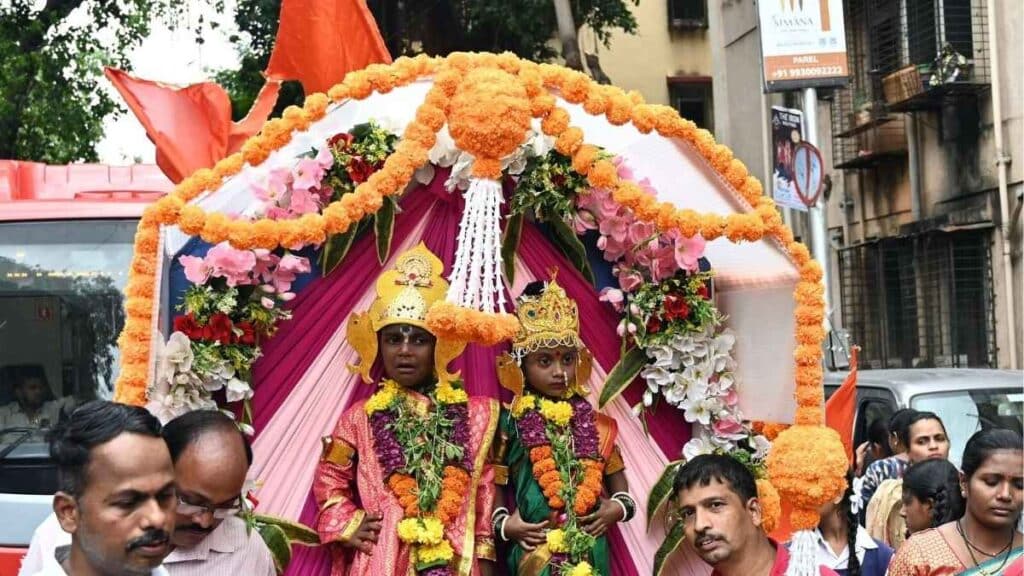
Music is the soul of Ashadhi Ekadashi, especially in the Warkari tradition. The Abhanga — a devotional Marathi verse form composed by saints like Tukaram, Dnyaneshwar, Namdev, and Eknath — is the defining musical expression of the Pandharpur Wari. Millions of Warkaris sing these compositions continuously during the pilgrimage, their voices rising and falling with the rhythm of walking feet and hand cymbals (chiplis).
The Dindi is a group devotional walking-dance performed during the Wari, with small groups singing Abhangas in step to the beat of drums and chiplis. Lezim, a traditional folk dance of Maharashtra, adds exuberance and energy to processions and community celebrations.
Warli paintings — the geometric tribal art of Maharashtra — frequently depict scenes from the Wari, and Paithani silk sarees, woven in the town of Paithan (the home of Sant Eknath), are worn by women devotees as a mark of cultural devotion.
In popular culture, Marathi cinema, music, and television have long celebrated the Wari tradition. Devotional albums and Abhanga covers are released each year ahead of the festival. Marathi channels broadcast the Pandharpur Mahapooja live, drawing millions of viewers, and social media fills with Wari vlogs, fasting recipes, and Abhanga covers.
Ashadhi Ekadashi: Modern Relevance and Cultural Continuity
In today’s fast-changing world, Ashadhi Ekadashi continues to hold deep relevance as a festival of devotion, community, and inner renewal. While lifestyles and celebrations have evolved, the core spirit remains unchanged — turning inward, surrendering to the divine, and walking together in shared faith.
For Indian communities living abroad, Ashadhi Ekadashi and the Pandharpur Wari serve as a powerful link to heritage, helping pass on traditions, stories, and values to younger generations born far from the roads the saints once walked.
Beyond fasting and pilgrimage, Ashadhi Ekadashi carries a timeless message: that devotion endures, that community sustains, and that the divine — even in slumber — watches over all. As Vitthal stands smiling in Pandharpur and Warkaris sing their way home, the festival reminds us that life’s deepest joys are found not in individual striving, but in walking together, singing the same song.
How to wish someone on Ashadhi Ekadashi: “Ashadhi Ekadashichya Shubhechha” (Marathi), “Devshayani Ekadashi ki Shubhkaamnayein” (Hindi), or simply “Vitthal Vitthal” — the timeless Warkari greeting that says everything.