


In this Baby Girl movie review, we explore a film that arrives as a breath of fresh air in Malayalam thriller cinema. When was the last time you watched a missing child investigation that made you question the very nature of right and wrong while keeping you completely riveted? Baby Girl doesn’t just deliver edge-of-seat suspense; it wraps profound human emotions around a tightly plotted thriller framework with the kind of sensitivity that’s become Sanjay-Bobby’s signature.
Director Arun Varma crafts a compelling narrative that unfolds on Christmas Eve when a four-day-old infant vanishes from Trivandrum’s Good Shepherd Hospital. This is Nivin Pauly’s most grounded, emotionally resonant performance in recent years, supported by breakthrough work from Lijomol Jose and Sangeeth Prathap who deliver career-defining performances. With exceptional writing that explores motherhood, family sacrifice, and moral complexity, Baby Girl represents everything we love about intelligent Malayalam cinema.
Quick Takeaway:
Baby Girl is a masterfully written, emotionally powerful thriller that succeeds brilliantly both as suspenseful entertainment and meaningful cinema. While some thriller enthusiasts might predict certain plot developments, the film’s genuine emotional depth, stellar ensemble performances, and Sanjay-Bobby’s exceptional writing make it essential viewing for anyone seeking substance alongside their suspense.
Language: Malayalam
Age Rating: U/A
Genre: Thriller, Drama, Investigation
Director: Arun Varma
Writers: Sanjay-Bobby
The Plot: Investigation Meets Human Heart
At its core, Baby Girl is a race against time—but calling it just that would be like calling motherhood “just biology.” The film’s genius lies in how it uses a missing child investigation to explore the deepest corners of human motivation, family bonds, and sacrifice.
When a newborn disappears from Good Shepherd Hospital on Christmas Eve, SI Rakesh’s police unit identifies multiple suspects including hospital attendant Sanal Mathew and the baby’s own relatives. What begins as a procedural investigation transforms into something far more profound as Sanal launches his own parallel search to clear his name and find the missing infant.
The beauty of Sanjay-Bobby’s approach is how it refuses simple answers. This isn’t about finding the bad guy—it’s about understanding what drives desperate people to desperate actions. When your brother risks everything for an estranged sister while a father sees his own child as a burden, suddenly morality becomes wonderfully complicated. The screenplay liberates itself from thriller conventions, delivering genuine emotional moments that resonate long after the mystery resolves.
Check Out: Nivin Pauly’s ‘Baby Girl’ to Release Worldwide on January 23
Performances: Every Actor Brings Authentic Depth
Nivin Pauly: Restrained Brilliance
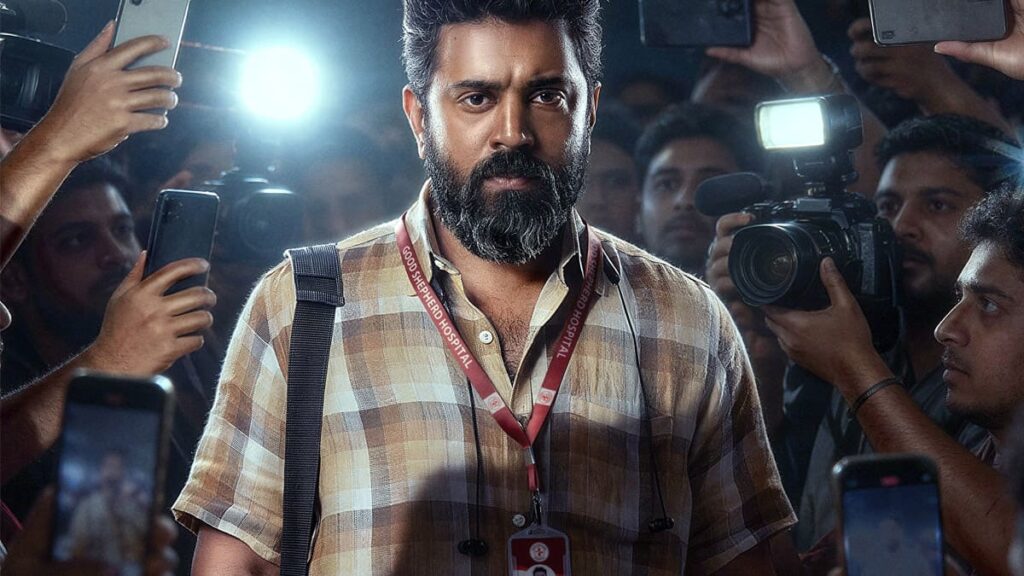
This Baby Girl movie review must celebrate what might be Nivin Pauly’s most mature performance yet. His Sanal Mathew isn’t a typical hero rising to save the day—he’s an ordinary man fighting to protect his reputation while doing what’s right. The restraint Nivin shows is remarkable; watch him navigate emotionally charged confrontations without melodrama, finding truth in underplayed moments.
After the recent success of Sarvam Maya, Nivin continues proving his commitment to substantial roles. There’s no showboating here, no mass moments inserted for fan service. This is an actor completely in service of character and story, which makes his performance all the more powerful. The vulnerability he brings to Sanal’s struggle creates genuine investment in the outcome.
Lijomol Jose: Raw Emotional Power
Lijomol Jose delivers the kind of performance that reminds you why cinema matters. Her character carries the weight of maternal instinct, family expectations, and personal anguish with extraordinary authenticity. Every scene she inhabits crackles with emotional truth—there’s nothing performative about her work here.
The screenplay trusts her with the film’s emotional core, and she rewards that trust magnificently. Her ability to convey complex feelings through minimal dialogue is masterful. This is the performance that will make people remember Baby Girl long after the investigation details fade.
Sangeeth Prathap: A Revelation
Perhaps the film’s biggest surprise is Sangeeth Prathap’s transformation from comedic roles to this deeply emotional character. As Rishi, he navigates family conflict, personal sacrifice, and moral dilemmas with nuanced skill. His evolution throughout the narrative feels completely earned, never rushed or manipulative.
That final phone conversation mentioned in reviews? It’s a testament to Prathap’s ability to find emotional truth in pivotal moments. He’s found depths that few expected, proving himself capable of carrying dramatic weight alongside comedy. This performance opens entirely new career possibilities for him.
Check Out: CBFC Clears Nivin Pauly Starrer ‘Baby Girl’ for Release with ‘U’ Certificate
Abhimanyu Shammi Thilakan: Commanding Presence
As SI Rakesh, Abhimanyu brings natural authority to the investigation. His police officer feels real—focused, determined, occasionally frustrated by bureaucratic roadblocks. While some dialogue delivery patterns emerge in extended scenes, his overall presence grounds the procedural elements effectively. He has the sound and look of authentic authority, which helps sell the investigation’s urgency.
The Supporting Ensemble: Depth Across the Board
Mythili and Azees Nedumangad add texture to the family dynamics, ensuring even smaller roles feel fully realized. Every performer understands they’re serving a larger story about human connection and sacrifice rather than just filling plot functions.
Direction and Vision: Confident Storytelling
Arun Varma demonstrates assured directorial instincts throughout Baby Girl. His approach prioritizes emotional authenticity alongside thriller mechanics—sequences feel grounded in genuine behavior rather than manipulative plot machinations.
The way Varma handles the interval block shows sophisticated understanding of narrative structure. Like Traffic before it, Baby Girl uses this moment to deepen character investment before the investigation intensifies. The director’s commitment to realistic hospital and police procedural details creates believable context for the emotional drama.
Where Varma truly excels is trusting his actors and material. He allows quieter moments to breathe, doesn’t over-explain emotional beats, and lets the investigation unfold with patience that rewards viewer investment. The second-half focus on women’s perspectives adds important dimension to the narrative, even if the execution of subsequent chase sequences varies in smoothness.
Technical Excellence: Craft Supporting Story

Cinematography: Capturing Trivandrum’s Character
The visual storytelling serves the narrative beautifully, capturing both the institutional coldness of hospital investigation scenes and the warmer tones of family moments. The cinematography never calls attention to itself, instead supporting the emotional truth of each scene.
Sound Design and Music: Emotional Amplification
The background score understands when to enhance tension and when silence speaks louder. Musical choices complement rather than overwhelm, letting performances shine while still creating atmospheric depth that pulls viewers deeper into the investigation.
Editing: Maintaining Momentum
The editing keeps multiple narrative threads clear despite complexity. The film moves with purpose through its investigation, revelation, and emotional resolution beats. While some sequences could potentially be trimmed slightly, the overall pacing serves the story’s emotional needs effectively.
Cultural Resonance: Universal Themes, Local Authenticity
Baby Girl works because it takes a uniquely Malayalam setting—the specifics of Trivandrum hospital culture, local police procedures, regional family dynamics—and uses them to explore universal human experiences. Motherhood, sibling bonds, parental responsibility, and moral complexity transcend regional boundaries.
The Christmas Eve setting adds subtle texture without heavy-handed symbolism. It’s simply when this story happens, which makes the world feel lived-in rather than constructed purely for narrative convenience.
Sanjay-Bobby’s writing demonstrates deep understanding of Kerala’s social fabric while asking questions relevant anywhere: What makes family? How far would you go for someone you love? When does the law diverge from justice?
The Sanjay-Bobby Touch: Emotional Intelligence Meets Thriller Craft
What separates Baby Girl from typical thrillers is the writers’ commitment to emotional authenticity alongside suspense. Like their previous work, this film asks “what is right and wrong?” not just legally but morally, psychologically, personally.
The screenplay’s exploration of motherhood in various forms—biological, adoptive, protective—shows remarkable sensitivity. The writers understand that thriller mechanics work best when serving genuine human stakes rather than existing purely for plot twists.
Their ability to create plausible story developments while maintaining emotional resonance is exceptional. The misdirection tactics they employ twice in the film work not because they’re clever tricks, but because they emerge organically from character psychology and situation.
Strengths: What Makes Baby Girl Essential Viewing
- Exceptional Writing Excellence – Sanjay-Bobby deliver their signature blend of suspense and profound humanity
- Powerhouse Ensemble Performances – Every actor from Nivin to supporting cast brings authentic depth
- Emotional Resonance – The film genuinely explores motherhood, sacrifice, and family bonds with rare sensitivity
- Moral Complexity – Refuses easy answers, trusting audiences with ambiguous situations
- Grounded Realism – Hospital and police procedures feel authentic rather than dramatized
- Character-Driven Thriller – Investigation serves emotional exploration rather than vice versa
- Meaningful Themes – Explores what defines family beyond biology or law
Minor Considerations: Room for Different Perspectives
- Predictability for Thriller Veterans – Some developments may feel familiar to genre enthusiasts, though emotional execution still delivers
- Dialogue Delivery Moments – Occasional extended monologues where modulation could vary more
- Chase Sequence Pacing – One late-film action sequence runs slightly long compared to tighter investigation scenes
These observations barely diminish the exceptional overall achievement. What matters is that Baby Girl succeeds magnificently at what it sets out to accomplish: creating meaningful, emotionally powerful thriller cinema.
Final Verdict: 5/5 Stars ⭐⭐⭐⭐⭐
Baby Girl is exactly what Malayalam cinema does best—intelligent storytelling that honors audience intelligence while touching the heart. This isn’t just a well-crafted thriller; it’s a profound exploration of what drives human behavior in crisis, wrapped in compelling investigative framework.
This Baby Girl movie review celebrates a film that succeeds on every level. Arun Varma’s assured direction, Sanjay-Bobby’s masterful writing, and uniformly excellent performances combine into something genuinely special. Nivin Pauly delivers career-affirming work. Lijomol Jose and Sangeeth Prathap provide performances that will be remembered as breakthrough moments. The entire ensemble reminds us that Malayalam cinema’s greatest strength has always been depth of talent.
For anyone who appreciates thrillers that engage mind and heart equally, Baby Girl is essential viewing. It proves that commercial entertainment and emotional depth aren’t opposing forces—they’re complementary elements of exceptional filmmaking.
Why Baby Girl Matters for Malayalam Cinema
There’s particular joy in watching cinema that remembers audiences deserve substance alongside their entertainment. In an industry sometimes tempted by formulaic approaches, Baby Girl feels refreshingly committed to emotional truth and narrative intelligence.
After years of waiting for thrillers that genuinely explore human complexity rather than just using it as plot decoration, Baby Girl delivers magnificently. This is what happens when talented writers, committed actors, and confident directors decide that good storytelling never goes out of style.
Baby Girl isn’t just 2026’s first must-watch Malayalam film—it’s a reminder of why we fell in love with cinema in the first place. Highly recommended for anyone who believes movies can thrill, move, and matter simultaneously.
