
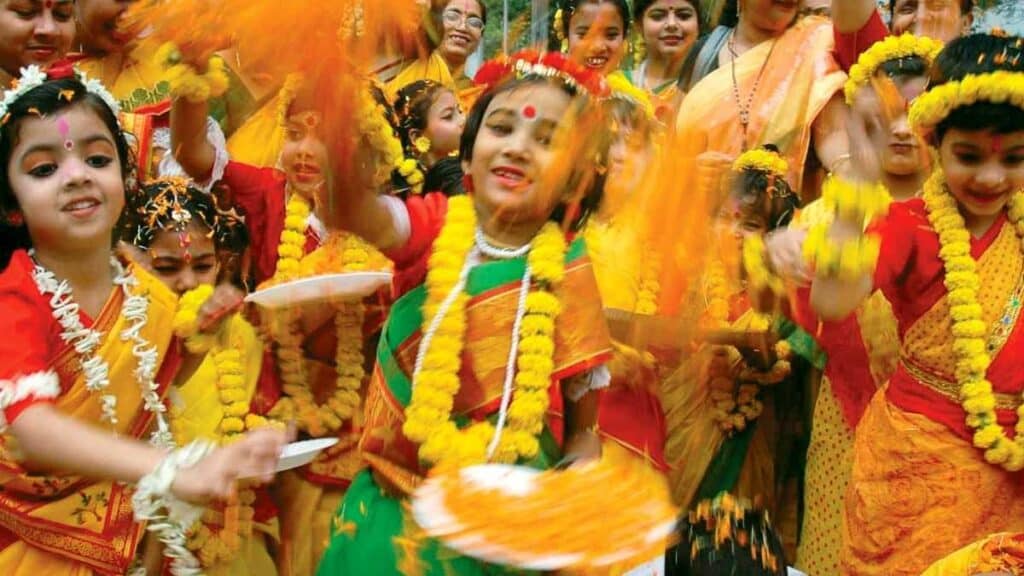
Basant Utsav is Bengal’s elegant tribute to spring, celebrating the arrival of the season through music, dance, and vibrant colors. Known as the refined counterpart to Holi, this festival was reimagined by Nobel Laureate Rabindranath Tagore at Santiniketan in 1923. Observed on Dol Purnima, the full moon day of the Bengali month of Falgun, Basanta Utsav transforms the exuberance of traditional color festivals into an aesthetic celebration of art, nature, and cultural expression.
The festival symbolizes renewal, hope, and the beauty of spring when palash and shimul trees burst into bloom across Bengal. Unlike the boisterous celebrations elsewhere, Basanta Utsav emphasizes grace, artistic merit, and community participation through Rabindra Sangeet (Tagore’s songs), classical dance, and the gentle exchange of abir—natural colored powder. What began as an ashram tradition has evolved into a cultural phenomenon attracting thousands to Santiniketan annually, while Bengali communities worldwide honor this celebration of spring’s arrival.
When Is Basanta Utsav Celebrated in 2026?
Basanta Utsav is celebrated on the full moon day (Purnima) of the Bengali month of Falgun, which typically falls in late February or March.
Basanta Utsav in India 2026 Dates
Basanta Utsav : Tuesday, March 3, 2026
The main celebration begins in the morning with cultural programs, processions, and Rabindra Sangeet performances, followed by abir khela (color play) in the afternoon. The exact date varies each year based on the lunar calendar, making Basanta Utsav a movable festival rather than a fixed-date event.
Table of Contents
Basanta Utsav In USA, Canada, Australia, New Zealand, UK, UAE, Singapore 2026 Dates
Basanta Utsav on Tuesday, March 3, 2026
Basanta Utsav on Tuesday, March 3, 2026
Basanta Utsav on Tuesday, March 3, 2026
Basanta Utsav on Tuesday, March 3, 2026
Basanta Utsav on Tuesday, March 3, 2026
Basanta Utsav on Tuesday, March 3, 2026
Why Basanta Utsav Dates Change Every Year?
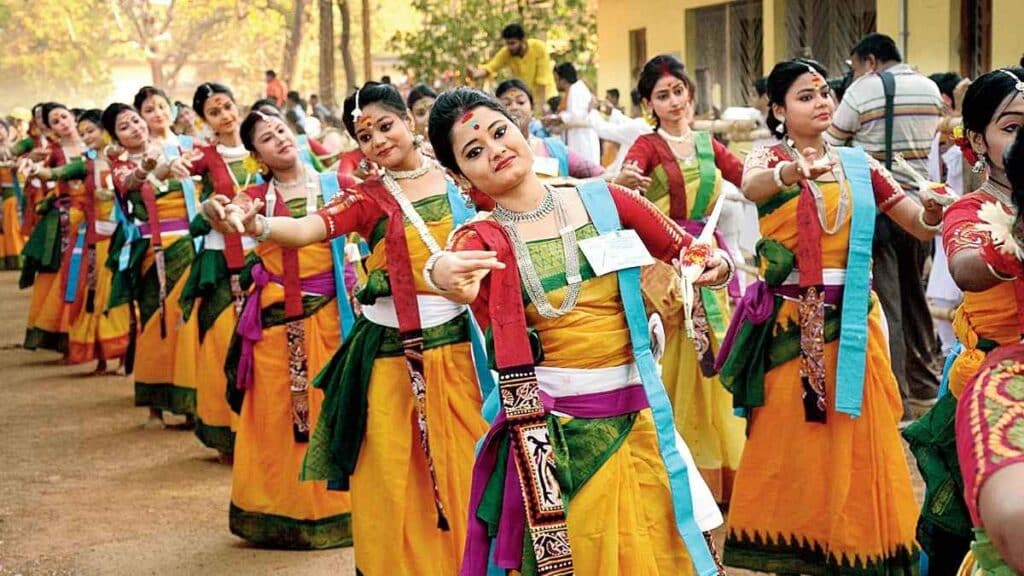
Basanta Utsav is celebrated based on the Bengali lunar calendar, not the Gregorian calendar. It falls on the Full Moon (Purnima) of Falgun month, which usually occurs in late February or March.
Since lunar months are shorter than solar months:
- Basanta Utsav’s date shifts every year
- Timing depends on moon position and local calculations
- The festival always coincides with Dol Purnima
This lunar calculation ensures the festival remains aligned with the traditional spring season and natural cycles that inspired Tagore’s vision.
Basanta Utsav Other Names & Regional Identities
These are general or widely used names for Basanta Utsav:
- Basanta Utsav / Basanta Utsab — Standard Bengali name (বসন্ত উৎসব)
- Dol Purnima — The full moon day when the festival occurs
- Dol Jatra / Dol Yatra — Traditional spring festival name in Bengal
- Falgunotsav — Celebration of the Falgun month
West Bengal & Bengali Regions
- Rabindrik Basanta — Tagore’s spring festival (emphasizes artistic nature)
- Santiniketan Basanta — Refers specifically to the flagship celebration at Visva-Bharati
- Dol — Short form used colloquially in Bengali-speaking areas
Diaspora / International Naming
- Basanta Utsav — Used universally by Bengali communities worldwide
- Tagore’s Spring Festival — English name used in cultural programs abroad
- Bengali Spring Festival — Generic name for non-Bengali audiences
- Festival of Spring — Translation used in international contexts
In many Western contexts, the festival is also called Bengali Holi to explain the connection to broader spring celebrations, though Bengali communities emphasize its distinct cultural character.
The Origins, History, and Legends of Basanta Utsav
Basanta Utsav’s story begins with Rabindranath Tagore’s vision of reimagining traditional spring celebrations at Santiniketan. The festival’s origins are rooted not in ancient mythology but in early 20th-century cultural renaissance.
In 1907, Tagore’s son Shamindranath initiated Ritu-Utsab (season festival) at the ashram, though it wasn’t held on Dol Purnima. The ashram celebrated spring on varying dates, with students singing seasonal songs while circumambulating the grounds. These early celebrations planted the seeds for what would become Basanta Utsav.
The formal Basanta Utsav was established in 1923 when Tagore organized it during the Ashram-Sammilani session on Falguni Purnima. This marked a cultural turning point—Tagore elevated the traditional color festival of Dol into an aesthetic celebration merging Bengali folk traditions with classical arts. He wanted to welcome spring not through raucous revelry but through music, poetry, and graceful cultural expression.
Tagore drew inspiration from Bengal’s natural beauty during Falgun—when palash and shimul trees burst into brilliant reds and oranges, carpeting the landscape with fallen flowers. The season represents renewal, hope, and nature’s creative power. He channeled this visual splendor into a festival celebrating these themes through artistic performance rather than religious ritual.
The festival continued uninterrupted from 1923, becoming integral to Santiniketan’s identity and Visva-Bharati University’s academic calendar. Tagore’s vision was to create a “sacred and well-cultured” spring observance that would educate students through immersive cultural participation—where festivals became living classrooms teaching music, dance, community values, and aesthetic refinement.
Unlike many Hindu festivals rooted in ancient scriptures, Basanta Utsav represents a modern cultural innovation—a conscious effort to shape tradition according to humanistic and artistic ideals. This makes it unique: a festival born from poetic vision rather than religious mandate, yet deeply rooted in Bengali cultural identity.
Basanta Utsav: Cultural and Spiritual Significance
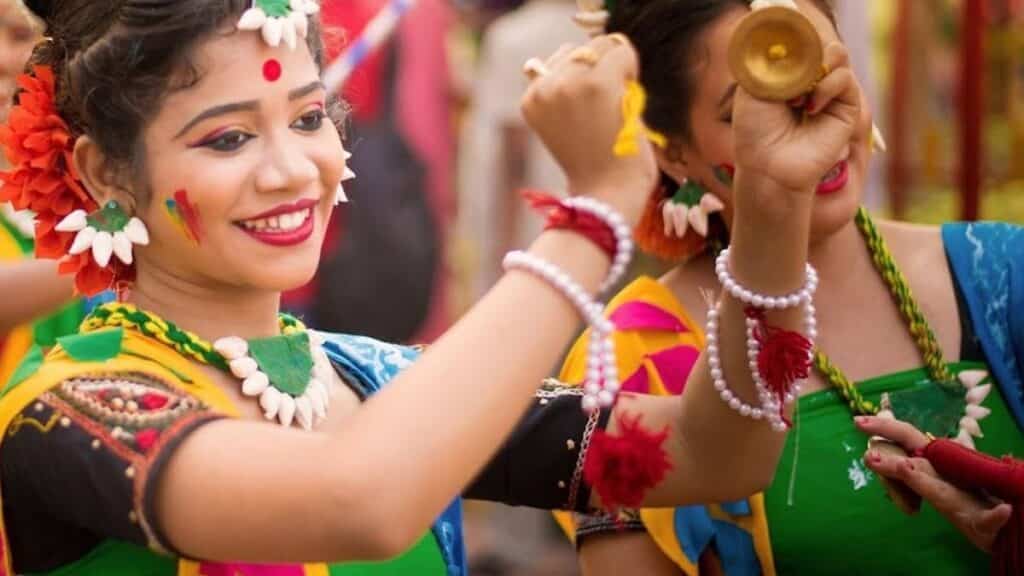
Basanta Utsav embodies Bengal’s philosophical relationship with nature, art, and human connection. The festival carries deep cultural meaning beyond its colorful exterior.
Cultural Significance:
The festival represents artistic renaissance—Tagore’s vision of education through cultural immersion, where celebration becomes a medium for learning music, dance, community participation, and aesthetic values. For Bengalis, Basanta Utsav distinguishes their spring celebration from other regional observances, emphasizing grace, intellectual engagement, and artistic merit alongside joyful color play.
Spring’s yellow symbolizes mustard fields in bloom and palash flowers, connecting celebrants to natural cycles. The abir (colored powder from natural sources) represents the vibrant diversity of human expression, spreading joy without distinction of caste, creed, or status.
Spiritual Dimensions:
While predominantly cultural, Basanta Utsav carries spiritual undertones. Spring symbolizes rebirth, the triumph of color over winter’s gray—a metaphor for hope conquering despair, creativity overcoming stagnation. The festival encourages unity in diversity, welcoming people of all backgrounds and reflecting Tagore’s universal humanism.
The emphasis on communal celebration through shared artistic experience creates spiritual connection without formal religious ritual. Music, dance, and collective joy become forms of devotion to life itself, beauty, and human potential.
Social Importance:
Basanta Utsav dissolves social hierarchies during celebration. Students, teachers, visitors—all participate equally in cultural programs and color play. This temporary equality reflects ideals of an egalitarian society where art and joy belong to everyone.
More than a festival, Basanta Utsav represents a way of seeing the world—where artistic expression, natural beauty, and human connection interweave to create meaning, celebrating life’s vibrancy while maintaining cultural dignity and grace.
Basanta Utsav Prayers and Religious Observances
Unlike many Hindu festivals, Basanta Utsav is predominantly cultural rather than religious, though it coincides with Dol Purnima when devotees traditionally worship Lord Krishna and Radha.
Cultural Rituals at Santiniketan:
The day begins not with formal prayers but with cultural offerings:
- Morning performances of Tagore’s spring songs, particularly “Ore Grihabashi” (O Householder, Open Your Doors)
- Students offer flowers and colors at Tagore’s statue, paying homage to the festival’s founder
- No specific pujas or formal religious ceremonies define the main celebration
- The emphasis remains on artistic participation rather than worship
Personal and Home Observances:
Some families may conduct traditional Dol Puja at home, worshipping Krishna and Radha before joining public festivities. However, this remains optional and personal rather than central to Basanta Utsav’s identity.
The True “Prayer” of Basanta Utsav:
The festival’s spiritual expression manifests through:
- Collective singing of Rabindra Sangeet
- Dance performances celebrating nature and life
- Shared joy of welcoming spring together
- Cultural participation as a form of devotion
At Temples:
While regular Dol Purnima observances occur at Krishna temples across Bengal, Basanta Utsav itself remains distinct—a secular, inclusive cultural celebration accessible to people of all faiths and backgrounds.
Whether observed at educational institutions, cultural centers, or community gatherings, Basanta Utsav emphasizes artistic expression, gratitude for nature, and communal harmony over formal religious ritual, making it a uniquely cultural celebration of spring’s arrival.
How Basanta Utsav Is Celebrated Across India
While Santiniketan remains the epicenter, Basanta Utsav has spread across India wherever Bengali cultural consciousness thrives.
West Bengal:
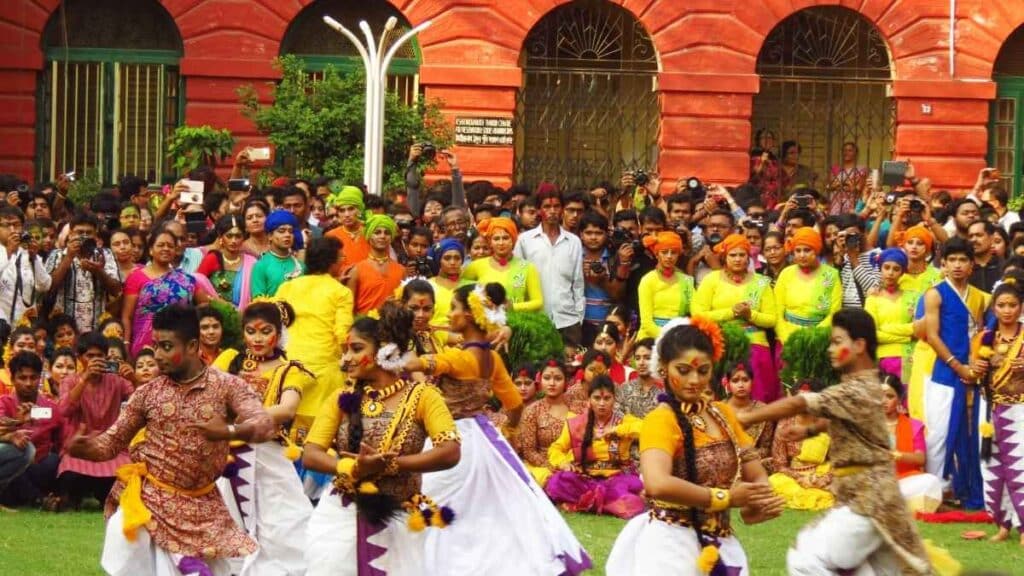
The state witnesses the most extensive celebrations. Santiniketan hosts the flagship event with thousands gathering at Visva-Bharati University. The day begins with morning processions of students dressed in yellow and white, singing and dancing through campus. Cultural programs at different bhavanas (departments) showcase Rabindra Sangeet, classical dance, and folk performances. Afternoon brings collective abir play across the sprawling grounds, followed by evening performances of Tagore’s dance dramas like “Chandalika,” “Shyama,” and “Chitrangada.”
Kolkata celebrates at multiple venues—Jorasanko Thakurbari (Tagore’s ancestral home), Rabindra Bharati Museum, and cultural organizations host programs featuring renowned artists. Public parks and cultural centers see community gatherings with music, dance, and family-friendly color play. The Academy of Fine Arts and Rabindra Sadan organize special performances.
Regional Celebrations:
Educational institutions across West Bengal—from Siliguri to Asansol—organize Basanta Utsav programs, introducing students to Tagore’s artistic heritage. Rabindra Sangeet academies, cultural societies, and neighborhood clubs host celebrations emphasizing music and community participation.
Bengali Communities Nationwide:
Wherever Bengali cultural associations exist—Delhi, Mumbai, Bangalore, Pune, Hyderabad—Basanta Utsav brings communities together. Cultural centers host programs maintaining core elements: yellow attire, Tagore’s compositions, cultural performances, and controlled color play.
Assam and Tripura:
States with significant Bengali populations celebrate with similar cultural programs, often blending local spring traditions with Tagore’s vision.
Despite geographical spread, celebrations maintain essential elements: emphasis on artistic performance, natural abir, cultural programming, and the graceful spirit that distinguishes Basanta Utsav from boisterous Holi celebrations elsewhere.
Participation Across Religions in India
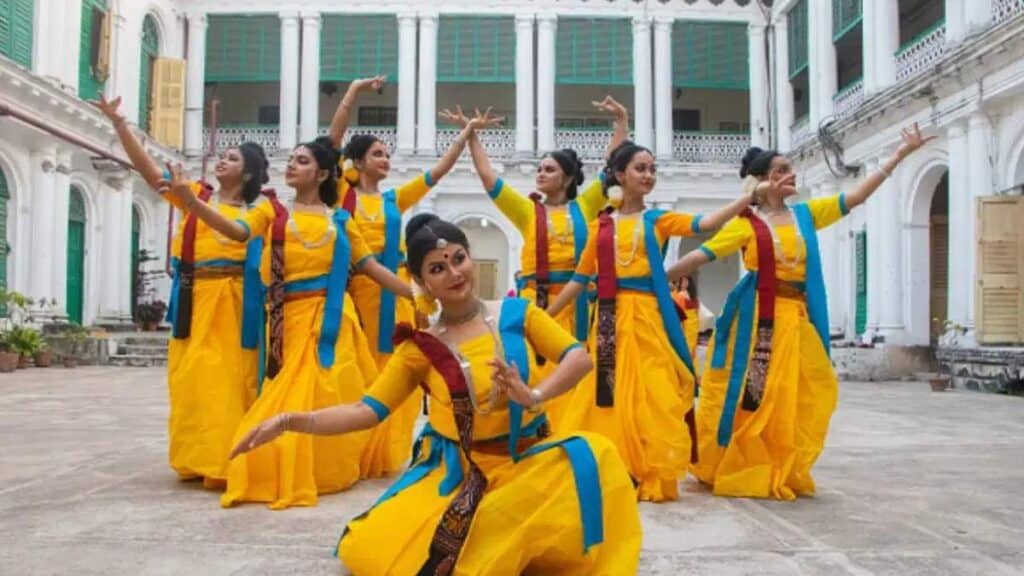
Basanta Utsav embodies inclusive celebration, welcoming participants regardless of religious background. Tagore’s vision for Visva-Bharati was explicitly universal, and the festival reflects this openness.
Interfaith Harmony:
At Santiniketan and beyond, people from Hindu, Muslim, Christian, Sikh, Jain, and other faiths participate equally in cultural programs and color play. The festival’s secular nature—focusing on music, art, nature, and community—makes it accessible to all.
Cultural Over Religious Identity:
Basanta Utsav functions as a cultural rather than religious festival. Unlike many Hindu observances, it carries no mandatory religious rituals, scriptural requirements, or faith-based restrictions. Anyone who appreciates Bengal’s artistic traditions can participate fully.
The festival’s inclusive spirit makes it a model for cultural celebration that respects tradition while welcoming universal participation.
How Basanta Utsav Is Celebrated Outside India
Bengali diaspora communities worldwide have embraced Basanta Utsav as a cultural touchstone, maintaining connections to heritage through spring celebrations.
North America:
Bengali cultural associations in New York, New Jersey, Chicago, Boston, Toronto, and Vancouver organize elaborate Basanta Utsav programs, typically on weekends near the actual date. Events feature:
- Rabindra Sangeet competitions and performances
- Classical dance presentations
- Children’s cultural programs teaching Tagore’s legacy
- Controlled abir play in community centers or outdoor venues
- Bengali cuisine and traditional sweets
United Kingdom:
London’s Bengali community celebrates at cultural centers with afternoon programs including traditional performances, poetry recitations, and art exhibitions. Tagore Centre UK hosts annual celebrations introducing British audiences to Bengali cultural heritage.
Australia:
Sydney and Melbourne host celebrations where families dress in yellow, participate in cultural programs, and introduce younger generations to Tagore’s artistic vision. Universities with South Asian cultural societies organize student-led events.
Middle East:
Dubai and Abu Dhabi’s Bengali communities organize indoor celebrations due to climate, focusing heavily on music and dance performances. Events emphasize cultural programming over outdoor color play.
Southeast Asia:
Singapore’s Bengali association hosts annual Basanta Utsav with elaborate cultural programs, attracting both Bengalis and local Tagore enthusiasts. The celebration includes art exhibitions and literary discussions.
Diaspora Adaptations:
Overseas celebrations often:
- Emphasize contained color play to respect venue requirements
- Extend programs to full-day festivals for traveling families
- Incorporate English explanations for non-Bengali spouses and children
- Stream performances online for global audiences
- Combine celebration with cultural education workshops
These celebrations help second and third-generation Bengalis maintain cultural roots while introducing non-Bengalis to Tagore’s artistic legacy and Bengal’s spring traditions.
Basanta Utsav Gifting Traditions
Basanta Utsav emphasizes shared experience over material exchange, though certain gifting customs have emerged around the celebration.
Traditional Gifts:
- Fresh flowers — Particularly yellow marigolds and seasonal blooms representing spring’s vitality
- Rabindra Rachanabali — Collections of Tagore’s writings, poems, and songs
- Musical instruments — Harmoniums, tanpuras, or ektaras for music students
- Handcrafted items — Kantha embroidery, terracotta pottery, and Bengali handicrafts
- Abir packets — Decorative packages of natural colored powder
Modern Practices:
- Cultural vouchers — Tickets to Rabindra Sangeet concerts or cultural performances
- Yellow attire — Gifting basanti-colored sarees, kurtas, or punjabis for the celebration
- Books — Bengali literature, poetry collections, Tagore biographies, or art books
- Music collections — CDs or digital albums of Rabindra Sangeet
The emphasis remains on thoughtful, culturally meaningful gifts that celebrate Bengal’s artistic heritage rather than commercial excess. Gifts reflect appreciation for culture, beauty, and shared tradition—values central to Basanta Utsav’s spirit.
Traditional Basanta Utsav Foods and Sweets
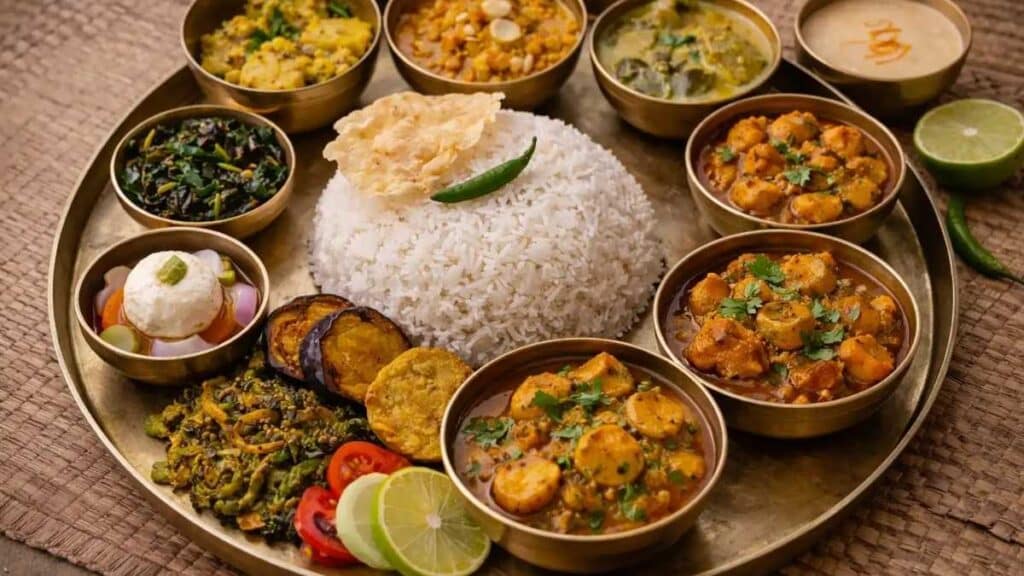
While Basanta Utsav doesn’t prescribe specific festival foods like many Hindu celebrations, certain culinary traditions have become associated with the occasion.
Common Basanta Utsav delicacies include:
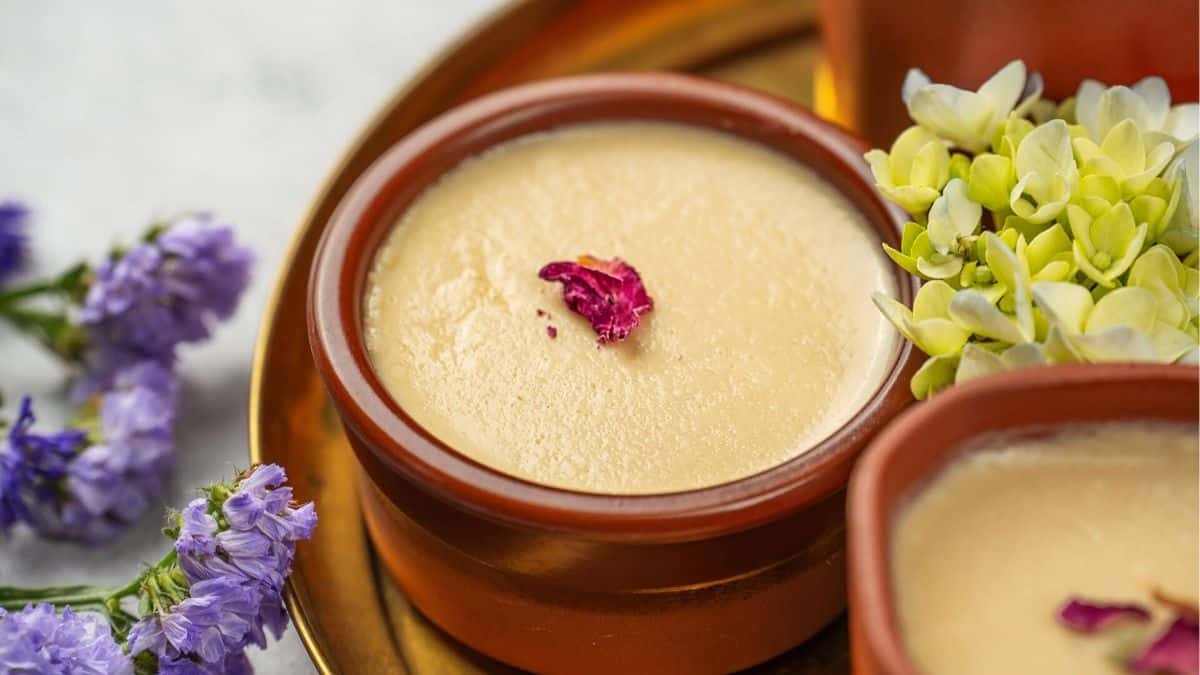
- Mishti Doi — Sweet yogurt, a Bengali staple for celebrations
- Rosogolla — Spongy cottage cheese balls in sugar syrup
- Sandesh — Traditional Bengali sweets made from cottage cheese
- Pitha — Rice cakes including patishapta (crepe-style) and dudh puli (milk dumplings)
- Payesh — Sweet rice pudding offered and shared
- Seasonal preparations — Dishes featuring fresh spring vegetables
- Sherbet — Sweetened rose or fruit drinks
- Lassi — Yogurt-based beverages complementing spring weather
At Santiniketan:
Community kitchens prepare simple vegetarian meals for visitors, reflecting the ashram’s ethos of simplicity and sustainability. The emphasis remains on communal dining rather than elaborate feasting.
Diaspora Variations:
Overseas celebrations feature potluck-style gatherings where families contribute Bengali dishes:
- Fish curry and fish preparations
- Luchi (fried flatbread) and alur dom
- Cholar dal (Bengal gram with coconut)
- Various traditional sweets
- Bengali-style vegetables
The culinary focus remains on sharing rather than elaborate preparation, with food serving as a backdrop to the festival’s primary cultural and artistic expressions. Tea accompanies evening cultural programs, creating spaces for conversation and community connection.

Basanta Utsav: Music, Art, and Cultural Expression
Music forms the soul of Basanta Utsav, with Rabindra Sangeet (Tagore’s songs) providing the festival’s sonic landscape and emotional core.
Signature Songs:
- “Ore Grihabashi” — The quintessential spring song welcoming the season
- “Aaji Basanta Jagrata Dwaarey” — Spring awakens at the doorstep
- “Esho Hey Boishakh” — Welcoming the new year (often included)
- “Phaguner Mohonay” — In the enchantment of spring
Performance Arts:
- Dance Dramas — Elaborate productions of Tagore’s works like “Chandalika,” “Shyama,” “Chitrangada,” and “Shaapmochon”
- Classical Dance — Kathak, Manipuri, Odissi, and Rabindrik Nritya (Tagore’s dance style) performances
- Baul Music — Folk singers perform with traditional ektaras and dotaras, connecting the festival to Bengal’s folk traditions
- Processions — Musical dance processions wind through Santiniketan campus
Visual Arts:
- Alpana — Traditional rice-paste floor designs adorn celebration spaces
- Art Exhibitions — Santiniketan’s Kala Bhavana displays student and professional artworks
- Photography — The festival has become a visual spectacle documented globally
- Natural aesthetics — Yellow and white clothing, flower decorations, and abir create living art
Together, music, art, and performance make Basanta Utsav a powerful expression of creativity, cultural unity, and aesthetic celebration—demonstrating how traditional arts remain vibrant through active participation.
Basanta Utsav’s Modern Relevance and Cultural Continuity
In today’s fast-changing world, Basanta Utsav continues to hold deep relevance as a celebration that promotes artistic expression, cultural identity, and human connection.
Cultural Continuity:
The festival plays a vital role in preserving Bengali cultural heritage across generations and geographies. For diaspora communities, Basanta Utsav serves as a powerful link to roots, helping transmit traditions, values, language, and artistic forms to younger generations growing up far from Bengal.
Educational institutions use the festival as a vehicle for cultural education—teaching not just songs and dances, but the values of aesthetic appreciation, communal harmony, and creative expression that Tagore championed.
Contemporary Relevance:
While lifestyles and celebration methods evolve, Basanta Utsav’s core message remains unchanged:
- Beauty and grace can coexist with joy and celebration
- Art and culture unite people across differences
- Nature’s cycles deserve recognition and reverence
- Community participation creates meaning beyond individual experience
Enduring Legacy:
Basanta Utsav endures because it addresses timeless human needs—celebrating nature’s renewal, expressing creativity communally, finding joy in shared cultural experiences. Tagore’s genius lay in channeling universal impulses through distinctly Bengali artistic forms, creating a festival that feels both intimately local and broadly accessible.
As spring returns each year painting Bengal’s landscape in vibrant hues, Basanta Utsav continues its century-old invitation: open your doors, welcome the season, and celebrate life’s beauty through art, community, and color.
Shubho Basanta Utsav!