
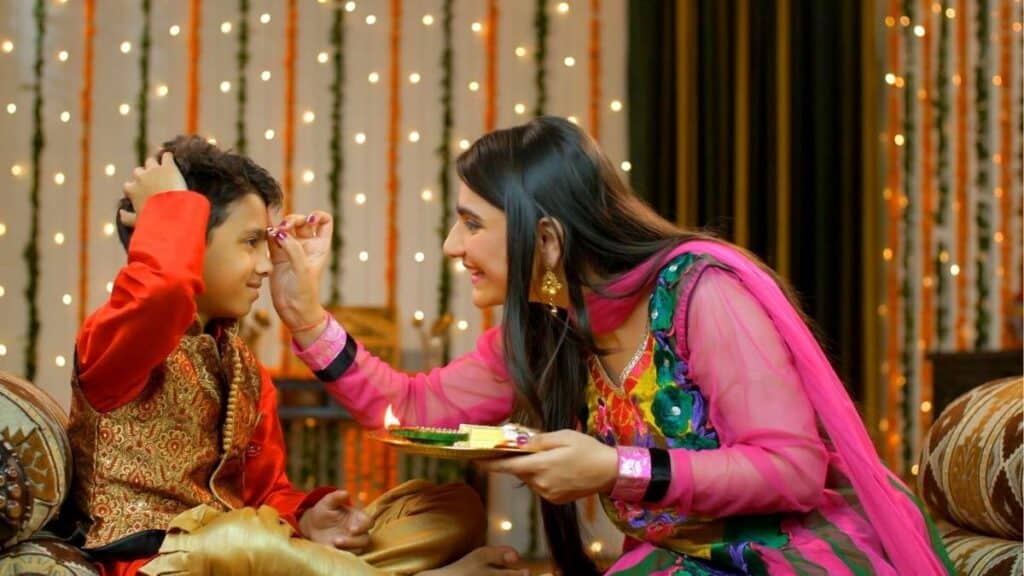
Bhai Dooj is one of the most cherished Indian festivals, celebrating the unique and eternal bond between brothers and sisters. Observed on the second day after Diwali, this beautiful festival sees sisters praying for their brothers’ long life, prosperity, and well-being, while brothers pledge to protect and care for their sisters throughout life.
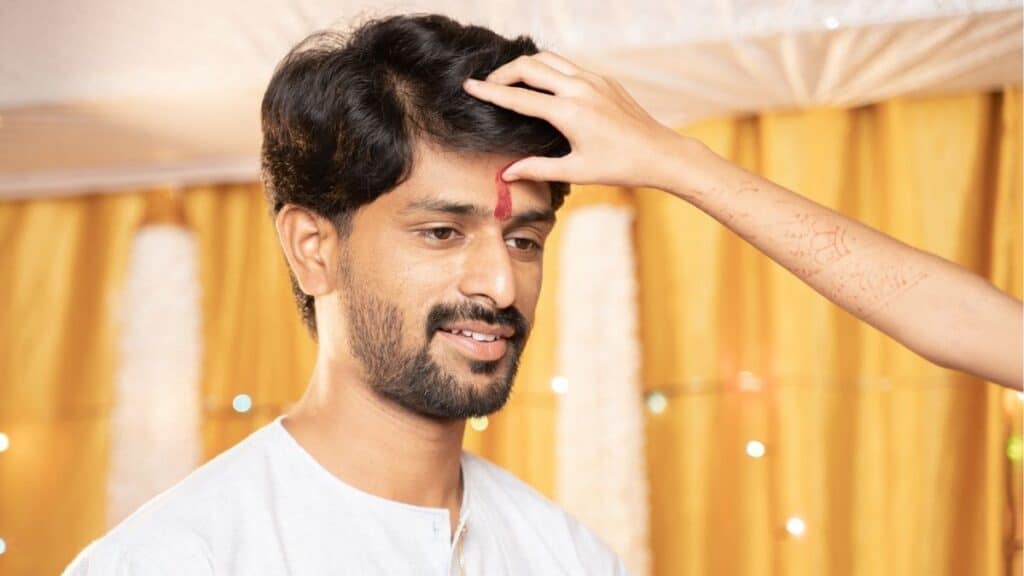
Rooted in ancient Hindu mythology, Bhai Dooj symbolizes the power of familial love, devotion, and mutual protection. The festival is marked by the traditional tilak ceremony, where sisters apply a ceremonial mark on their brothers’ foreheads while performing aarti and offering prayers. In return, brothers shower their sisters with blessings and gifts as tokens of love and appreciation.
Also known as Bhai Tika in Nepal, Bhau Beej in Maharashtra, Bhai Phonta in Bengal, and Yama Dwitiya across South India, this festival transcends regional boundaries to celebrate a universal relationship. Beyond ritual and tradition, Bhai Dooj represents unconditional love, lifelong friendship, and the promise of standing by each other through all of life’s challenges.
When Is Bhai Dooj Celebrated in 2026?
Bhai Dooj is celebrated on the Dwitiya Tithi (second lunar day) of Shukla Paksha in the Hindu month of Kartika, which typically falls in October or November.
Bhai Dooj In India 2026 Dates
Bhai Dooj falls on Wednesday, November 11, 2026
Bhai Dooj Tika Time (Aparahna Muhurat): 01:10 PM to 03:20 PM
Duration: 2 Hours 10 Minutes
Dwitiya Tithi Begins: 02:00 PM on November 10, 2026
Dwitiya Tithi Ends: 03:53 PM on November 11, 2026
The tilak ceremony should ideally be performed during the Aparahna time (afternoon period) for maximum auspiciousness, as prescribed in Hindu scriptures.
Table of Contents
Bhai Dooj In USA, Canada, Australia, New Zealand, UK, UAE, Singapore 2026 Dates
Bhai Dooj on Tuesday, November 10, 2026
- Bhai Dooj Aparahna Time – 12:40 PM to 02:41 PM
- Yama Dwitiya on Tuesday, November 10, 2026
Bhai Dooj on Tuesday, November 10, 2026
- Bhai Dooj Aparahna Time – 01:00 PM to 02:59 PM
- Yama Dwitiya on Tuesday, November 10, 2026
Bhai Dooj on Wednesday, November 11, 2026
- Bhai Dooj Aparahna Time – 02:11 PM to 04:57 PM
- Yama Dwitiya on Wednesday, November 11, 2026
Bhai Dooj on Tuesday, November 10, 2026
- Bhai Dooj Aparahna Time – 12:39 PM to 02:29 PM
- Yama Dwitiya on Tuesday, November 10, 2026
Bhai Dooj on Tuesday, November 10, 2026
- Bhai Dooj Aparahna Time – 01:09 PM to 03:21 PM
- Yama Dwitiya on Tuesday, November 10, 2026
Bhai Dooj on Wednesday, November 11, 2026
- Bhai Dooj Aparahna Time – 02:01 PM to 04:26 PM
- Yama Dwitiya on Wednesday, November 11, 2026
Why Bhai Dooj Dates Change Every Year?
Bhai Dooj is celebrated based on the Hindu lunar calendar, not the Gregorian calendar. It falls on Dwitiya Tithi (second lunar day) of Shukla Paksha in Kartika month.
Since lunar months are shorter than solar months:
- Bhai Dooj’s date shifts every year on the Gregorian calendar
- The festival typically falls 11 days earlier each year
- Timing depends on moon position and tithi calculations
- The auspicious muhurat for tilak ceremony is calculated using planetary positions
This lunar-based system ensures the festival aligns with traditional astronomical and spiritual timing, maintaining its religious significance across generations.
Bhai Dooj Other Names & Regional Identities
Standard Names
Bhai Dooj — Most common name in Hindi and across North India
Yama Dwitiya — Emphasizing the Yama-Yamuna legend
Bhratri Dwitiya — Sanskrit name meaning “brother’s second day”
North India
Bhaiya Dooj — Awadh and Purvanchal regions of Uttar Pradesh and Bihar
Bhardutiya — Celebrated by Maithils in Bihar and Nepal
Bhai Duj — Common variant in Delhi and surrounding areas
Nepal
Bhai Tika / Bhai Teeka (भाइटीका) — The most important festival after Dashain
Kija Puja — Celebrated by Newari community
Bhardutiya Bhai Tika — Among Maithil communities
East India
Bhai Phonta (ভাই ফোঁটা) — West Bengal, Tripura, Bangladesh
Bhai Jiuntia / Bhai Jitiyā (ଭାଇ ଜିଉନ୍ତିଆ) — Western and Central Odisha
West India
Bhau Beej / Bhav Bij (भाऊ बीज) — Maharashtra, Goa, North Karnataka
Bhai Beej — Gujarat and Konkani-speaking communities
South India
Yama Dwitiya — Across South India
Bhatru Dviteeya — Andhra Pradesh and Telangana
Bhatri Ditya — Telugu-speaking regions
Bhaghini Hastha Bhojanamu — Traditional Telugu name
Diaspora Naming
In international contexts, the festival is commonly referred to as:
- Bhai Dooj — Most diaspora communities
- Brother’s Day — Simplified English translation
- Siblings Day (Indian) — Broader contemporary interpretation
The Origins, History, and Legends of Bhai Dooj
Bhai Dooj is an ancient festival with roots in Hindu mythology and scriptures. The festival finds mention in various Puranas and classical texts that describe it as a celebration of sibling devotion, protection, and divine blessings.
The Krishna-Subhadra Legend
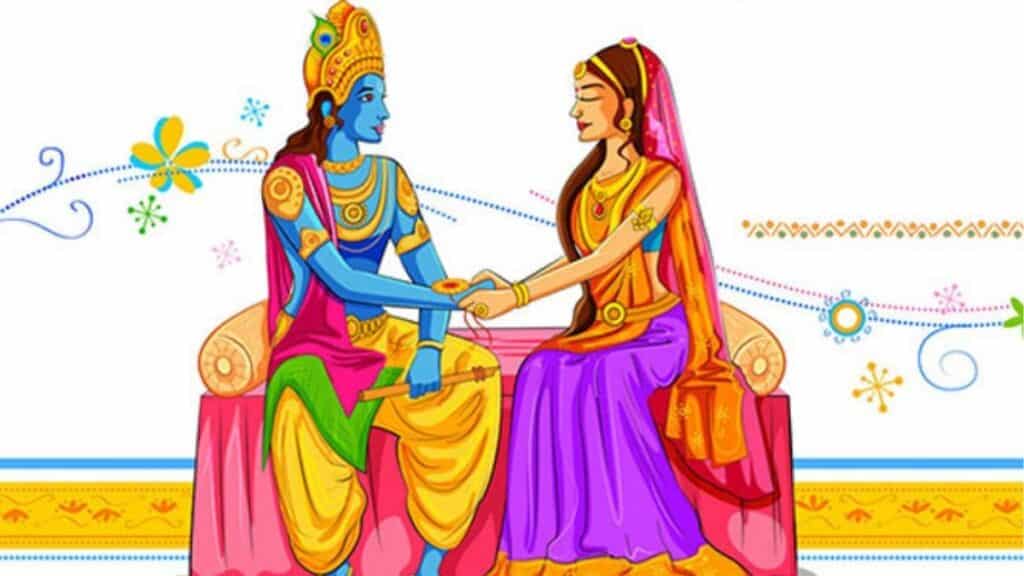
The most popular legend tells of Lord Krishna’s visit to his sister Subhadra after defeating the demon Narakasura. Subhadra welcomed her victorious brother with great joy, offering him sweets and flowers, and lovingly applying a ceremonial tilak on his forehead. This affectionate gesture of celebration is believed to be the origin of Bhai Dooj, establishing the tradition of sisters honoring their brothers with tilak and prayers.
The Yama-Yamuna Story
The more spiritually significant legend centers on Yama, the God of Death, and his sister Yamuna, the sacred river goddess. According to mythology, Yamuna had been longing to see her brother Yama, who was too occupied with his divine duties. Finally, on Dwitiya (the second day after new moon), Yama visited Yamuna, who welcomed him with immense love and devotion. She performed his aarti, applied tilak on his forehead, and served him a feast prepared with affection.
Deeply moved by his sister’s love, Yama blessed Yamuna and declared that any brother who receives tilak from his sister on this day and bathes in the Yamuna River would be blessed with longevity and freed from the fear of untimely death. This is why the festival is also called Yama Dwitiya, and bathing in the Yamuna holds special spiritual significance on this day.
Scriptural References
Hindu scriptures emphasize the spiritual merit of Bhai Dooj rituals. Religious texts state that brothers who receive tilak from their sisters on this auspicious day are protected from Yama Loka (realm of death) and blessed with long, prosperous lives. For sisters, observing the rituals brings good fortune, marital bliss, and prosperity.
The festival’s placement at the end of the five-day Diwali festivities symbolically extends the triumph of light over darkness to include the protective bond between siblings, making it both a spiritual and social celebration.
Bhai Dooj: Cultural and Spiritual Significance
Bhai Dooj is a festival that celebrates one of life’s most cherished relationships—the bond between brothers and sisters. Spiritually, it represents divine protection, blessings, and the victory of devotion over death itself, as symbolized by the Yama-Yamuna legend.
Symbol of Protection and Devotion
The tilak ceremony performed by sisters symbolizes their prayers for their brothers’ protection from evil and their wish for long, happy lives. Brothers, in turn, reaffirm their lifelong commitment to protect and care for their sisters. This reciprocal exchange of blessings and responsibilities forms the spiritual core of Bhai Dooj.
Spiritual Cleansing and Divine Blessings
The association with Yama Dwitiya adds profound spiritual depth. Bathing in sacred rivers, particularly the Yamuna, is believed to cleanse sins and bring blessings of longevity and wealth. Scriptures promise that those who observe the rituals with devotion are spared from suffering in the afterlife.
Cultural Unity and Social Harmony
Beyond its religious aspects, Bhai Dooj serves as an important family reunion occasion. The festival promotes forgiveness, strengthens family bonds, and maintains cultural continuity across generations. It reminds us that relationships require nurturing, celebration, and the sacred acknowledgment of mutual love and responsibility.
Culturally, Bhai Dooj brings people together regardless of social status or background, promoting unity, equality, and shared joy. The festival symbolizes the timeless message that family bonds provide unconditional support and protection throughout life’s journey..
Bhai Dooj Prayers and Religious Observances
Bhai Dooj prayers and rituals are performed to seek blessings for brothers’ longevity, prosperity, and protection from evil. The religious observances center around the sacred tilak ceremony, which carries deep spiritual significance.
The Tilak Ceremony
The central ritual of Bhai Dooj follows these traditional steps:
- Preparation: Sisters wake early, bathe, and prepare a decorated puja thali containing kumkum (vermillion), rice grains, sweets, flowers, a diya (lamp), and sacred items.
- Vow and Fast: Many sisters observe a fast until completing the tilak ceremony, dedicating their prayers to their brothers’ well-being.
- Tilak Application: Sisters apply a red tilak on their brothers’ foreheads (or seven-colored Saptarangi Tika in Nepal) while chanting prayers for longevity and prosperity.
- Sacred Thread: A protective thread is tied around the brother’s wrist as a symbol of the sister’s prayers.
- Aarti: Sisters perform aarti for their brothers, circling the decorated thali with a lit diya while singing traditional songs.
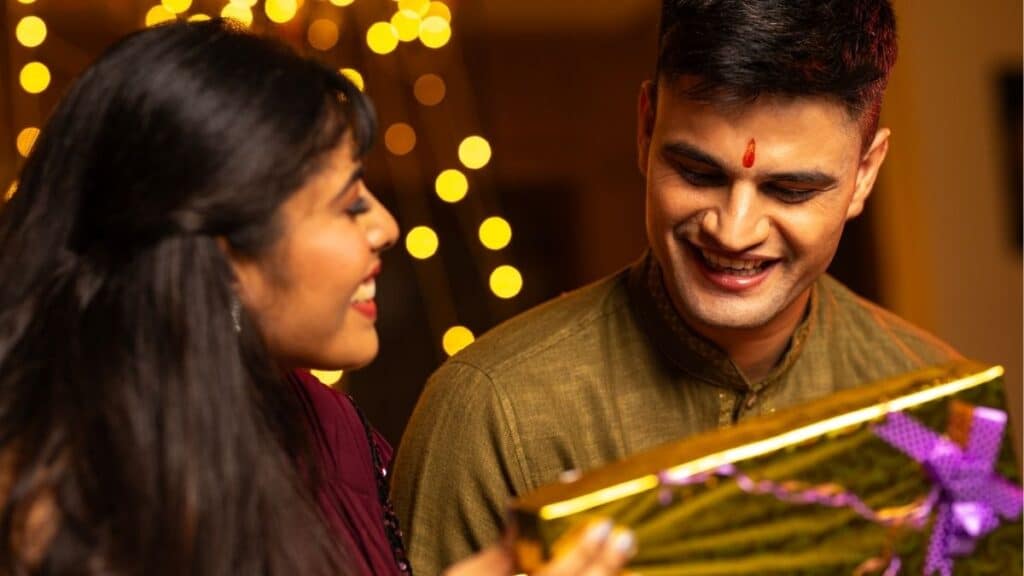
- Blessings and Gifts: Brothers offer blessings to their sisters and present gifts as tokens of love and appreciation.
Regional Ritual Variations
Haryana and Uttar Pradesh: A dry coconut (gola) with klewa is used during the aarti ceremony, adding regional distinctiveness.
Maharashtra and Gujarat: Women without brothers worship the Moon (Chandra) as a symbolic brother, performing aarti and applying mehendi.
Nepal: The Bhai Tika ceremony includes an elaborate seven-colored tika and special garlands made from Gomphrena globosa flowers.
Bengal: Bhai Phonta requires both siblings to be at least five years old and includes specific rituals along with grand feasts.
Home vs Temple Observances
Most Bhai Dooj celebrations occur at home, emphasizing the intimate, personal nature of sibling bonds. Sisters invite brothers to their residences, creating a festive atmosphere filled with love and devotion.
Some families also visit temples together after the home ceremony, offering collective prayers for family well-being. In regions near the Yamuna River, devotees take holy dips to receive the blessings associated with Yama Dwitiya.
Whether observed at home or in temples, Bhai Dooj rituals emphasize devotion, gratitude, forgiveness, and spiritual renewal, making the festival both joyous and deeply meaningful.
How Bhai Dooj Is Celebrated Across India
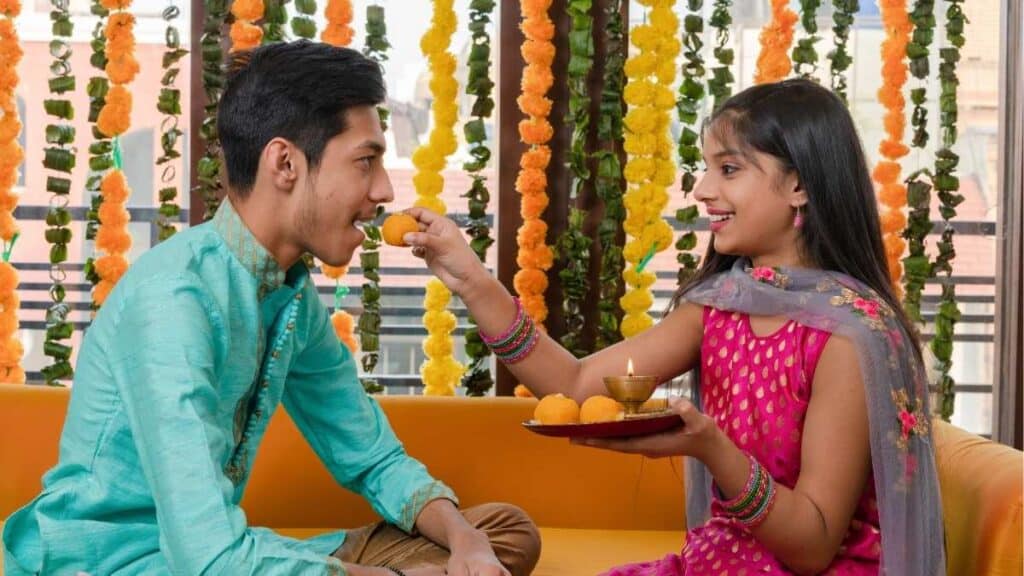
While the essence of Bhai Dooj remains consistent—celebrating sibling bonds through tilak, prayers, and togetherness—its expressions vary beautifully across India’s diverse regions.
North India (Delhi, Uttar Pradesh, Haryana, Punjab, Rajasthan): Bhai Dooj is celebrated with great enthusiasm. Sisters prepare elaborate meals featuring their brothers’ favorite dishes. Markets bustle with shoppers buying gifts, sweets, and ceremonial items. The traditional tilak ceremony is followed by family gatherings with festive meals and heartfelt exchanges.
Maharashtra and Goa: Bhau Beej is celebrated with tremendous fervor. The day features the tilak ceremony followed by special feasts with traditional sweets like basundi poori or kheerni poori. Extended families gather for joyous reunions. Women without brothers perform the Moon worship ceremony.
Gujarat: Gujarati families celebrate Bhai Beej as an important occasion with traditional delicacies and sweets. Community celebrations often include cultural programs and performances.
West Bengal, Tripura, and Bangladesh: Bhai Phonta is celebrated with distinctive Bengali traditions two days after Kali Puja. Sisters prepare special sweets including sandesh with “Bhaiphonta” written on them. The ceremony includes elaborate rituals followed by grand feasts.
Nepal: Bhai Tika is Nepal’s second-most important festival after Dashain. Celebrated on the fifth day of Tihar, it features the distinctive seven-colored Saptarangi Tika. Newari communities celebrate Kija Puja with unique traditions and elaborate ceremonies.
Odisha: Bhai Jiuntia in western and central Odisha follows regional customs while maintaining the core significance of sibling protection and love.
South India (Andhra Pradesh, Telangana, Karnataka, Tamil Nadu): Yama Dwitiya is observed with emphasis on the Yama-Yamuna legend. Families perform prayers, exchange blessings, share festive meals, and often visit temples or take holy river baths.
Despite regional variations, food, music, family togetherness, and the exchange of love remain central everywhere, making Bhai Dooj a truly pan-Indian celebration.
Participation Across Religions in India
While Bhai Dooj is primarily a Hindu festival, its celebration of sibling love resonates across religious boundaries in India’s pluralistic society. The festival has evolved beyond its religious origins to become a shared cultural celebration in many communities.
People from different faiths—including Sikhs, Jains, and others—participate in Bhai Dooj festivities, especially in regions where communities live in close proximity. Sikh families, particularly in Punjab and Delhi, often celebrate Bhai Dooj alongside their Hindu neighbors, honoring the universal theme of sibling protection and love.
In cosmopolitan Indian cities, the festival has taken on a more secular character, with people from various backgrounds participating in gift exchanges, family gatherings, and celebrations that honor sibling relationships regardless of religious affiliation.
The festival’s focus on universal human values—love, protection, family bonds, and mutual devotion—allows it to transcend religious boundaries and unite diverse communities. By promoting harmony, forgiveness, and shared happiness, Bhai Dooj serves as a reminder that festivals can bring people together through common values of joy, respect, and celebration.
How Bhai Dooj Is Celebrated Outside India
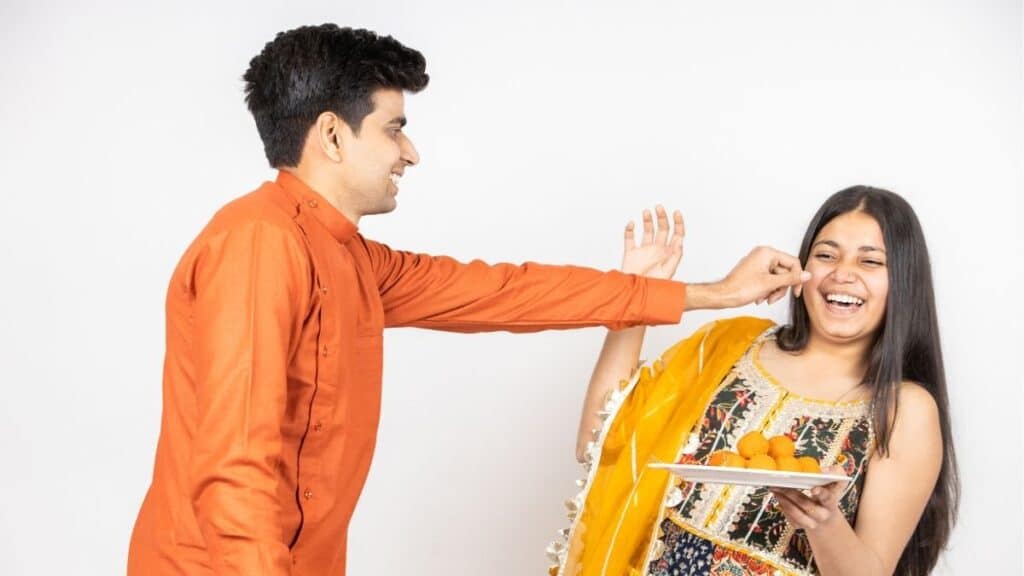
Indian diaspora communities worldwide celebrate Bhai Dooj through various adaptations that honor tradition while fitting modern, multicultural contexts.
Community Celebrations
United States and Canada: Hindu temples and Indian community centers organize Bhai Dooj celebrations featuring traditional tilak ceremonies, cultural programs, and festive meals. Major cities like New York, Toronto, Chicago, and Vancouver host events that bring families together.
United Kingdom: British Indian communities in London, Leicester, Birmingham, and Manchester maintain strong Bhai Dooj traditions through temple programs and family gatherings.
UAE: The large Indian expatriate population celebrates enthusiastically through community centers and temple events in Dubai, Abu Dhabi, and Sharjah.
Australia and New Zealand: Indian communities organize cultural programs at temples and community centers, often combining celebrations with educational activities for younger generations.
Singapore: Little India becomes a hub of festive activity, with temples hosting special programs and families gathering for traditional observances.
Diaspora Adaptations
Common adaptations include:
- Weekend Celebrations: Shifting observances to the nearest weekend to accommodate work schedules
- Virtual Ceremonies: Long-distance siblings connect via video calls for symbolic tilak ceremonies
- Fusion Gifting: Blending traditional Indian gifts with local preferences
- Simplified Rituals: Streamlining ceremonies while maintaining spiritual essence
- Cultural Education: Increased emphasis on explaining traditions to diaspora-born younger generations
These celebrations help maintain cultural connections to heritage while introducing non-Indian friends and colleagues to beautiful Indian traditions, making Bhai Dooj a bridge between cultures.
Bhai Dooj Gifting Traditions
Bhai Dooj gifting is a beautiful tradition that symbolizes love, protection, and mutual appreciation between siblings.
Traditional Gifts
From Sisters to Brothers:
- Handmade sweets and traditional delicacies
- Sacred threads (raksha) symbolizing protection
- Traditional clothing
- Religious items like rudraksha beads
- Coconuts and dry fruits
From Brothers to Sisters:
- Gold or silver jewelry
- Sarees or ethnic clothing
- Money (shagun) in decorated envelopes
- Cosmetics and accessories
- Household items
Modern Gifting Practices
Contemporary Bhai Dooj gifts include:
- Tech gadgets (smartphones, tablets, smartwatches)
- Personalized items (photo frames, engraved jewelry)
- Experience gifts (spa vouchers, restaurant cards, travel packages)
- Fashion and accessories
- Wellness products and subscription services
Diaspora Gifting Trends
International families often:
- Send online gifts and money transfers to siblings in India
- Create hampers combining Indian sweets with local treats
- Use gift cards for flexibility
- Support Indian artisan products
- Share virtual gift reveals over video calls
The essence of Bhai Dooj gifting lies not in material value but in the expression of unconditional love and lifelong commitment to each other’s well-being.
Traditional Bhai Dooj Foods and Sweets
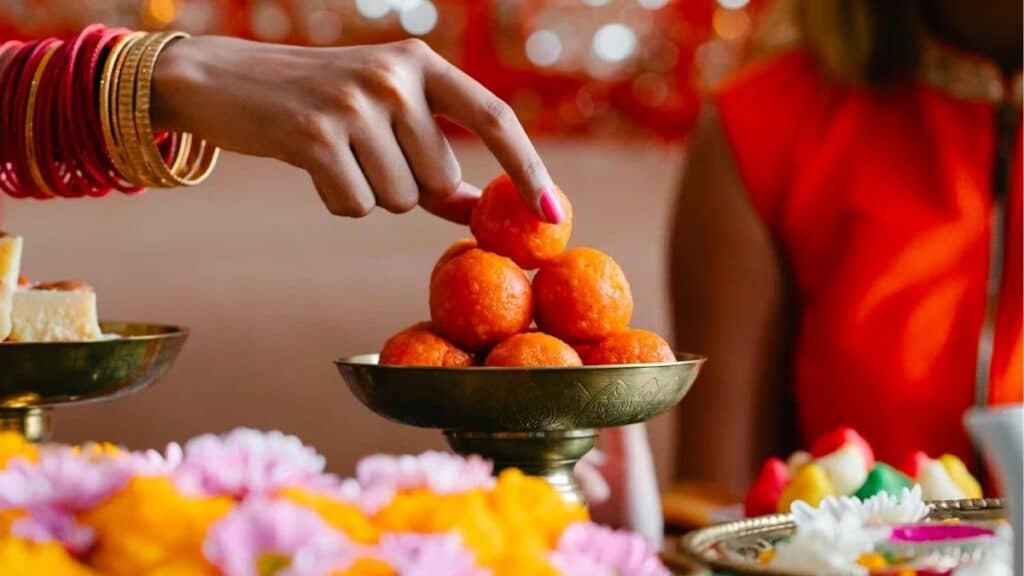
Food plays a central role in Bhai Dooj celebrations, symbolizing love, hospitality, and the sweetness of sibling bonds.
Common Bhai Dooj Delicacies
North Indian Favorites:
- Gulab jamun, jalebi, rasgulla
- Barfi, ladoo, halwa varieties
- Samosas, kachori, chaat
- Paneer dishes, chole bhature
- Gujiya (in some regions)
Maharashtra and Goa Specialties:
- Basundi Poori / Kheerni Poori — The signature sweet dish for Bhau Beej
- Puran Poli
- Shrikhand
- Chakli, murukku, chivda
Gujarat:
- Mohanthal
- Ghughra
- Khandvi
- Jalebi-fafda
Bengal:
- Sandesh — Especially with “Bhaiphonta” written
- Rasgulla and rajbhog
- Mishti doi (sweet yogurt)
- Traditional Bengali lunch spread
Nepal:
- Sel roti
- Traditional festive meals
- Special sweets and fruits
Sisters traditionally prepare their brothers’ favorite dishes, with cooking itself considered an act of devotion. These culinary traditions, passed down through generations, form an essential part of the festival’s cultural identity.
Bhai Dooj: Music, Art, and Cultural Expression
Music, art, and cultural performances bring energy and emotion to Bhai Dooj celebrations, making the festival a vibrant expression of creativity and tradition.
Traditional Music
Regional folk songs celebrating sibling bonds are sung during tilak ceremonies and throughout the day. These songs express sisters’ prayers for brothers’ well-being and brothers’ promises of protection. Each region has distinct musical traditions—Bengali Bhai Phonta songs, Marathi Bhau Beej bhajans, Nepali Bhai Tika songs, and Hindi devotional melodies.
Bollywood and Popular Culture
Bollywood has celebrated sibling relationships through countless films and songs that have become part of Bhai Dooj celebrations. Popular brother-sister songs are played during festivities, connecting traditional values with contemporary entertainment.
Decorative Arts
Homes are adorned with rangoli (colorful floor designs) featuring auspicious symbols and floral patterns. Decorated puja thalis, flower arrangements, and diyas create a festive atmosphere.
Contemporary Expression
Modern celebrations incorporate:
- Social media posts with photos and heartfelt messages
- Digital art and e-cards
- Photography sessions capturing special moments
- Cultural programs with dance performances
- Community art exhibitions
Together, music, art, and celebration make Bhai Dooj a powerful expression of cultural identity, emotional connection, and the timeless beauty of sibling love.
Bhai Dooj’s Modern Relevance and Cultural Continuity
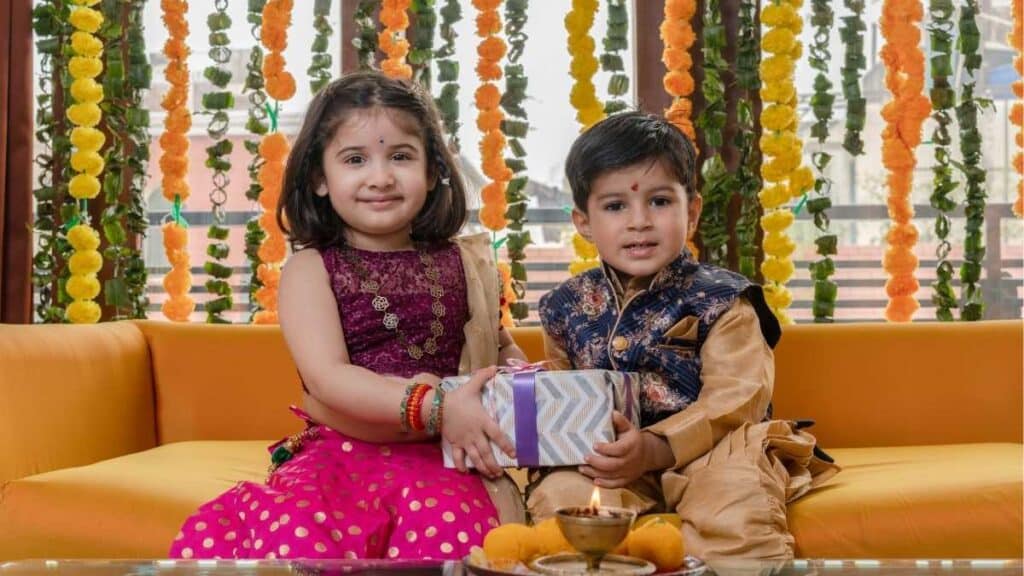
In today’s fast-paced world, Bhai Dooj continues to hold deep relevance as a festival that promotes family bonds, emotional connection, and unconditional love. While lifestyles and celebrations have evolved, the core spirit remains unchanged—honoring the unique relationship between siblings through prayer, blessing, and togetherness.
Modern Bhai Dooj celebrations blend tradition with contemporary expressions, from virtual ceremonies to sustainable practices to fusion gifting. The festival plays an important role in preserving cultural continuity, connecting people to their roots while allowing space for new interpretations.
For Indian communities living abroad, Bhai Dooj serves as a powerful link to heritage, helping pass traditions, values, and stories to younger generations. The festival transcends its religious origins to become a universal celebration of chosen family and deep platonic bonds.
Beyond tilak and gifts, Bhai Dooj carries a timeless message: relationships require nurturing, protection is mutual, love is unconditional, and family bonds remain humanity’s most enduring strength. The festival reminds us that in an increasingly digital world, human connection and the celebration of those we love matter most.
As we celebrate Bhai Dooj 2026, we honor not just ancient tradition but the living, evolving relationships that make life meaningful—relationships that deserve sacred acknowledgment, no matter how far we travel or how much the world changes around us.
Happy Bhai Dooj !