
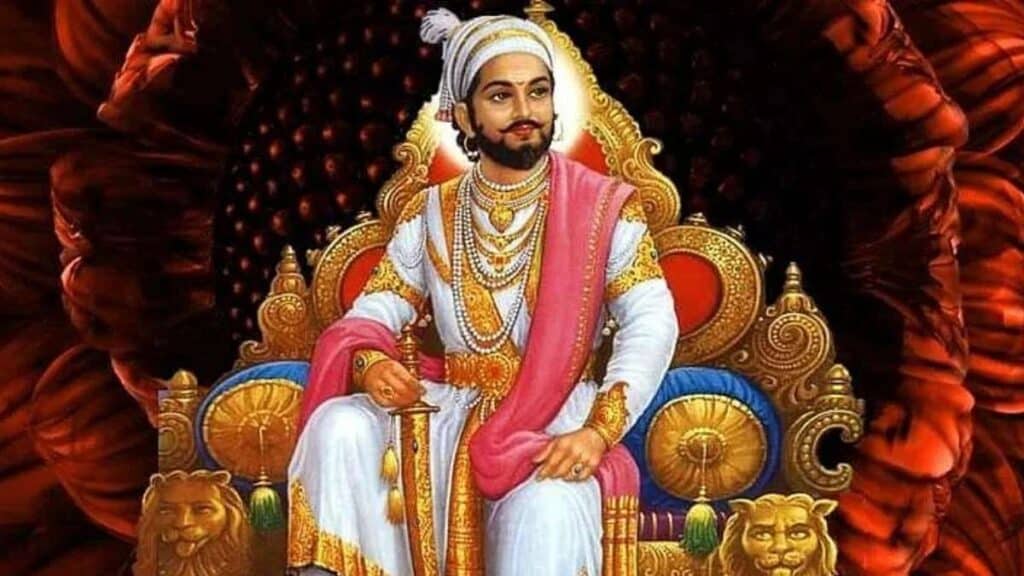
Chhatrapati Shivaji Maharaj Jayanti, popularly known as Shiv Jayanti, is one of the most celebrated cultural festivals of Maharashtra. Observed every year on February 19, the day marks the birth anniversary of Chhatrapati Shivaji Maharaj — the visionary founder of the Maratha Empire and architect of Hindavi Swarajya (self-rule of the Hindavi people). Born in 1630 at Shivneri Fort near Pune, Shivaji Maharaj is revered not only as a warrior king but as a symbol of just governance, people’s welfare, and Marathi cultural identity.
The day is marked by grand Shobha Yatras, powada ballads, Shivcharitra readings, fort visits, and floral tributes across Maharashtra and among Marathi communities worldwide. Beyond Maharashtra, the Indian diaspora observes Shiv Jayanti as an expression of heritage, pride, and shared history.
When Is Chhatrapati Shivaji Maharaj Jayanti Celebrated in 2026?
Chhatrapati Shivaji Maharaj Jayanti is observed on February 19 every year. Unlike lunar festivals that shift annually, this date is fixed on the Gregorian calendar, established after Lokmanya Bal Gangadhar Tilak identified February 19, 1630 (Julian calendar) as the corresponding date for Shivaji Maharaj’s Hindu tithi birth date — Falgun Krishna Paksha Tritiya of Shalivahan Shaka 1551.
In 2026, Chhatrapati Shivaji Maharaj Jayanti falls on Thursday, February 19 — marking the 396th birth anniversary of the Maratha king. It is a public holiday in Maharashtra.
Table of Contents
Chhatrapati Shivaji Maharaj Jayanti In USA, Canada, Australia, New Zealand, UK, UAE, Singapore 2026 Dates
Shiv Jayanti falls on Thursday, February 19
Shiv Jayanti falls on Thursday, February 19
Shiv Jayanti falls on Thursday, February 19
Shiv Jayanti falls on Thursday, February 19
Shiv Jayanti falls on Thursday, February 19
Shiv Jayanti falls on Thursday, February 19
Chhatrapati Shivaji Maharaj Jayanti Overview
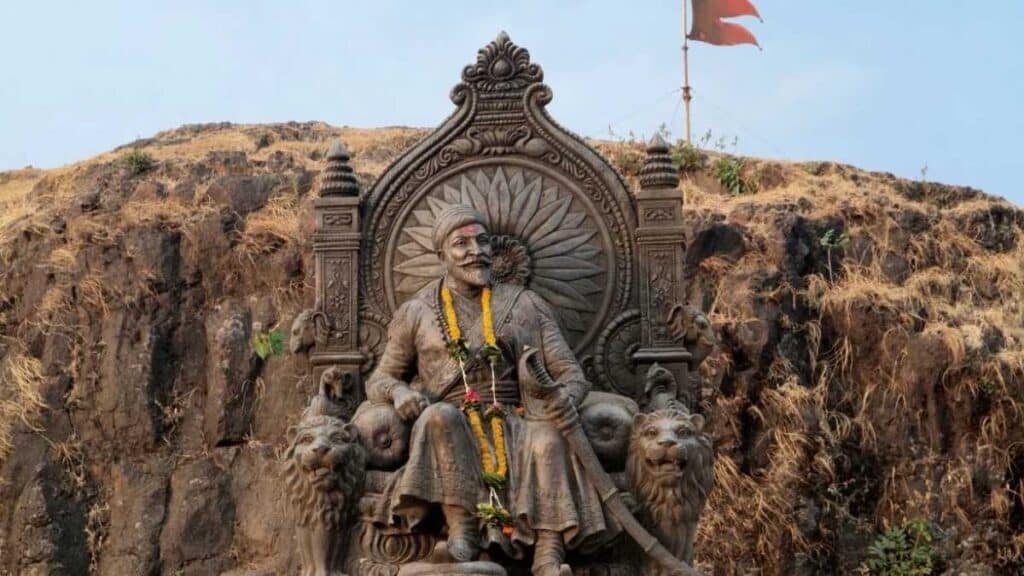
Chhatrapati Shivaji Maharaj Jayanti is a cultural and public holiday that honours the birth of one of India’s greatest rulers.
The day celebrates his legacy of courageous leadership, inclusive governance, and the establishment of the Maratha Empire. It is primarily observed in Maharashtra but is recognized across India and by Marathi communities worldwide.
The festival is not tied to religious ritual or deity worship. Instead, it is a civic and cultural occasion — one that reaffirms Maharashtrian pride, the Marathi language, and values of responsible rule, care for the common people, and cultural continuity. People from all backgrounds join the celebrations, making it a symbol of Maharashtra’s inclusive identity.
Chhatrapati Shivaji Maharaj Jayanti Other Names and Regional Identities
Chhatrapati Shivaji Maharaj Jayanti is known by several names:
- Shiv Jayanti — the most widely used short form in Maharashtra
- Shivaji Jayanti — common in everyday speech and media
- Chhatrapati Shivaji Maharaj Jayanti — the formal name used in official government communication
- In Marathi: छत्रपती शिवाजी महाराज जयंती
- In Hindi: शिवाजी जयंती
The title Chhatrapati (meaning “sovereign ruler” or “Lord of the Umbrella”) was formally conferred on Shivaji Maharaj during his coronation (Rajyabhishek) at Raigad Fort in 1674. Its inclusion in the festival name reflects the deep respect Marathis hold for his kingship. In the Indian diaspora — particularly in the UK, USA, Canada, and Australia — Marathi cultural organizations use the full formal name to preserve this legacy.
The Origins, History, and Legends Of Shiv Jayanti
Birth at Shivneri Fort
Chhatrapati Shivaji Maharaj was born at Shivneri Fort in present-day Junnar, near Pune. His mother Jijabai raised him on the stories of the Ramayana and Mahabharata and instilled in him the vision of a self-ruled Maratha kingdom. From a young age, Shivaji displayed qualities of strategic brilliance, courage, and deep concern for his people — qualities that would define his reign.
Mahatma Jyotiba Phule Initiates Shiv Jayanti (1870)
The formal celebration of Shiv Jayanti was initiated in 1870 by social reformer Mahatma Jyotirao Phule in Pune. A year earlier, in 1869, Phule had discovered the neglected samadhi of Shivaji Maharaj at Raigad Fort, hidden beneath trees and bushes, and restored it with care. At a gathering in Hirabag, Pune, Phule proposed an annual public celebration in Shivaji Maharaj’s honour. A public collection of Rs. 27 was made and Shiv Jayanti was born. Phule saw in Shivaji Maharaj a champion of the oppressed and a king who ruled for his people.
Lokmanya Tilak and the National Movement
Freedom fighter Bal Gangadhar Tilak transformed Shiv Jayanti into a tool for national awakening. After consulting official documents from Maratha royal courts — including those of the Bhosales of Nagpur and the Gaikwads of Baroda — Tilak established February 19, 1630 (Julian calendar) as Shivaji Maharaj’s birthday in 1912 and began widespread annual celebrations. Tilak used the occasion to unite people against British rule, positioning Shivaji Maharaj as a symbol of self-governance, resistance, and cultural pride.
Cultural and Spiritual Significance
Chhatrapati Shivaji Maharaj Jayanti carries deep cultural, civic, and historical significance. Shivaji Maharaj is remembered for an administration that was inclusive, strategic, and people-first. He created a cabinet-style governance system (Ashtapradhan), built a powerful naval fleet, maintained an extensive network of mountain forts, and protected all religions and communities under his rule.
For Marathis worldwide, Shiv Jayanti is a day of shared identity. It affirms the richness of Marathi language, literature (particularly powadas — ballads of his exploits), and the pride of the Maratha legacy. For youth, the values associated with the day — courage, fairness, planning, and care for the vulnerable — are invoked in schools, leadership forums, and community events.
His concept of Hindavi Swarajya — self-rule of the Hindavi people — is seen as an early articulation of democratic and indigenous governance ideals, giving the day a timeless civic resonance.
Prayers and Religious Observances
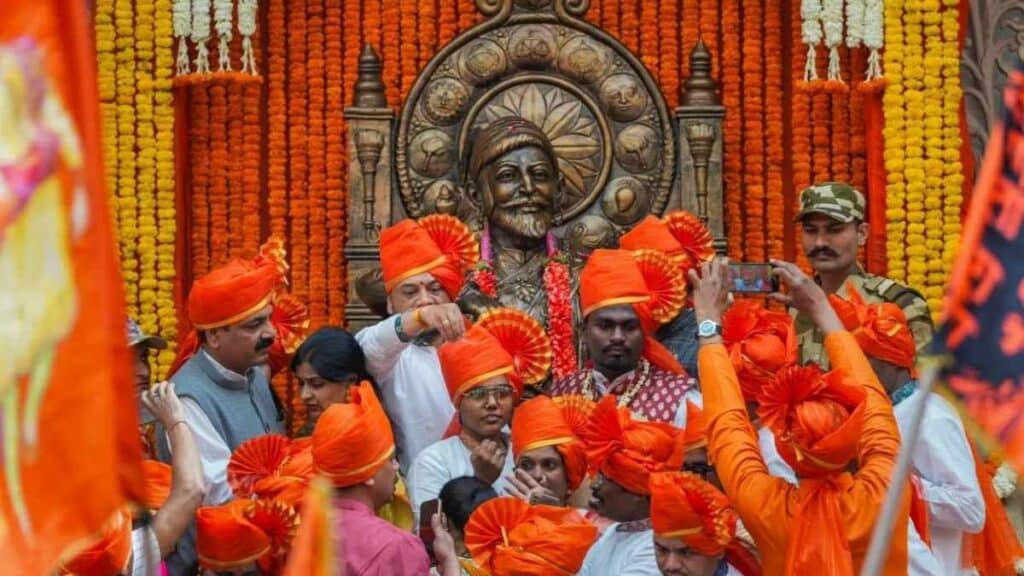
Shiv Jayanti does not follow a fixed puja structure, but observances include:
Floral Tributes: Garlands and flowers placed at statues and portraits of Shivaji Maharaj in homes, schools, and public spaces — the most universal act of observance.
Powada Recitations: Marathi narrative ballads recounting Shivaji Maharaj’s battles and character, performed at community gatherings — the closest equivalent to devotional music on this day.
Shivcharitra Readings: Reading or listening to accounts of Shivaji Maharaj’s life is common at institutions and cultural events.
Fort Visits: Pilgrimage-like visits to forts associated with Shivaji Maharaj — Raigad, Shivneri, Pratapgad, Sinhagad — are a cherished annual tradition for many families.
Abhishek at Samadhis: At Raigad Fort, where his samadhi stands, special abhishek rituals and tributes are conducted on this day.
How Shiv Jayanti Is Celebrated Across India
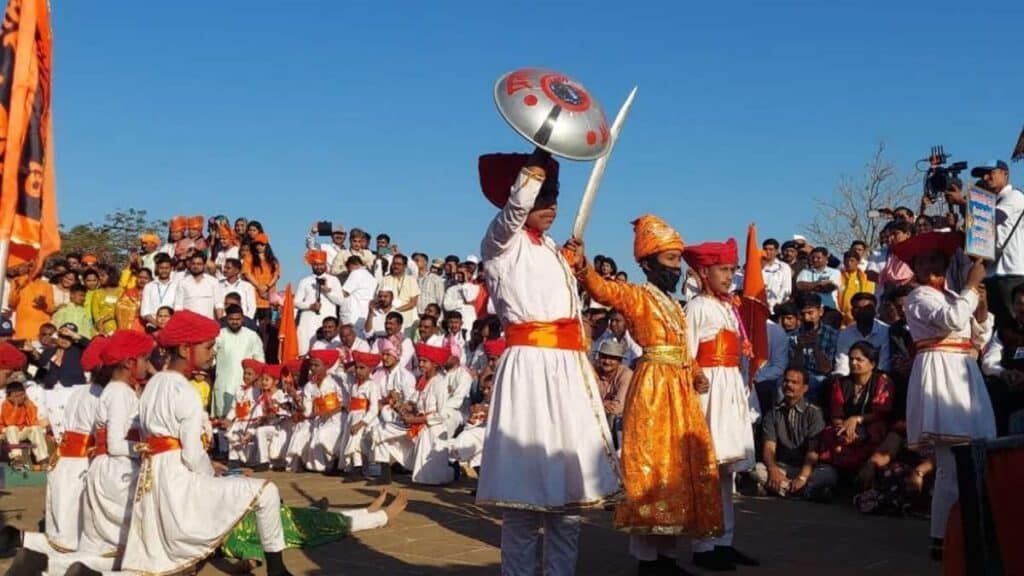
Maharashtra is the heartland of celebrations. Mumbai, Pune, Nagpur, Nashik, Kolhapur, and virtually every town and village hold Shobha Yatras with flags, portraits, dhol-tasha ensembles, and saffron colours.
Pune sees especially prominent events — Shivneri Fort (his birthplace) lies within the district, and heritage organisations here are among the most active.
Mumbai hosts massive processions across multiple neighbourhoods, with political groups, cultural organisations, and community bodies all participating.
Kolhapur, Satara, and Nashik — deeply linked to Maratha history — hold Shivcharitra lectures and historically themed programmes.
Across India, Marathi communities in Delhi, Bengaluru, Hyderabad, and other metros organise cultural evenings and powada performances.
Participation Across Religions in India
Shivaji Maharaj’s legacy is notably inclusive. Historical accounts record his protection of mosques, his employment of Muslim commanders (including Ibrahim Khan, who led his navy), and his respectful treatment of religious figures of all faiths.
As a result, Shiv Jayanti draws participants from across communities in Maharashtra. Muslims, Christians, and others attend public events alongside Hindus — particularly in culturally mixed urban areas. The festival’s civic and cultural nature makes it an open and inclusive occasion, reflecting Maharashtra’s composite heritage.
How Shiv Jayanti Is Celebrated Outside India
The Marathi diaspora — with large communities in the USA, UK, Canada, UAE, Australia, and New Zealand — celebrates Shiv Jayanti through events organised by Marathi Mandals and cultural associations.
USA: New York, New Jersey, Chicago, San Francisco Bay Area, and Dallas see events including powada performances, Shivcharitra sessions, and community dinners.
UK: London, Leicester, and Birmingham host cultural evenings. Since 2026’s date falls on a Thursday, many communities may shift celebrations to the weekend.
Canada: Toronto, Vancouver, and Calgary have active Marathi associations that mark the day.
UAE: Dubai and Abu Dhabi communities celebrate at cultural centres.
Australia and New Zealand: Sydney, Melbourne, Auckland, and Wellington host Shiv Jayanti gatherings annually.
Gifting Traditions
Shiv Jayanti does not carry a strong commercial gifting culture, but meaningful practices exist. Gifting Shivcharitra books — biographies, historical accounts, and illustrated editions for children — is a popular and purposeful gesture. Historical memorabilia such as miniature fort models, framed portraits, and commemorative coins are shared at community events. Some families gift traditional Maharashtrian items like Kolhapuri chappals or saffron turbans as a cultural expression.
Marathi cultural organisations abroad often distribute or sell books and community publications around the occasion.—purity, simplicity, environmental consciousness—avoiding ostentation and preferring natural, useful items.
Chhatrapati Shivaji Maharaj Jayanti Foods and Culinary Traditions
There is no strict food ritual associated with Shiv Jayanti, but traditional Maharashtrian foods are widely shared at community programmes and along procession routes:
- Puran Poli — the quintessential Marathi festive sweet bread
- Ukdiche Modak — steamed rice-flour dumplings with jaggery-coconut filling
- Batata Vada and Vada Pav — iconic Maharashtrian street food available at procession stalls
- Pitla Bhakri — a traditional rural Maharashtrian staple
- Solkadhi — a cooling kokum-coconut drink from coastal Maharashtra
- Chivda and regional laddoos — distributed freely at community gatherings
Stalls near Shobha Yatra routes and forts turn the occasion into a lively cultural food experience.
Shiv Jayanti: Music, Art, and Cultural Expression
Powadas are the musical soul of Shiv Jayanti. These dramatic narrative ballads — originally composed by poets like Agniadas and later by Annabhau Sathe — recount Shivaji Maharaj’s battles and character with great energy and pride. Shahirs perform these at public events across Maharashtra.
Dhol-Tasha ensembles accompany Shobha Yatras with powerful percussion, especially in Pune where this tradition is central to festival culture.
Theatre and Plays: Dramatic performances depicting key moments from Shivaji Maharaj’s life — battles, court scenes, the coronation — are staged at schools, community halls, and open grounds.
Visual Art and Digital Tributes: Artists create murals, portraits, and digital illustrations for the occasion. Social media sees a significant outpouring of fan art, rangoli, and creative tributes every February 19.
Shiv Jayanti’s Modern Relevance and Cultural Continuity
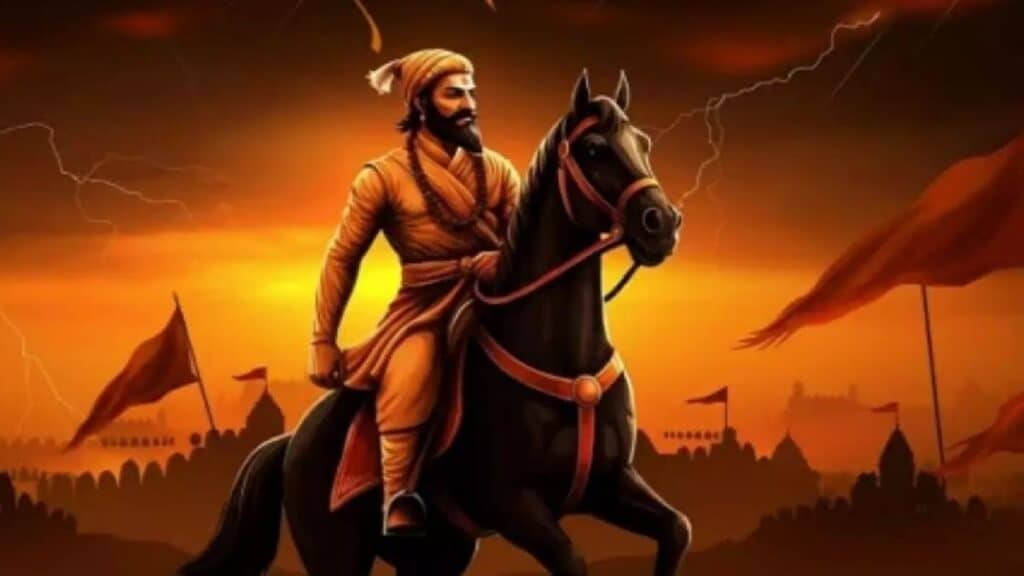
Shiv Jayanti continues to evolve while retaining its core. Large Shobha Yatras remain central, but the occasion has gained a powerful digital presence — social media campaigns, livestreams of fort events, and WhatsApp forwards with powada clips reach millions beyond Maharashtra.
Youth and trekking groups have made fort treks on Shiv Jayanti a growing tradition, combining heritage awareness with outdoor adventure. Raigad, Torna, and Pratapgad see thousands of visitors on this day.
Some community groups are also shifting toward eco-friendly decorations and reducing plastic use in processions, reflecting a broader sustainability consciousness.
How to Wish Someone on Shiv Jayanti:
- “Jai Bhavani! Jai Shivaji!” — the traditional greeting and chant
- “Chhatrapati Shivaji Maharaj Jayantichya Shubhechha” — Happy Shiv Jayanti in Marathi
- “May the courage and vision of Chhatrapati Shivaji Maharaj inspire you always”
- “Happy Shiv Jayanti — Jai Maharashtra!”
Cultural Reflection
Chhatrapati Shivaji Maharaj Jayanti endures because what Shivaji Maharaj represents goes beyond history. He is remembered as a model of governance that was inclusive, strategic, and grounded in the welfare of ordinary people. For Maharashtra and the Marathi-speaking world, this day is an annual reaffirmation of those values — courage tempered with compassion, ambition guided by responsibility, and pride expressed through unity.
For the Indian diaspora, Shiv Jayanti is a thread connecting communities to their Marathi roots, offering a moment each year to pass on stories, language, and values to the next generation. As the celebration grows — from fort gatherings to global webinars — its message remains unchanged: remember, be inspired, and serve.
Jai Bhavani! Jai Shivaji!