
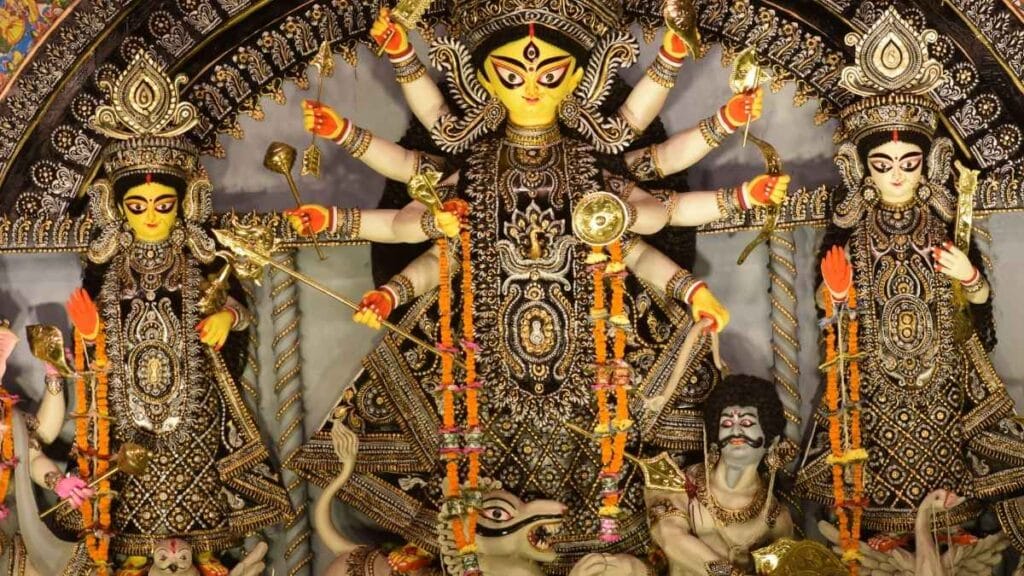
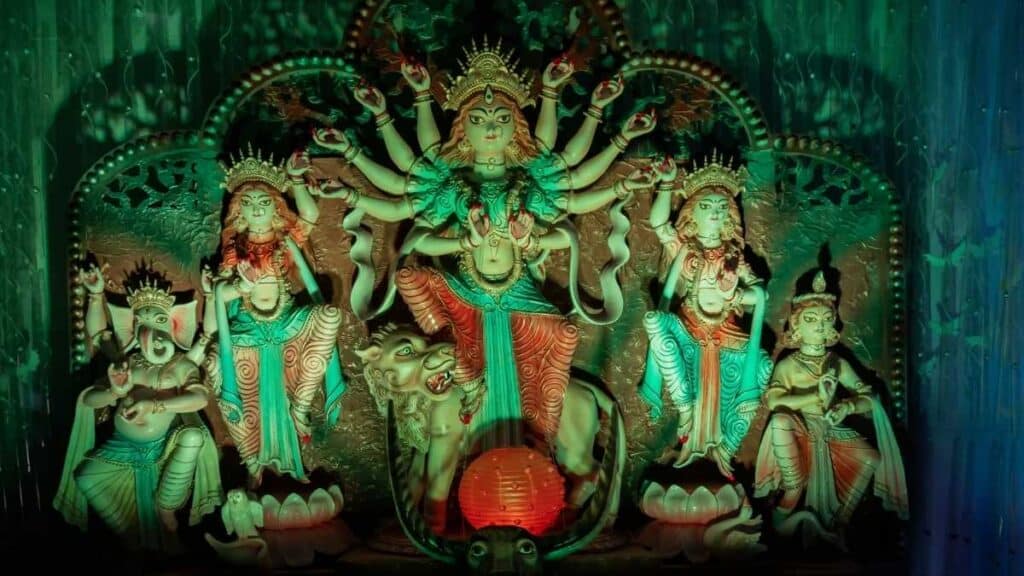
Durga Puja is one of the most magnificent and widely celebrated Indian Festival, popularly known as the Festival of the Goddess. Observed during the autumn season, Durga Puja symbolizes the victory of good over evil, the power of the divine feminine, and the celebration of life itself. Rooted in ancient Hindu traditions, the festival honors Goddess Durga’s triumph over the demon Mahishasura.
The spiritual meaning of Durga Puja comes from Hindu mythology, where the gods combined their powers to create Goddess Durga to defeat Mahishasura. This victory represents the triumph of righteousness over evil and is celebrated through elaborate rituals, artistic expressions, and community gatherings.
The festival spans ten days, with the final five days being the most prominent—from Mahalaya to Vijayadashami. Communities come together to worship beautifully crafted clay idols, enjoy cultural programs, share festive meals, and participate in processions. During Durga Puja, social boundaries dissolve—age, caste, and background fade as people celebrate together in devotion and joy.
Durga Puja is primarily observed by Bengali Hindus and communities across Eastern India, but today it is celebrated worldwide in countries such as the USA, UK, Canada, Australia, and across Europe. In 2021, UNESCO recognized Durga Puja in Kolkata as an Intangible Cultural Heritage of Humanity.
When Is Durga Puja Celebrated in 2026?
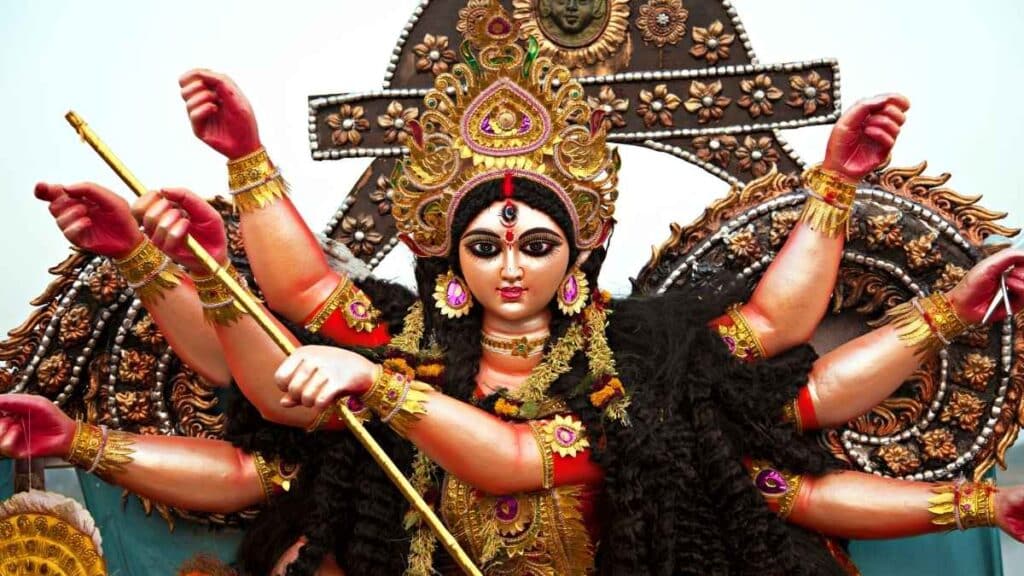
Durga Puja is celebrated during the Ashvin month of the Hindu lunar calendar, typically falling in September or October.
Durga Puja in India 2026 Dates:
- Mahalaya: October 10, 2026 (Saturday) – Marks the arrival of Goddess Durga
- Maha Shashthi: October 17, 2026 (Saturday) – Official beginning of worship
- Maha Saptami: October 18, 2026 (Sunday) – Second day of main puja
- Maha Ashtami: October 19, 2026 (Monday) – Peak worship with Sandhi Puja
- Maha Navami: October 20, 2026 (Tuesday) – Culmination of worship rituals
- Vijayadashami: October 21, 2026 (Wednesday) – Immersion day, symbolizing the goddess’s return
The exact dates vary each year based on the lunar calendar, making Durga Puja a movable festival rather than a fixed-date event.
Table of Contents
Durga Puja In USA, Canada, Australia, New Zealand, UK, UAE, Singapore 2026 Dates
- Maha Ashtami: October 18, 2026 – Peak worship with Sandhi Puja
- Maha Navami: October 19, 2026 – Culmination of worship rituals
- Vijayadashami: October 20, 2026 – Immersion day, symbolizing the goddess’s return
- Maha Ashtami: October 18, 2026 – Peak worship with Sandhi Puja
- Maha Navami: October 19, 2026 – Culmination of worship rituals
- Vijayadashami: October 20, 2026 – Immersion day, symbolizing the goddess’s return
- Maha Ashtami: October 19, 2026 – Peak worship with Sandhi Puja
- Maha Navami: October 20, 2026 – Culmination of worship rituals
- Vijayadashami: October 21, 2026 – Immersion day, symbolizing the goddess’s return
- Maha Ashtami: October 18, 2026 – Peak worship with Sandhi Puja
- Maha Navami: October 19, 2026 – Culmination of worship rituals
- Vijayadashami: October 20, 2026 – Immersion day, symbolizing the goddess’s return
- Maha Ashtami: October 19, 2026 – Peak worship with Sandhi Puja
- Maha Navami: October 20, 2026 – Culmination of worship rituals
- Vijayadashami: October 21, 2026 – Immersion day, symbolizing the goddess’s return
- Maha Ashtami: October 19, 2026 – Peak worship with Sandhi Puja
- Maha Navami: October 20, 2026 – Culmination of worship rituals
- Vijayadashami: October 21, 2026 – Immersion day, symbolizing the goddess’s return
Why Durga Puja Dates Change Every Year?

Durga Puja is celebrated based on the Hindu lunar calendar, not the Gregorian calendar.
It falls during Devi Paksha in the month of Ashvin, which usually occurs in September or October.
Since lunar months are shorter than solar months:
- Durga Puja dates shift every year
- Timing depends on tithi (lunar day) and local sunrise
- Main celebration occurs from Shashthi to Dashami tithis.
How Are Durga Puja Dates Decided?
The timing of Durga Puja is determined by the lunar calendar and specific tithis (lunar days) as per Hindu scriptures and the Drik Panchang system.
- Mahalaya marks the beginning on Amavasya (new moon) of Pitru Paksha
- Main puja begins on Shashthi (sixth day) of Devi Paksha
- Continues through Saptami (seventh), Ashtami (eighth), and Navami (ninth)
- Concludes on Dashami (tenth day) with Vijayadashami
- Sandhi Puja occurs at the cusp of Ashtami and Navami (48-minute ritual)
- Each day’s muhurat (auspicious timing) is calculated based on sunrise and tithi
Durga Puja Other Names & Regional Identities
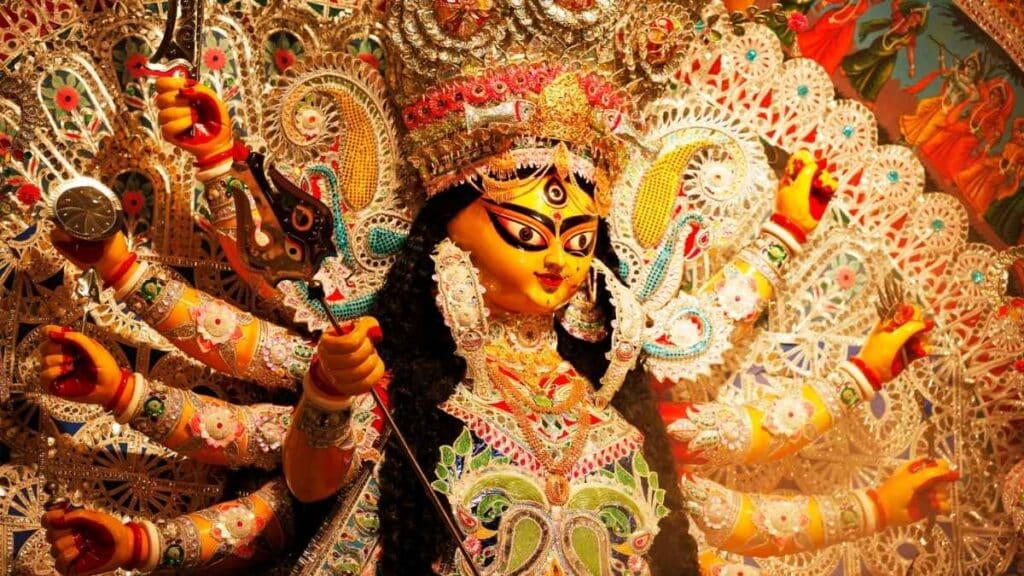
These are general or widely used names for Durga Puja:
Durga Puja — Standard name in Bengali, Hindi, English, and Sanskrit Durgotsava — Festival of Durga, emphasizing the celebratory nature Sharadotsava — Autumnal festival Akalbodhan — Untimely awakening (referencing Rama’s worship)
Eastern India
Durga Pujo / Pujo — Bengali pronunciation and colloquial name (West Bengal) Maayer Pujo — Worship of the Mother (West Bengal) Maha Pujo — Grand worship (West Bengal) Dol Jatra — Sometimes overlaps with related celebrations (West Bengal) Durga Puja — Assam, Tripura, Odisha (ଦୁର୍ଗା ପୂଜା) Chandi Medha — Odisha (referring to silver-adorned idols)
North India
Navaratri — Nine nights (celebrated simultaneously in Gujarat, Maharashtra, Uttar Pradesh, Punjab) Durga Puja / Puja — Bihar, Jharkhand (often called simply “Puja”)
Other Regional Variants
Kullu Dussehra — Himachal Pradesh (related festival) Mysore Dasara — Karnataka (royal celebration) Bommai Golu — Tamil Nadu (doll festival during same period) Bathukamma — Telangana (flower festival)
Diaspora / International Naming
Durga Puja — Standard name worldwide Pujo — Used by Bengali diaspora Festival of Durga — Western English contexts Durgotsav / Durga Festival — Community events globally
The Origins, History, and Legends of Durga Puja
Durga Puja is one of the oldest festivals of India, with roots in ancient Hindu scriptures and traditions. The festival finds mention in classical texts such as the Devi Mahatmya (Markandeya Purana), Devi Bhagavata Purana, Skanda Purana, and Varaha Purana, which describe the worship of the supreme goddess Durga and her victory over evil. Archaeological evidence, including a 608 CE temple inscription in Rajasthan, confirms the ancient origins of Durga worship.
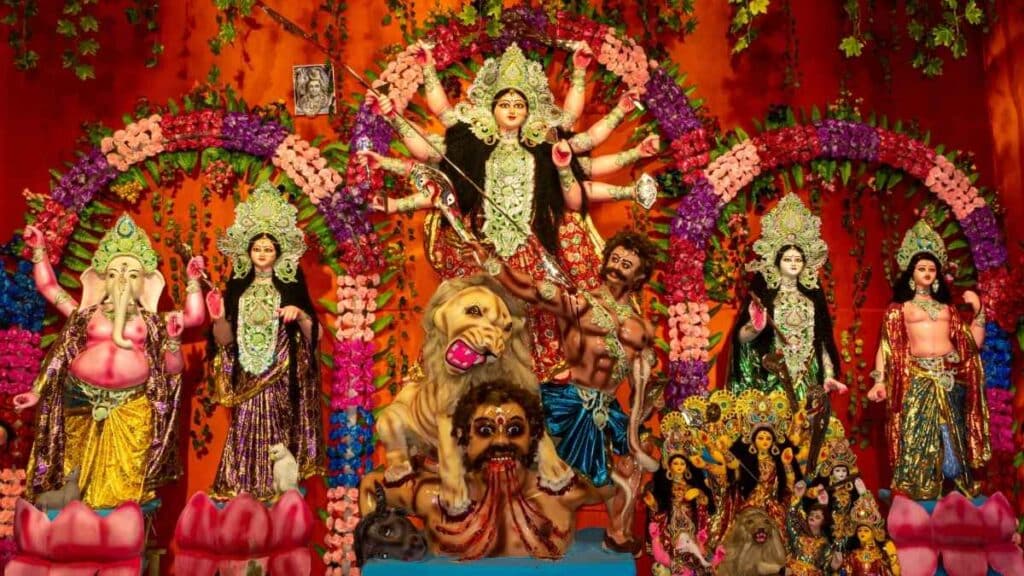
The most widely known legend associated with Durga Puja is the story of Mahishasura Vadha. Mahishasura, a buffalo demon, received a boon making him invincible against all gods and men. With this power, he terrorized the heavens and earth. Unable to defeat him individually, the gods combined their divine energies to create Goddess Durga. Armed with weapons from each deity and riding a lion, Durga battled Mahishasura for nine days and nights, finally slaying him on the tenth day—Vijayadashami. This victory symbolizes the triumph of good over evil and righteousness over tyranny.
Another important legend connects Durga Puja to Lord Rama. According to the Krittivasi Ramayana (15th-century Bengali text), Rama performed Akalbodhan (untimely awakening) to invoke Goddess Durga’s blessings before his battle with Ravana. This established the tradition of autumn Durga worship, as the festival was traditionally celebrated in spring.
Historical records show that by the 14th century, detailed puja manuals existed, and wealthy families sponsored public celebrations. During the medieval period, particularly under Muslim rule, Durga worship intensified as a reassertion of Hindu cultural identity. The colonial era saw Durga Puja transform from domestic worship to grand public festivals (sarvajanin pujas), establishing it as Bengal’s premier cultural celebration.
Scripturally, Durga Puja represents the victory of Shakti (divine feminine power) over negative forces, purification of the soul, and renewal of life. Over centuries, it evolved from a religious observance into a comprehensive socio-cultural festival that promotes art, unity, joy, and community bonding. Today, Durga Puja continues to symbolize that good ultimately prevails over evil and that divine power protects devotees.
Durga Puja: Cultural and Spiritual Significance
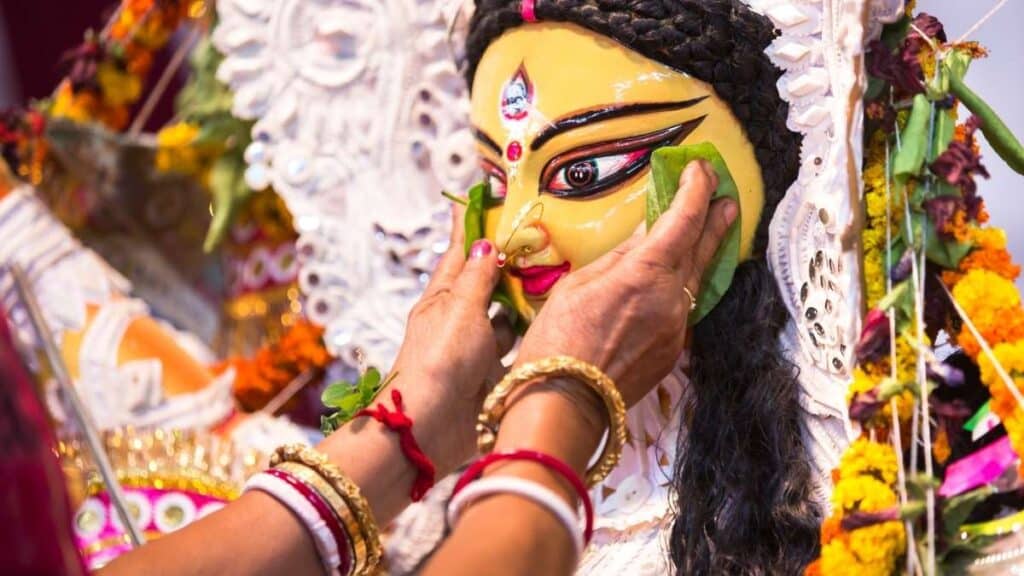
Durga Puja is a festival that symbolizes divine feminine power, victory of good over evil, and the celebration of life itself. Spiritually, Goddess Durga represents Shakti—the supreme cosmic energy that creates, sustains, and transforms the universe. Her victory over Mahishasura teaches that righteousness, courage, and divine grace ultimately triumph over tyranny and deception.
Culturally, Durga Puja transcends religious worship to become the world’s largest community art festival. The elaborate clay idols, innovative pandal themes, traditional music, and street celebrations bring millions together in a shared cultural experience. The festival promotes unity, creativity, and social equality, as people from all backgrounds participate in pandal-hopping, cultural programs, and community feasts.
Marking the post-monsoon harvest season, Durga Puja also signifies agricultural abundance, seasonal renewal, and gratitude to nature. The Navapatrika ritual—bundling nine sacred plants—honors the divine presence in vegetation and nature’s life-giving forces.
Beyond its religious roots, Durga Puja carries deep emotional significance as a homecoming festival. The saying “Maa asche” (Mother is coming) reflects the tradition where Durga returns to her parental home from Mount Kailash, mirroring Bengali customs where married daughters visit their families. This symbolism makes Durga Puja a celebration of family bonds, nostalgia, and belonging.
More than worship, Durga Puja is a universal celebration of strength, hope, and human connection—reminding us that courage and goodness can overcome any challenge.
Durga Puja Prayers and Religious Observances
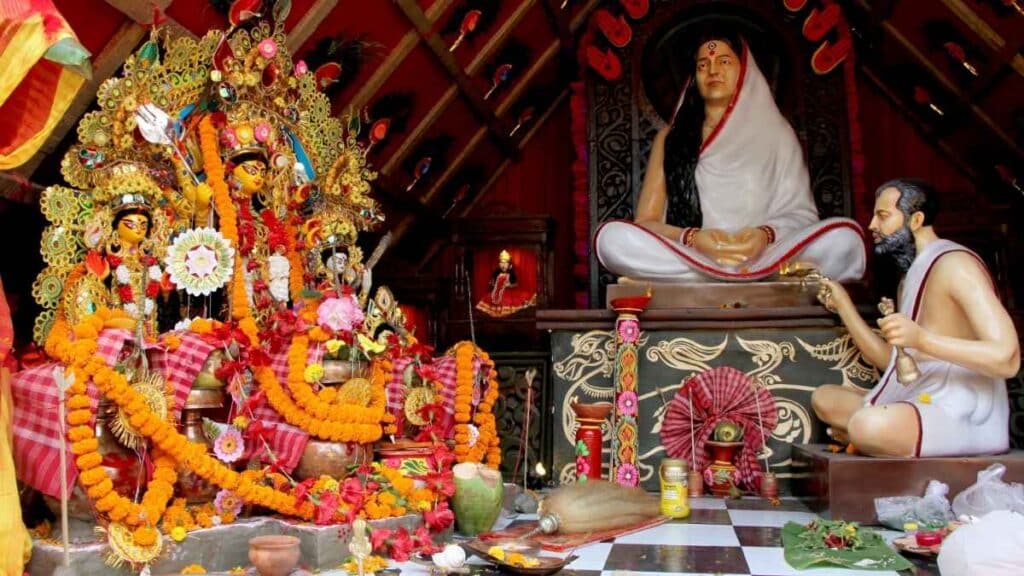
Durga Puja prayers and rituals are performed to seek divine blessings, spiritual purification, and protection from negative forces. The religious observances span ten days, with elaborate ceremonies conducted by priests following Vedic, Puranic, and Tantric traditions.
The central text recited during Durga Puja is the Devi Mahatmya (also called Chandi Path), narrating Goddess Durga’s battles and her manifestations of divine power. Devotees believe that listening to or reciting these Sanskrit verses removes obstacles and brings prosperity.
Main Rituals and Observances:
Mahalaya (Day 1):
- Tarpana: Offering water to ancestors
- Mahishasuramardini: Listening to pre-dawn recitation on radio
- Chokkhu Daan: Painting eyes on idols, bringing them to life
Shashthi (Day 2):
- Bodhana: Awakening ritual, invoking the goddess
- Adhivasa: Anointing ceremony with symbolic offerings
- Ghatasthapana: Establishing divine presence in sacred kalash
Saptami-Navami (Days 3-5):
- Pushpanjali: Offering flowers with Vedic mantras
- Sandhi Puja: 48-minute ritual at cusp of Ashtami-Navami, offering 108 lotuses
- Kumari Puja: Worshipping young girls as goddess manifestations
- Homa: Fire oblations with ghee, grains, and sacred herbs
- Arati: Waving lamps accompanied by dhak drums and conch shells
Dashami (Day 6):
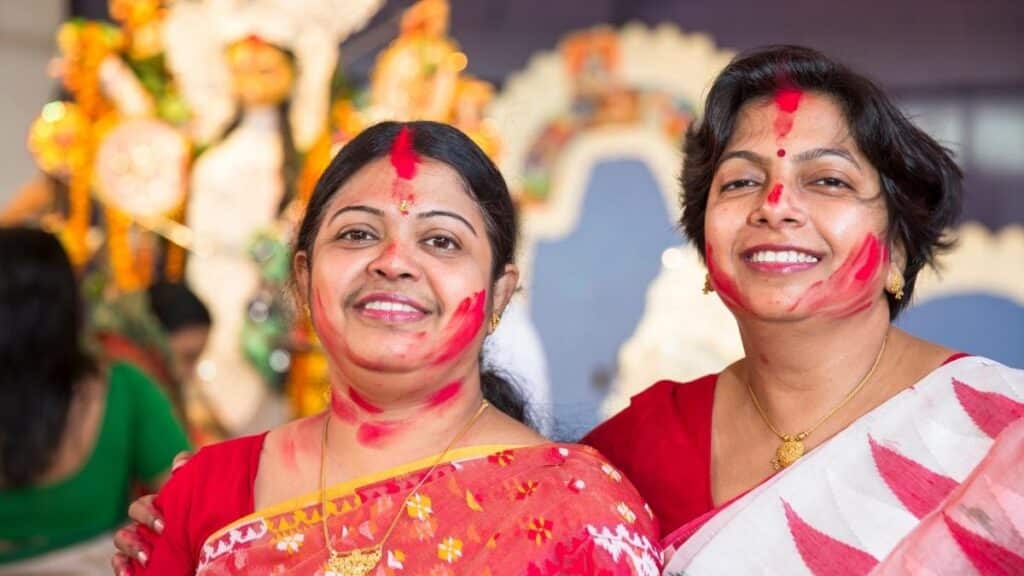
- Sindoor Khela: Married women apply vermillion to the goddess and each other
- Visarjan: Immersion procession to rivers
Home vs Temple Observances:
Home Pujas: Families dedicate a worship space (thakur dalan) with simplified rituals, intimate gatherings, and traditional decorations.
Community/Temple Pujas: Grand pandals with professional priests conducting full rituals, public arati participation, dhunuchi dance (devotional dance with incense burners), and 24-hour festivities.
Whether at home or in temples, Durga Puja rituals emphasize devotion, gratitude, community bonding, and spiritual renewal, making the festival both sacred and joyously celebratory.
How Durga Puja Is Celebrated Across India
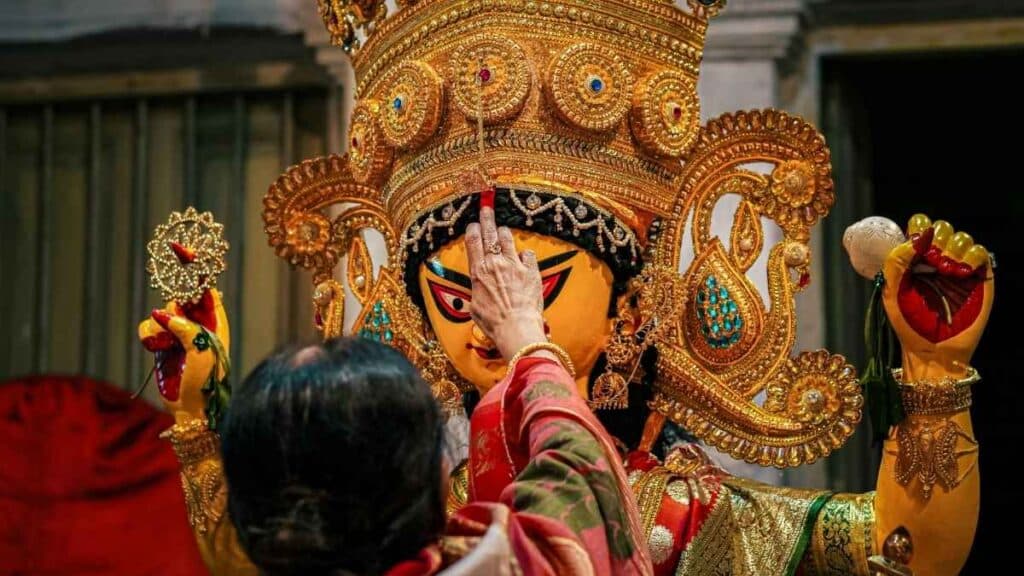
While the essence of Durga Puja remains consistent, its expressions vary widely across regions.
West Bengal: The epicenter of celebrations with over 3,000 community pandals in Kolkata alone. Elaborate theme-based pandals, pandal-hopping, cultural competitions, and mass immersions in the Hooghly River. UNESCO-recognized cultural heritage.
Assam: Major celebrations in Guwahati and across the state, with traditional dhak-dhol drumming, temple worship, and strong community participation. Animal sacrifices at some traditional temples.
Odisha: Known for the Chandi Medha tradition in Cuttack, where idols are adorned with silver jewelry. Retro pandal decorations and strong connection to regional art forms.
Tripura: Over 2,500 community pujas with the historic Durgabari Temple celebration founded by royalty. Tribal communities participate alongside Bengalis.
Bihar & Jharkhand: Traditional, family-centered celebrations with less commercialization. Strong devotional focus with simple yet heartfelt observances.
Delhi NCR: Over 800 pujas across Delhi, Gurgaon, and Noida. Chittaranjan Park (“Mini Bengal”) hosts 30+ pandals. The Kashmere Gate puja, dating to 1910, is one of the oldest outside Bengal.
Maharashtra, Gujarat, Karnataka: Celebrated by Bengali communities maintaining their cultural traditions within cosmopolitan cities.
Despite regional variations, artistic pandals, devotional music, community feasts, and shared participation remain central everywhere.
Participation Across Religions in India
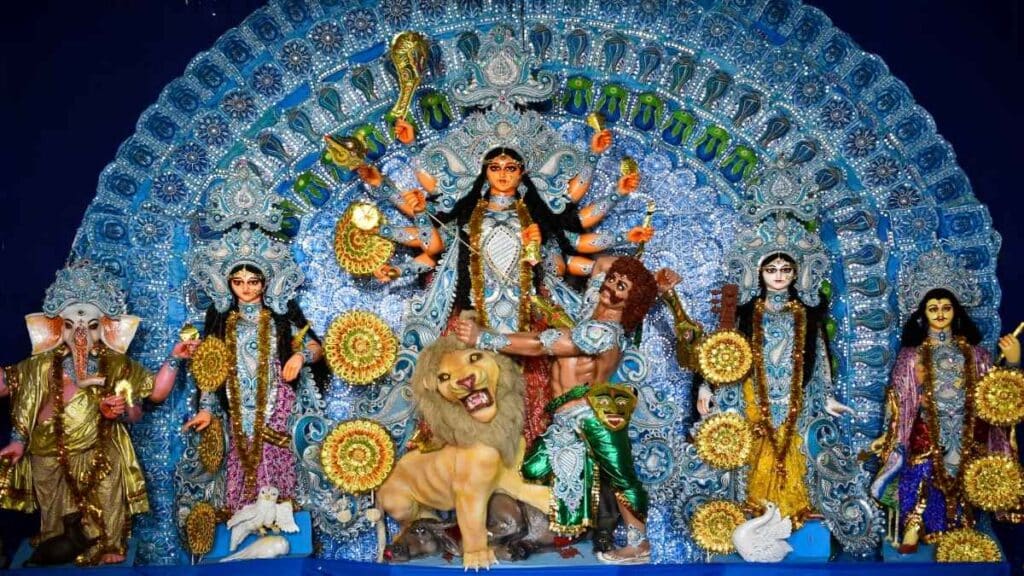
Durga Puja is celebrated not only by Hindus but by people of many religions across India, making it a truly inclusive cultural festival. Over time, Durga Puja has evolved beyond religious boundaries and become a shared celebration of art, joy, and togetherness.
People from different faiths—Hindus, Muslims, Sikhs, Christians, and others—participate in Durga Puja festivities by visiting pandals, enjoying cultural programs, sharing festive meals, and contributing to community celebrations.
Muslim artisans dominate Kumortuli (Kolkata’s idol-making district), crafting the clay sculptures worshipped by millions. Many pandals receive sponsorship from businesses owned by people of various faiths. Cultural performers, vendors, and volunteers come from diverse religious backgrounds.
The festival promotes harmony and social bonding, as neighborhoods come together to celebrate without distinction of religion, caste, or background. In Bengal and Bangladesh, interfaith participation is a natural part of Durga Puja, reflecting the region’s pluralistic spirit.
By encouraging unity, creativity, and shared happiness, Durga Puja serves as a reminder that cultural festivals can bring people together through common values of beauty, celebration, and mutual respect.
How Durga Puja Is Celebrated Outside India
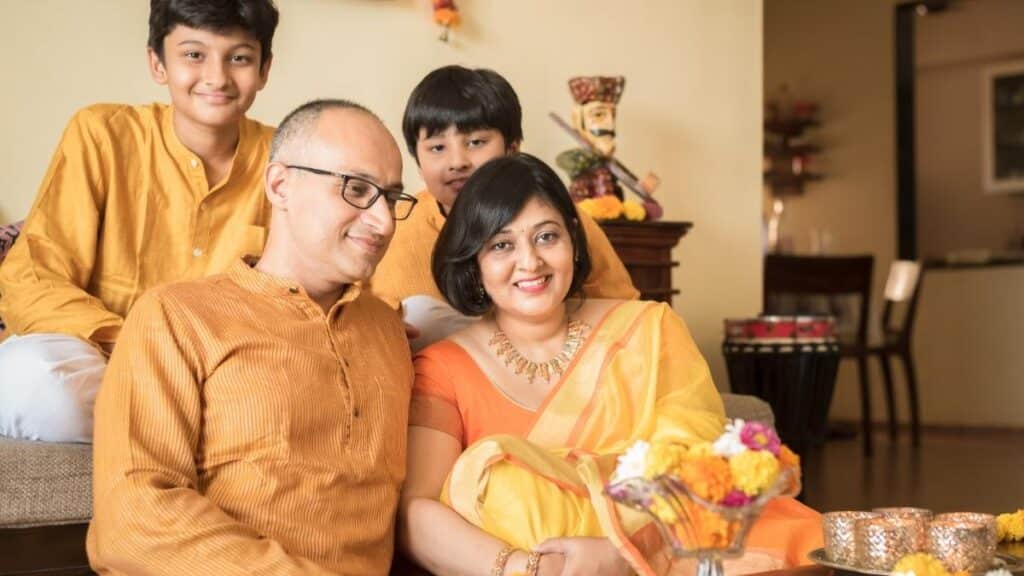
Indian diaspora communities across the United States, Canada, the UK, Australia, the Middle East, and beyond celebrate Durga Puja through:
- Community events and weekend celebrations accommodating work schedules
- Temple gatherings with traditional rituals and imported or locally-made idols
- Cultural programs featuring music, dance, drama, and competitions
- Pandal decorations in convention centers and community halls
- Immersion ceremonies in designated water bodies or symbolic pools
- Food festivals serving traditional Bengali cuisine
Major cities host elaborate celebrations:
- USA: New York, New Jersey, California, Texas, Chicago
- Canada: Toronto (Toronto Durgabari), Vancouver, Montreal
- UK: London (Thames immersion tradition), Manchester, Birmingham
- Australia: Sydney, Melbourne
- Middle East: Dubai, Abu Dhabi, Singapore
These celebrations help second-generation Indians stay connected to their cultural roots while introducing non-Indians to Bengali traditions. Organizations like ECDPA (established 1970 at Columbia University) maintain multi-decade traditions, while newer communities continue to establish their celebrations.
Durga Puja Gifting Traditions
Durga Puja is a major gifting and shopping season, with elaborate traditions of exchanging presents symbolizing love, respect, and new beginnings.
Traditional Gifts:
- New clothes: Sarees, kurta-pajama, traditional wear
- Sweets (Mishti): Rasgulla, sandesh, rosogolla, mishti doi
- Jewelry: Modest gold/silver items, traditional ornaments
- Books: Especially Pujabarshiki (special festival editions)
Modern Gifting:
- Designer fashion and accessories
- Artisanal Bengali handicrafts (terracotta, dhokra, handloom)
- Gift hampers with sweets, dry fruits, tea
- Tech gadgets and lifestyle products
- Experience gifts and subscription services
Timing: Gifts are primarily exchanged on Vijayadashami (immersion day) and following days, accompanied by “Shubho Bijoya” greetings.
The tradition reflects the spirit of gratitude, family bonding, and sharing prosperity that Durga Puja represents. In diaspora communities, gifts become cultural bridges, keeping traditions alive while adapting to contemporary contexts.
Traditional Durga Puja Foods and Sweets
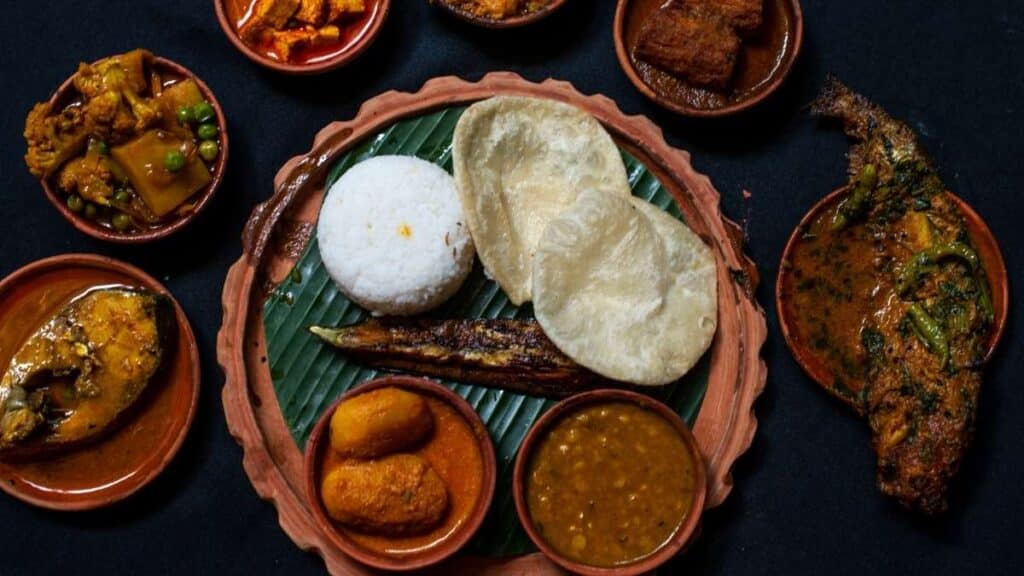
Food plays an essential role in Durga Puja celebrations, symbolizing community, devotion, and indulgence.
The Sacred Bhog (Offering):
Classic Menu:
- Khichuri: Creamy rice-lentil preparation with ghee
- Labra: Mixed vegetable curry with 5-7 vegetables
- Begun Bhaja: Fried eggplant slices
- Tomato Chutney: Sweet-tangy condiment
- Payesh (Kheer): Rice pudding with milk and jaggery
- Luchi: Deep-fried puffed bread
Bengali Sweets (Mishti):
- Rosogolla/Rasgulla: Spongy cottage cheese balls in syrup
- Sandesh: Sweetened cottage cheese delicacy
- Mishti Doi: Sweet fermented yogurt
- Chomchom, Langcha, Pantua: Syrupy traditional sweets
- Notun Gurer Payesh: Rice pudding with date palm jaggery
Street Food Culture:
- Phuchka (Pani Puri), Jhalmuri, Ghugni
- Kathi Rolls, Egg Roll
- Telebhaja: Assorted fritters (beguni, alur chop)
Home-Cooked Specialties:
- Kosha Mangsho: Slow-cooked mutton curry
- Fish preparations: Hilsa, prawn malaikari
- Vegetable curries: Shukto, dhokar dalna
These dishes are prepared lovingly and shared freely with neighbors, friends, and community, embodying Durga Puja’s spirit of abundance and togetherness.
Durga Puja: Music, Art, and Cultural Expression
Music, art, and performance are the heartbeat of Durga Puja, transforming the festival into the world’s largest open-air art celebration.
Music and Sound:
- Dhak-dhol drumming: Traditional leather drums creating hypnotic rhythms
- Mahishasuramardini: Iconic All India Radio broadcast (since 1950s)
- Rabindra Sangeet: Tagore songs integral to cultural programs
- Devotional chants: Chandi Path recitations, bhajans, kirtans
- Contemporary music: Bengali bands, Bollywood songs, fusion concerts
Visual Arts:
- Clay idol-making: Artisans at Kumortuli crafting elaborate sculptures months in advance
- Pandal architecture: Bamboo-and-cloth structures transformed into artistic masterpieces—replicas of global monuments, abstract installations, socially conscious themes
- Alpana: Rice-paste floor art with intricate patterns
- Lighting design: Traditional lamps to modern LED installations
Together, music, art, and celebration make Durga Puja a powerful expression of creativity, cultural unity, and democratic participation in the arts.
Durga Puja’s Modern Relevance and Cultural Continuity
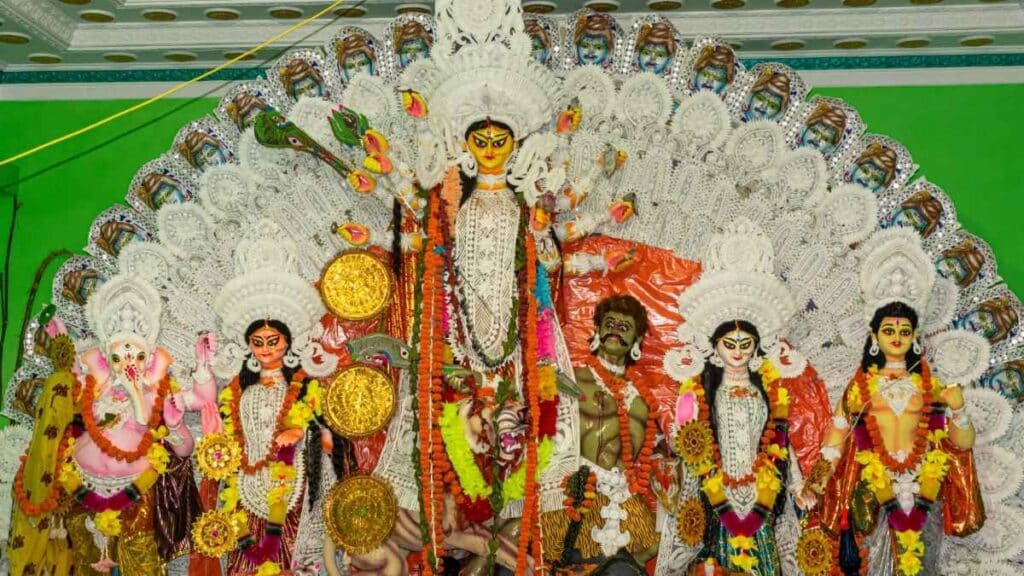
In today’s fast-changing world, Durga Puja continues to hold deep relevance as a festival that promotes art, unity, and emotional connection. While celebrations have become more elaborate and commercialized, the core spirit remains unchanged—celebrating divine power, cultural pride, and community bonds.
Durga Puja plays an important role in preserving cultural continuity. For Bengali communities worldwide, the festival connects people to their roots while allowing creative reinterpretation. Second-generation diaspora members find cultural identity through puja participation, learning Bengali traditions, cuisine, and values.
Beyond religious worship, Durga Puja carries a timeless message of courage, creativity, and triumph over adversity. In an increasingly fragmented world, the festival reminds us of the importance of community celebration, artistic expression, and cultural heritage.
Durga Puja’s enduring relevance lies in its ability to adapt while staying true to its essence—celebrating the divine feminine, honoring tradition through innovation, and bringing millions together in shared joy and devotion.
Joi Maa Durga. Shubho Bijoya.