
Eid ul-Fitr is one of the most significant and widely celebrated festivals in Islam, popularly known as the Festival of Breaking the Fast or Meethi Eid (Sweet Eid). Observed at the end of the holy month of Ramadan, Eid ul-Fitr symbolizes gratitude, renewal, and the joy of spiritual achievement. Rooted in Islamic tradition, the festival marks the conclusion of a month-long period of fasting, prayer, and reflection — and the beginning of celebration and thankfulness.
The spiritual meaning of Eid ul-Fitr lies in divine reward. It is considered Allah’s gift to believers who successfully observed the fast of Ramadan, and a day to express gratitude for the strength and guidance received through the holy month. The festival begins with a special congregational prayer (Salat al-Eid), followed by charity, family gatherings, festive meals, and the giving of gifts.
During Eid ul-Fitr, social boundaries dissolve — communities come together in prayer, shared meals, and acts of generosity that cross lines of age, status, and background. Eid ul-Fitr is primarily observed by Muslims across South Asia, the Middle East, Southeast Asia, Africa, and beyond, but its spirit of joy and togetherness resonates worldwide. Today it is celebrated in countries such as India, the USA, UK, Canada, Australia, and the UAE, bringing Muslim communities and their neighbors together in shared festivity.
When Is Eid ul-Fitr Celebrated in 2026?
Eid ul-Fitr is celebrated on the first day of Shawwal, the tenth month of the Islamic Hijri (lunar) calendar, immediately after the completion of Ramadan.
Eid ul-Fitr 2026 Dates in India: Expected Date: Friday, March 20, 2026, or Saturday, March 21, 2026 — subject to the sighting of the crescent moon (Hilal) of Shawwal 1447 AH. The celebration traditionally spans three days: March 20–22, 2026. Eid prayer timing (IST): Typically between 7:00 AM and 10:00 AM, after the sun rises above the horizon.
The exact date is confirmed upon the sighting of the crescent moon on the last evening of Ramadan, making it a movable festival rather than a fixed-date event.
Table of Contents
Eid ul-Fitr In USA, Canada, Australia, New Zealand, UK, UAE, Singapore 2026 Dates
Eid ul-Fitr on Friday, March 20, 2026
Eid ul-Fitr on Friday, March 20, 2026
Eid ul-Fitr on Friday, March 20, 2026
Eid ul-Fitr on Friday, March 20, 2026
Eid ul-Fitr on Friday, March 20, 2026
Eid ul-Fitr on Friday, March 20, 2026
Why Do Eid Dates Change Every Year?

Eid al-Fitr is based on the Islamic Hijri calendar, which follows the lunar cycle of approximately 354 days — about 11 days shorter than the Gregorian solar calendar. The festival begins with the confirmed sighting of the crescent moon on the last day of Ramadan.
Since lunar months are shorter than solar months, Eid’s Gregorian date shifts earlier each year, cycling through all seasons over approximately 33 years. Dates may also vary between countries depending on whether they follow local moon sighting or astronomical calculation.
Eid ul-Fitr Overview
Eid al-Fitr — meaning the “Festival of Breaking the Fast” in Arabic — is one of the two most sacred celebrations in Islam, observed on the first day of Shawwal, the tenth month of the Islamic Hijri calendar. It marks the joyful conclusion of Ramadan, the holy month of fasting, prayer, and spiritual reflection.
The festival begins with a congregational prayer (Salat al-Eid), followed by charity, family gatherings, festive meals, and gift-giving. Fasting on Eid al-Fitr is strictly forbidden, reflecting its nature as a day of divine reward and rejoicing. Observed by over 1.8 billion Muslims worldwide, Eid al-Fitr is among the largest annual celebrations on earth — a day of gratitude, generosity, and human connection.
Eid ul-Fitr Other Names and Regional Identities

These are general and widely used names for Eid ul-Fitr:
Eid ul-Fitr — Standard name used in Urdu, English, Arabic, and most languages.
Meethi Eid / Sweet Eid — Name used across South Asia to reflect the tradition of sweet foods.
Choti Eid (Lesser Eid) — Common Urdu/Hindi name distinguishing it from Eid ul-Adha.
South Asia: Ramzan Id — Widely used in India across Hindi-speaking regions.
ঈদুল ফিতর (Eid ul-Fitr) — Bengali name; Chand Raat marks the festive eve in Bangladesh and West Bengal.
ஈத் உல் பித்ர் — Tamil name used in Tamil Nadu and Sri Lanka.
Middle East and Central Asia: عيد الفطر (ʿĪd al-Fiṭr) — Arabic name used across the Arab world.
عید فطر (Eid-e-Fitr) — Persian/Farsi name used in Iran and Afghanistan.
Ramazan Bayramı / Şeker Bayramı (Sugar Feast) — Turkish names; Bayram meaning festival.
Oraza Ait — Kazakh name. Orozo Ait — Kyrgyz name. Idi Ramazon — Tajik name.
Southeast Asia and Africa: Hari Raya Idul Fitri / Hari Raya Aidilfitri / Lebaran — Indonesian and Malay names; Hari Raya meaning “Great Day.”
Korité — Name used across Senegal and West Africa.
Small Sallah — Popular name in Nigeria.
Diaspora and International Naming:
Hariraya Buka Puasa — Filipino name.
Fitër Bajrami — Albanian name.
Ramazanski Bajram — Bosnian name.
In many Western and multicultural contexts, the festival is simply known as Eid or Eid ul-Fitr, recognized as one of the world’s major Islamic celebrations.
The Origins, History, and Legends of Eid ul-Fitr
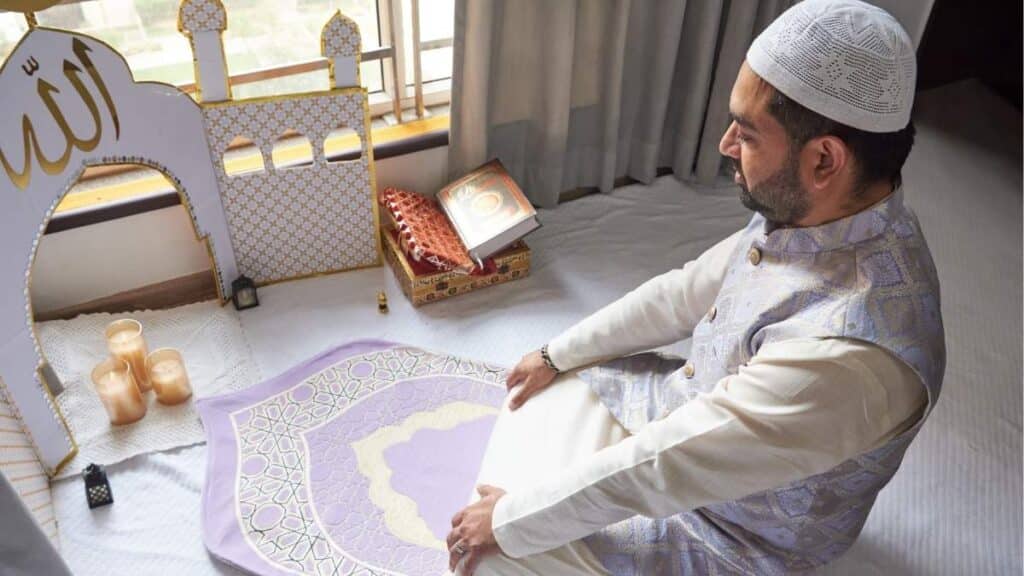
Eid ul-Fitr is one of the most ancient and sacred festivals in Islam, with its origins rooted in the traditions of the Prophet Muhammad (PBUH). According to a hadith narrated by Anas ibn Malik and recorded in Sunan An-Nasa’i (1556), when the Prophet migrated from Mecca to Medina, he found the people celebrating two festive days. He remarked that Allah had ordained two better days of festivity for Muslims — Eid ul-Fitr and Eid ul-Adha — establishing both as divinely sanctioned celebrations.
The theological foundation of Eid ul-Fitr lies in divine reward and gratitude. The Quran (2:185) instructs believers to complete the period of fasting, to glorify Allah for His guidance, and to be grateful — a verse that underpins the entire spirit of the festival. Eid ul-Fitr is therefore understood as Allah’s gift to believers who successfully observed the fast of Ramadan, and a moment of collective thanksgiving for the strength and spiritual elevation received through the holy month.
Historically, Eid ul-Fitr also carries the significance of Ramadan itself — the month in which the Quran was revealed to the Prophet Muhammad — making its conclusion a moment of profound spiritual importance. Over centuries, the festival evolved from a religious observance into a rich social and cultural celebration that unites communities across class, geography, and language in shared gratitude and joy.
Eid ul-Fitr: Cultural and Spiritual Significance
Eid ul-Fitr is a festival that symbolizes gratitude, renewal, and the joy of spiritual accomplishment. Spiritually, it represents the reward for a month of devotion, discipline, and closeness to Allah — believers emerge from Ramadan cleansed, strengthened, and grateful. The festival embodies the core Islamic values of generosity, forgiveness, brotherhood, and care for the vulnerable.
Culturally, Eid ul-Fitr brings communities together beyond social distinctions, promoting unity, reconciliation, and harmony. The obligation of Zakat ul-Fitr — a charitable payment made before the Eid prayer on behalf of every family member — ensures that even the poorest members of the community can celebrate with dignity, making inclusion a built-in principle of the festival.
More than a religious occasion, Eid ul-Fitr is a universal celebration of togetherness, positivity, and human connection — a reminder that spiritual discipline and communal joy are deeply intertwined.
Eid ul-Fitr Prayers and Religious Observances
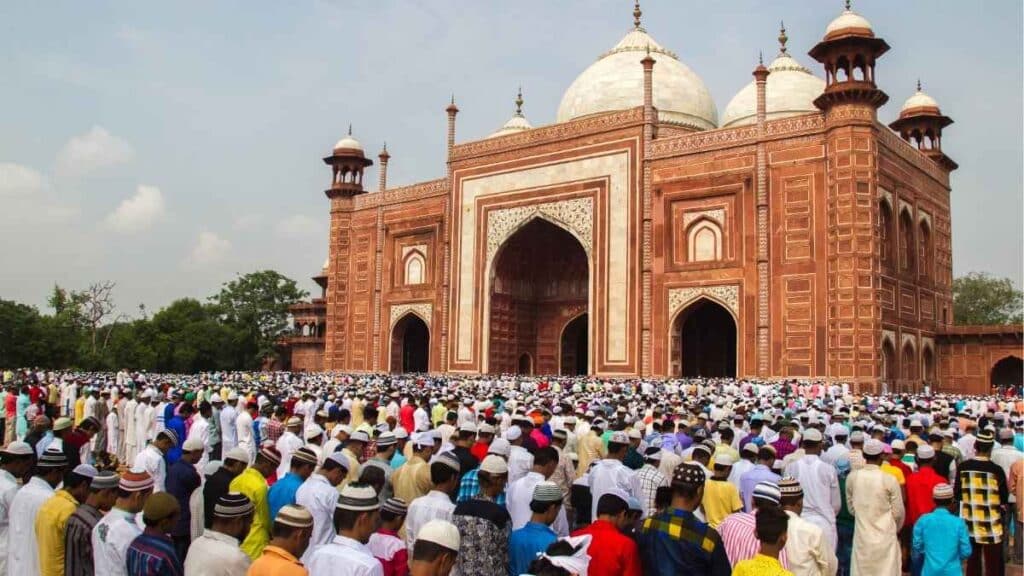
Eid ul-Fitr follows a specific and sacred sequence of observances rooted in the Sunnah of the Prophet Muhammad (PBUH).
Zakat ul-Fitr must be paid before the Eid prayer — a mandatory charitable contribution made on behalf of every family member, ensuring that the poor can participate in the joy of Eid (Sahih Bukhari: 1511).
Ghusl (ritual bath) is performed in the morning, followed by wearing one’s finest clothes and applying perfume, in accordance with the Sunnah.
Eating an odd number of dates before leaving for prayer is a recommended Sunnah act specific to Eid ul-Fitr (Sahih Bukhari: 953).
Salat al-Eid (Eid Prayer) consists of two rak’ats with additional Takbirs (declarations of Allahu Akbar). The prayer is offered in congregation in open fields, Eidgahs, or large mosques. It is considered either obligatory or strongly recommended depending on the school of jurisprudence.
Khutbah (sermon) follows the Eid prayer — unlike Friday prayer, where the sermon comes first — and covers themes of gratitude, charity, and community.
Takbeerat — the recitation of “Allahu Akbar, Allahu Akbar, La ilaha illallah, Allahu Akbar, Allahu Akbar wa Lillahil Hamd” — is encouraged while traveling to and from the prayer venue.
It is forbidden to fast on Eid ul-Fitr (Sahih Bukhari: 1995), reflecting its nature as a day of reward, not restraint.
How Eid ul-Fitr Is Celebrated Across India

While the essence of Eid ul-Fitr remains consistent, its expressions vary beautifully across India’s regions.
In Delhi and Uttar Pradesh, Jama Masjid in Delhi draws tens of thousands for congregational prayer. Lucknow’s Eid culture is renowned for its tehzeeb (refinement) — elaborate Sheer Khurma preparations, formal family visits, and traditional attire define the celebrations.
In Hyderabad, the old city comes alive with mehndi bazaars and fragrant kitchens. Biryani is central to the feast, and Mecca Masjid hosts one of India’s largest Eid congregations.
In Kerala, Eid ul-Fitr features distinctive traditions — pathiri (rice flatbread) with mutton curry, community feasts, and cultural programs unique to Kerala’s Muslim communities.
In West Bengal and Assam, Bengali Muslims celebrate with Shemai, Polao, and Korma, while Chand Raat brings mehndi, lanterns, and festive markets.
In Kashmir, prayers at the historic Hazratbal Shrine and community celebrations carry deep spiritual significance.
In Tamil Nadu, seviyan, biryani, and dargah visits mark the occasion, particularly in coastal districts with significant Muslim populations.
Despite regional variations, prayer, food, charity, and shared participation remain central everywhere..
Participation Across Religions in India
Eid ul-Fitr in India often extends warmly beyond Muslim communities, reflecting the country’s composite culture. Hindu, Sikh, and Christian neighbors regularly join Muslim households for Eid meals, and the tradition of sharing Sheer Khurma and sweets across faiths is widespread — especially in mixed neighborhoods across Uttar Pradesh, Rajasthan, and Bengal. Community leaders and neighbors from all backgrounds attend Eid gatherings as a natural expression of mutual respect and cultural solidarity.
This cross-community participation reflects the same pluralistic spirit that defines India’s many shared festivals — a reminder that the joy of Eid belongs, in a meaningful way, to all.
How Eid ul-Fitr Is Celebrated Outside India

Eid ul-Fitr is celebrated by Muslim communities in virtually every country on earth, with each culture bringing its own flavor to the shared occasion.
In the UAE and Saudi Arabia, grand mosque prayers, new thobes and abayas, and elaborate feasts of rice dishes and sweets define the celebrations. UAE cities are decorated with festive lights.
In Turkey, Şeker Bayramı is a major national holiday with mosque minarets illuminated by traditional mahya lights. Children visit neighbors door-to-door for sweets, and families visit cemeteries to honor their loved ones.
In Indonesia, Lebaran features the mudik — one of the world’s largest annual human migrations — as millions travel home for family celebrations with ketupat, rendang, and opor ayam.
In Malaysia and Singapore, Hari Raya Aidilfitri features open houses, traditional Baju Melayu attire, and “duit raya” envelopes for children.
In Bangladesh, Eid prayers at Sholakia host one of the world’s largest congregations, and Chand Raat is celebrated with mehndi and beloved Eid songs broadcast on national television.
In the United Kingdom, schools and employers widely accommodate time off, with major Eid festivals in London, Birmingham, and Bradford.
In the United States, New York City suspends parking rules on Eid, and public schools have been closed on Eid since 2016.
In West Africa, celebrations known as Korité or Small Sallah can last two to ten days, featuring community prayers and grand family feasts.
Eid ul-Fitr Gifting Traditions
Eid ul-Fitr gifting is a joyful tradition that symbolizes love, generosity, and inclusion. Eidi — the gifting of money to children by elders and relatives — is the most universal and beloved Eid tradition. In Pakistan, freshly issued currency notes are a cherished custom. In Malaysia and Singapore, Eidi comes in colorful “duit raya” envelopes. In Egypt and the Arab world, children receive Eidi to spend freely during the Eid days.
Beyond cash gifts, Eid ul-Fitr gifting traditions include new clothes gifted to children and younger family members, sweets and baked goods shared with neighbors, and charitable donations in the spirit of Zakat ul-Fitr. Today, digital Eidi transfers, Eid hampers, and curated sweet boxes have become popular among diaspora communities — the symbolism remains unchanged: generosity, love, and making sure everyone feels included.
Eid ul-Fitr Foods and Culinary Traditions
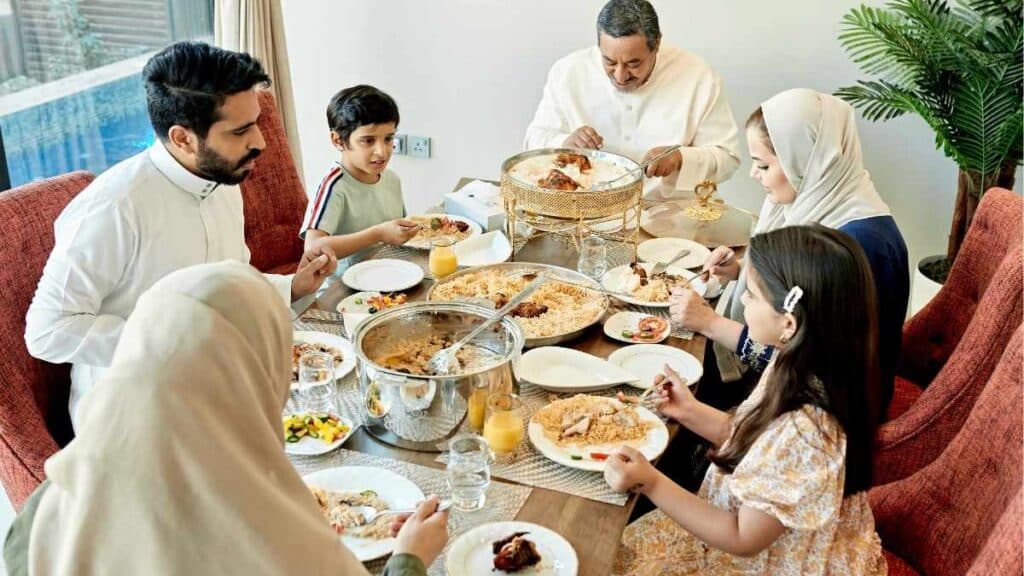
Food is central to Eid al-Fitr, earning it the nickname Meethi Eid (Sweet Eid). Common festive foods include:
India & Pakistan: Sheer Khurma (vermicelli in sweetened milk with dates and dry fruits) is the quintessential Eid breakfast. Biryani, Korma, Haleem, Sewaiyan, and Gulab Jamun are staples.
Bangladesh: Shemai, Polao, Korma, and rich Bengali curries grace the table.
Arab World: Ma’amoul and Kahk (date-filled cookies) across the Levant; Shuwa (slow-cooked lamb) in Oman; Bint al-sahn (honey bread) in Yemen.
Turkey: Baklava, Turkish delight, and börek are synonymous with Şeker Bayramı.
Indonesia & Malaysia: Ketupat, rendang, lemang, and opor ayam are Lebaran/Hari Raya icons.
East Africa: Xalwo (halwa) and buskut are traditional Eid sweets in Somalia and neighboring regions.
Trinidad & Tobago: Sawine (sweet vermicelli) alongside curries, roti, and goat curry define Caribbean Eid.
Music, Art, and Cultural Expression
Eid ul-Fitr has inspired rich musical and artistic traditions across cultures. In Turkey, the Eid period features Sufi concerts, dervish dancing (Sema), and the Ottoman tradition of mahya illuminations — messages formed by lights strung between mosque minarets. In Bangladesh, beloved Eid songs are broadcast on national television on Chand Raat. Urdu and Persian poetry celebrating Eid has a centuries-old tradition in South Asia.
Lebanon hosts major Arabic music concerts during Eid along the Beirut waterfront. Film industries in Muslim-majority countries — Bollywood, Lollywood, and Indonesian cinema — regularly release major productions during Eid, making it one of the year’s premier entertainment seasons.
Modern Observance and Evolving Practices

Contemporary Eid celebrations blend deep-rooted tradition with modern sensibilities. Digital greetings via WhatsApp, Instagram, and social media have become universal, with millions sharing Eid Mubarak messages and festive photos in new outfits. Online Eidi transfers and e-gift cards are increasingly common among diaspora communities.
How to wish someone on Eid: The most common greeting is “Eid Mubarak” (Blessed Eid). In Malay cultures, “Selamat Hari Raya, Maaf Zahir dan Batin” beautifully captures the spirit of forgiveness central to the day. In Turkish, “Bayramınız Kutlu Olsun” is the traditional greeting.
Sustainability has also entered modern Eid conversations — mindful consumption, reduced food waste, and community-organized food drives reflect how younger generations are carrying forward the festival’s core ethic of generosity with fresh purpose.
Cultural Reflection
Eid ul-Fitr endures as one of humanity’s great celebrations because of meaning, not spectacle. It closes a month of spiritual discipline with an outpouring of joy, gratitude, and human connection. It insists that celebration be inclusive — the poorest member of the community must also know the happiness of Eid, hence the obligatory charity before prayer. It asks families to gather, communities to forgive, and believers to be grateful.
Across every culture where it is observed — from the Eidgahs of Lucknow to the open houses of Kuala Lumpur, from the mudik homecoming of Indonesia to the Eid fairs of New York — Eid al-Fitr speaks to a universal longing: to mark moments of spiritual achievement with love, food, and the company of those who matter most.
Eid Mubarak.