
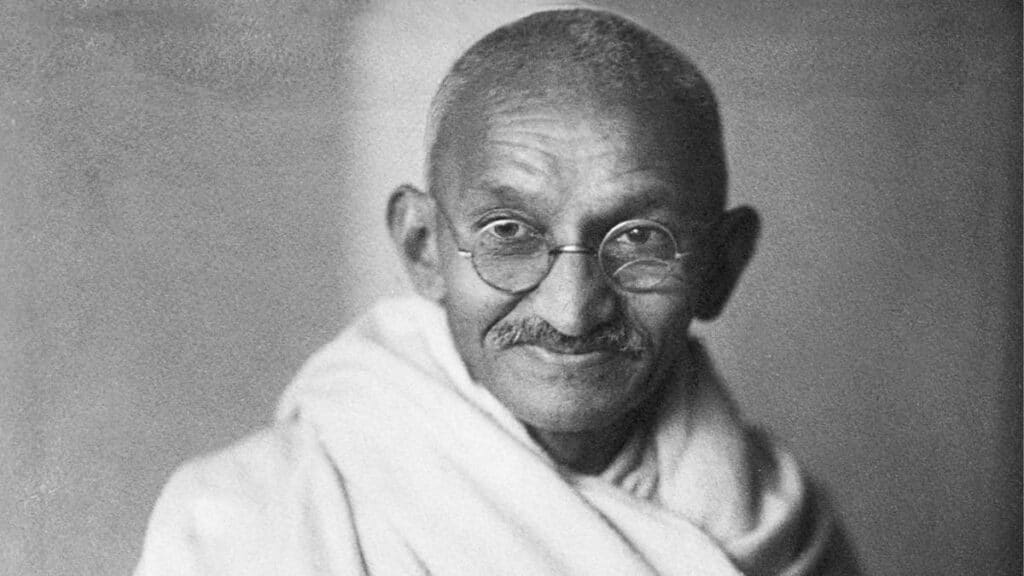
Gandhi Punyatithi, observed as Shaheed Diwas (Martyrs’ Day), is one of India’s most solemn national commemorations. Marked every year on January 30, the day honours the memory of Mohandas Karamchand Gandhi — the Father of the Nation — who was assassinated on this date in 1948. It is a day of quiet reflection, national tribute, and recommitment to Gandhi’s enduring ideals of truth, non-violence, and communal harmony.
The day is observed not only by government institutions and armed forces but by schools, civil society organisations, temples, and Indian diaspora communities worldwide. At its heart, Gandhi Punyatithi is an invitation to pause — and to carry Bapu’s legacy forward.
When Is Gandhi Punyatithi in 2026?
Gandhi Punyatithi falls on a fixed calendar date — January 30 — every year, marking the death anniversary of Mahatma Gandhi. Unlike lunar-calendar festivals, this date does not change. The national two-minute silence is observed at 11:00 AM IST.
Because Gandhi Punyatithi follows the Gregorian calendar, it is observed on the same date globally. In 2026, it falls on a Friday, making it accessible for evening community commemorations worldwide.
Table of Contents
Gandhi Punyatithi In USA, Canada, Australia, New Zealand, UK, UAE, Singapore 2026 Dates
Mahatma Gandhi Punyatithi on Friday, 30 January 2026
Mahatma Gandhi Punyatithi on Friday, 30 January 2026
Mahatma Gandhi Punyatithi on Friday, 30 January 2026
Mahatma Gandhi Punyatithi on Friday, 30 January 2026
Mahatma Gandhi Punyatithi on Friday, 30 January 2026
Mahatma Gandhi Punyatithi on Friday, 30 January 2026
Gandhi Punyatithi Overview
Gandhi Punyatithi is the death anniversary of Mahatma Gandhi, observed annually on January 30 as Shaheed Diwas (Martyrs’ Day) by the Government of India. The day honours Gandhi’s life of non-violent resistance and his sacrifice for India’s freedom, while also paying tribute to all those who gave their lives for the nation’s independence.
It is a day of solemn national mourning, interfaith prayer, and civic reflection — observed by millions across India and the global Indian diaspora.
Other Names and Regional Identities
Gandhi Punyatithi is known by several names across India’s languages and communities:
- Hindi: गांधी पुण्यतिथि (Gandhi Punyatithi), शहीद दिवस (Shaheed Diwas)
- English: Martyrs’ Day, Gandhi Death Anniversary, Gandhi Remembrance Day
- Gujarati: શહીદ દિવસ (Shaheed Divas)
- Marathi: हुतात्मा दिन (Hutatma Din)
- Bengali: শহিদ দিবস (Shahid Dibas)
- Tamil: தியாகிகள் நாள் (Thiyagikal Naal)
- Telugu: అమరవీరుల దినం (Amaraveerula Dinam)
- Kannada: ಹುತಾತ್ಮರ ದಿನ (Huthatmara Dina)
In diaspora communities, it is widely referred to as Gandhi Punyatithi or Martyrs’ Day, and is observed as a counterpart to the celebratory Gandhi Jayanti on October 2.
Origins, History, and Background
Mohandas Karamchand Gandhi was born on October 2, 1869, in Porbandar, Gujarat. After studying law in England and leading civil rights efforts in South Africa, he returned to India in 1915. Over the following decades, he transformed the Indian independence movement — launching the Non-Cooperation Movement (1920), the historic Dandi March (1930), and the Quit India Movement (1942) — through his doctrine of Ahimsa (non-violence) and Satyagraha (truth-force).
On the evening of January 30, 1948, barely five months after India’s independence, Gandhi was walking to his prayer meeting at Birla House in New Delhi when he was shot three times by Nathuram Godse. He passed away at 5:17 PM. The nation — and the world — mourned deeply. The Government of India declared January 30 as Shaheed Diwas in his honour, and the solemn observance has continued every year since.
India also observes a second Shaheed Diwas on March 23, honouring revolutionaries Bhagat Singh, Rajguru, and Sukhdev, who were executed by the British in 1931.
Prayers and Religious Observances
Gandhi’s own daily prayer meetings were a model of interfaith harmony. On Shaheed Diwas, observances reflect that same spirit:
- Raghupati Raghav Raja Ram — Gandhi’s favourite bhajan — is sung at gatherings across India
- All-religion prayer meetings include verses from the Gita, Bible, Quran, and Guru Granth Sahib
- A two-minute silence is observed nationwide at 11:00 AM IST
- At Raj Ghat, the Last Post bugle is sounded and the inter-services contingent reverses arms in military tribute.
Observances Across India
While the national ceremony is held in New Delhi, Gandhi Punyatithi is observed across India:
- New Delhi: The President, Vice President, Prime Minister, Defence Minister, Chief of Defence Staff, and Service Chiefs gather at Raj Ghat — Gandhi’s samadhi — to lay floral wreaths and offer tributes.
- Gujarat (Porbandar & Ahmedabad): Special commemorations at Sabarmati Ashram, the spiritual centre of Gandhi’s movement.
- Maharashtra: Events at Mani Bhavan in Mumbai, where Gandhi stayed during his visits to the city.
- Schools and colleges nationwide hold assemblies, patriotic programmes, essay and art competitions.
- Government offices observe the two-minute silence and hold tribute ceremonies.
Participation Across Religions in India
Gandhi devoted his life to Hindu-Muslim unity and communal harmony. Shaheed Diwas honours that legacy through genuine interfaith participation:
- Hindus, Muslims, Sikhs, Christians, Parsis, and members of all communities join in the day’s observances
- Multi-faith prayer meetings — a hallmark of Gandhi’s own daily routine — are organised across cities and towns
- Civil society organisations use the day to reaffirm commitments to peace, unity, and equality.
Global and Diaspora Observances
Gandhi’s impact extends far beyond India’s borders. The United Nations observes October 2 as the International Day of Non-Violence in his honour. On January 30, diaspora communities around the world observe Gandhi Punyatithi:
- United Kingdom: Events at Gandhi statues in Parliament Square, London, and in Leicester and Birmingham
- USA: Commemoration programmes organised by Indian-American associations and cultural centres in New York, Chicago, and Houston
- Canada: Community gatherings in Toronto, Vancouver, and Brampton
- South Africa: Special significance as the place where Gandhi first launched Satyagraha; Phoenix Settlement near Durban holds annual observances
- Australia, New Zealand, UAE, Germany, Singapore: Local Indian associations and cultural organisations hold remembrance events and prayer meetings.
Music, Art, and Cultural Expression
Gandhi’s life has inspired an extraordinary body of creative work across generations:
- Raghupati Raghav Raja Ram remains the most iconic bhajan associated with him, sung at virtually every Gandhian gathering worldwide
- Films such as Richard Attenborough’s Gandhi (1982) and Lage Raho Munna Bhai (2006) introduced his philosophy to global and younger audiences
- Visual art: Gandhi is one of the most depicted figures in Indian public art — murals, portraits, and sculptures across government buildings and public spaces
- Literature: His autobiography The Story of My Experiments with Truth remains a widely read classic
- Schools perform patriotic plays and recite Gandhi’s writings and speeches on this day
Modern Observance and Evolving Practices
Gandhi Punyatithi has taken on new dimensions in contemporary India:
- Digital tributes on social media mark the day, with quotes, photographs, and short films shared widely
- NGOs and social enterprises launch campaigns aligned with Gandhian values — rural development, cleanliness, environmental sustainability
- Swachh Bharat clean-up drives are often organised on this day
- Young Indians engage with Gandhi’s legacy through podcasts, documentary series, and talks on non-violence and civil disobedience
- How to wish someone: Share a favourite Gandhi quote or simply say “Let us remember Bapu and walk in his footsteps.” A message of peace, truth, and service is most fitting for the day.
Cultural Reflection
Gandhi Punyatithi is a pause in the national calendar — a moment to look inward. In a world marked by conflict and division, the quiet observance of January 30 carries enduring relevance. Gandhi’s life was a testament to the power of conviction over coercion, of service over self-interest. Whether through a two-minute silence, a shared prayer, or a page of his autobiography, the day invites every Indian — at home and across the diaspora — to carry a little of Bapu’s light forward.