
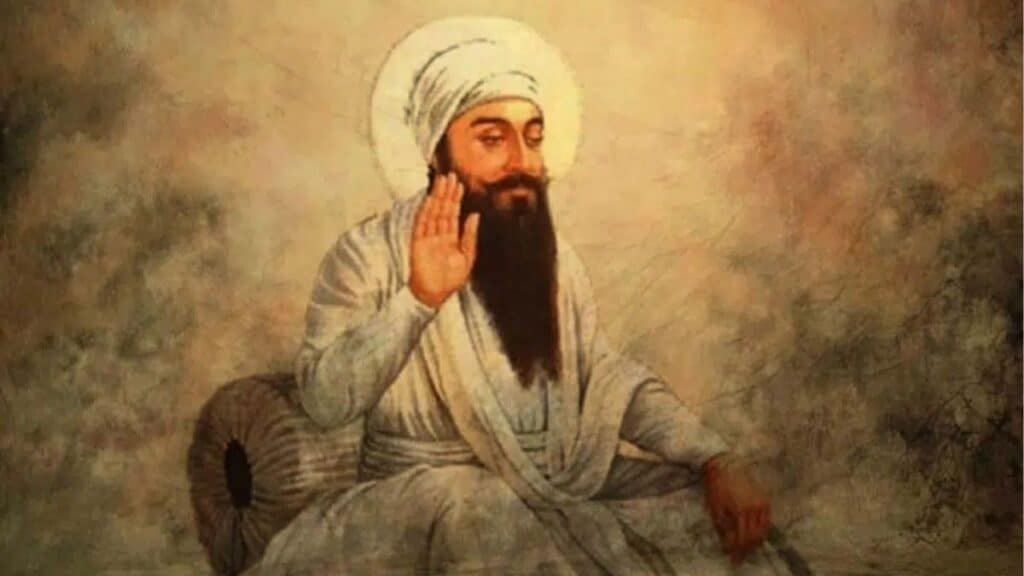
Guru Arjan Dev Shaheedi Divas is one of the most solemn and significant observances in the Sikh faith. It commemorates the martyrdom of Guru Arjan Dev Ji (1563–1606), the fifth of the ten Sikh Gurus and the first Sikh martyr (Shaheed) in history. Observed each year in late May or June, this day is not a festival of celebration but a day of deep spiritual reflection, reverence, and renewed commitment to the values Guru Arjan Dev Ji embodied — truth, humility, selfless service, and unshakeable faith in the face of persecution.
Guru Arjan Dev Ji built the Harmandir Sahib (Golden Temple) in Amritsar and compiled the Adi Granth — the first edition of the Sikh scripture — giving the community a permanent spiritual home and a living scripture. His execution by Mughal Emperor Jahangir in 1606 became a watershed moment in Sikh history, transforming how the Panth understood faith, courage, and resistance.
Sikhs across India and the global diaspora observe Shaheedi Divas through Akhand Paths (continuous scripture readings), kirtan, langar, and the distribution of Chabeel — sweetened water offered freely to all — as a living act of seva in the Guru’s memory.
When Is Guru Arjan Dev Shaheedi Divas in 2026?
Shaheedi Divas is observed on the 24th day of Jeth, the third month of the Nanakshahi calendar, which falls in June each year.
Guru Arjan Dev Shaheedi Divas 2026 Dates in India:
- June 16, 2026 — as per the Mool Nanakshahi Calendar (2 Harr)
- June 18, 2026 (Thursday) — as per the SGPC Nanakshahi Calendar (24 Jeth)
Akhand Path (48-hour scripture reading) typically begins two days before the Shaheedi Divas date, with the Bhog (conclusion) on the morning of the main day, around sunrise (approximately 4:00–6:00 AM IST).
Table of Contents
Guru Arjan Dev Shaheedi Divas In USA, Canada, Australia, New Zealand, UK, UAE, Singapore 2026 Dates
- June 16, 2026 — as per the Mool Nanakshahi Calendar (2 Harr)
- June 18, 2026 (Thursday) — as per the SGPC Nanakshahi Calendar (24 Jeth)
- June 16, 2026 — as per the Mool Nanakshahi Calendar (2 Harr)
- June 18, 2026 (Thursday) — as per the SGPC Nanakshahi Calendar (24 Jeth)
- June 16, 2026 — as per the Mool Nanakshahi Calendar (2 Harr)
- June 18, 2026 (Thursday) — as per the SGPC Nanakshahi Calendar (24 Jeth)
- June 16, 2026 — as per the Mool Nanakshahi Calendar (2 Harr)
- June 18, 2026 (Thursday) — as per the SGPC Nanakshahi Calendar (24 Jeth)
- June 16, 2026 — as per the Mool Nanakshahi Calendar (2 Harr)
- June 18, 2026 (Thursday) — as per the SGPC Nanakshahi Calendar (24 Jeth)
- June 16, 2026 — as per the Mool Nanakshahi Calendar (2 Harr)
- June 18, 2026 (Thursday) — as per the SGPC Nanakshahi Calendar (24 Jeth)
Why Guru Arjan Dev Shaheedi Divas Dates Change Every Year?
Two Nanakshahi calendar systems exist within the Sikh community — the SGPC-revised version (2003) and the original Mool Nanakshahi Calendar. Both are solar-based and largely fixed, but slight structural differences cause a 2-day variation for certain observances. Unlike lunar Hindu festivals that shift widely each year, Shaheedi Divas consistently falls in June, making diaspora planning straightforward.
Other Names and Regional Identities
| Language / Region | Name |
|---|---|
| Punjabi (Gurmukhi) | ਗੁਰੂ ਅਰਜਨ ਦੇਵ ਸ਼ਹੀਦੀ ਦਿਵਸ |
| Punjabi (Shahmukhi) | گرو ارجن دیو شہیدی دیوس |
| Hindi | गुरु अर्जन देव शहीदी दिवस |
| English | Martyrdom Day of Guru Arjan Dev Ji |
| Common Sikh Usage | Shaheedi Divas / Shaheedi Diwas |
| Also Known As | Chabeel Day |
| Diaspora Usage | Guru Arjan Dev Ji Martyrdom Day |
In Punjab, the day is widely referred to simply as “Shaheedi” in everyday speech. Diaspora organizations in the UK, Canada, and USA use “Martyrdom Day of Guru Arjan Dev Sahib” in formal communications.
The Origins, History, and Legends of Guru Arjan Dev Shaheedi Divas
Guru Arjan Dev Ji was born on April 15, 1563, in Goindwal, Punjab. He was the youngest son of Guru Ram Das Ji (the fourth Sikh Guru) and Mata Bhani Ji. At just 18 years of age, he was appointed the fifth Sikh Guru following his father’s passing in 1581.
During his 25-year Guruship, Guru Arjan Dev Ji accomplished extraordinary things. He completed the construction of the Harmandir Sahib in Amritsar — designing its four open doors to welcome people of all castes and faiths from every direction. He compiled the Adi Granth, incorporating 2,218 of his own hymns alongside compositions of previous Gurus and 19 Hindu and Muslim saints (Bhagats), completing it on August 30, 1604, and installing it in the Harmandir Sahib on September 1, 1604. He also founded the towns of Tarn Taran, Kartarpur, and Hargobindpur, reorganized the dasvandh (voluntary tithe) system, and authored the beloved Sukhmani Sahib — the Psalm of Peace.
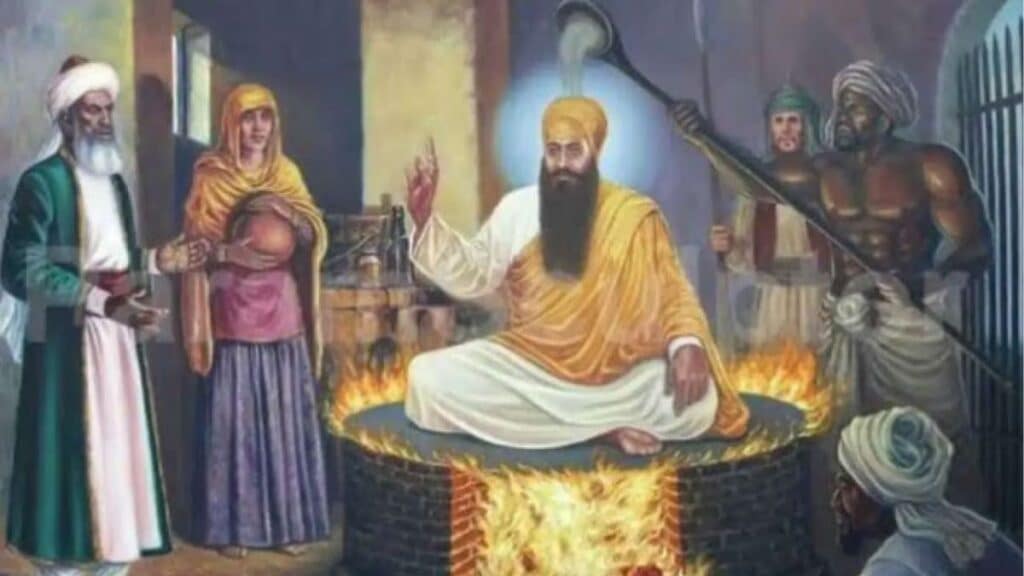
In 1606, Mughal Emperor Jahangir ordered Guru Arjan Dev Ji’s arrest. The Guru had blessed Khusrau Mirza, Jahangir’s rebellious son — an act the Emperor treated as sedition. Deeper motivations included the Mughal establishment’s alarm at the growing influence of the Sikh Panth across both Hindu and Muslim communities. Jahangir demanded a heavy fine, sought changes to the Adi Granth, and pressed the Guru to convert to Islam. Guru Arjan Dev Ji refused every demand.
He was imprisoned in Lahore Fort and subjected to severe torture over several days in the scorching summer heat. He died on May 30, 1606. Spanish Jesuit missionary Jerome Xavier, present in Lahore at the time, documented the Guru’s suffering and confirmed that Sikhs had attempted to purchase his release. Guru Arjan Dev Ji’s last instruction to his son was to “sit fully armed on his throne and maintain an army” — a directive that gave rise to the concept of Miri-Piri under the sixth Guru, Hargobind, and permanently shaped the character of the Sikh faith.
Guru Arjan Dev Shaheedi Divas: Cultural and Spiritual Significance
Guru Arjan Dev Ji’s martyrdom is considered the most defining moment in early Sikh history — a watershed that shaped the identity, courage, and resilience of the Panth for all generations to follow.
His sacrifice embodies enduring Sikh values. He refused to alter a single verse of the Adi Granth under imperial pressure — Sat (truth) over compromise. Even during torture, accounts describe him reciting Gurbani and repeating “Tera Bhana Meetha Laage” (Thy Will is Sweet to me) — Chardi Kala (eternal optimism) in the face of death. His refusal to submit despite certain consequences reflects Nirbhau (fearlessness) rooted in divine faith, one of the core principles of Sikhism.
For the global Indian diaspora, Shaheedi Divas is a reminder that spiritual courage, cultural preservation, and community solidarity are values worth defending at personal cost — a message that resonates as powerfully in 2026 as it did in 1606.
Prayers and Religious Observances
Akhand Path: The central religious observance is the Akhand Path — an uninterrupted 48-hour reading of the entire Guru Granth Sahib Ji, beginning two days before Shaheedi Divas and concluding (Bhog) on the morning of the day itself.
Kirtan Darbars: Gurdwaras organize all-day and all-night kirtan programs featuring Guru Arjan Dev Ji’s compositions, particularly Sukhmani Sahib and verses from Kirtan Sohila. Professional ragis perform in classical ragas that the Guru himself specified for his compositions.
Ardas and Hukamnama: Special congregational prayers (Ardas) recounting the Guru’s sacrifice are offered, followed by a Hukamnama — a divine directive drawn by opening the Guru Granth Sahib at random.
Chabeel: One of the most visible traditions is the distribution of Chabeel — sweetened water or chilled sherbet — offered freely to all passersby in public spaces. This act of seva commemorates the Guru’s suffering in the summer heat and embodies the Sikh spirit of sharing with all, regardless of faith.
Langar: Gurdwaras serve free community meals throughout the day with extended hours to welcome all who come.
How Guru Arjan Dev Shaheedi Divas Is Celebrated Across India
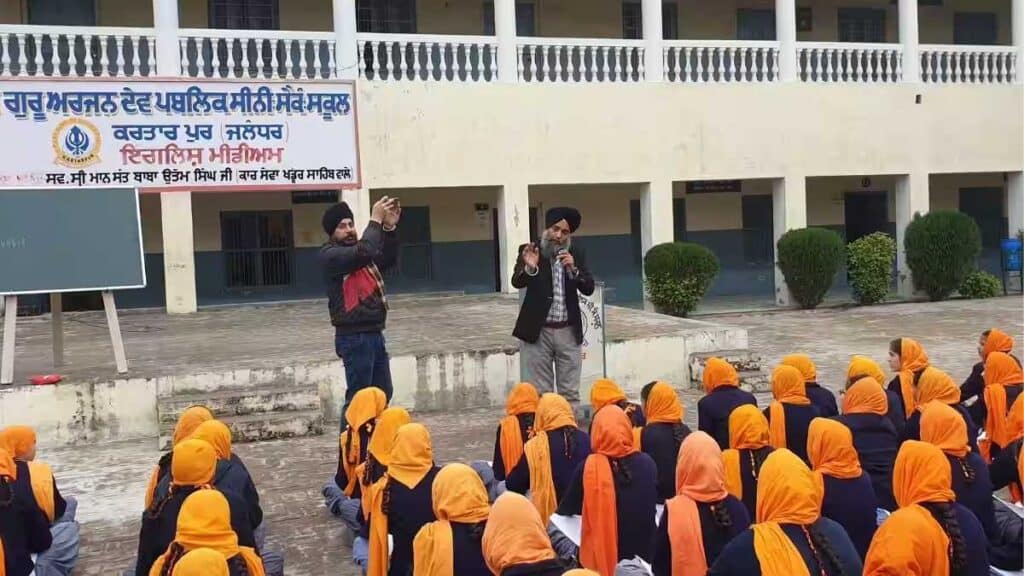
Punjab sees the largest and most immersive observances. Akhand Paths begin in thousands of gurdwaras across the state, Nagar Kirtans (devotional processions) wind through cities and towns, and Chabeel stalls line highways, markets, and crossroads as a living tribute to the Guru. The Harmandir Sahib (Golden Temple) in Amritsar draws the largest gatherings in India.
Delhi’s Sikh community observes the day at Gurdwara Sis Ganj Sahib, Gurdwara Bangla Sahib, and neighborhood gurdwaras, with the Delhi Sikh Gurdwara Management Committee organizing citywide programs and Chabeel distribution from major intersections.
Haryana, Himachal Pradesh, and Chandigarh hold full-day kirtan programs with particular solemnity, given their deep historical Sikh connections.
Maharashtra, Gujarat, and other states host kirtan and langar programs in Sikh communities in Mumbai, Pune, and Ahmedabad, reflecting the pan-India presence of the faith.
Participation Across Religions in India
One of the extraordinary aspects of Guru Arjan Dev Ji’s legacy is its interfaith resonance. His Adi Granth included the compositions of both Hindu and Muslim saints — a gesture of profound inclusivity. The four open doors of the Harmandir Sahib remain a universal symbol of welcome.
On Shaheedi Divas, it is not uncommon to see Hindu and Muslim neighbors joining Sikhs at gurdwaras for langar or receiving Chabeel at roadside stalls. The act of offering sweetened water to a stranger on a hot June day is a gesture that crosses all religious boundaries. In Punjab especially, many Hindu families maintain a generations-old tradition of reverence toward Sikh Gurus, and Shaheedi Divas brings this shared cultural fabric to the surface.
How Guru Arjan Dev Shaheedi Divas Is Celebrated Outside India
USA: Major Sikh hubs in Fremont, Yuba City, New York, and New Jersey organize multi-day Akhand Paths and open-door community programs. Several gurdwaras conduct public educational outreach about Guru Arjan Dev Ji’s life for non-Sikh neighbors.
Canada: Home to one of the world’s largest Sikh diaspora populations, cities like Brampton, Surrey, and Vancouver hold significant Nagar Kirtans and community programs. Chabeel stalls appear at prominent public locations throughout June.
UK: The communities in Southall, Birmingham, and Leicester mark the day with all-night kirtan, langar, and in some cities, interfaith dialogues. Sikh organizations engage schools and local councils to raise awareness about the Guru’s legacy.
UAE: Gurdwara Sri Guru Nanak Darbar in Jebel Ali, Dubai, is the region’s most prominent center of observance, organizing prayer programs and community meals for Sikhs across the Gulf.
Australia and New Zealand: Sikh communities in Sydney, Melbourne, Brisbane, Auckland, and Wellington hold week-long programs. The Australian winter offers a reflective contrast to the scorching summer heat in which the Guru was martyred.
Germany and Singapore: Active Sikh sangats in Frankfurt, Cologne, and Singapore’s Central Sikh Temple organize kirtan programs, langars, and community gatherings that draw broad participation.
Traditional Guru Arjan Dev Shaheedi Divas Foods and Culinary Traditions
The culinary heart of Shaheedi Divas is langar — the Sikh practice of free, vegetarian communal meals served to all without distinction. Every dish is prepared and served by sewadars (volunteers) as an act of devotion.
Karah Prasad is the sacred sweet distributed at the conclusion of prayers — made from equal parts whole wheat flour (or semolina), pure ghee, and sugar. It carries deep spiritual significance and is shared with every member of the congregation.
Chabeel — sweetened water or milk-based sherbet — is the defining food tradition of this day. Recipes vary by region: some stalls serve simple lemon-sugar water, others offer chilled milk with rose water and sugar. All are offered freely to every passerby.
Langar meals typically include dal, sabzi, chapati, rice, and a sweet dish such as kheer. On significant days like Shaheedi Divas, gurdwaras often prepare more elaborate and generous spreads to honor the occasion.
Guru Arjan Dev Shaheedi Divas: Music, Art, and Cultural Expression
Gurbani Kirtan is the soul of Shaheedi Divas. Compositions by Guru Arjan Dev Ji — particularly Sukhmani Sahib — are recited and sung at length in classical ragas the Guru himself specified, including Raga Gauri and Raga Bilaval. Professional ragis perform through the night, and the sound of kirtan from gurdwaras fills entire neighborhoods.
Guru Arjan Dev Ji’s martyrdom has inspired centuries of visual art. Historical paintings by artists including Purkhu of Kangra (circa 1800) and Sri Ram (1876–1926) remain iconic depictions of his serenity during suffering. Contemporary Sikh artists continue to create new works capturing this spirit.
Some gurdwaras and Sikh cultural organizations host Kavi Darbars (poetry gatherings) where poets recite compositions honoring the Guru’s sacrifice. Youth groups stage educational dramatizations of the Guru’s life for younger generations. On social media, Shaheedi Divas inspires thousands of posts, kirtan clips, and reflective tributes each year across Instagram, YouTube, and WhatsApp.
Guru Arjan Dev Shaheedi Divas’s Modern Observance and Evolving Practices
While the core of Shaheedi Divas remains unchanged, the day has taken on meaningful new dimensions. Many gurdwaras in diaspora countries use the day for interfaith outreach, inviting non-Sikh neighbors and school groups to learn about Guru Arjan Dev Ji’s legacy of religious freedom and universal compassion. Sikh youth organizations increasingly connect the Guru’s martyrdom to contemporary issues of human rights and social justice.
Eco-conscious Chabeel distribution — using biodegradable cups and reusable dispensers — is growing in popularity, honoring both the Guru’s service ethic and environmental responsibility. Livestreamed programs have made global participation possible for anyone, anywhere.
How to acknowledge someone on Shaheedi Divas: The day calls for respectful, reflective acknowledgment rather than festive greetings. Common expressions include the universal Sikh greeting — Waheguru Ji Ka Khalsa, Waheguru Ji Ki Fateh — or a simple, heartfelt: “Let us remember the Guru’s sacrifice today.”
Cultural Reflection
Guru Arjan Dev Ji did not merely die for his faith — he built it, inscribed it into scripture, and housed it in a temple whose four open doors declared that no one is a stranger to the Divine. His Adi Granth, compiled in the summer of 1604, lives today as the Guru Granth Sahib Ji — the eternal Guru of the Sikhs.
Each year, as June arrives, Shaheedi Divas calls communities back to something essential: that truth is worth protecting, that service is a spiritual act, and that the cup of sweetened water offered freely to a stranger on a hot June day carries within it the Guru’s enduring love. For Indian families across Punjab, Toronto, Southall, Singapore, or Sydney, this day is a thread that ties generations together in shared memory and shared values.