

Guru Purnima is one of India’s most revered spiritual festivals, dedicated to honoring teachers, spiritual guides, and mentors. Celebrated on the full moon day of the Hindu month of Ashadha, this ancient festival recognizes the profound guru-disciple relationship that has preserved knowledge and wisdom across generations.
The word “guru” comes from Sanskrit: “gu” (darkness) and “ru” (dispeller)—making a guru one who dispels the darkness of ignorance with the light of knowledge. Guru Purnima celebrates this timeless principle of gratitude toward those who guide us on our spiritual and educational journeys.
Observed by Hindus, Buddhists, Jains, and Sikhs, Guru Purnima transcends religious boundaries to honor the universal value of learning and mentorship. The festival also commemorates Sage Vyasa, compiler of the Vedas and author of the Mahabharata, and marks the day Buddha delivered his first sermon at Sarnath.
Today, Guru Purnima is celebrated worldwide—from ashrams in Rishikesh to temples in New York, from schools in Nepal (where it’s Teachers’ Day) to yoga centers across the globe. It strengthens the bond between teachers and students while reminding modern society that wisdom comes not just from information, but from transformative relationships with those who have walked the path before us.
When Is Guru Purnima Celebrated in 2026?
Guru Purnima is celebrated on the full moon day (Purnima) of the Hindu lunar month of Ashadha, which typically falls in June or July.
Guru Purnima in India 2026 Dates
Guru Purnima will be celebrated on Wednesday, July 29, 2026
- Purnima Tithi Begins: 06:18 PM on Tuesday, July 28, 2026
- Purnima Tithi Ends: 08:05 PM on Wednesday, July 29, 2026
- Festival Day: Wednesday, July 29, 2026 (बुधवार)
Table of Contents
Guru Purnima In USA, Canada, Australia, New Zealand, UK, UAE, Singapore 2026 Dates
Guru Purnima on Wednesday, July 29, 2026
- Purnima Tithi Begins – 08:48 AM on Jul 28, 2026
- Purnima Tithi Ends – 10:35 AM on Jul 29, 2026
Guru Purnima on Wednesday, July 29, 2026
- Purnima Tithi Begins – 08:48 AM on Jul 28, 2026
- Purnima Tithi Ends – 10:35 AM on Jul 29, 2026
Guru Purnima on Wednesday, July 29, 2026
- Purnima Tithi Begins – 10:48 PM on Jul 28, 2026
- Purnima Tithi Ends – 12:35 AM on Jul 30, 2026
Guru Purnima on Wednesday, July 29, 2026
- Purnima Tithi Begins – 01:48 PM on Jul 28, 2026
- Purnima Tithi Ends – 03:35 PM on Jul 29, 2026
Guru Purnima on Wednesday, July 29, 2026
- Purnima Tithi Begins – 04:48 PM on Jul 28, 2026
- Purnima Tithi Ends – 06:35 PM on Jul 29, 2026
Guru Purnima on Wednesday, July 29, 2026
- Purnima Tithi Begins – 08:48 PM on Jul 28, 2026
- Purnima Tithi Ends – 10:35 PM on Jul 29, 2026
Why Guru Purnima Dates Change Every Year
Guru Purnima is celebrated based on the Hindu lunar calendar, not the Gregorian calendar. It falls on the Full Moon (Purnima) of Ashadha month, which usually occurs in June or July.
Since lunar months are shorter than solar months:
- Guru Purnima’s date shifts by approximately 11 days each year
- The festival is determined by the moon’s position and lunar tithi
- Timing follows traditional Panchang calculations
This makes Guru Purnima a movable festival tied to celestial cycles rather than a fixed date.
Guru Purnima: Other Names & Regional Identities
General Names
- Guru Purnima (गुरुपूर्णिमा) — Most common name across India
- Vyasa Purnima (व्यास पूर्णिमा) — Honoring Sage Vyasa
- Vyasa Puja — Day of worship for Vyasa
North & East India
- Hindi: गुरु पूर्णिमा (Guru Purnima)
- Bengali: গুরু পূর্ণিমা (Guru Purnima) / Dol Purnima context
- Punjabi: ਗੁਰੂ ਪੂਰਨਮਾਸ਼ੀ (Guru Puranmashi)
- Odia: ଗୁରୁ ପୂର୍ଣ୍ଣିମା (Guru Purnima)
South India
- Tamil: குரு பூர்ணிமா (Guru Poornima)
- Telugu: గురు పౌర్ణమి (Guru Pournami)
- Kannada: ಗುರು ಪೂರ್ಣಿಮಾ (Guru Purnima)
- Malayalam: ഗുരു പൂർണ്ണിമ (Guru Poornima)
West India
- Marathi: गुरु पौर्णिमा (Guru Pournima)
- Gujarati: ગુરુ પૂર્ણિમા (Guru Purnima)
Buddhist Tradition
- Dharmachakra Pravartana Diwas — Day Buddha turned the wheel of Dharma
- Buddha Purnima (in some Buddhist contexts)
In Nepal
- Guru Purnima — Also celebrated as Teachers’ Day (राष्ट्रिय शिक्षक दिवस)
Diaspora / International Naming
International Hindu, Buddhist, and Jain communities continue using “Guru Purnima” as the standard name, making it universally recognizable across cultures.
The Origins, History, and Legends of Guru Purnima
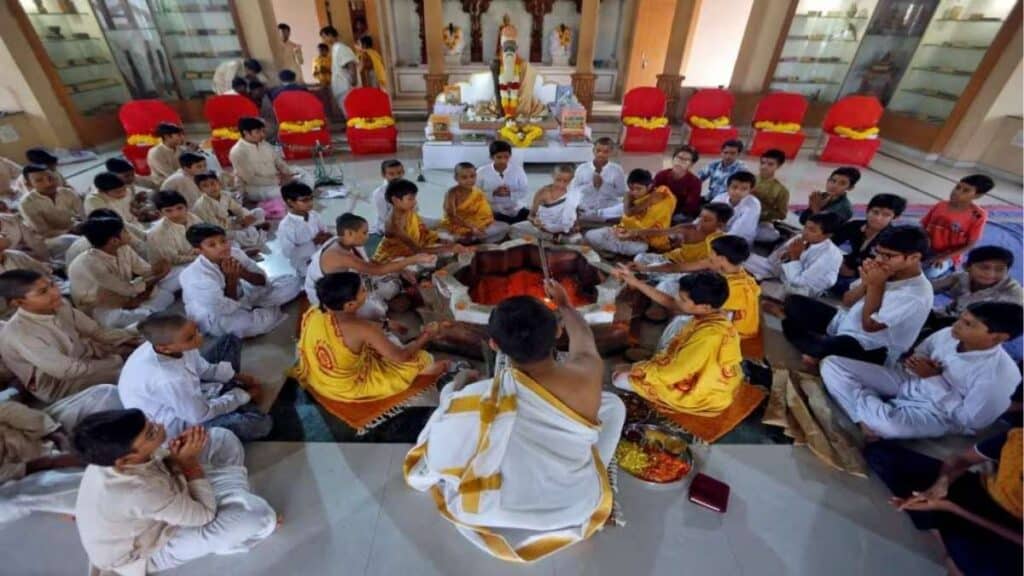
Guru Purnima has ancient roots in Hindu scriptures and finds mention in classical texts like the Puranas, Guru Gita, and Mahabharata. The festival celebrates the guru-shishya parampara (teacher-disciple lineage), which has preserved spiritual and academic knowledge across millennia.
The Legend of Shiva as Adi Guru
Hindu mythology identifies Lord Shiva as the Adi Guru (first teacher) and Adi Yogi (original yogi). According to legend, Shiva lived as an ascetic in the Himalayas, deep in meditation. Many seekers came to him, but most couldn’t understand his ways and left.
Seven seekers remained steadfast, performing intense penance for decades. Finally, on the full moon of Ashadha, moved by their dedication, Shiva accepted them as disciples and transmitted the sacred knowledge of yoga. These seven became the Saptarishis (Seven Seers), legendary sages who carried spiritual wisdom throughout the world.
This day marks the origin of the guru-shishya tradition and establishes a profound principle: a true guru chooses disciples based on readiness and dedication.
Sage Vyasa and the Compilation of Knowledge
Guru Purnima also commemorates the birth of Sage Vyasa (Krishna Dwaipayan), one of the most revered figures in Hindu tradition. Born to sage Parashara and princess Satyavati, Vyasa’s contributions are unparalleled:
- Compiled the Vedas: Organized Vedic hymns into four texts—Rigveda, Yajurveda, Samaveda, and Atharvaveda
- Authored the Mahabharata: Composed the epic containing 100,000 verses, including the Bhagavad Gita
- Wrote the Puranas: Credited with composing 18 major Puranas
- Distilled the Vedanta Sutras: Made philosophical wisdom accessible
The name “Vyasa” means “compiler,” recognizing his work in organizing and preserving sacred knowledge. His disciples—Paila, Vaisampayana, Jaimini, and Sumantu—carried this wisdom forward.
For this reason, Guru Purnima is also called Vyasa Purnima, celebrating the principle he embodied: knowledge preserved and transmitted thoughtfully serves humanity across generations.
Buddhist Tradition: Buddha’s First Sermon
In Buddhism, Guru Purnima marks the day Gautama Buddha delivered his first sermon after attaining enlightenment.
About five weeks after his enlightenment at Bodhgaya, Buddha traveled to Sarnath (near Varanasi) to find his five former companions who had abandoned him. At the deer park, Buddha taught them the Dharmacakrapravartana Sutra, presenting the Four Noble Truths and the Noble Eightfold Path—the foundational teachings of Buddhism.
This event, occurring on the full moon of Ashadha, marks:
- The first turning of the wheel of Dharma
- The establishment of the Sangha (monastic community)
- Buddha’s transformation from enlightened being to teacher
Buddha spent his first rainy season at Sarnath, and as the bhikshu sangha grew, he sent them in all directions to teach the Dharma, beginning Buddhism’s spread across Asia.
Jain Tradition: Mahavira and His First Disciple
In Jainism, Guru Purnima commemorates when Lord Mahavira, the 24th Tirthankara, accepted Gautama Swami as his first disciple after attaining kaivalya (omniscience).
This event symbolizes the beginning of the guru-disciple relationship in Jain tradition and the systematic transmission of Jain philosophy. The day also marks the start of Chaturmasya, a four-month period of austerity and spiritual discipline.
Guru Purnima: Cultural and Spiritual Significance
Guru Purnima symbolizes gratitude, knowledge transmission, and the sacred bond between teacher and student. At its heart lies the guru-shishya parampara—the lineage that has preserved wisdom in Indian civilization for millennia.
Spiritually, the festival represents:
- Illumination: The guru dispels the darkness of ignorance
- Transformation: True learning requires not just information but personal guidance
- Devotion: The relationship between guru and disciple is sacred and transformative
- Purification: Honoring the guru purifies the mind and opens pathways to wisdom
Culturally, Guru Purnima:
- Strengthens the bond between teachers and students across all fields
- Promotes gratitude as a fundamental human value
- Preserves knowledge transmission traditions
- Encourages respect for learning and mentorship
The full moon (Purnima) carries deep symbolism:
- Completeness of knowledge the guru provides
- Illumination, as the moon reflects light
- The cooling, calming influence on the disciple’s mind
Why Guru Purnima Endures:
In an age of instant information, Guru Purnima’s relevance hasn’t diminished because:
- Gratitude remains timeless across cultures and eras
- Wisdom differs from information—discernment and compassion require mentorship
- Transformative learning happens in relationship, not isolation
- The guru principle extends beyond spiritual teachers to parents, academic teachers, and anyone who dispels our ignorance
More than a religious festival, Guru Purnima is a universal celebration of the human capacity to guide, nurture, and illuminate others..
Guru Purnima Prayers and Religious Observances

Guru Purnima observances blend devotion, gratitude, and spiritual renewal through prayers, rituals, and community celebrations.
Traditional Morning Rituals
Devotees typically begin the day with:
- Early rising during Brahma Muhurta (pre-dawn)
- Ritual bathing, preferably in sacred rivers
- Surya Namaskar (prayers to the sun)
The Sacred Guru Mantra
The most important prayer chanted on Guru Purnima is from the Guru Gita:
Sanskrit:
गुरुर्ब्रह्मा गुरुर्विष्णुः गुरुर्देवो महेश्वरः।
गुरुः साक्षात् परं ब्रह्म तस्मै श्री गुरवे नमः॥
Transliteration:
Gurur Brahmā Gurur Viṣṇuḥ Gurur Devo Maheśvaraḥ
Guruḥ Sākṣāt Paraṁ Brahma Tasmai Śrī Gurave Namaḥ
Meaning:
“The Guru is Brahma (creator), Vishnu (preserver), and Shiva (transformer). The Guru is the Supreme Absolute. I offer my salutations to that revered Guru.”
Guru Puja (Worship of the Teacher)
At Home:
- Create an altar with the guru’s photograph
- Offer flowers, incense, fruits, and sweets
- Light a diya (lamp) symbolizing dispelling ignorance
- Recite sacred texts or the guru’s teachings
- Meditate on the guru’s guidance
With Living Gurus:
- Visit spiritual teachers in person
- Perform pada puja—ritual washing of the guru’s feet
- The water becomes charnamrita (blessed nectar), distributed as prasad
- Offer gurudakshina—flowers, fruits, cloth, or donations
Temple Observances
Vyasa Puja: Special ceremonies dedicated to Sage Vyasa at temples across India, particularly in Varanasi
Rituals Include:
- Floral offerings and decorations
- Abhishekam (ritual bathing of deities)
- Chanting of Vedic hymns and Mahabharata excerpts
- Distribution of prasada
Sacred Text Recitations:
- The Guru Gita—dialogue between Shiva and Parvati
- Bhagavad Gita readings
- Vedic hymns and Upanishads
Buddhist Observances
Uposatha: Buddhists observe the eight precepts, abstaining from killing, stealing, sexual activity, false speech, intoxicants, eating after noon, entertainment, and luxurious beds.
Vassa Begins: The three-month rainy season retreat begins on Guru Purnima:
- Monks remain in one monastery for intensive meditation
- Lay practitioners adopt more ascetic practices
- Many give up meat, alcohol, or smoking
Temple Ceremonies:
- Lighting candles before Buddha statues
- Chanting Buddhist sutras
- Meditation sessions
- Dharma talks by senior monks
Jain Observances
Chaturmasya Begins: Jains observe the start of a four-month period of increased austerity, reduced travel for monks, and special veneration of gurus.
Diksha: Spiritual Initiation
Guru Purnima is highly auspicious for diksha (initiation):
- Beginning formal spiritual study under a guru
- Receiving a mantra or spiritual practice
- Formal acceptance into a spiritual lineage
Home vs. Temple Observance
Home Practices: More intimate and personal, focusing on contemplation and gratitude, with simpler puja using available materials.
Temple/Ashram Practices: Community-oriented with elaborate rituals, collective chanting, festive atmosphere, and opportunity to receive blessings from spiritual leaders.
How Guru Purnima Is Celebrated Across India
While the essence of Guru Purnima remains consistent, regional expressions vary across India’s diverse cultural landscape.
North India
Uttar Pradesh:
- Varanasi sees major celebrations at the Vyasa Temple in Ramnagar
- Sarnath hosts significant Buddhist gatherings with international monks
- Ritual bathing in the Ganges
- Academic institutions honor teachers with special programs
Uttarakhand:
- Rishikesh and Haridwar ashrams conduct large-scale Guru Puja
- Himalayan meditation centers receive spiritual seekers
- Ganga Aarti takes on special significance
Delhi NCR:
- Urban ashrams host satsangs (spiritual gatherings)
- Academic institutions organize teacher appreciation assemblies
- Cultural programs featuring bhajans and kirtan
- Major temples conduct Vyasa Puja
Rajasthan:
- Traditional folk songs dedicated to gurus
- Ashrams hold meditation retreats
- Rural communities honor village elders
Punjab & Haryana:
- Sikh communities honor gurus and teachers
- Gurudwaras may hold special prayers
- Schools conduct Teachers’ Day programs
West India
Maharashtra:
- Pune sees vibrant ashram celebrations
- Warkari tradition devotees sing abhang devotional songs
- Temple processions in rural areas
Gujarat:
- Celebrations at Swaminarayan temples
- Community satsangs and discourse
- Distribution of prasad and festive meals
South India
Tamil Nadu:
- Temples dedicated to saints celebrate grandly
- Carnatic music concerts honoring musical gurus
- Thiruvannamalai’s Ramana Maharshi Ashram sees international visitors
Karnataka:
- Bangalore spiritual centers host programs
- Udupi and Sringeri (matha centers) conduct traditional rituals
- Classical arts communities honor their lineage
Andhra Pradesh & Telangana:
- Temple towns see increased pilgrim traffic
- Traditional Telugu songs praising gurus
- Rural areas honor village teachers
Kerala:
- Martial arts students honor kalari gurus
- Kathakali performers honor their teachers
- Ayurvedic tradition honors healing lineages
East India
West Bengal:
- Ramakrishna Mission centers, especially Belur Math, hold grand celebrations
- Artistic communities honor gurus of music and literature
- Buddhist communities in Darjeeling celebrate
Bihar & Jharkhand:
- Bodhgaya attracts international Buddhist pilgrims
- Jain communities at Shikharji celebrate elaborately
Northeast India
Sikkim & Arunachal Pradesh:
- Strong Buddhist monastery celebrations
- Tibetan Buddhist traditions prominently featured
- Traditional dances at gompas
Despite regional variations, gratitude, devotion, and community participation remain central everywhere.
Participation Across Religions in India
Guru Purnima stands as a beautiful example of interfaith harmony, with three major religions sharing the same day while honoring distinct traditions.
Shared Values:
- Reverence for teachers and spiritual guides
- Importance of the guru-disciple relationship
- Gratitude as a spiritual practice
- Transmission of wisdom across generations
Hindu-Buddhist-Jain Confluence:
- Hindu temples acknowledge Buddha’s first sermon
- Buddhist viharas recognize the day’s broader spiritual significance
- Jain communities participate in shared cultural events
- Mutual respect across all traditions
Sikh Community Participation: While Sikhs have distinct Gurpurab celebrations, many acknowledge Guru Purnima as the concept of the Guru is central to Sikhism.
Secular and Academic Observance: Students from all backgrounds honor teachers in schools and universities, making Guru Purnima a celebration of universal educational values beyond religious affiliation.
Inclusive Traditions:
- Professional fields honor mentors across religious lines
- Multi-faith families celebrate together
- Yoga centers welcome practitioners of all backgrounds
- Community events honor the universal guru principle
How Guru Purnima Is Celebrated Outside India
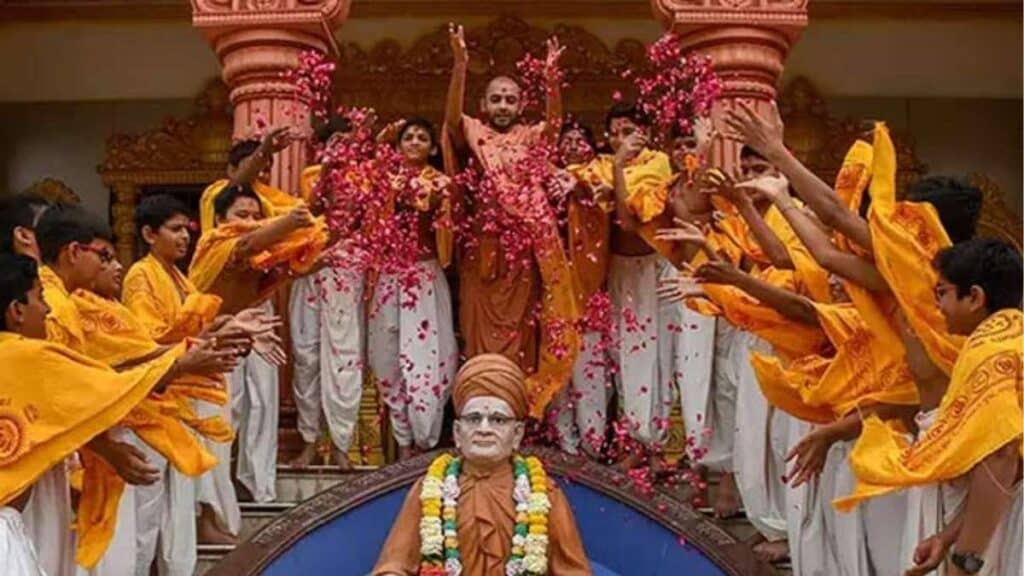
Indian diaspora communities worldwide celebrate Guru Purnima through temple gatherings, cultural programs, and spiritual events, helping second and third-generation Indians stay connected to their heritage.
United States & Canada
Major Cities: New York, New Jersey, California, Chicago, Houston, Toronto, Vancouver, Calgary
Adaptations:
- Weekend observances when the festival falls on weekdays
- Virtual satsangs enabling participation across time zones
- Community hall rentals for large gatherings
- Interfaith elements emphasizing universal values
Prominent Organizations:
- BAPS Swaminarayan temples
- Art of Living centers
- Isha Foundation centers
- Chinmaya Mission chapters
- Independent yoga studios
United Kingdom
Key Cities: London (Neasden Temple), Leicester, Birmingham, Manchester
British Adaptations:
- Evening programs after work hours
- Integration with local interfaith initiatives
- School programs for British-born children
- Heritage preservation emphasis
United Arab Emirates
Dubai, Abu Dhabi, Sharjah:
- Large expatriate community celebrations
- Hotel ballrooms and community centers
- Friday weekend allows daytime celebrations
- Pan-Indian traditions blend together
Australia & New Zealand
Major Cities: Sydney, Melbourne, Brisbane, Perth, Auckland, Wellington
Southern Hemisphere Context:
- July is winter, affecting outdoor celebrations
- Strong community bonds in smaller diaspora
- Weekend celebrations at community centers
- Growing interest from non-Indian Australians in yoga traditions
Southeast Asia
Singapore:
- Hindu and Buddhist communities celebrate together
- Serangoon Road temples see large gatherings
- Buddhist temples host Dharma talks
Malaysia:
- Batu Caves conducts special pujas
- Tamil and North Indian communities celebrate
- Buddhist viharas participate
Europe
Germany, Switzerland, Netherlands, France:
- Growing Indian professional communities
- Weekend workshops on yoga philosophy
- Programs often in English for diverse participants
- Academic approach to teachings
Guru Purnima Gifting Traditions
The concept of gurudakshina is central to Guru Purnima—a token of gratitude offered to the guru. This isn’t payment but a symbolic gesture completing the learning cycle.
Traditional Offerings
Classical Gurudakshina:
- Fruits and flowers: Natural offerings symbolizing devotion
- Cloth: Simple white cloth or traditional garments
- Books: Sacred texts symbolizing continued learning
- Firewood: Historic offering in gurukuls for the sacred fire
- Gold or money: Given according to capacity
Symbolism of Traditional Gifts
- Fruits: Represent fruits of knowledge received
- Flowers: Beauty and fragrance of wisdom blooming
- Incense: Prayers carrying upward like teachings spread
- Diya (Lamp): Illumination of ignorance
- Paduka (Sandals): Worshiping guru’s feet represents humility
Modern Gifting Practices
To Spiritual Gurus:
- Photo frames with inspirational quotes
- Donations to ashram charitable activities
- Books—spiritual texts, biographies
- Personal service commitments
To Academic Teachers:
- Greeting cards with personal messages
- Flowers and sweets
- Books related to their subject
- Shawls or scarves
- Gift certificates
Traditional Guru Purnima Foods
Guru Purnima falls during the monsoon season and Chaturmasya period, influencing food choices toward sattvic (pure, vegetarian) preparations.
Common Prasad Offerings
Fruits:
- Seasonal: mangoes, bananas, coconuts, grapes
- Symbolize natural purity and sweetness
Traditional Sweets:
- Kheer (Payasam): Rice pudding with milk, cardamom, nuts
- Laddu: Besan or rava sweet balls
- Peda: Milk-based sweet with cardamom
- Halwa: Wheat or semolina cooked with ghee
- Panchamrit: Sacred mixture of milk, yogurt, honey, sugar, ghee
Simple Offerings:
- Jaggery and peanuts/sesame
- Dry fruits and nuts
- Coconut pieces
- Dates
Regional Prasad Specialties
North India:
- Panjiri (wheat flour roasted in ghee)
- Sooji Halwa
- Til ke Laddu
- Boondi
South India:
- Payasam varieties (rice, vermicelli, moong dal)
- Kesari Bath
- Coconut Barfi
Maharashtra:
- Puran Poli
- Shrikhand
- Karanji
Gujarat:
- Mohanthal
- Lapsi
- Basundi
Bengal:
- Sandesh
- Rasogolla
- Mishti Doi
Community Feast (Bhandara)
Large community meals typically include:
- Rice or roti
- Dal (lentil curry)
- 2-3 vegetable curries
- Raita or curd
- Pickle and papad
- Sweet (kheer or halwa)
Guru Purnima: Music, Art, and Cultural Expression
Music, art, and devotion play a central role in Guru Purnima celebrations, bringing depth and vibrancy to the festival.
Devotional Music Traditions
Guru Bhajans and Kirtans:
- “Guru Brahma Guru Vishnu” (based on the main mantra)
- “Guru Bin Gyan Nahin” (Without guru, no knowledge)
- “Guru Gobind Dono Khade” (Kabir’s tribute)
- “Om Namah Shivaya” (honoring Shiva as Adi Guru)
Guru Gita Recitation:
- Complete melodic Sanskrit chanting (2-3 hours)
- Often done in early morning
- Verses praising the guru’s significance
Classical Music and Dance
Honoring Musical Gurus: Guru Purnima is especially significant in Indian classical arts:
- Hindustani Classical: Disciples perform for gurus, special baithaks
- Carnatic Classical: Guru vandana songs, temple performances
- Dance Traditions: Bharatanatyam, Kathak, Odissi students perform guru pranam
- First earnings from performances offered to guru
- Major debuts scheduled around Guru Purnima
Visual Arts
Artistic Representations:
- Paintings of Shiva as Adi Guru with Saptarishis
- Vyasa composing the Mahabharata
- Buddha delivering the first sermon
- Modern poster art with inspirational quotes
Guru Purnima’s Modern Relevance and Cultural Continuity
In today’s fast-changing world, Guru Purnima continues to hold deep relevance as a festival that celebrates gratitude, wisdom, and the transformative power of mentorship.
While information is now abundant, wisdom remains scarce. Guru Purnima reminds us that true transformation requires more than data—it demands the lived experience and guidance of those who have walked the path before us.
Cultural Continuity: For Indian communities worldwide, Guru Purnima serves as a powerful link to heritage, helping pass traditions, values, and stories to younger generations. The festival connects modern Indians with millennia-old traditions, providing rootedness in an increasingly globalized world.
Universal Relevance: The guru principle extends beyond spiritual teachers to include parents, academic teachers, mentors, coaches, and anyone who dispels our ignorance—making the festival relevant to everyone. The emphasis on gratitude, respect for learning, and the value of mentorship resonates across cultures.
Adaptability: Guru Purnima has proven remarkably resilient, evolving from temple rituals to include digital satsangs, from traditional ashrams to modern yoga studios, from Sanskrit chants to multilingual discourses—all while maintaining its core essence.
The Timeless Message: Beyond rituals and celebrations, Guru Purnima carries a profound truth: we didn’t get here alone. Every skill we’ve mastered, every insight we’ve gained, every transformation we’ve experienced—someone guided us there. The festival invites us to pause our busy lives and acknowledge this fundamental debt of gratitude.
In honoring our gurus, we honor humanity’s capacity to guide, nurture, and illuminate. And in that act of gratitude, we become a little more capable of being that light for others.
शिष्य होने का सौभाग्य मिले, गुरु का आशीर्वाद बना रहे।
(May we have the fortune of being students, may the guru’s blessings remain with us.)