
Hanukkah is one of the most recognized Jewish festivals in the world, popularly known as the Festival of Lights. Observed for eight nights and days, Hanukkah commemorates the rededication of the Second Temple in Jerusalem and the miracle of a single cruse of oil that burned for eight days. Rooted in ancient Jewish history, the festival symbolizes the triumph of faith over oppression, light over darkness, and the enduring strength of a people who refused to surrender their identity.
The spiritual meaning of Hanukkah comes from the story of the Maccabees — a small group of Jewish fighters who defeated the powerful Seleucid Greek army in 164 BCE, reclaimed the Temple in Jerusalem, and rededicated it to God. When they sought to relight the Temple menorah, they found only enough pure olive oil for a single day. Miraculously, the oil burned for eight days — the time needed to prepare a fresh supply. This miracle is the heart of Hanukkah.
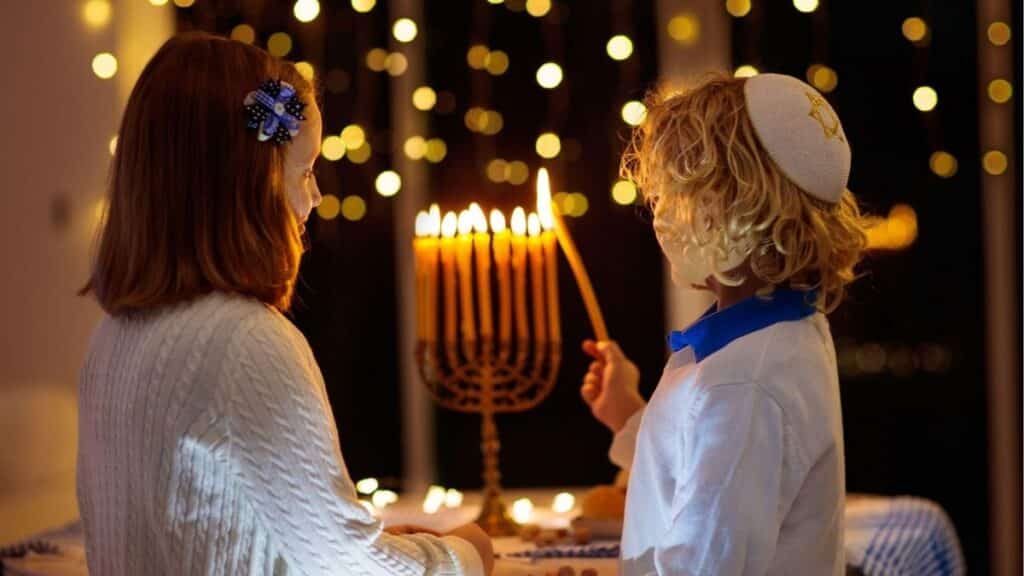
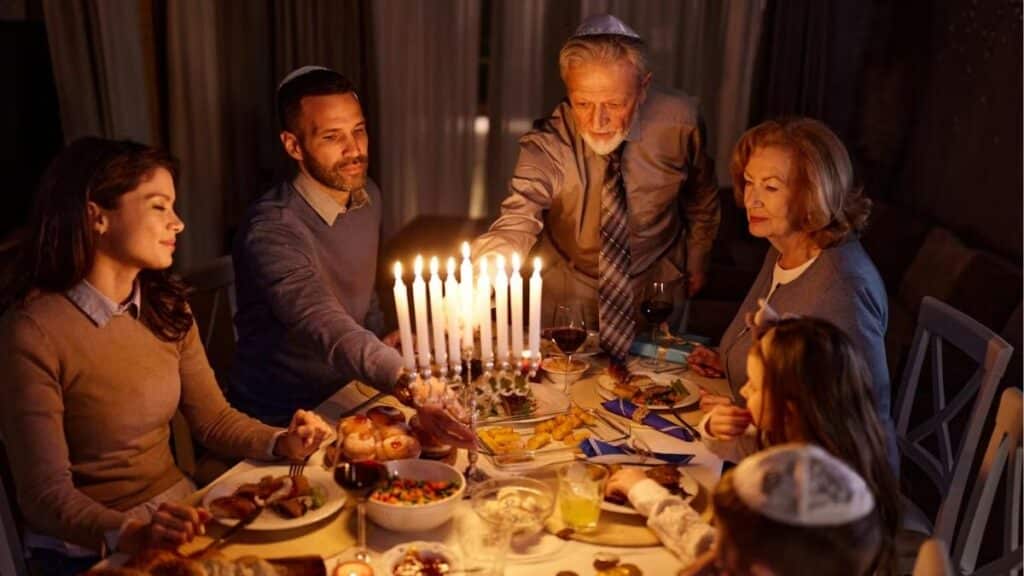
Each night of the festival, one additional candle is lit on the Hanukkah menorah (chanukiah), growing from one flame to eight. The candles are placed in a window or by the door so passersby can witness the miracle being remembered. Celebrations include songs, prayers, traditional fried foods, the spinning of the dreidel, and the giving of gelt and gifts. Hanukkah is observed by Jewish communities across the world — and in India, by three distinct ancient communities with their own beautiful local traditions.
When Is Hanukkah in 2026?
Hanukkah begins on 25 Kislev in the Hebrew lunisolar calendar and lasts eight days, ending on 2 or 3 Tevet. Because the Hebrew calendar does not align with the fixed Gregorian calendar, Hanukkah’s date shifts each year, falling anywhere between late November and late December.
Hanukkah 2026 Dates in India
Night 1: Evening of Friday, 4 December 2026 — 1 candle lit
Night 2: Evening of Saturday, 5 December 2026 — 2 candles lit
Night 3: Evening of Sunday, 6 December 2026 — 3 candles lit
Night 4: Evening of Monday, 7 December 2026 — 4 candles lit
Night 5: Evening of Tuesday, 8 December 2026 — 5 candles lit
Night 6: Evening of Wednesday, 9 December 2026 — 6 candles lit
Night 7: Evening of Thursday, 10 December 2026 — 7 candles lit
Night 8: Evening of Friday, 11 December 2026 — 8 candles lit + shamash
Festival concludes: Nightfall, Saturday, 12 December 2026
Candle lighting begins shortly after sunset each evening — approximately 6:00–6:30 PM IST in Mumbai.
Table of Contents
Hanukkah In USA, Canada, Australia, New Zealand, UK, UAE, Singapore 2026 Dates
Hanukkah on Evening of Fri, 4 Dec, 2026 – Sat, 12 Dec, 2026
Hanukkah on Evening of Fri, 4 Dec, 2026 – Sat, 11 Dec, 2026
Hanukkah on Evening of Fri, 4 Dec, 2026 – Sat, 12 Dec, 2026
Hanukkah on Evening of Fri, 4 Dec, 2026 – Sat, 12 Dec, 2026
Hanukkah on Evening of Fri, 4 Dec, 2026 – Sat, 12 Dec, 2026
Hanukkah on Evening of Fri, 4 Dec, 2026 – Sat, 12 Dec, 2026
Why Do Hanukkah Dates Change Every Year?
Hanukkah is set by the Hebrew lunisolar calendar, not the Gregorian calendar. It always begins on 25 Kislev, but because lunar months are shorter than solar months, the equivalent Gregorian date shifts each year — typically landing somewhere between late November and late December.
Other Names and Regional Identities
Hanukkah is known by the following names across languages and communities:
Hebrew: חֲנֻכָּה (Ḥănukkā) — meaning “Dedication” Modern Hebrew nickname: Chag HaUrim — Festival of Lights Common English variants: Chanukah, Hanukah, Channukah Yiddish: Khanike Ladino (Judeo-Spanish): Hanuca
In India, all three historic Jewish communities — the Bene Israel of Maharashtra, the Cochin Jews of Kerala, and the Baghdadi Jews of Mumbai and Kolkata — use the Hebrew name Hanukkah. Within broader Indian culture, it is commonly called the Jewish Festival of Lights, often informally compared to Diwali for its candle-lighting traditions.
Across diaspora countries including the USA, Canada, UK, Australia, New Zealand, Germany, Singapore, and UAE, the holiday is universally called Hanukkah or Chanukah, with no significant regional naming variation.
Origins, History, and Legends
Hanukkah is one of Judaism’s most story-rich festivals, with its origins in a real historical revolt. After the death of Alexander the Great, Judea came under Seleucid Greek rule. King Antiochus IV Epiphanes outlawed Jewish religious practice, looted the Second Temple, erected an altar to Zeus within it, and banned circumcision — acts of profound cultural and religious desecration.
In 167 BCE, a Jewish priest named Mattathias and his five sons launched a revolt. His son Judah — known as Yehuda HaMakabi, or Judah the Hammer — led the Maccabees to a remarkable military victory. By 164 BCE, the Temple had been recaptured and rededicated.
According to the Talmud (tractate Shabbat 21b), when the Maccabees sought to relight the Temple menorah, they found only one small jar of ritually pure olive oil — enough for a single day. Miraculously, it burned for eight days. This is the central miracle of Hanukkah, and the eight nights of candle lighting commemorate it. The historian Josephus, writing in Jewish Antiquities, called the resulting celebration the “Festival of Lights.”
Cultural and Spiritual Significance
Hanukkah endures because its message is timeless: even a small flame can illuminate great darkness. The menorah growing brighter each night — from one candle to eight — is a quiet but powerful symbol of hope that does not diminish, only increases.
Spiritually, Hanukkah is about dedication — of the Temple, of faith, and of identity. The word itself means “dedication.” For Jewish communities worldwide, it is a reaffirmation that cultural and religious life is worth preserving, even under pressure.
Culturally, Hanukkah represents resilience. For Zionists in the 19th and 20th centuries, it became a symbol of national liberation. For diaspora Jews in the West, it anchors Jewish identity during the Christmas season. For India’s Jewish communities, it is a living reminder that Jewish life has thrived on the subcontinent for centuries.
Prayers and Religious Observances
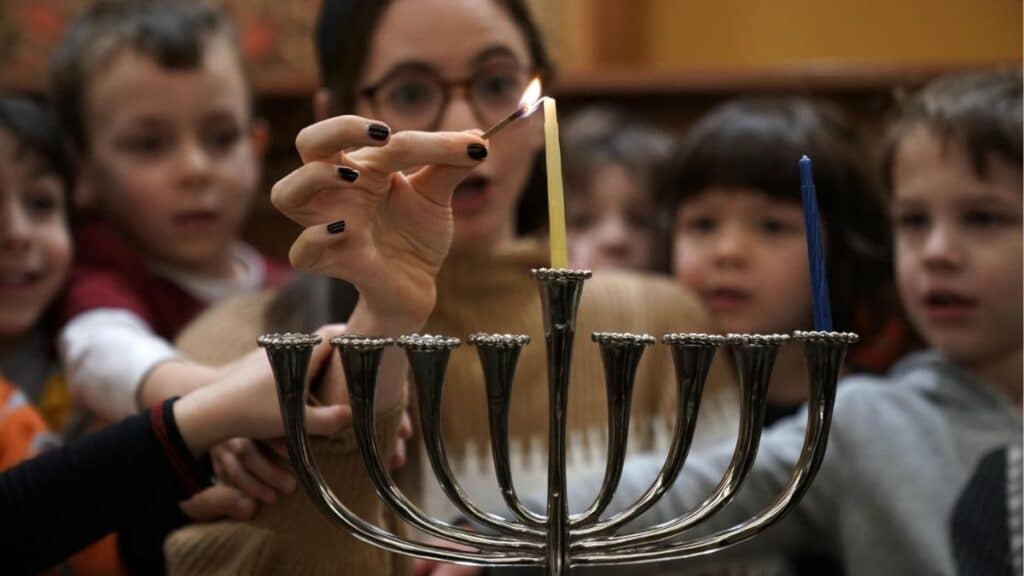
The central ritual of Hanukkah is the nightly lighting of the chanukiah — a nine-branched menorah. Eight branches hold the festival candles; the ninth holds the shamash (attendant candle), which is used to light the others and kept lit separately to avoid using the sacred candles for ordinary purposes.
Two blessings are recited before each night’s lighting: one for the commandment to kindle the Hanukkah lights, and one thanking God for the miracles of those days. On the first night only, a third blessing — the Shehecheyanu — is added, expressing gratitude for reaching this season. After lighting, the hymn Hanerot Halalu is recited, declaring the candles holy and set apart for meditating on the miracle.
The Al HaNissim prayer (“On the Miracles”) is inserted into the Amidah — the thrice-daily standing prayer — and into the grace after meals throughout the eight days. The Hallel psalms of praise are recited each morning. In the Ashkenazi tradition, the song Ma’oz Tzur (Rock of Ages) is sung after candle lighting each night. The Tachanun penitential prayers are omitted throughout Hanukkah.
Candles are placed in a prominent window or near the front door so that passersby can see the lights and be reminded of the miracle — a public act of memory and faith.
Celebrations Across India
India is home to some of the world’s oldest Jewish communities, each bringing its own cultural flavor to Hanukkah.
The Bene Israel of Maharashtra — concentrated in Mumbai, Pune, and Thane — are the largest Jewish group in India, with roots believed to span over 2,000 years. They observe all traditional Hanukkah rituals and incorporate local flavors into their celebrations. Fried festival foods include kanda bhaji (onion fritters), samosas, and pakoras alongside traditional Jewish dishes. Their community also prepares malida — an offering of flattened rice with fruit, coconut, and spices — for communal occasions of thanksgiving.
The Cochin Jews (Malabar Jews) of Kerala celebrate Hanukkah at the historic Paradesi Synagogue in Kochi’s Jew Town — one of the oldest synagogues in the Commonwealth. Their culinary traditions blend Jewish practice with Kerala flavors, with coconut oil and local spices featuring in fried foods.
The Baghdadi Jews of Kolkata and Mumbai, of Iraqi and Syrian descent, follow Sephardic traditions at their Hanukkah tables, including cheese dishes and fried sweets.
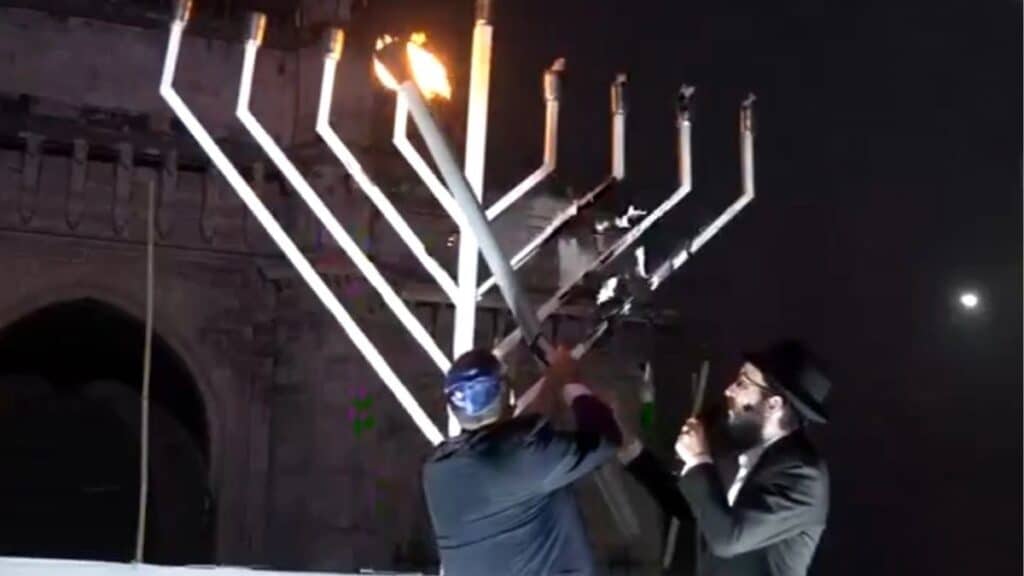
The Chabad House in Mumbai has organized a public menorah lighting at the Gateway of India since 2003. Similar events are held at India Gate in New Delhi, often attended by Israeli embassy officials, making Hanukkah briefly visible in India’s public landscape.
Participation Across Religions in India
Hanukkah is a specifically Jewish religious festival, but in India’s syncretic cultural environment, it draws the warmth and curiosity of Hindu, Muslim, Christian, and Parsi neighbors — particularly in communities like Colaba and Malabar Hill in Mumbai, and Mattancherry in Kochi, where Jewish families have lived among diverse populations for generations.
Public menorah lightings at the Gateway of India and India Gate are open events, and non-Jewish Indians frequently attend. The visual parallel between Hanukkah’s Festival of Lights and Diwali — both involving lamps that symbolize the triumph of light over darkness — serves as a natural bridge for interfaith connection. This shared symbolism is often noted and celebrated across communities, reflecting India’s long tradition of religious pluralism.
How Hanukkah Is Celebrated Outside India
Hanukkah is celebrated by Jewish communities in virtually every country, with traditions adapting to local cultures while preserving the core rituals.
In the United States and Canada, Hanukkah is one of the most widely recognized Jewish holidays. Families exchange gifts across all eight nights, hold community parties, and participate in large public menorah lightings. The Chabad movement — which has organized public menorahs in over 100 countries since the 1970s — lights large menorahs in Times Square, on the White House grounds, and in hundreds of city centers. The National Menorah has been lit near the White House since 1979.
In the UK, community menorahs are lit in Trafalgar Square and across London, Manchester, and Leeds.
In Germany, Hanukkah has particular resonance. A famous 1931 photograph shows a menorah placed opposite a Nazi building in Kiel. Today, the Brandenburg Gate hosts a major annual public lighting attended by community leaders and interfaith guests — a powerful statement of Jewish continuity.
In the UAE, following the Abraham Accords of 2020, public Hanukkah celebrations have become newly possible, with menorahs lit in Dubai and Abu Dhabi.
In Australia and New Zealand, Hanukkah falls in midsummer, giving it a different seasonal character. Community organizations in Sydney, Melbourne, Auckland, and Wellington hold menorah lightings and family events.
In Singapore, the Jewish community centered around the Maghain Aboth Synagogue holds Hanukkah events with candle lightings and communal gatherings.
Gifting Traditions
The tradition of Hanukkah gelt — giving money or coins to children — dates back to Eastern Europe, where children would offer small coins to their teachers at this time of year as a gesture of gratitude. Over time, adults began giving children gelt instead. Today, chocolate coins wrapped in gold foil are the most popular form of Hanukkah gelt.
In North America especially, the tradition has expanded to include a gift each night across the eight days — books, games, clothing, and toys are typical — partly in response to the cultural context of the Christmas season. Traditional gifted items with Jewish significance include menorahs, dreidels, Jewish books, Judaica art, and items connected to Israel. Charitable giving (tzedakah) is also encouraged, with many families donating to a cause in lieu of personal gifts.
For diaspora communities, Hanukkah gifts often serve a cultural purpose — passing on Jewish heritage through cookbooks, Hebrew books, or Israel-related items.
Hanukkah Foods and Culinary Traditions
Hanukkah food traditions center on one theme: oil. Foods fried in oil commemorate the miracle of the single cruse of olive oil that burned for eight days. Traditions vary by community.
Common Hanukkah foods include: Latkes (potato pancakes) — the Ashkenazi classic, served with sour cream or applesauce Sufganiyot (jelly-filled doughnuts) — the dominant Hanukkah food in Israel, available in chocolate, caramel, vanilla, and other fillings Bimuelos (fritters) — a Sephardic tradition Cheese dishes — commemorating the story of Judith, who fed the Assyrian general Holofernes salty cheese and wine until he fell asleep and was defeated
In India, Jewish families incorporate local fried favorites: kanda bhaji (onion fritters), samosas, pakoras, and gulab jamun — fried dough balls in sweet syrup, similar in spirit to sufganiyot. In Cochin, coconut oil and Kerala spices add local character to festival cooking.
Music, Art, and Cultural Expression
Music is central to Hanukkah. The best-known traditional song is Ma’oz Tzur (Rock of Ages), composed in the 13th century, recounting episodes of Jewish persecution and divine rescue. Other beloved songs include Hanerot Halalu, Mi Yimalel (Who Can Retell), S’vivon Sov Sov Sov, and Ocho Kandelikas — a Ladino Hanukkah song beloved in Sephardic communities. In English-speaking countries, Dreidel, Dreidel, Dreidel and Oh Chanukah are widely known.
Artisanal menorahs — crafted from silver, ceramic, wood, and recycled materials — represent a living craft tradition. The dreidel, a four-sided spinning top with Hebrew letters, is the most iconic Hanukkah game. Each letter stands for a word in the phrase Nes Gadol Haya Sham — “A great miracle happened there.”
Modern Observance and Evolving Practices
Hanukkah continues to evolve while remaining anchored in centuries of tradition. Environmental awareness has found a home in the festival — the “miracle of the oil” has become a touchpoint for conversations about energy conservation and sustainability, with organizations encouraging communities to reflect on renewable energy use during the eight days.
Celebrations have also become more inclusive, with non-Jewish friends and family welcomed at menorah lightings and Hanukkah gatherings. Public menorah lightings have grown into civic events attended by mayors, ambassadors, and community leaders of all backgrounds.
How to wish someone a Happy Hanukkah: The traditional greeting is Chag Urim Sameach — “Happy Festival of Lights” — or simply Chag Sameach (“Happy Holiday”). In English, Happy Hanukkah is warmly received by all.
Cultural Reflection
Hanukkah endures not because it is the most religiously significant Jewish holiday, but because its story speaks to something universal: the courage to keep a small flame burning in the dark. For Jewish communities in India, Israel, North America, Europe, and every corner of the diaspora, the eight-night festival is both a historical remembrance and a living affirmation. The candles grow brighter each night — a quiet but enduring reminder that light, once kindled, does not diminish. It only multiplies.