


For more than a decade, Taarak Mehta Ka Ooltah Chashmah has positioned itself as a rare Indian television show rooted in moral values, social harmony, and clean, family-friendly entertainment. It is often held up as an example of television that avoids cruelty and promotes togetherness.
That is precisely why one of its longest-running narrative choices deserves serious re-evaluation.
To be clear, this critique is not directed at the actors. Performers bring characters to life based on what is written and directed. The responsibility for what is normalized on screen lies squarely with the writing, direction, and creative leadership behind the show.
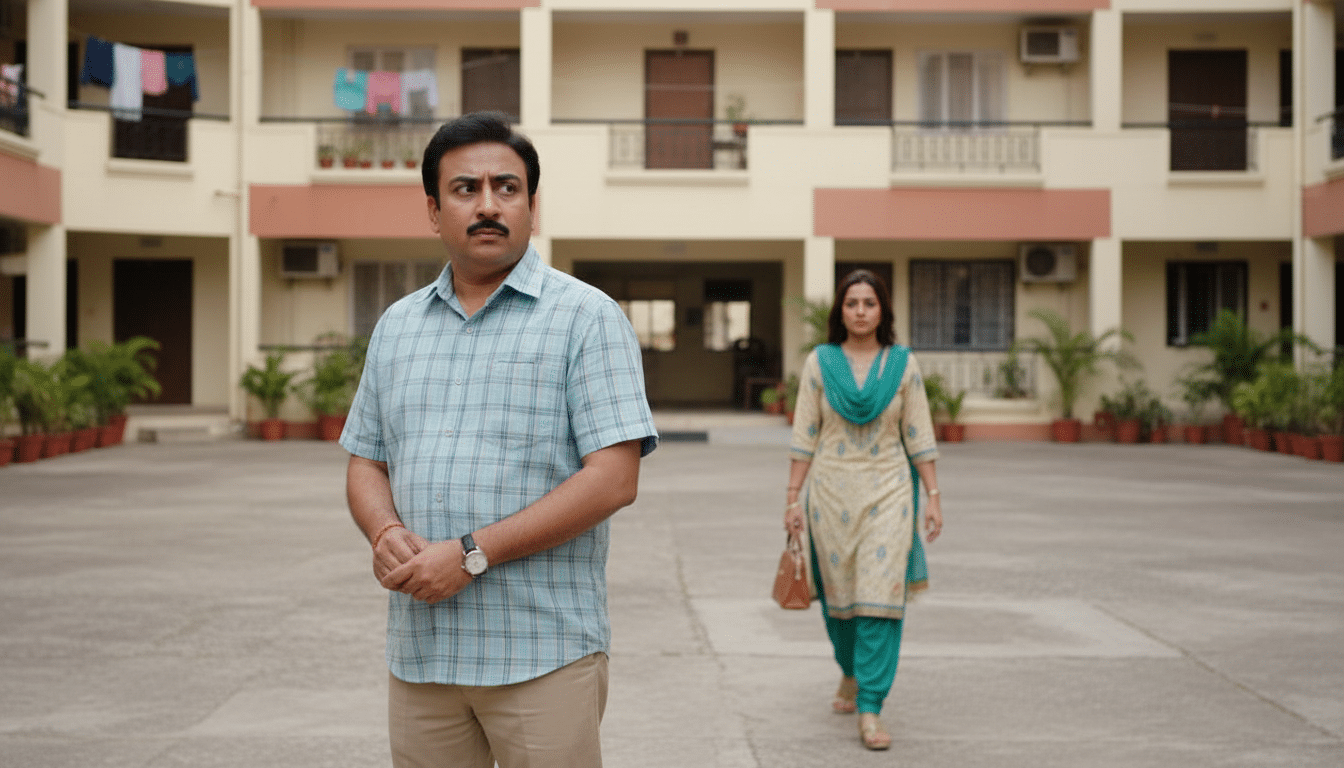
The character of Jethalal Gada is portrayed as flawed but lovable—a devoted father, loyal friend, and a man meant to represent the “common Indian.” Yet, over the years, the show has repeatedly portrayed him openly ogling, fantasizing about, and emotionally fixating on Babita Ji, a married woman who is his neighbor.
This is not an isolated joke. It is a recurring narrative device that the audience is repeatedly asked to laugh at.
The contradiction is hard to ignore. A show that claims to uphold family values simultaneously normalizes a married man’s unchecked desire for another married woman—without consequences, without correction, and without growth. His wife remains absent from the household for years, while his attention is visibly and consistently directed elsewhere.
In any real-world context, such behavior would be recognized as inappropriate and disrespectful. On television, it is softened with music, exaggerated expressions, and the label of “harmless comedy.” Repetition, however, turns humor into conditioning.
What makes this even more concerning is the silent complicity built into the narrative. Taarak Mehta, positioned as the moral and intellectual anchor of the society, is fully aware of Jethalal’s behavior. He observes it, understands it, and yet repeatedly chooses not to intervene. When a moral authority figure stays silent, the message is subtle but powerful: this behavior is tolerable.
A family show does not exist in a vacuum. Its audience includes children, teenagers, and young adults who absorb norms through repetition. When lecherous behavior is consistently framed as funny rather than problematic, it quietly reshapes what is considered acceptable.
At this stage, responsibility must be clearly acknowledged at the top. Asit Kumar Modi, as the creator and long-time director of the show, has a duty to recognize that cultural standards evolve. Continuing to promote outdated and troubling character behavior under the banner of family entertainment is no longer defensible.
This is also the moment to address another creative stagnation that has lingered for far too long. The prolonged absence of Daya’s character has left the family dynamic incomplete and distorted. Instead of freezing the narrative indefinitely, it is time the show introduced a new artist in the role of Daya and restored balance to the household it claims to celebrate.
Revival does not mean erasing the past. It means correcting course.
This critique is not about canceling a beloved show. It is about asking it to live up to the values it proudly claims to represent. Comedy can evolve. Writing can mature. And family entertainment can remain funny without normalizing behavior that would be unacceptable in any decent society.
Questioning a plot is not disrespect.
It is how responsible storytelling—and culture—moves forward.demn in real life.
