


There’s a common sight at Indian weddings and festivals—someone wearing an absolutely stunning outfit, but piled with so much jewellery that you can’t quite appreciate either. A gorgeous Banarasi silk saree with intricate zari work, paired with a heavy Kundan choker, oversized jhumkas, three layers of necklaces, and an elaborate maang tikka. By the end of the evening, the discomfort shows, and more importantly, everything competes for attention instead of working together.
That’s the essential challenge with Indian jewellery and outfits—they’re both stunning on their own, but together, they need harmony. Too much of either, and the magic gets lost. Whether you’re getting ready for a wedding, a festival, or just a casual day out in your favorite kurta, knowing how to pair jewellery with your outfit can transform your entire look from overwhelming to effortlessly elegant.
Quick Answer:
Choosing jewellery for Indian outfits is about balance: pair heavy embroidered clothing with minimal pieces, match metals to fabric weight and color tones, and let your neckline guide your necklace choice. For weddings, go traditional with Kundan or temple jewellery; for everyday wear, keep it light with simple gold or oxidized silver. When your outfit is the star, let your jewellery play a supporting role—and vice versa.
The golden rule of styling Indian jewellery is simple: if your outfit is doing all the talking, your jewellery should listen. And if your outfit is understated, that’s when your jewellery gets to steal the show.
Heavy embroidery, intricate zari work, mirror work, or bold prints mean your outfit already has plenty of visual interest. Piling on statement jewellery creates clutter rather than elegance. Instead, opt for minimal, classic pieces—a simple gold chain, delicate studs, or a pair of thin bangles. These let your outfit breathe while still adding that finishing touch.
On the flip side, a plain silk saree, a solid-colored Anarkali, or a simple cotton kurta-palazzo set is the perfect canvas for bold jewellery. This is when you bring out the chunky oxidized silver necklace, the dramatic temple jewellery, or those oversized chandbalis you’ve been saving for the right moment. The simplicity of the outfit allows your jewellery to become the focal point without overwhelming your look.
It’s not about rules set in stone—it’s about visual balance. Stand in front of a mirror and ask yourself: is one element drowning out the other, or are they complementing each other?
Matching Jewellery to Fabric and Color

The Weight of the Fabric Matters
The texture and weight of your outfit’s fabric should guide your jewellery choices. Delicate fabrics like chiffon, georgette, or soft silk drape gently and call for equally delicate jewellery. Think thin gold chains, pearl earrings, or lightweight filigree pieces. These fabrics can’t support heavy jewellery, and honestly, they don’t need it—their elegance lies in their fluidity.
Heavier fabrics like brocade, velvet, Kanjivaram silk, or Banarasi weaves have structure and weight. They can carry substantial jewellery beautifully. This is where temple jewellery, oxidized silver, chunky gold necklaces, and traditional Polki sets come into play. The fabric won’t get lost under the jewellery, and the jewellery won’t feel out of place on the fabric.
Color Coordination: Warm Meets Gold, Cool Meets Silver
Color theory isn’t just for artists—it’s incredibly helpful when styling Indian outfits. Warm colors like red, maroon, orange, mustard, and deep greens have a natural affinity for gold jewellery. The warmth of the metal echoes the warmth of the fabric, creating a cohesive, glowing look.
Cool tones—blues, purples, pinks, pastels, and whites—pair beautifully with silver, platinum, or even white gold jewellery. The coolness creates a sophisticated, fresh aesthetic that feels modern yet traditional.
If your outfit has multiple colors or you’re wearing something like a multicolored Bandhani or Patola saree, gemstone jewellery becomes your best friend. Pieces with rubies, emeralds, sapphires, or multicolored Meenakari work can tie the entire look together by picking up different hues from the outfit.
And for those days when you’re not sure? Classic gold or silver never goes wrong. They’re versatile enough to work with almost anything, especially if you keep the design simple.
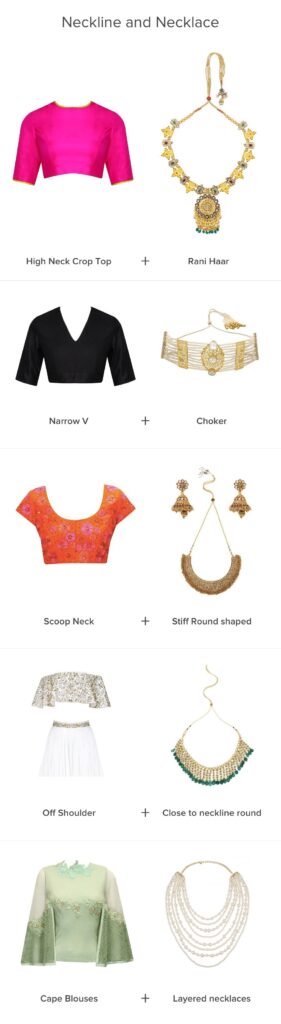
Neckline and Necklace: The Perfect Pairing
Your outfit’s neckline is basically giving you a roadmap for which necklace to wear. Ignoring it is like ignoring GPS when you’re lost—you might eventually get somewhere, but it’s going to be more complicated than it needs to be.
High neck or boat neck blouses sit right up against your collarbone, leaving little to no open space. Necklaces can feel cramped here, so it’s better to skip them or opt for a long chain or pendant that sits over the fabric. Instead, focus on statement earrings—chandbalis, jhumkas, or even chandelier-style earrings. These draw attention to your face and give the look balance without crowding your neckline.
V-neck and plunging necklines create a beautiful open space that’s practically begging for a pendant necklace or layered chains. The V-shape naturally draws the eye downward, and a necklace that follows that line elongates your neck and fills the space elegantly. If you’re wearing a lehenga with a deep V blouse, a delicate pendant or a layered gold chain set works wonders.
Strapless or off-shoulder outfits are all about the shoulders and collarbone. This is choker territory. Statement chokers, collar necklaces, or even a traditional rani haar (layered necklace) highlight your shoulders and collarbone beautifully, creating a dramatic, regal effect.
Sweetheart and scoop necklines have a gentle curve that pairs well with collar-style necklaces or short pendants. These necklaces sit right at the base of your neck, filling the open chest area without overwhelming the delicate curve of the neckline.
When in doubt, remember: necklaces should follow the natural line your neckline creates, not fight against it.
Jewellery for Different Occasions
Weddings and Grand Ceremonies
Weddings are where Indian jewellery truly gets to shine. This is the time for heirloom pieces, elaborate sets, and traditional designs. Kundan, Polki, and temple jewellery are the holy trinity of bridal and wedding wear. These pieces are heavy, intricate, and designed to make a statement.
If you’re the bride, you’re likely wearing a full set—maang tikka, necklace (or multiple layers), earrings, bangles, rings, and maybe even a nath or mathapatti. It’s a lot, but it’s also a once-in-a-lifetime look, and the grandeur is part of the magic.
If you’re a guest, you have more flexibility. You can still wear traditional jewellery but maybe tone it down a notch—a single-layer Kundan necklace instead of three, or a pair of chandbalis instead of the full earring-maang tikka combo. The goal is to look festive and elegant without upstaging the bride.

Festivals: Color, Joy, and Tradition
Festivals like Diwali, Navratri, or Pongal are about celebration, and your jewellery should reflect that joy. Meenakari jewellery, with its bright enamel work in reds, greens, and blues, is perfect for these occasions. Lac jewellery, temple jewellery, and pieces with colorful gemstones add that festive pop.
Jhumkas are a festival staple—they’re traditional, versatile, and come in endless designs. Pair them with a simple silk kurta or a colorful lehenga, and you’re set. Don’t shy away from bold colors and traditional motifs during festivals; this is the time to embrace them fully.
Formal Events: Subtle Elegance
Formal events—think corporate gatherings, upscale dinners, or elegant cocktail parties—call for jewellery that’s sophisticated but not overly traditional. Subtle Kundan or Polki sets, delicate diamond pieces, or elegant pearl jewellery work beautifully here.
If you’re wearing a formal saree or Anarkali, a thin gold chain with a small pendant, paired with diamond or pearl studs, strikes the right balance between traditional and contemporary. You want to look polished and put-together, not like you’re heading to a sangeet.
Everyday and Casual Wear
For everyday wear—your cotton kurtas, handloom sarees, or casual salwar suits—comfort is key. Light, simple jewellery is your best bet. Thin gold chains, small hoop earrings, simple bangles, or stud earrings with gemstones or pearls are perfect.
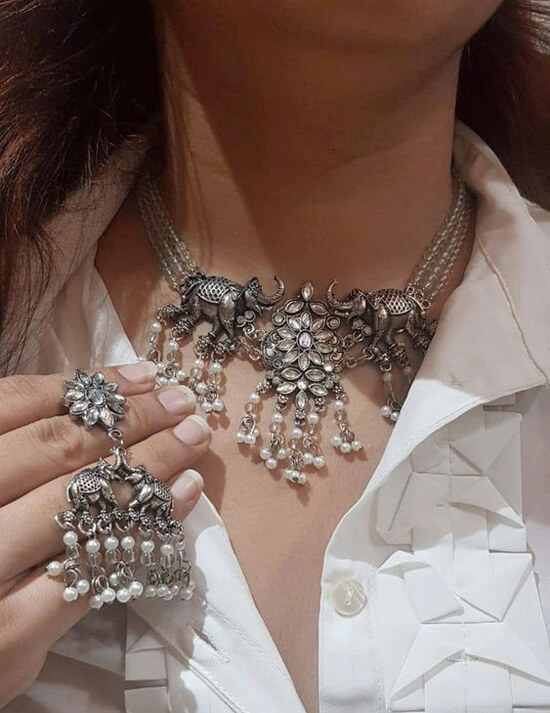
Oxidized silver jewellery has become incredibly popular for casual ethnic wear, especially with handloom fabrics and indie brands. It has a bohemian, artisanal vibe that pairs beautifully with cotton, khadi, or linen. Plus, it’s lightweight and comfortable for all-day wear.
The beauty of everyday jewellery is that it’s low-maintenance. You’re not worried about it being too heavy or too delicate—it’s just there, quietly completing your look.
Skin Tone and Jewellery: A Gentle Consideration
While there are no hard rules, certain metals do tend to complement certain skin tones more naturally. Warm skin tones—those with golden, olive, or peachy undertones—often look radiant in gold jewellery. The warmth of the metal enhances the warmth in the skin, creating a harmonious glow.
Cool skin tones—those with pink, red, or bluish undertones—tend to shine in silver, white gold, or platinum. The coolness of the metal complements the coolness in the skin beautifully.
If you have a neutral skin tone, lucky you—you can wear both gold and silver effortlessly. And honestly, even if you have a warm or cool undertone, don’t let it stop you from wearing what you love. Personal style and confidence trump any “rule.”
Colorful gemstones can also enhance your look regardless of skin tone. A pop of ruby red, emerald green, or sapphire blue can add vibrancy and draw attention in all the right ways.
Mixing Metals and Styles: Modern Meets Traditional
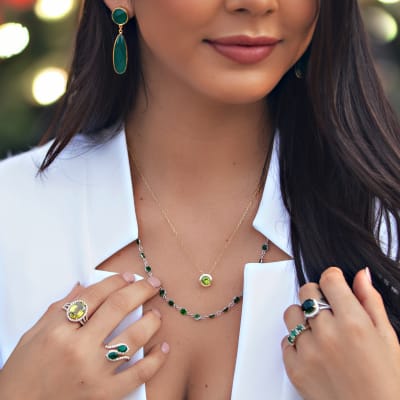
One question that comes up often is: can you mix gold and silver? The short answer is yes, but with intention. Mixing metals can look modern and eclectic, but it requires a thoughtful approach.
If you’re mixing metals, choose one as the dominant metal and use the other as an accent. For example, a gold necklace with silver earrings can work if the designs complement each other and the overall look feels balanced. Mixed-metal jewellery pieces—those that intentionally combine gold and silver in one design—are also a great option and take the guesswork out of mixing.
The same goes for mixing traditional and contemporary styles. A classic Kundan necklace can be paired with modern, minimalist earrings. A simple gold chain can be worn with traditional jhumkas. The key is balance and making sure the pieces don’t clash in terms of style or weight.
Practical Tips: Comfort and Confidence
Beyond aesthetics, your jewellery needs to be comfortable. If your earrings are so heavy they hurt after an hour, or your necklace feels like a weight around your neck, you’re not going to enjoy wearing them—and that discomfort will show.
Consider the length of the event. A wedding that lasts six hours requires lighter, more comfortable jewellery than you might initially think. Save the heaviest pieces for shorter events or just the ceremony itself, and switch to lighter options for the reception.
Also, think about your personal style. If you’re someone who prefers minimal jewellery, don’t feel pressured to wear a full set just because it’s a wedding. A single statement piece—a bold necklace or dramatic earrings—paired with simple outfits can be just as striking.
And finally, trust your instincts. If something feels off when you look in the mirror, it probably is. You know your style, your comfort level, and what makes you feel confident. Let that guide you.
Choosing the right jewellery for your Indian outfit isn’t about following rigid rules—it’s about understanding balance, knowing what works for your body and style, and most importantly, wearing what makes you feel like yourself. Your jewellery should enhance your look, not define it. When in doubt, remember that confidence is the best accessory you can wear, and everything else is just the cherry on top.
