


The thunder of tank engines. A young officer standing his ground against impossible odds. Ikkis doesn’t unfold like a typical war film—it carries the weight of lived history. As audiences prepare for its release, one question naturally arises: Is Ikkis inspired by a real-life story?
Indian cinema has often found its most stirring narratives on the battlefield of history. Films like Border, Shershaah, and Uri transformed real sacrifices into collective memory. Ikkis joins this lineage, drawing directly from one of the most extraordinary chapters in India’s military past.
And at the heart of this story stands a name etched into the annals of bravery: Second Lieutenant Arun Khetarpal.
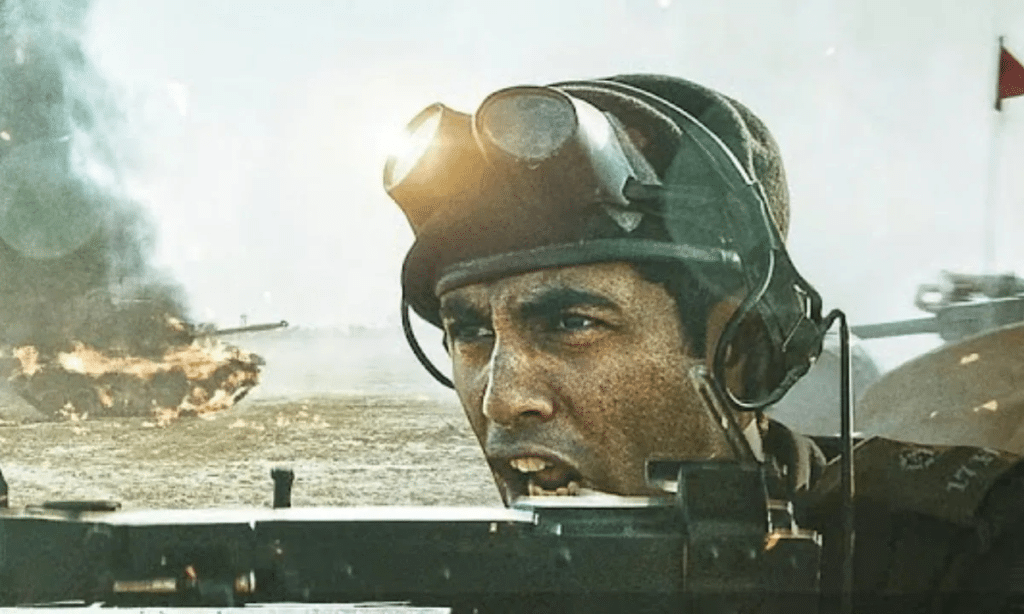
The Real Life Behind the Reel Story
Born into an Army family, Arun Khetarpal grew up with discipline, courage, and service ingrained in his everyday life. Commissioned into the 17 Poona Horse regiment, he was barely 21 when history called upon him to do the unthinkable.
During the 1971 Indo-Pak War, in the decisive Battle of Basantar, Khetarpal found himself leading from the front—outnumbered, outgunned, yet unshaken. When enemy tanks advanced and communication lines broke down, retreat was an option. He refused it.
Instead, he chose resistance.
What followed was an act of heroism so profound that it continues to be taught at military academies decades later. Fighting till his last breath, Arun Khetarpal destroyed multiple enemy tanks, ensuring strategic victory for Indian forces, even as his own tank was hit.
For this supreme act of valour, he was posthumously awarded the Param Vir Chakra, becoming India’s youngest recipient of the nation’s highest wartime gallantry honour.
How Ikkis Brings This Heroism to the Screen
Directed by Sriram Raghavan, a filmmaker known for tension, precision, and emotional depth, Ikkis approaches its subject with restraint rather than spectacle. Instead of glorifying war, the film focuses on the mindset of a young officer facing his first—and final—battle.
Agastya Nanda steps into the role of Arun Khetarpal, portraying not just a soldier, but a son, a leader, and a man confronting destiny far earlier than most. Veteran actor Dharmendra’s presence adds gravitas, symbolizing legacy, mentorship, and the generational cost of war.
Rather than compressing history into loud heroics, Ikkis reportedly allows silence, fear, resolve, and sacrifice to speak just as loudly.
What Makes Ikkis Feel So Authentic
The film’s realism stems from its attention to detail—the claustrophobic interiors of tanks, the confusion of battle commands, the rawness of frontline leadership. Sriram Raghavan’s direction emphasizes human vulnerability amid chaos, making the heroism feel earned rather than manufactured.
Uniforms, terrain, and military protocol are treated with respect, grounding the narrative in realism. Much like a historical memoir brought to life, Ikkis aims to immerse viewers in a moment where decisions were measured in seconds—and lives.
Why Arun Khetarpal’s Story Still Matters
Ikkis is not just about a war fought in 1971. It’s about youth, conviction, and the price of courage. Arun Khetarpal was not a seasoned general; he was a newly commissioned officer who chose duty over survival.
In an era where heroism is often romanticized, Ikkis reminds us that real bravery is quiet, decisive, and often paid for in full.
The Biopic in Context
Indian cinema has long explored stories of leaders, rebels, and visionaries—from political figures to spiritual icons. Where Ajey examined the rise of a monk-turned-leader, Ikkis shifts the lens to a soldier whose leadership lasted just one battle—but changed history forever.
Both films share a common thread: extraordinary lives shaped by discipline, belief, and an unwavering sense of purpose.
So, Is Ikkis Based on a True Story?
Yes—Ikkis is firmly rooted in reality.
The film is directly inspired by the life and sacrifice of Second Lieutenant Arun Khetarpal, whose actions during the Battle of Basantar remain one of the Indian Army’s most celebrated moments of valour.
While cinematic liberties may shape the narrative flow, the soul of Ikkis stays true to history—honouring a young man who became immortal at 21.
Ikkis isn’t just a war film.
It’s a tribute to courage that didn’t ask for time—and a reminder that some heroes live forever, not by how long they lived, but by what they stood for.
