
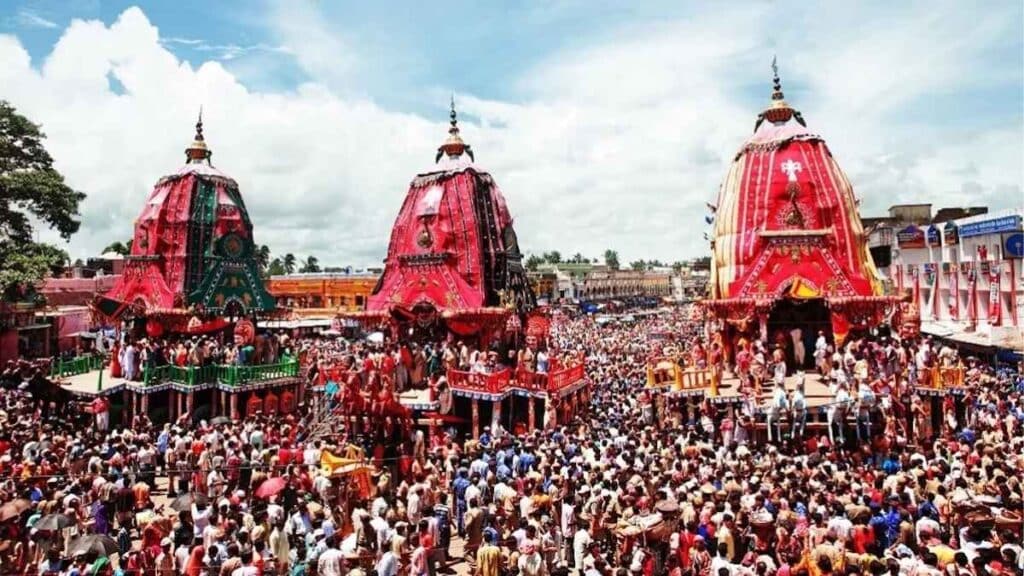
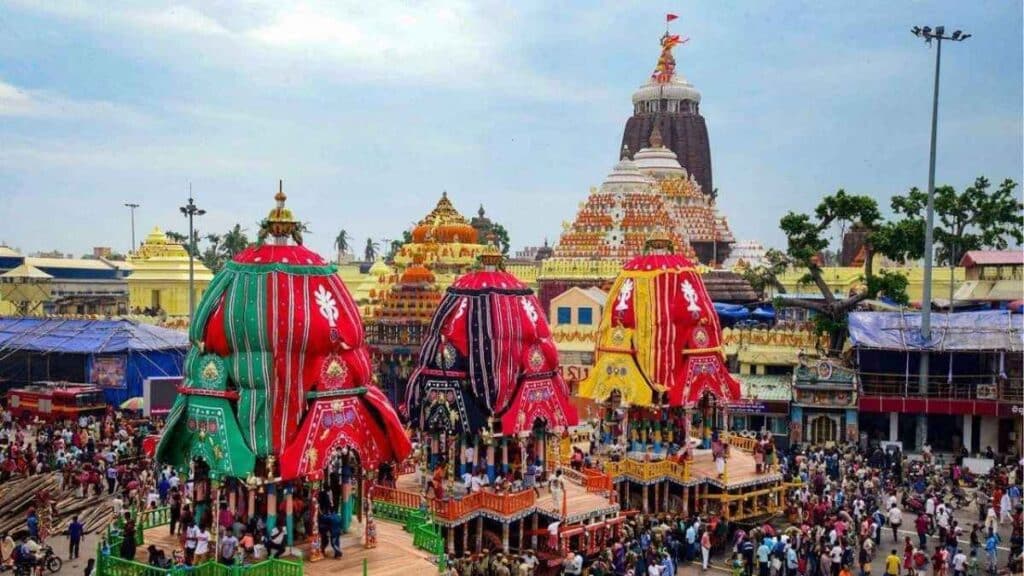
Jagannath Rath Yatra, popularly known as the Puri Car Festival or Chariot Festival, is considered the world’s oldest and largest chariot festival. Celebrated annually in the sacred city of Puri, Odisha, India, Rath Yatra marks the annual journey of Lord Jagannath — the Lord of the Universe — along with his elder brother Lord Balabhadra and younger sister Devi Subhadra, from their abode in the Jagannath Temple to the Gundicha Mata Temple.
The festival symbolizes the soul’s journey toward liberation and God’s divine accessibility to all people. Three massive, freshly constructed wooden chariots are pulled through the streets by hundreds of thousands of devotees, making it one of the most spectacular religious events in the world.
Rath Yatra is primarily observed by Hindus, especially Vaishnavas, but its inclusive spirit welcomes people of all faiths. It is celebrated across India and by Indian diaspora communities worldwide, from the USA and UK to Singapore and Australia.
When Is Jagannath Rath Yatra Celebrated in 2026?
Rath Yatra is celebrated on the Dwitiya Tithi (2nd lunar day) during the Shukla Paksha (bright fortnight) of the Hindu month of Ashadha, which typically falls in June or July.
Rath Yatra 2026 Date in India
- Rath Yatra (Chariot Procession): Thursday, July 16, 2026
- Gundicha Marjana (Temple Cleaning): July 15, 2026 — one day before Rath Yatra
- Hera Panchami: ~July 20, 2026 — Goddess Lakshmi visits Gundicha Temple
- Bahuda Yatra (Return Journey): ~July 24, 2026 — deities return to the main temple
- Suna Besha (Golden Attire): Day of Bahuda Yatra — deities adorned in 208 kg of gold jewelry
Dwitiya Tithi Timings : Dwitiya Tithi Begins: 11:50 AM, July 15, 2026 Dwitiya Tithi Ends: 08:52 AM, July 16, 2026
Table of Contents
Rath Yatra In USA, Canada, Australia, New Zealand, UK, UAE, Singapore 2026 Dates
Ratha Yatra on Wednesday, July 15, 2026
- Dwitiya Tithi Begins – 02:20 AM on Jul 15, 2026
- Dwitiya Tithi Ends – 11:22 PM on Jul 15, 2026
Ratha Yatra on Wednesday, July 15, 2026
- Dwitiya Tithi Begins – 02:20 AM on Jul 15, 2026
- Dwitiya Tithi Ends – 11:22 PM on Jul 15, 2026
Ratha Yatra on Thursday, July 16, 2026
- Dwitiya Tithi Begins – 04:20 PM on Jul 15, 2026
- Dwitiya Tithi Ends – 01:22 PM on Jul 16, 2026
Ratha Yatra on Wednesday, July 15, 2026
- Dwitiya Tithi Begins – 07:20 AM on Jul 15, 2026
- Dwitiya Tithi Ends – 04:22 AM on Jul 16, 2026
Ratha Yatra on Thursday, July 16, 2026
- Dwitiya Tithi Begins – 10:20 AM on Jul 15, 2026
- Dwitiya Tithi Ends – 07:22 AM on Jul 16, 2026
Ratha Yatra on Thursday, July 16, 2026
- Dwitiya Tithi Begins – 02:20 PM on Jul 15, 2026
- Dwitiya Tithi Ends – 11:22 AM on Jul 16, 2026
Why Do Rath Yatra Dates Change Every Year?
Rath Yatra follows the Hindu Lunisolar Calendar, not the Gregorian calendar. It is fixed on Dwitiya Tithi of Ashadha Shukla Paksha, which shifts annually because lunar months are approximately 29.5 days long.
The festival therefore falls on different Gregorian dates each year, always in June or July. Periodic intercalary months are added to realign the lunar calendar with the solar year, causing further variation.
Rath Yatra Other Names and Regional Identities
Rath Yatra is known by different names across languages and communities:
- Rathajatra / ରଥଯାତ୍ରା — Standard Odia name (Odisha)
- Ratha Yatra / रथ यात्रा — Sanskrit and Hindi
- Ghosha Jatra — Alternate Odia name meaning Festival of Celebration
- Rath Jatra / রথ যাত্রা — Bengali (West Bengal, Bangladesh)
- Puri Car Festival / Chariot Festival — English name used by foreign visitors
- Festival of Chariots — ISKCON branding used globally in Western countries
- Phagwah/Jagannath Festival — Used in some Caribbean diaspora communities (Trinidad, Guyana)
The Origins, History, and Legends of Rath Yatra
Rath Yatra is one of India’s most ancient festivals, with descriptions found in the Brahma Purana, Padma Purana, Skanda Purana, and the Kapila Samhita. European travelers documented the festival as early as the 13th century, with vivid accounts in the 17th century.
The Legend of Queen Gundicha According to tradition, the Jagannath Temple in Puri was built by the legendary King Indradyumna. His queen, Gundicha, was a devoted worshipper of Lord Jagannath. To honor her devotion, Lord Jagannath leaves the main temple every year and spends eight days at the Gundicha Temple — built by the queen in the deity’s honor.
Tribal Roots and the Daitapati Tradition The Jagannath cult carries deep tribal origins. Descendants of the tribal chieftain Biswabasu — known as daitapatis or daitas — hold the hereditary privilege of serving the deities throughout the Rath Yatra period and the sacred convalescence period (Anasara). This fusion of tribal and Brahminical traditions is a defining feature of the Jagannath tradition.
Chariot Construction: Chandana Yatra Preparations begin with the Chandana Yatra, a 42-day sandalwood festival. Chariot construction formally starts on Akshaya Tritiya with ritual fire worship. Wood — primarily phassi and dhausa trees — is sourced from the ex-princely state of Dasapalla and transported via the Mahanadi river by hereditary craftsmen.
Cultural and Spiritual Significance
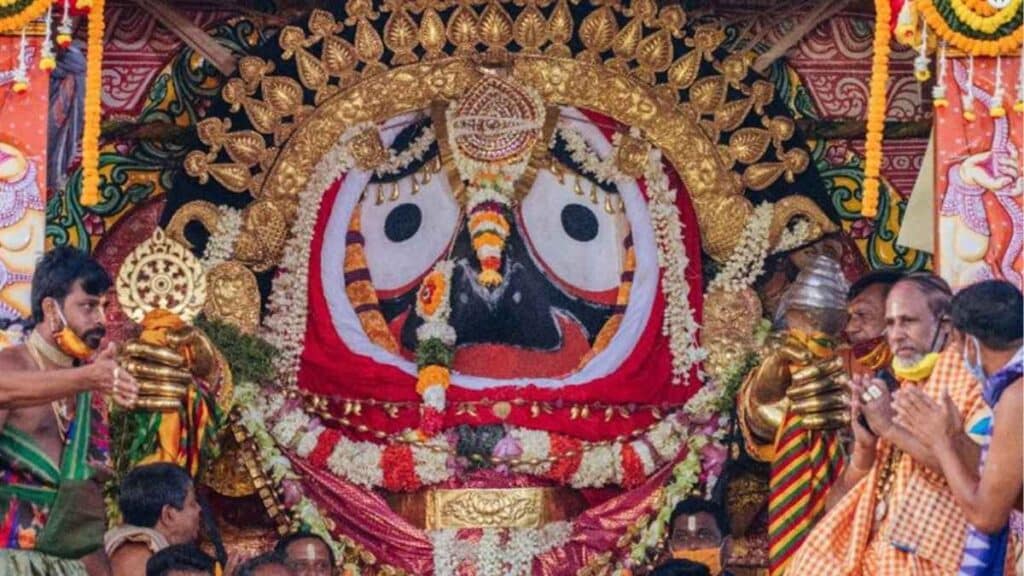
Rath Yatra carries profound symbolism. The chariot journey represents the soul’s journey toward liberation (moksha). Lord Jagannath — whose name literally means Lord of the Universe (Jagat = Universe, Nath = Lord) — is a uniquely inclusive deity whose abstract, unfinished wooden form is believed to embody the formlessness of the ultimate reality, welcoming all devotees without distinction.
The festival communicates a powerful message: that God steps outside his abode to be accessible to everyone. Devotees who cannot enter the inner sanctum of the temple can receive the Lord’s darshan (divine sight) on the open streets. Pulling the chariot rope is considered an act of supreme devotion, with tradition holding that even a moment’s touch washes away lifetimes of karma.
Prayers and Religious Observances
Pahandi — The Sacred Procession The festival begins with Pahandi, the ceremonial procession of the three deities from the temple to their chariots. The daitapatis carry the deities in a rhythmic, swaying motion while priests chant Vedic hymns and temple musicians play traditional instruments.
Chhera Panhara — The King Sweeps Before the chariots depart, the Gajapati King of Puri ceremonially sweeps the path ahead of each chariot with a golden broom — a ritual symbolizing that before God, all are equal, including kings.
Dahuka Boli — Sacred Songs The Dahuka (chariot singers) perform traditional poetic recitations called Dahuka Boli. These songs are considered sacred — tradition holds that the chariot will not move unless the Dahuka sings.
Hera Panchami On the fifth day after Rath Yatra, Goddess Lakshmi visits the Gundicha Temple in search of Lord Jagannath. In a dramatic ritual, she symbolically damages the Nandighosa chariot before returning home — a divine domestic drama that delights millions of devotees.
Suna Besha — The Golden Attire On the day of the return journey, the three deities are dressed in approximately 208 kg of gold jewelry on their chariots. This tradition began with King Kapilendra Deva in 1460 CE, who donated gold after returning victorious from war.
The Three Sacred Chariots — Detailed Specifications
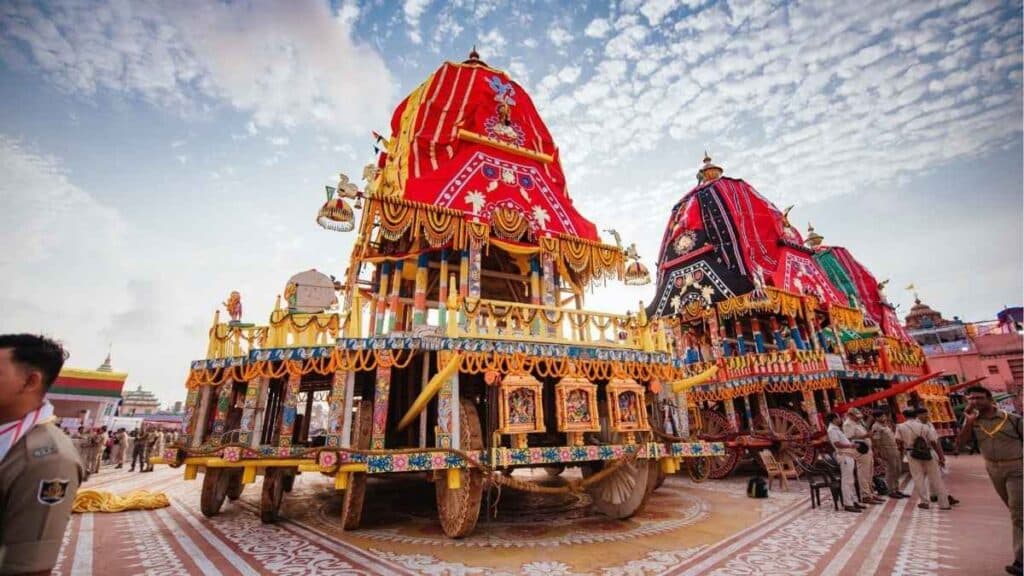
Three brand-new wooden chariots are constructed every year. Each chariot has a distinct name, color, size, and set of accompanying deities.
| Chariot Detail | Jagannath | Balabhadra | Subhadra |
|---|---|---|---|
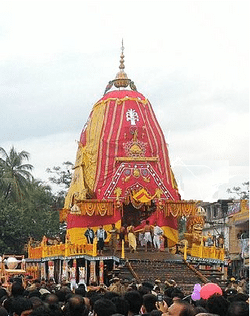 | 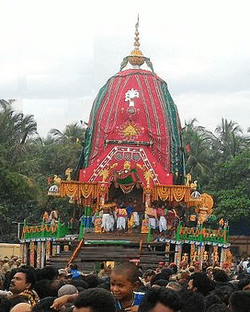 | 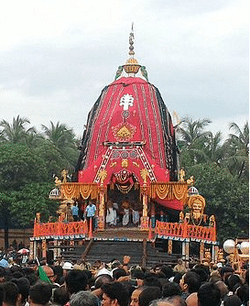 | |
| Chariot Name | Nandighosha | Taladhwaja | Darpadalana |
| Alternate Name | Garudadhwaja / Kapidhwaja | Langaladhwaja | Devadalana / Padmadhwaja |
| Number of Wheels | 16 | 14 | 12 |
| Height | 44 ft 2 in | 43 ft 3 in | 42 ft 3 in |
| Size (L × B) | 34’6″ × 34’6″ | 33′ × 33′ | 31’6″ × 31’6″ |
| Wooden Pieces | 832 | 763 | 593 |
| Canopy Color | Red & Yellow | Red & Bluish Green | Red & Black |
| Guardian | Garuda | Vasudeva | Jayadurga |
| Charioteer | Daruka | Matali | Arjuna |
| Horse Color | White | Black | Red |
| Horse Names | Shankha, Balahaka, Shweta, Haridashwa | Tibra, Ghora, Dirghasharma, Swarnanava | Rochika, Mochika, Jita, Aparajita |
| Flag Name | Trailokyamohini | Unnani | Nadambika |
| Chariot Rope | Sankhachudha Nagini | Basuki Naga | Swarnachuda Nagini |
| Accompanying Deity | Madanmohan | Ramakrishna | Sudarshana |
All three chariots are dismantled after the festival and the wood is used for cooking Mahaprasad in the temple kitchen — a sacred zero-waste tradition.
How Rath Yatra Is Celebrated Across India
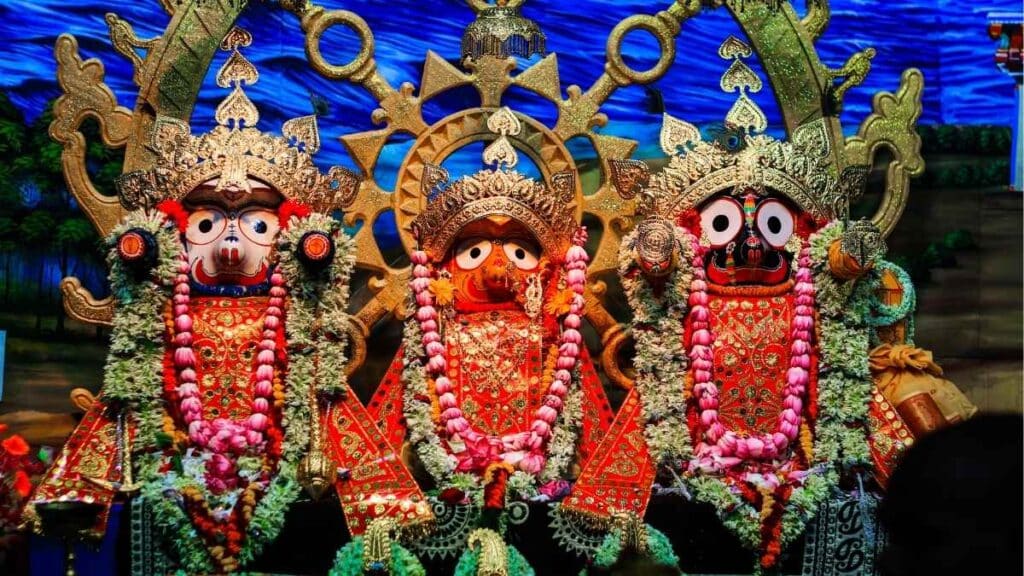
While Puri hosts the grandest Rath Yatra, the festival is widely celebrated across India.
In West Bengal, Rath Jatra is celebrated with enormous enthusiasm — the tradition in Mahesh, Serampore, and Guptipara spans over 400 years, rivaling Puri in scale.
ISKCON Kolkata organizes one of India’s largest city-based chariot festivals.
In Gujarat, historic Jagannath temples in Ahmedabad lead vibrant local processions.
Across Maharashtra, Tamil Nadu, Bangalore, and Hyderabad, ISKCON temples organize community Festival of Chariots events combining traditional rituals with cultural performances and Mahaprasad distribution.
Participation Across Religions in India
Rath Yatra is one of Hinduism’s most universally inclusive festivals. The medieval Panchasakha saints of Odisha explicitly preached that Lord Jagannath transcends caste and religious barriers. The Mahaprasad of Lord Jagannath is one of the rare instances in Hindu tradition where sacred food is prepared and distributed without caste distinction — a powerful symbol of equality. The Muslim poet-saint Salabega composed devotional hymns to Lord Jagannath that are still sung today, exemplifying the festival’s interfaith embrace. People of diverse backgrounds — Hindu, Muslim, Sikh, tribal, and others — participate naturally in the festival, reflecting India’s pluralistic spirit.
How Rath Yatra Is Celebrated Outside India
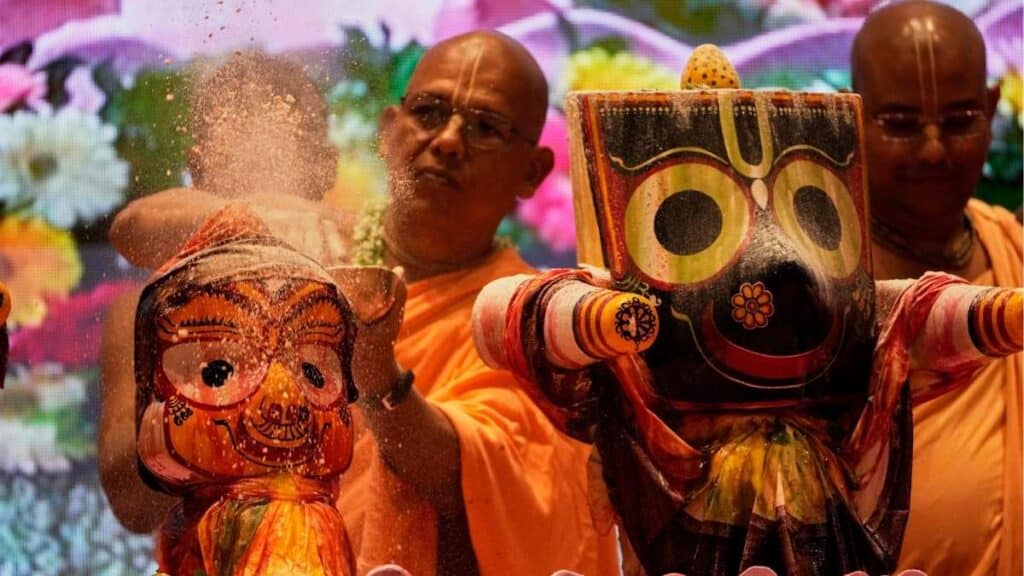
Driven primarily by ISKCON, Rath Yatra is now celebrated in over 100 cities worldwide. The first international Festival of Chariots was organized in San Francisco in 1967 by Srila Prabhupada. Today, colorful chariot processions take place in New York, London, Toronto, Sydney, and beyond, drawing Indian diaspora families and spiritual seekers of all backgrounds.
In New York, ISKCON’s procession on Fifth Avenue attracts tens of thousands, with kirtan, cultural performances, and free Mahaprasad. London’s Rath Yatra near Trafalgar Square is one of Europe’s largest, featuring Odissi dance and exhibitions on Odia culture. Toronto and Sydney host vibrant events with chariot processions and community food distribution. In the UAE, the large Indian expatriate community celebrates through temple events that serve as spiritual and cultural anchors far from home.
Rath Yatra Gifting Traditions
Gifting during Rath Yatra centers on sharing the blessings of Lord Jagannath. Mahaprasad — the sacred food blessed by the deity — is the most meaningful gift, shared freely with family, friends, and neighbors. Traditional gifts include wooden miniature chariots, framed images of Lord Jagannath, Pattachitra paintings (traditional Odia art), sandalwood items, and Odia sweets. In the diaspora, Jagannath-themed handicrafts, digital greeting cards, and donations to community food distribution programs in the deity’s name have become popular modern expressions of the gifting tradition.
Jagannath Rath Yatra Foods and Culinary Traditions
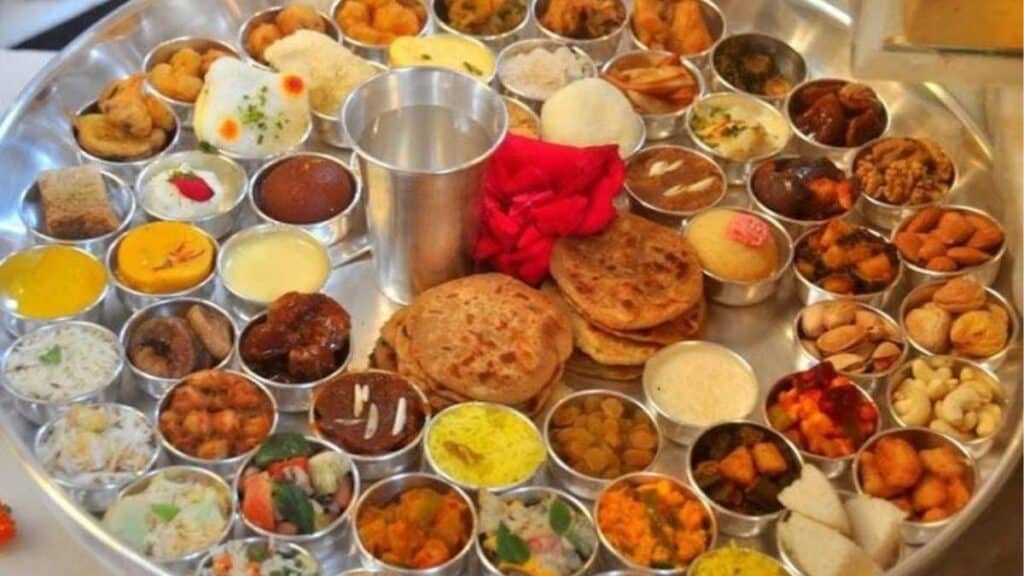
Mahaprasad is the heart of Rath Yatra’s culinary tradition. Prepared in the world’s largest temple kitchen — which serves up to 100,000 people daily — the Mahaprasad consists of 56 dishes known as Chappan Bhog, cooked in earthen pots using an ancient stacking method considered divinely blessed.
Poda Pitha — a baked rice cake made with jaggery, coconut, and black gram — holds special significance during Rath Yatra. On the return journey, the deities stop at Mausi Maa Temple (Aunt’s abode) specifically for an offering of Poda Pitha, believed to be the deity’s favorite food. Other traditional foods associated with the festival include:
- Khichdi (Khichuri) and Dalma
- Rasagola and Chhena Poda
- Malpua and Arisa Pitha
- Khaja and Ada Pakhala (fermented rice)
In diaspora communities, families prepare these dishes at home or enjoy Mahaprasad at ISKCON temple events during the festival period.
Music, Art, and Cultural Expression
Rath Yatra is as much a cultural festival as a religious one. The streets of Puri come alive with Odissi classical music, Odissi and Gotipua dance performances, and the sounds of mardala (drum), mohuri (oboe), and ghanta (bell) played by temple musicians. The Dahuka Boli — traditional poetic songs sung by the chariot singers — is a unique art form performed only during this festival.
Pattachitra, Odisha’s exquisite traditional painting style, reaches its artistic peak during Rath Yatra, with artisans from Raghurajpur creating intricate depictions of Lord Jagannath and the chariots. Globally, ISKCON events blend traditional kirtan with classical dance, folk music, and cultural exhibitions, making Rath Yatra an immersive cross-cultural experience.
Modern Observance and Evolving Practices
Rath Yatra continues to evolve while staying rooted in its ancient traditions. In 2025, a significant number of devotees participated through live streaming platforms, enabling real-time darshan for millions unable to travel to Puri. This digital pilgrimage tradition is growing. Puri authorities have introduced eco-friendly initiatives — biodegradable offerings, reduced single-use plastics, and enhanced crowd management technology — making the festival more sustainable without diminishing its spiritual power. Globally, ISKCON-run events increasingly incorporate large-scale food distribution to the homeless, honoring Jagannath’s inclusive Mahaprasad tradition.
To wish someone on Rath Yatra, say “Jai Jagannath!” — a greeting warmly received across generations and geographies.
Cultural Reflection
Jagannath Rath Yatra endures not just as a religious festival but as a living expression of India’s pluralism and spiritual depth. The sight of millions of hands — kings and commoners, devotees of all faiths — pulling the same chariot rope together carries a message that transcends any tradition: the journey toward the divine is one we take collectively. Whether witnessed in Puri, New York, Singapore, or through a screen from home, Jai Jagannath resonates as a universal invocation of unity, equality, and joy.