

Karwa Chauth is one of the most cherished Indian festivals celebrated by married Hindu women across North and Western India. Observed primarily for the longevity and well-being of their husbands, this day-long fast from sunrise to moonrise symbolizes devotion, love, and the sacred bond of marriage. Rooted in ancient traditions, Karwa Chauth represents the spiritual power of a devoted wife and the strength of feminine solidarity.
The name “Karwa” refers to an earthen pot used to offer water to the moon, while “Chauth” means the fourth day, marking its occurrence on the fourth lunar day of Kartik month. The festival coincides with the wheat-sowing season and falls ten days before Diwali, making it a significant autumn celebration.
On Karwa Chauth, women dress in bridal finery, adorn themselves with mehendi and jewelry, and gather for community prayers. The fast is broken only after sighting the moon and receiving the first sip of water from their husband’s hands, making it a deeply romantic and spiritual observance that has captured hearts across generations and geographies.
When Is Karwa Chauth Celebrated in 2026?
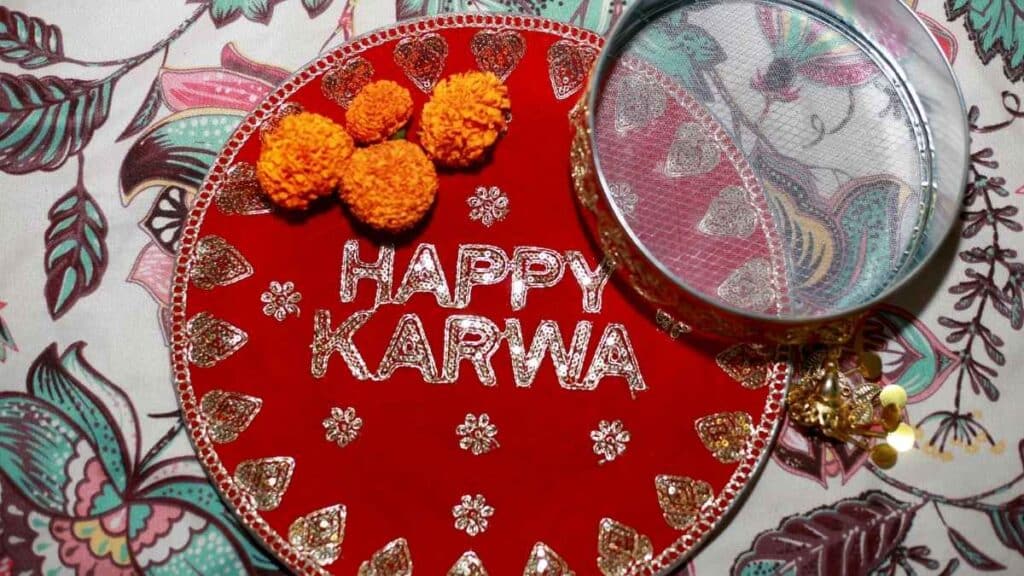
Karwa Chauth is celebrated on the Krishna Paksha Chaturthi (fourth day of the waning moon) in the Hindu month of Kartik, which typically falls in October or November.
Karwa Chauth in India 2026 Date
Karwa Chauth will be celebrated on Thursday, October 29, 2026 in India
- Karwa Chauth Puja Muhurat: 05:38 PM to 06:56 PM (Duration: 1 Hour 17 Minutes)
- Upavasa (Fasting) Time: 06:31 AM to 08:11 PM (Duration: 13 Hours 40 Minutes)
- Moonrise Time: 08:11 PM
- Chaturthi Tithi Begins: 01:06 AM on October 29, 2026
- Chaturthi Tithi Ends: 10:09 PM on October 29, 2026
Table of Contents
Karwa Chauth In USA, Canada, Australia, New Zealand, UK, UAE, Singapore 2026 Dates
Karwa Chauth on Wednesday, October 28, 2026
- Karwa Chauth Puja Muhurat – 05:57 PM to 07:18 PM
- Moonrise on Karwa Chauth Day – 07:29 PM
Karwa Chauth on Wednesday, October 28, 2026
- Karwa Chauth Puja Muhurat – 06:14 PM to 07:35 PM
- Moonrise on Karwa Chauth Day – 07:38 PM
Karwa Chauth on Thursday, October 29, 2026
- Karwa Chauth Puja Muhurat – 07:31 PM to 08:34 PM
- Moonrise on Karwa Chauth Day – 11:22 PM
Karwa Chauth on Thursday, October 29, 2026
- Karwa Chauth Puja Muhurat – 04:39 PM to 06:04 PM
- Moonrise on Karwa Chauth Day – 06:21 PM
Karwa Chauth on Thursday, October 29, 2026
- Karwa Chauth Puja Muhurat – 05:41 PM to 06:57 PM
- Moonrise on Karwa Chauth Day – 08:24 PM
Karwa Chauth on Thursday, October 29, 2026
- Karwa Chauth Puja Muhurat – 06:50 PM to 08:02 PM
- Moonrise on Karwa Chauth Day – 09:57 PM
Why Karwa Chauth Dates Change Every Year?
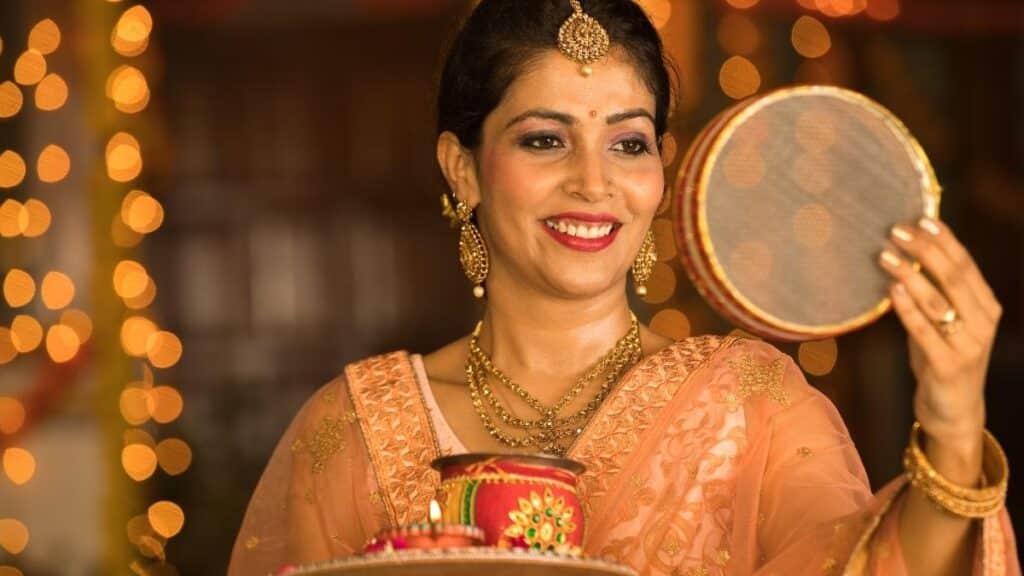
Karwa Chauth is celebrated based on the Hindu lunar calendar, not the Gregorian calendar. It falls on the Krishna Paksha Chaturthi (fourth day of the waning moon) of Kartik month according to the Purnimanta calendar followed in North India.
Since lunar months are shorter than solar months:
- Karwa Chauth’s date shifts every year
- Timing depends on moon position and local calculations
- The festival always falls ten days before Diwali
- Moonrise timings vary by geographical location
This lunisolar calculation ensures the festival maintains its traditional astronomical and spiritual significance while adapting to different time zones and locations worldwide.
Karwa Chauth Other Names & Regional Identities
Standard Names:
- Karwa Chauth / Karva Chauth — Most common name across North India
- Karaka Chaturthi (करकचतुर्थी) — Sanskrit scriptural name
- Karak Chaturthi (करक चतुर्थी) — Alternative Sanskrit variant
Regional Names:
North India
- Andhra Pradesh: Atla Tadde
- General: Also coincides with Sankashti Chaturthi (Lord Ganesha fasting day)
Western India
- Maharashtra: Vakratunda Sankashti Chaturthi (worship of Vakratunda form of Ganesha)
Meaning:
- “Karwa” or “Karaka” means earthen pot (used for offering water to the moon)
- “Chauth” or “Chaturthi” means the fourth day
The Origins, History, and Legends of Karwa Chauth
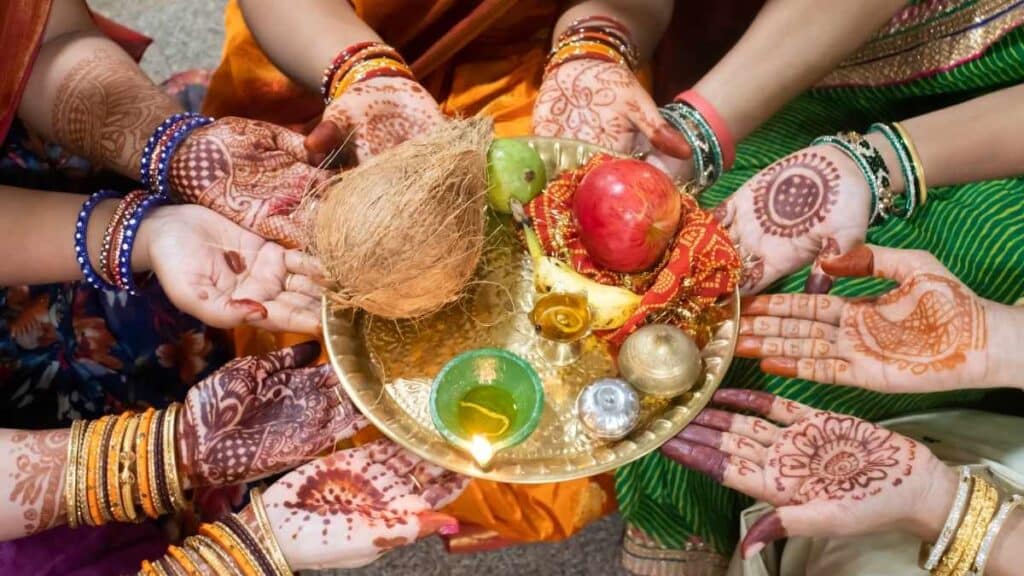
Karwa Chauth has deep historical and mythological roots in Hindu tradition, with origins tied to both warrior culture and ancient agricultural practices.
Historical Origins:
The festival traces back to the warrior traditions of North India, particularly among Rajput communities. When men left for military campaigns to distant lands, their wives would observe this fast praying for their safe return. The festival also coincides with the wheat-sowing season (beginning of Rabi crop cycle), and the large earthen pots (karvas) used to store wheat inspired prayers for bountiful harvests.
Another significant origin relates to feminine solidarity. In traditional arranged marriages, brides would form sacred friendships with other women as “kangan-saheli” (friend) or “dharam-behn” (sister) for life. Days before Karwa Chauth, women would beautifully paint clay pots and fill them with bangles, ribbons, sweets, and gifts to exchange, celebrating this bond of sisterhood.
Mythological Legends:
The Story of Queen Veeravati
The most popular legend tells of Queen Veeravati, the only sister of seven loving brothers. During her first Karwa Chauth as a married woman, she observed a strict fast but by evening suffered severe hunger and thirst. Unable to bear their sister’s distress, her brothers created a mirror reflection in a pipal tree resembling the moon. Deceived, Veeravati broke her fast and immediately learned her husband had died. Heartbroken, her devotion compelled a goddess to appear, who revealed the deception and instructed her to repeat the fast with complete devotion. When Veeravati observed the fast properly, Yama (the god of death) was forced to restore her husband to life.
Legend from the Mahabharata
Draupadi observed Karwa Chauth when Arjuna went to the Nilgiris for penance and the remaining Pandavas faced difficulties. Seeking Krishna’s guidance, she learned that Goddess Parvati had observed this fast when advised by Lord Shiva under similar circumstances. Following these instructions, Draupadi performed all rituals with devotion, and the Pandavas overcame their problems.
The Legend of Karva
A devoted wife named Karva possessed such intense love for her husband that it gave her immense shakti (spiritual power). When a crocodile caught her husband while bathing, Karva bound the creature with cotton yarn and commanded Yama to send it to hell. Fearing the power of a devoted wife (pativrata), Yama blessed her husband with long life. Karva and her husband enjoyed many years of wedded bliss.
These legends emphasize that a devoted wife’s prayers and spiritual strength can challenge even death itself, making Karwa Chauth a celebration of feminine power and marital devotion.
Karwa Chauth: Cultural and Spiritual Significance
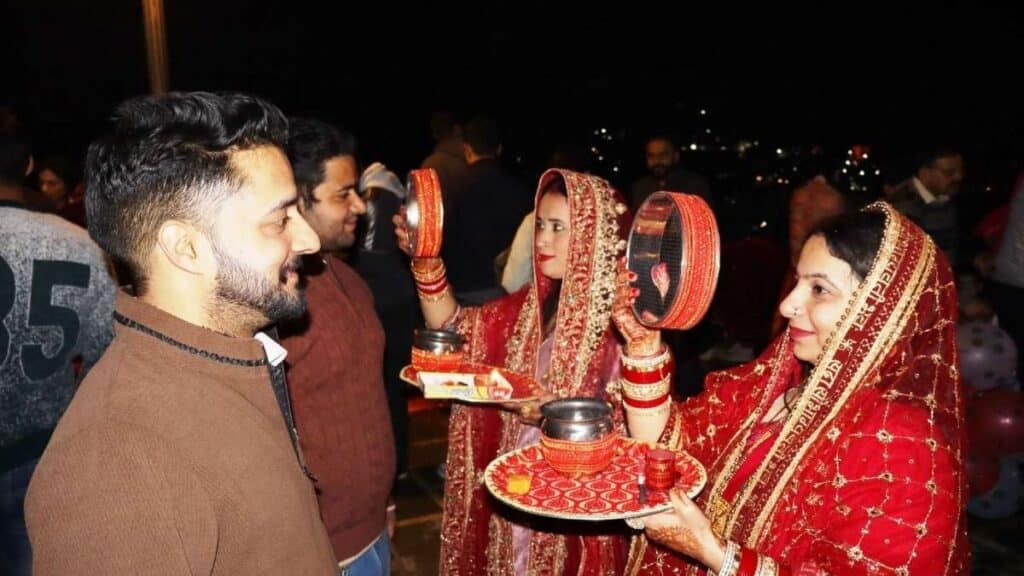
Karwa Chauth embodies profound cultural values centered on marital commitment, feminine strength, and spiritual devotion.
Spiritual Significance:
The festival represents the spiritual power (shakti) accumulated through fasting, believed to create a protective shield around the husband. The legends demonstrate that a devoted wife’s prayers can challenge death itself. The fast symbolizes self-discipline, sacrifice, and the transformation of love into spiritual energy.
Cultural Significance:
Beyond marital bonds, Karwa Chauth celebrates feminine solidarity and sisterhood. The collective rituals, shared storytelling, and community gatherings create powerful bonds among women. The festival also promotes:
- Unity and togetherness in marriage
- Forgiveness and renewal of marital vows
- Community bonding and social harmony
- Intergenerational connection through traditional practices
Symbolic Elements:
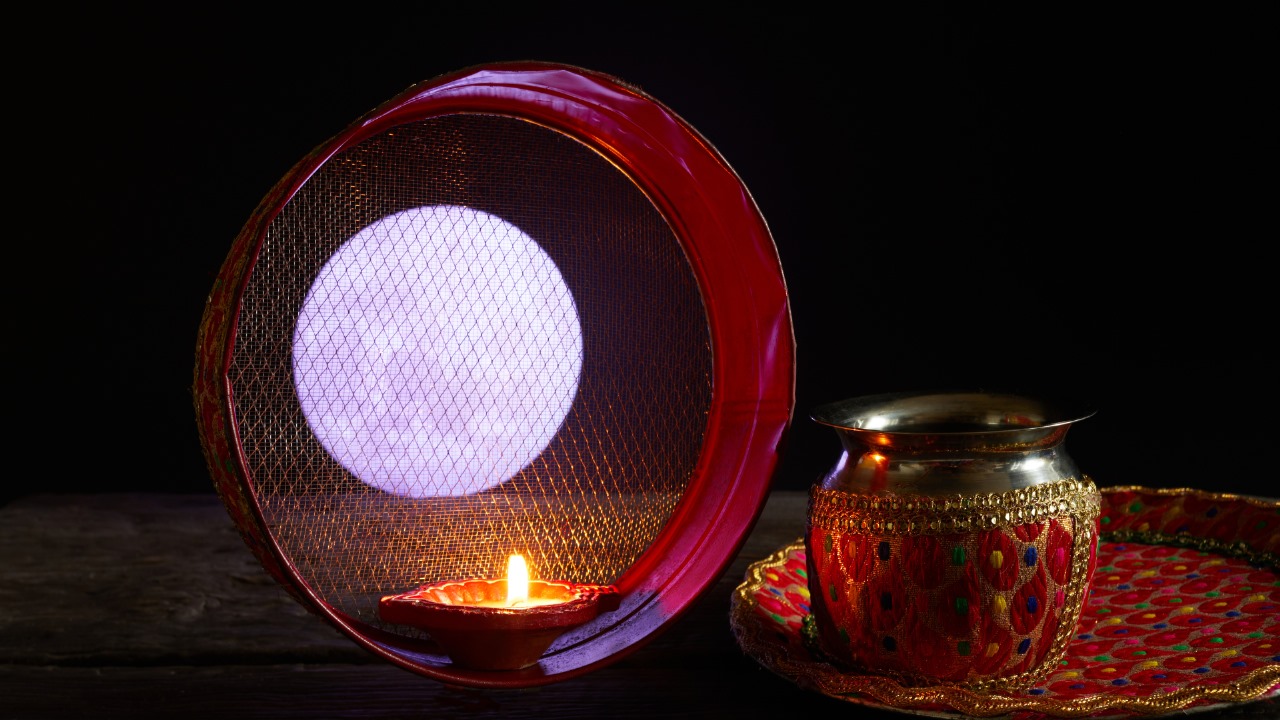
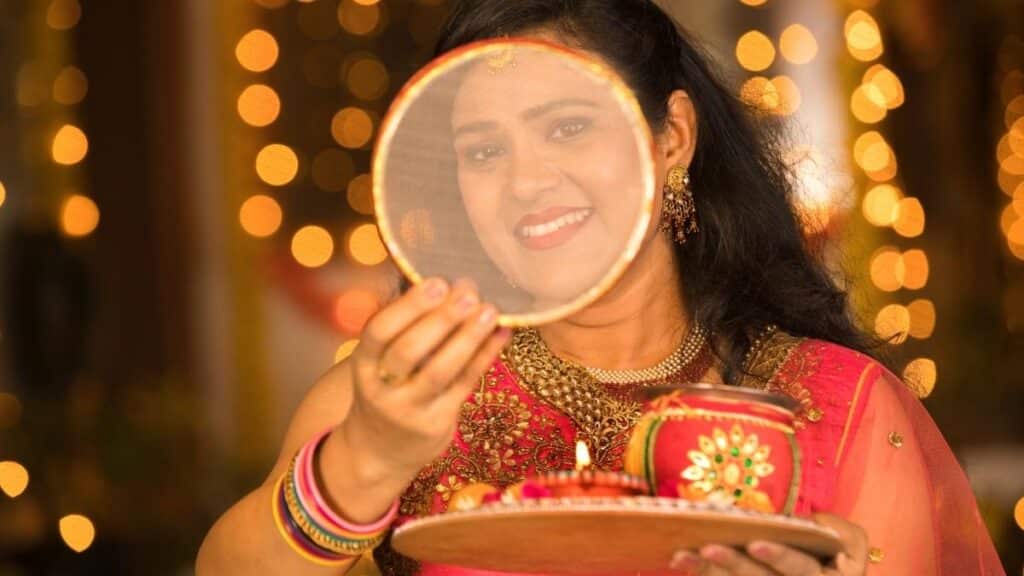
The earthen pot (karva) symbolizes abundance and prosperity. Viewing the moon through a sieve represents filtering divine blessings. The exchange of decorated pots among women celebrates friendship and mutual support.
More than a religious observance, Karwa Chauth is a celebration of love, devotion, and the sacred bonds that sustain relationships through life’s journey.
Karwa Chauth Prayers and Religious Observances
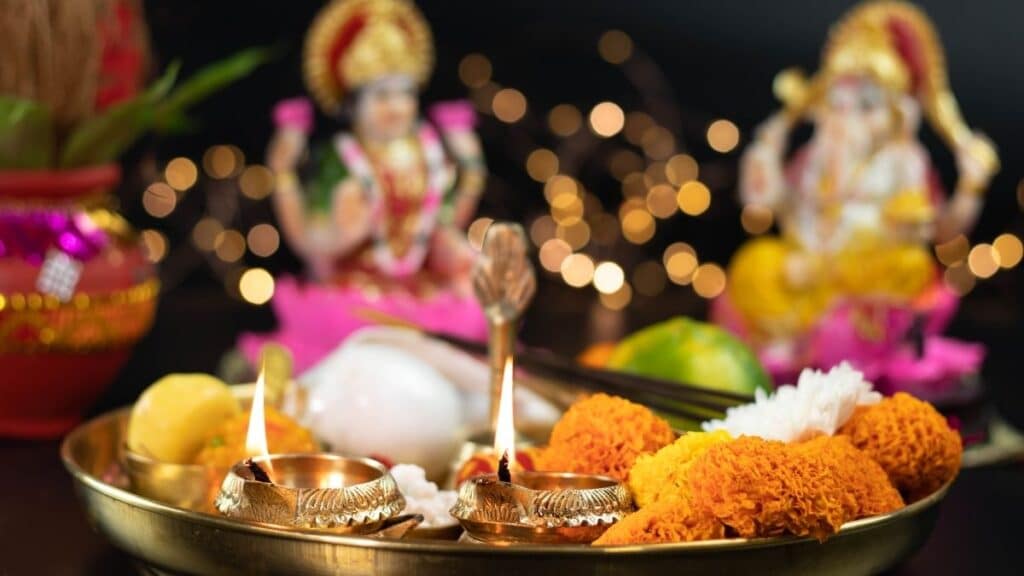
Karwa Chauth prayers and rituals are performed to seek blessings for the husband’s longevity, prosperity, and well-being. The religious observances follow a structured pattern throughout the day.
Pre-Dawn Rituals:
The observance begins before sunrise with Sargi—a pre-dawn meal traditionally prepared by the mother-in-law. In Punjab, sargi always includes fenia (a sweet), along with fruits, milk, dry fruits, and foods that provide sustained energy. Women consume this meal before sunrise, as no food or water will pass their lips until moonrise.
Daytime Observance:
Throughout the day, fasting women traditionally refrain from housework. They apply mehendi (henna) on their hands and feet, adorn themselves with jewelry, and prepare decorated puja thalis for evening worship.
Evening Puja:
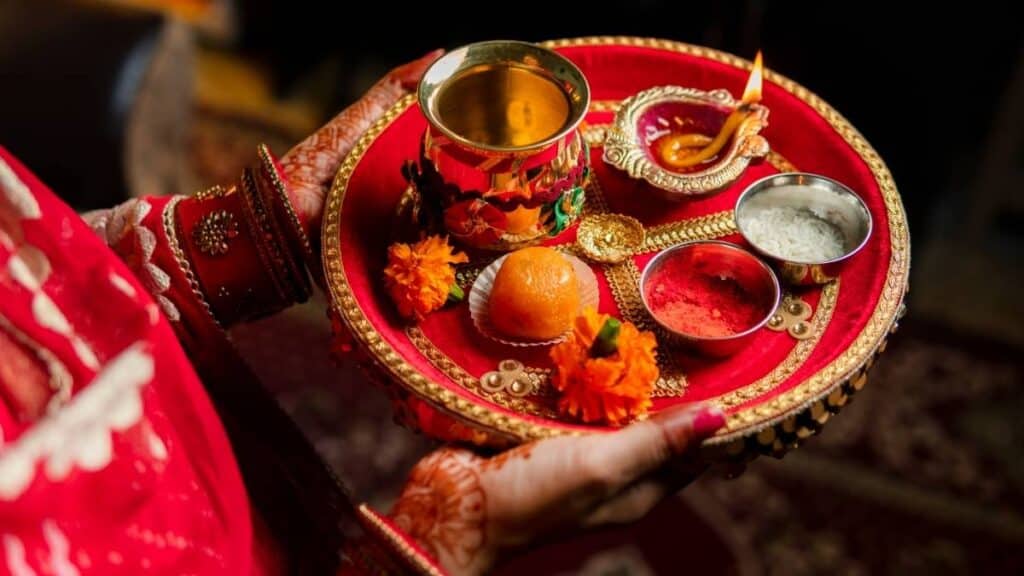
Before dusk, women gather in colorful traditional attire—often wedding finery in auspicious colors like red, gold, or pink. They sit in a circle with decorated thalis containing:
- Karva (earthen pot with water)
- Sindoor, incense, rice
- Earthen lamp
- Offerings (mathri, halwa, fruits)
An elder woman or priest narrates the Karwa Chauth katha (traditional stories). Women perform the fera ceremony, passing their thalis around the circle seven times while singing devotional songs.
Moonrise Rituals:
When the moon appears:
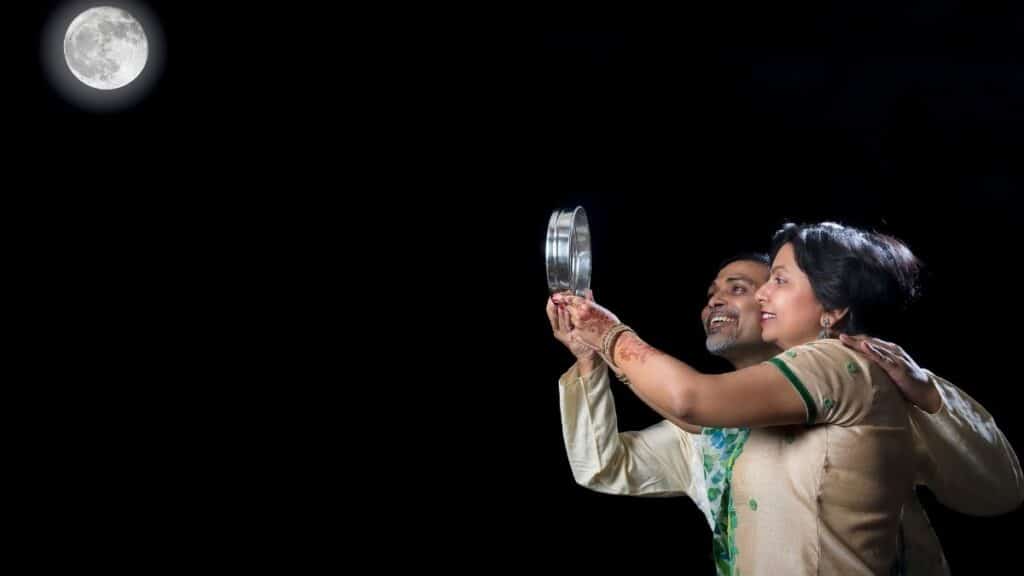
- Women view the moon through a sieve or dupatta
- Water is offered (argha) to the moon
- The woman views her husband’s face through the sieve
- Prayers are offered to Chandra (lunar deity)
- The husband offers the first sip of water
- The fast is broken
चंद्र अर्घ्य मंत्र :
ॐ सोम सोमाय नमः
या
ॐ श्रां श्रीं श्रौं सः चन्द्रमसे नमः
While many families perform simple prayers at home, temples conduct special pujas and community celebrations. Whether observed at home or in temples, Karwa Chauth rituals emphasize devotion, gratitude, and spiritual renewal.
Karwa Chauth Vrat Katha
No Karwa Chauth celebration is complete without the recitation of the Vrat Katha. Traditionally narrated by an elder woman during the evening puja, as women sit in a circle passing their thalis, this sacred story has been passed down through generations. Listening to the katha with devotion is considered essential for the fast to bear its full spiritual fruit.
Karwa Chauth Vrat Katha in Hindi
एक सर्वगुण और धर्म के कर्मों में निरत रहने वाला ब्राह्मण था। उस ब्राह्मण की एक पुत्री और सात पुत्र थे। पुत्री का नाम वीरावती था और इकलौती बहन होने के कारण उसके सातों भाई उससे बहुत प्रेम करते थे। कुछ समय में वीरावती का विवाह एक ब्राह्मण युवक से हो गया। विवाह के कुछ समय बाद वीरावती अपने मायके आई। उस दिन उसने करवा चौथ का व्रत रखा था और भूख के कारण वो बहुत व्याकुल हो रही थी। शाम को सारे भाई अपने-अपने काम से घर आए तो उन्होंने अपनी बहन से उसकी व्याकुलता का कारण पूछा। वीरावती ने बताया कि उसका व्रत है और वह चंद्रमा को अर्घ्य देने के पश्चात ही भोजन ग्रहण कर सकती है।
परंतु भाइयों से अपनी लाड़ली बहन की व्याकुलता देखी नहीं जा रही थी। तब सबसे छोटे भाई ने एक तरकीब लगाई और एक दीपक प्रज्वलित करके चलनी की ओट में पास के पीपल के वृक्ष पर रख दिया। दूर से देखने पर ऐसा प्रतीत हो रहा था मानो चाँद निकल आया हो। इसके पश्चात सभी भाइयों ने जाकर वीरावती को कहा कि चाँद निकल आया है और अब तुम अपना करवा चौथ का व्रत खोल सकती हो। वीरावती ने भाइयों की बात मानकर विधिपूर्वक चंद्रमा को अर्घ्य दिया।
घर आकर उसने जैसे ही भोजन का पहला निवाला अपने मुख में डाला तो उसे छींक आ गई। परंतु वीरावती इस चेतावनी को समझ न पाई। जब दूसरा निवाला मुख में रखा तो उसमें बाल निकल आया, परंतु वीरावती भूख से इतनी व्याकुल थी कि उसने इसे भी अनदेखा कर दिया। जैसे ही तीसरा निवाला उसने ग्रहण किया, उसे उसके पति की मृत्यु का समाचार प्राप्त हुआ। यह दुखद समाचार सुनकर वीरावती रोने-बिलखने लगी, तब उसकी भाभी ने उसे सच्चाई से अवगत कराया और बताया कि यह सब व्रत टूटने के कारण हुआ है।
सच्चाई जानने के उपरांत वीरावती ने निश्चय किया कि वो अपने पति को अपने सतीत्व से दुबारा जीवित करेगी और इसीलिए उसने अपने पति का अंतिम संस्कार नहीं होने दिया। वो पूरे एक साल तक अपने पति के शरीर की देखभाल करती रही और उस पर उगने वाली सुईनुमा घास को इकट्ठा करती रही। उसके मन में दृढ़ निश्चय था कि उसका पति वापस जीवित होगा। एक साल बाद फिर से करवा चौथ का त्योहार आया और वीरावती की भाभियाँ उससे आशीर्वाद लेने आईं। उसने अपनी भाभियों से आग्रह किया — “यम सूई ले लो, पिय सूई दे दो, मुझे भी अपनी जैसी सुहागिन बना दो।” तब उसकी एक भाभी ने कहा कि सबसे छोटे भाई के कारण तेरे पति की मृत्यु हुई है, इसीलिए उसकी पत्नी ही इसे जीवित कर सकती है।
अंत में सबसे छोटी भाभी आती है और वीरावती उससे घास लेकर उसके पति को जीवित करने का आग्रह करती है। कुछ देर तक भाभी हठ करती है, परंतु वीरावती का पतिव्रता रूप और सतीत्व देखकर उसकी बात मान लेती है। इसके पश्चात भाभी अपनी छोटी अंगुली को चीरकर उसमें से अमृत उसके पति के मुँह में डाल देती है। वीरावती का पति जीवित हो जाता है।
Karwa Chauth Vrat Katha in English
There was a virtuous Brahmin devoted to righteous deeds, who had seven sons and a daughter named Veeravati. Being the only sister, she was deeply cherished by all seven brothers. In time, Veeravati was married to a young Brahmin man. Some time after her marriage, she visited her parental home on the day of Karwa Chauth and observed the fast, growing weak and restless from hunger as the day wore on. When her brothers returned home in the evening and found her distressed, she explained that her fast could only be broken after offering arghya to the moon.
Unable to bear their beloved sister’s suffering, the brothers devised a plan. The youngest brother lit a lamp and placed it behind a sieve high in a nearby peepal tree. From a distance, it glowed just like the moon. The brothers rushed to Veeravati and told her the moon had risen. Trusting them, she performed the ritual and offered her prayers. But as she sat down to eat, the warning signs came one by one: the first morsel brought a sneeze, the second revealed a strand of hair, and with the third came the devastating news that her husband had died. Her sister-in-law then revealed the deception — the false moon had broken the fast, and with it, the fast’s protective grace.
Resolute in her devotion, Veeravati refused to let her husband be cremated. For an entire year, she tended to his body and gathered every needle-like blade of grass that grew upon it, holding firm to the belief that he would live again. When the next Karwa Chauth arrived, her sisters-in-law came seeking her blessings. She implored each one: “यम सूई ले लो, पिय सूई दे दो, मुझे भी अपनी जैसी सुहागिन बना दो” — take back the needle of death, give back the needle of life, make me a blessed wife as you are. One sister-in-law told her that since her husband’s death was caused by the youngest brother, only his wife held the power to restore life.
At last, the youngest sister-in-law arrived. Though she hesitated, moved by Veeravati’s unwavering pativrata devotion, she relented. She cut her little finger and let the nectar from within fall onto the lips of Veeravati’s husband. He opened his eyes, restored to life.
This story of Veeravati has been recited at every Karwa Chauth for centuries, reminding women that the power of sincere devotion and an unbroken fast can transcend even death. It is not merely a tale of wifely duty, but a testament to the spiritual strength that love, patience, and sacrifice carry within them.
करवा चौथ माता की आरती
ॐ जय करवा मैया, माता जय करवा मैया।
जो व्रत करे तुम्हारा, पार करो नइया॥
॥ ॐ जय करवा मैया…॥
सब जग की हो माता, तुम हो रुद्राणी।
यश तुम्हारा गावत, जग के सब प्राणी॥
॥ ॐ जय करवा मैया…॥
कार्तिक कृष्ण चतुर्थी, जो नारी व्रत करती।
मैया जो नारी व्रत करती।
होए सुहागिन नारी, सुख संपत्ति पावे॥
॥ ॐ जय करवा मैया…॥
करवा चौथ का व्रत यह, देता अभय वरदान।
मैया देता अभय वरदान।
श्रद्धा से जिसने निभाया, करवा मां करे कल्याण॥
॥ ॐ जय करवा मैया…॥
करवा मैया की आरती, व्रत कर जो गावे।
मैया व्रत कर जो गावे।
व्रत हो जाता पूरन, सब विधि सुख पावे॥
॥ ॐ जय करवा मैया…॥
ॐ जय करवा मैया, माता जय करवा मैया।
जो व्रत करे तुम्हारा, पार करो नइया॥
॥ ॐ जय करवा मैया…॥
How Karwa Chauth Is Celebrated Across India
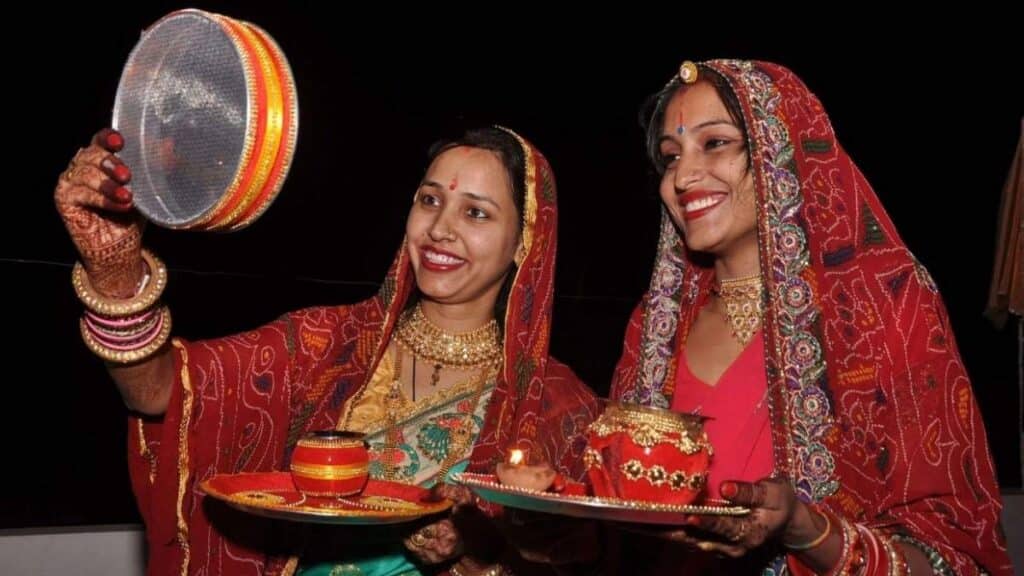
While the essence of Karwa Chauth remains consistent, its expressions vary across regions.
North India (Primary Celebration Belt):
In Punjab, the spiritual heartland of Karwa Chauth, sargi traditions are most elaborate. Women dress in vibrant traditional attire with elaborate mehendi designs.
In Haryana and Rajasthan, women observe strict fasts and gather for large community celebrations. Rajasthan is known for elaborate storytelling sessions and the exchange of beautifully decorated karvas.
In Uttar Pradesh, the worship of Gaur Mata (Mother Earth) is prominent, with women creating clay idols of Shiva, Parvati, and Ganesha. The Veeravati legend is most commonly narrated here.
Delhi blends traditional rituals with modern practices, with large-scale community gatherings in parks and specially decorated markets.
Western India:
In Gujarat, while not traditionally celebrated, Karwa Chauth has gained popularity in recent decades, particularly in urban areas, observed alongside Vakratunda Sankashti Chaturthi.
Maharashtra primarily observes it as Sankashti Chaturthi for Lord Ganesha, though some communities celebrate Karwa Chauth as well.
Eastern and Southern India:
In Bengal, Northeast India, and Bhutan, a unique tradition exists where teenage boys participate in fasting rituals alongside married women, believed to help them find suitable life partners.
In Andhra Pradesh, it’s celebrated as Atla Tadde with regional variations while maintaining the core essence.
Despite regional variations, mehendi application, community gatherings, storytelling, and moonrise rituals remain central everywhere.
Participation Across Religions in India
Karwa Chauth is celebrated not only by Hindus but has transcended religious boundaries in certain regions, making it a shared cultural festival.
Sikh Women: In Punjab and surrounding areas, Sikh women observe Karwa Chauth with equal devotion, integrating the tradition into their cultural practices while maintaining their distinct religious identity.
Interfaith Participation: In cosmopolitan cities, women from various backgrounds sometimes participate in the festivities as a cultural celebration, appreciating the emphasis on love and marital commitment.
The festival’s core themes of devotion, sacrifice, and love resonate across religious boundaries. By encouraging unity and shared happiness, Karwa Chauth serves as a reminder that festivals can bring people together through common values of commitment, family bonds, and mutual celebration.
How Karwa Chauth Is Celebrated Outside India
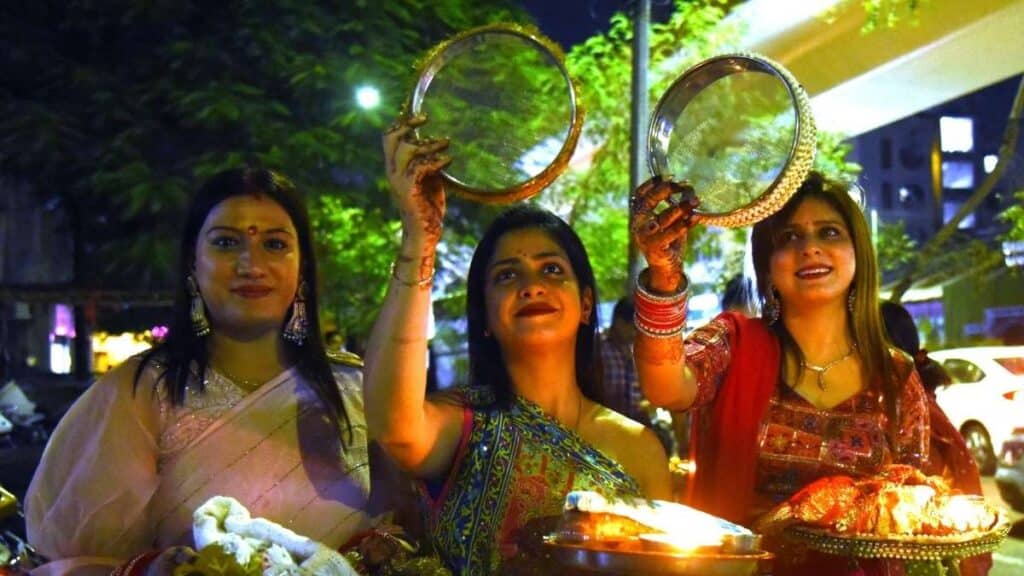
Indian diaspora communities across the world celebrate Karwa Chauth through:
Community Events: Large gatherings at temples and cultural centers where women observe collective pujas, storytelling, and moonrise ceremonies.
Virtual Celebrations: Technology enables separated couples to observe rituals together via video calls, making geographical distance manageable.
Adapted Timings: Celebrations adjust to local moonrise schedules across different time zones.
Cultural Programs: Organizations host events featuring traditional music, mehendi artists, and group fasts.
Weekend Observances: When the actual date falls on weekdays, some communities organize weekend celebrations.
These celebrations help maintain cultural connections while introducing the festival to multicultural communities in:
- United States & Canada: Community temples organize group pujas with adjusted moonrise timings
- United Kingdom: British-Indian communities celebrate in London, Birmingham, and Leicester
- UAE: Large expatriate communities host elaborate gatherings
- UAE: Large expatriate communities host elaborate gatherings
- Australia, New Zealand, Singapore: Adapted celebrations maintaining traditions despite different seasons and time zones, Birmingham, and Leicester
Karwa Chauth Gifting Traditions

Karwa Chauth gifting symbolizes love, appreciation, and the strengthening of familial bonds.
Traditional Gifts:
From Mother-in-Law to Daughter-in-Law:
- Sargi thali with fenia, fruits, sweets, and dry fruits
- New karva (decorated earthen pot)
- Traditional jewelry, particularly bangles
- Red or auspicious-colored sarees or lehengas
- Sindoor, mehendi, and cosmetics
Between Friends (Kangan-Saheli):
- Decorated karvas filled with bangles, ribbons, and homemade sweets
- Matching jewelry sets
- Traditional textiles
From Husbands to Wives:
- Jewelry (mangalsutra, bangles, rings)
- Designer sarees or traditional attire
- Special moonrise dinners
Modern Diaspora Gifting:
- Gift cards and online vouchers
- Spa packages and beauty treatments
- Flowers and gourmet treats
- Eco-friendly and sustainable gifts
- Charitable donations
The exchange of gifts reinforces relationships between generations and celebrates the wife’s devotion and the sacred bonds of family.
Traditional Karwa Chauth Foods
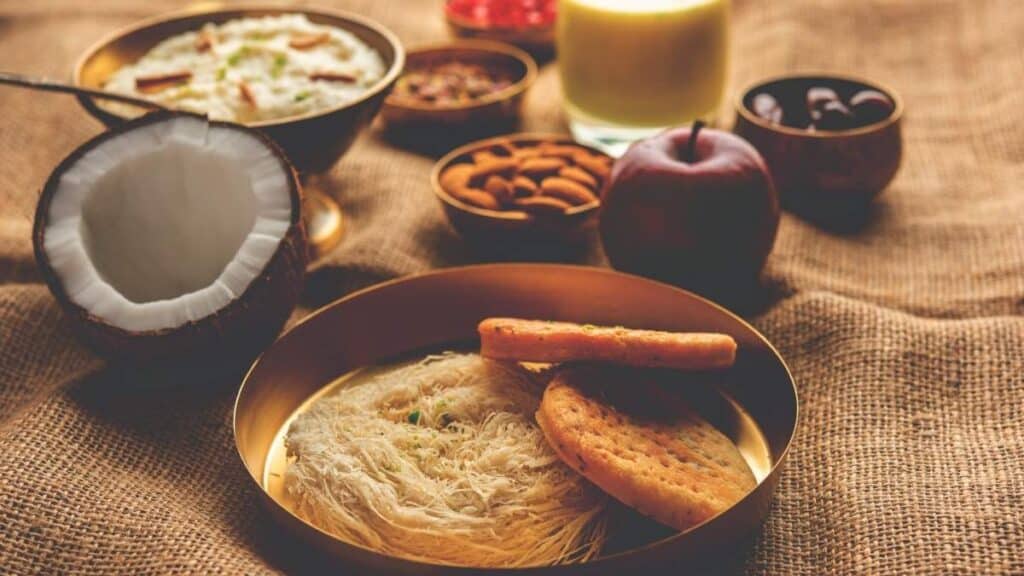
Food plays an essential role in Karwa Chauth, symbolizing nourishment, hospitality, and celebration.
Sargi (Pre-Dawn Meal):
Traditional sargi includes:
- Fenia: Sweet, crispy wheat preparation (essential in Punjab)
- Mathri: Savory fried crackers
- Fresh fruits: Bananas, apples, pomegranates for sustained energy
- Dry fruits and nuts: Almonds, cashews, dates
- Sweets: Homemade laddoos, barfi, or kheer
- Milk or yogurt: For hydration and protein
Modern Sargi Adaptations:
- Quinoa kheer or oatmeal
- Multigrain rotis and avocado parathas
- Smoothies with nuts and fruits
- Energy bars for health-conscious celebrants
Fast-Breaking Foods:
The first bite traditionally includes:
- Water offered by the husband
- A sweet from puja prasad
- Light foods like fruits or milk
Festive Dinner:
- Regional specialties based on family traditions
- Puris, paneer curry, dal, rice, raita
- Special sweets: halwa, gulab jamun, kheer
Karwa Chauth: Music, Art, and Cultural Expression

Music, art, and cultural expression are integral to Karwa Chauth celebrations, bringing energy and emotion to the festival.
Traditional Songs:
Devotional songs sung during the fera ceremony express the sanctity of the fast and celebrate marital bonds. Traditional Punjabi and Hindi songs passed down through generations create emotional connections during the puja.
Bollywood Influence:
Karwa Chauth has been romanticized in Hindi cinema, most famously in films like Dilwale Dulhania Le Jayenge and Baghban, transforming the festival into a symbol of romantic love in modern Indian culture.
Art and Aesthetics:
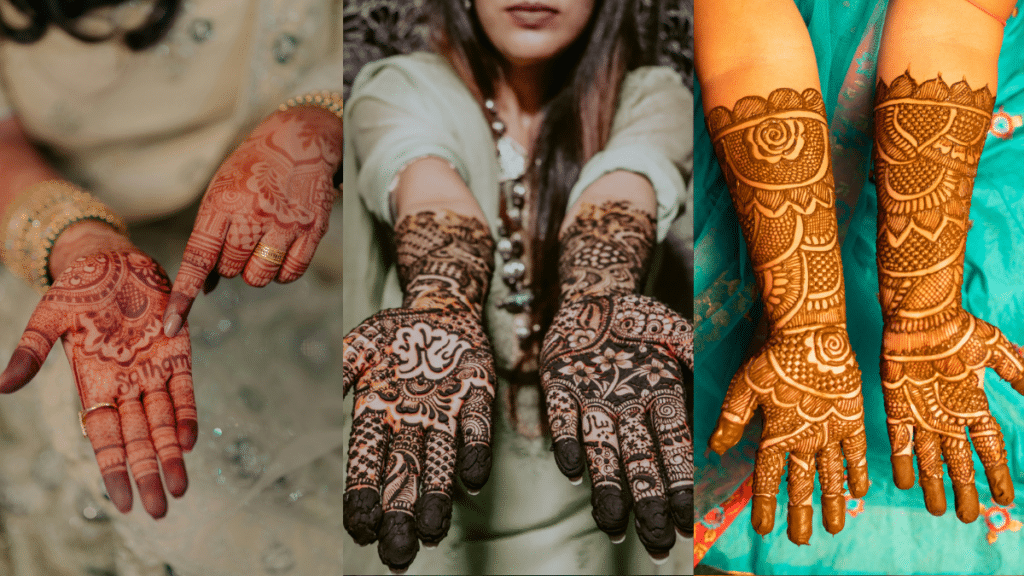
Mehendi Art: Intricate henna designs covering hands and feet are essential artistic expressions, featuring traditional motifs of peacocks, paisleys, and bridal patterns.
Karva Decoration: Earthen pots painted with vibrant colors and traditional patterns represent folk art traditions.
Fashion: The festival showcases traditional Indian attire, with women dressed in elaborate sarees, lehengas, and complete bridal jewelry.
Together, music, art, and celebration make Karwa Chauth a powerful expression of cultural unity, creativity, and devotional love. on social media.
Karwa Chauth’s Modern Relevance and Cultural Continuity
In today’s fast-changing world, Karwa Chauth continues to hold deep relevance as a festival that promotes devotion, love, and emotional connection. While celebrations have evolved, the core spirit remains unchanged—honoring marital bonds, encouraging feminine solidarity, and celebrating love’s transformative power.
Karwa Chauth plays an important role in preserving cultural continuity. Across generations and geographies, the festival connects people to their roots while allowing space for modern interpretations. For Indian communities abroad, it serves as a powerful link to heritage, helping pass traditions and values to younger generations.
The growing practice of mutual fasting represents the festival’s transformation into a celebration of equal partnership. The emphasis on feminine solidarity through sargi exchanges and community gatherings highlights women’s support networks that transcend marital relationships.
Beyond rituals and festivities, Karwa Chauth carries a timeless message of devotion, sacrifice, and the spiritual power of love. In an increasingly digital world, the festival reminds us of the importance of human connection, shared traditions, and cultural unity. Karwa Chauth’s enduring relevance lies in its ability to adapt while staying true to its essence—celebrating the sacred bonds of marriage, the strength of devotion, and the triumph of love.!