
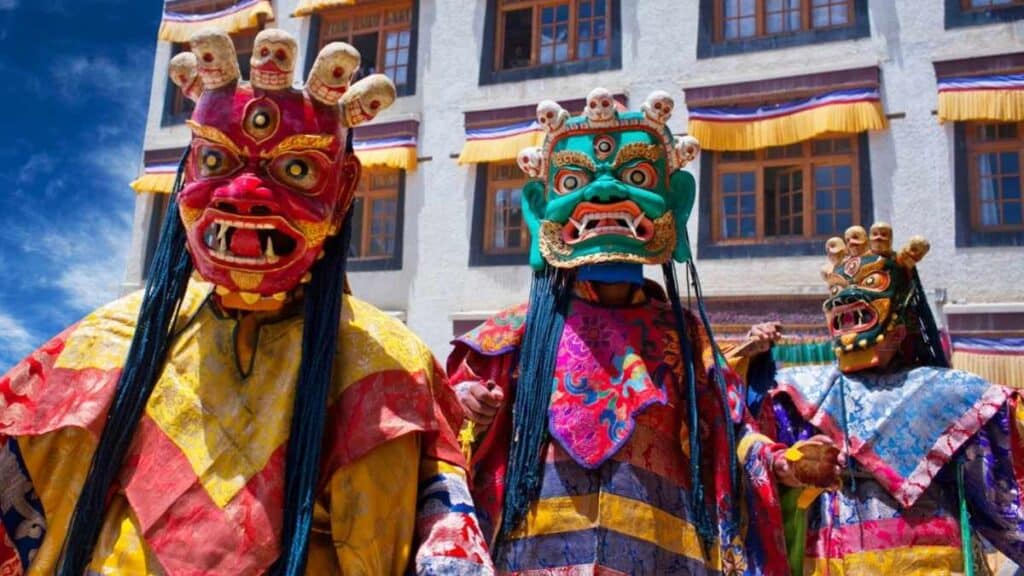
Losar is the Tibetan New Year—one of the most significant festivals in Tibetan culture, celebrated with deep spiritual reverence, vibrant rituals, and joyous community gatherings. Observed at the arrival of the new lunar year, Losar symbolizes renewal, purification, and the triumph of good over evil. Rooted in ancient Bon traditions and later integrated with Tibetan Buddhism, the festival marks the end of winter and the beginning of a new cycle associated with hope, spiritual merit, and fresh beginnings.
The spiritual meaning of Losar comes from both Bon cosmology and Buddhist teachings, representing the opportunity for karmic cleansing and spiritual renewal. This is commemorated through Gutor (New Year’s Eve), when households perform exorcism rituals to drive away negative forces, symbolizing the burning away of negativity and past obstacles.
The following days—three days of celebration and extending to fifteen days—are marked by prayers, temple visits, colorful traditional dress, special foods, and the raising of prayer flags. Families gather, neighbors exchange blessings, and communities come together in a spirit of devotion and joy. During Losar, spiritual practice intensifies—offerings are made, mantras are recited, and merit is accumulated for the year ahead.
Losar is primarily observed by Tibetan Buddhists across Tibet, India, Nepal, Bhutan, and Tibetan diaspora communities worldwide in countries such as the USA, UK, Canada, Australia, and Europe. In many places, it has become a cultural festival that also welcomes people of all backgrounds to participate respectfully.
When Is Losar Celebrated in 2026?
Losar is celebrated on the new moon day of the first month of the Tibetan lunar calendar, which typically falls in February or early March.
Losar in India 2026 Dates
- Day 1: Losar (New Year’s Day) will be celebrated on February 18, 2026 in India – The main day of celebration, marked by temple visits, family gatherings, and traditional rituals.
- Day 2: Gyalpo Losar (King’s Losar) will be celebrated on February 19, 2026 in India – The second day, focused on extended family visits and community celebrations.
- Day 3: Choe-kyong Losar (Yosei) will be celebrated on February 20, 2026 in India – The third day, when prayer flags are raised and incense offerings made at high places.
The festival extends for 15 days, though the first three days are the most intensively celebrated. The exact dates vary each year based on the Tibetan lunar calendar, making Losar a movable festival rather than a fixed-date event.
Table of Contents
Losar in USA, Canada, Australia, New Zealand, UK, UAE, Singapore 2026 Dates
- New Year’s Day (Losar): February 18, 2026 (Wednesday)
- Main Celebrations: February 18-20, 2026
- Community Events: Typically held on the weekend of February 21-22, 2026
- New Year’s Day (Losar): February 18, 2026 (Wednesday)
- Main Celebrations: February 18-20, 2026
- New Year’s Day (Losar): February 18, 2026 (Wednesday)
- Main Celebrations: February 18-20, 2026
- New Year’s Day (Losar): February 18, 2026 (Wednesday)
- Main Celebrations: February 18-20, 2026
- New Year’s Day (Losar): February 18, 2026 (Wednesday)
- Main Celebrations: February 18-20, 2026
Note: Celebrations are typically private gatherings in hotels or community centers
- New Year’s Day (Losar): February 18, 2026 (Wednesday)
- Main Celebrations: February 18-20, 2026
Why Losar Dates Change Every Year
Losar is celebrated based on the Tibetan lunar calendar, not the Gregorian calendar. It falls on the new moon of the first month of the Tibetan calendar, which usually occurs in February or early March.
Since lunar months are based on the moon’s cycles:
- Losar’s date shifts every year
- Timing depends on moon position and astronomical calculations
- Different Tibetan regions may celebrate on slightly different dates based on local traditions
- Monasteries and astrologers calculate the exact date months in advance using traditional Tibetan astronomical systems
The Tibetan calendar system is similar to (but distinct from) the Chinese lunar calendar, which is why Losar and Chinese New Year often fall close to each other but not on the same date.
2026: The Special Fire Horse Year
2026 is not just any Losar—it’s the Year of the Fire Horse, a rare convergence that occurs only once every sixty years.
What Makes the Fire Horse Year Special?
Tibetan astrology operates on a sixty-year cycle combining twelve animals with five elements:
- Animals: Rat, Ox, Tiger, Hare, Dragon, Snake, Horse, Sheep, Monkey, Bird, Dog, Pig
- Elements: Wood, Fire, Earth, Metal, Water
The Fire Horse combination creates:
- Fire = Purification, transformation, illumination, burning away ignorance
- Horse = Movement, freedom, endurance, carrying prayers forward
Spiritual Significance of Fire Horse Year
According to Tibetan Buddhist tradition:
- Amplified merit: Prayers, pilgrimages, and charitable acts yield 12 times the spiritual benefit
- Karmic cleansing: The Fire element accelerates the burning away of negative karma
- Mount Kailash pilgrimage: One circumambulation equals multiple rounds in ordinary years
- Transformation timing: Ideal year for major life changes, new spiritual practices, or releasing old patterns
Last Fire Horse Year: 1966
Next Fire Horse Year: 2086
This makes 2026 a once-in-a-lifetime spiritual opportunity for most practitioners.

Losar: Other Names & Regional Identities
Standard Names
- Losar (ལོ་གསར་) — Standard Tibetan name meaning “New Year” (Lo = Year, Sar = New)
- Tibetan New Year — Common English translation
- Fire Horse New Year — 2026-specific designation
North India & Himalayan Regions
Ladakh (Jammu & Kashmir):
- Losar — Same as standard Tibetan
Sikkim:
- Losar / Sonam Losar / Gyalpo Losar (King’s New Year)
- Celebrated by Bhutia community
Arunachal Pradesh:
- Losar — Celebrated by Monpa community in Tawang
Himachal Pradesh (Dharamshala):
- Losar — Central celebration for Tibetan exile community
Regional Variations in Tibet and Neighboring Areas
Amdo Region:
- Date may differ by 1-2 days from Central Tibet
Kham Region:
- Similar naming, slight ritual variations
Sherpa Communities (Nepal, Darjeeling):
- Gyalpo Lhosar / Sonam Lhosar
Related but Distinct Celebrations
Bhutan:
- Bhutanese Losar — Similar but separate traditions
Nepal (Tamang & Gurung communities):
- Tamang Lhosar — January (different date)
- Gurung Lhosar — December (different date)
Diaspora / International Naming
English-speaking Countries:
- Losar Festival
- Tibetan New Year Celebration
- Festival of Renewal
Community Centers:
- Often marketed as “Losar: Tibetan New Year Festival” to broader audiences
The Origins, History, and Legends of Losar
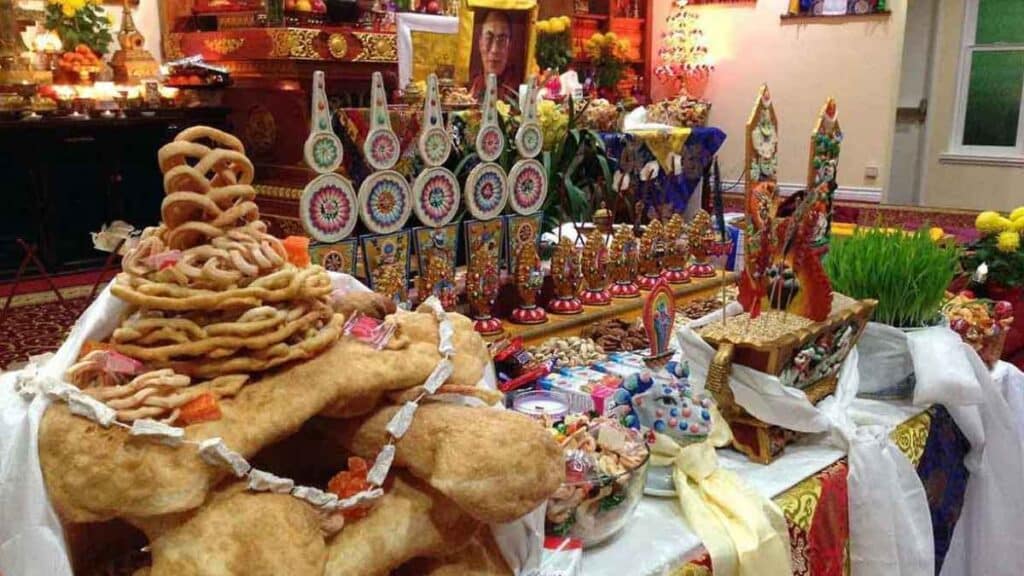
Losar is one of the oldest festivals of Tibet, with origins predating Buddhism by centuries. The celebration finds its roots in the ancient Bon religion that flourished in Tibet before the 7th century CE. Historically, Losar marked the end of winter, the arrival of spring, and the beginning of a new agricultural cycle—a time to celebrate renewal, honor nature spirits, and ensure prosperity for the coming year.
Ancient Bon Foundations
In the pre-Buddhist era (before 7th century CE), Losar was celebrated as a winter festival connected to:
- The blossoming of apricot trees in the Lhoka region
- Offerings to local deities and mountain spirits
- Smoke offerings (sang) to nature forces
- King Pude Gungyal is credited with establishing Losar as a formal royal celebration
According to Bon cosmology, the Horse was sacred—the animal that connected humans to divine forces and carried prayers to the heavens, a belief still reflected in today’s prayer flag traditions.
Buddhist Integration (7th-9th Centuries)
When Buddhism arrived in Tibet during King Songtsen Gampo’s reign (617-650 CE), Losar underwent transformation:
- Buddhist monks incorporated existing festivities into the religious calendar
- Added Buddhist prayers, prostrations, and monastery ceremonies
- Maintained Bon elements (incense, prayer flags, spirit offerings)
- Created the unique Tibetan Buddhist-Bon synthesis that defines Losar today
The integration was gradual and respectful, allowing both traditions to coexist and enrich the celebration.
Key Legends Associated with Losar
The Story of the Old Woman and Demons:
A popular legend tells of a poor old woman who was constantly haunted by demons. On New Year’s Eve, she thoroughly cleaned her house, prepared special foods, and performed purification rituals with fierce determination. The demons, witnessing her devotion and purity, were so impressed that instead of tormenting her, they blessed her household. This story underlies the Gutor (New Year’s Eve) exorcism rituals where negative forces are driven away through cleaning, prayers, and symbolic offerings.
The Five Kings’ Divination:
Another tale involves five ancient Tibetan kings who sought to know their fortunes for the coming year. They consulted a wise hermit who created the Gutu tradition—hiding symbolic objects in dough balls. Each king received a different fortune, teaching that destiny combines what you receive (luck) with how you respond (character). This practice continues today as a beloved family tradition.
Mount Kailash and Divine Blessings:
Tibetan tradition holds that during Losar, the gods descend from sacred Mount Kailash (གངས་རིན་པོ་ཆེ) to bless the earth. This belief explains why pilgrimages to Kailash during Losar—especially in Fire Horse years—carry amplified spiritual merit. Devotees believe they are closer to divine presence during this sacred time.
Historical Evolution
9th-17th Centuries:
- Losar became standardized across Tibetan regions
- Regional variations developed based on local agricultural cycles
- Monastic traditions solidified religious components
- The 60-year astrological cycle (combining 12 animals with 5 elements) was refined
1950s-Present:
- 1959: Following Chinese occupation, massive Tibetan diaspora begins
- Losar becomes a symbol of cultural resistance and preservation
- Exile communities in India, Nepal, and Bhutan maintain traditions with fierce dedication
- His Holiness the Dalai Lama delivers annual Losar messages from Dharamshala
- Global diaspora adapts celebrations while preserving core practices
Scriptural References
Tibetan Buddhist Texts:
- Kadam texts discuss New Year purification practices
- Kangyur (translated words of Buddha) includes festival timing calculations
- Various terma (treasure texts) describe Losar observances
- Monastic chöyig (regulations) outline proper protocols
Astronomical Texts:
- Phugpa calendar system (originated 1027 CE) governs Losar dating
- Tibetan astronomy texts calculate lunar months and auspicious timings
- Astrology manuals determine animal-element combinations for each year
Losar’s endurance through centuries of change—political upheaval, religious transformation, forced exile—demonstrates its central role in Tibetan cultural identity. The festival represents not just a celebration but a profound act of cultural survival and spiritual renewal.
Losar: Cultural and Spiritual Significance
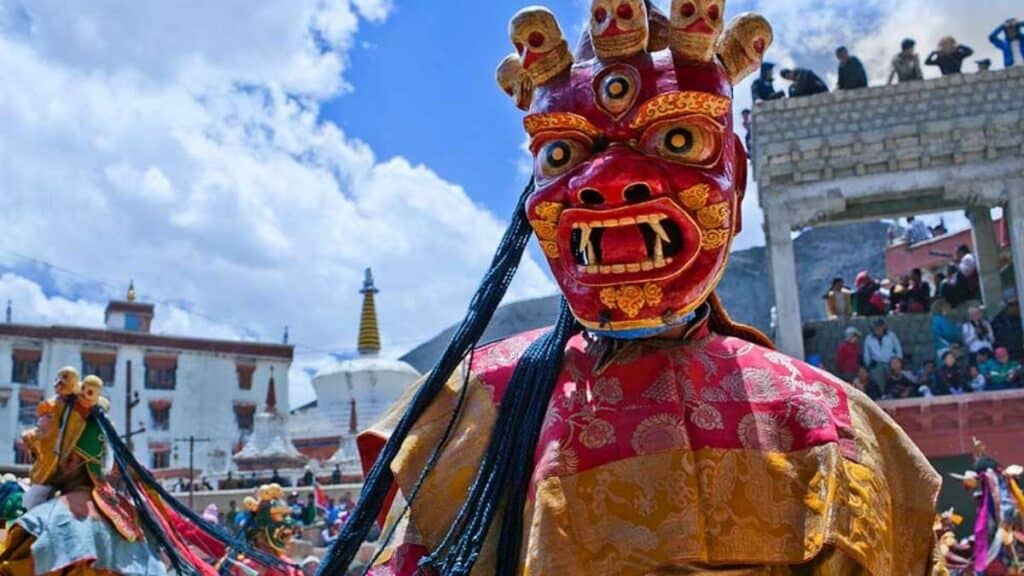
Losar is a festival that embodies renewal, purification, and the triumph of good over evil. Spiritually, it represents the burning away of negativity, ego, and past karma through sacred rituals, encouraging inner transformation and fresh spiritual beginnings.
Spiritual Dimensions
Purification and Renewal:
- The Gutor (New Year’s Eve) exorcism ritual symbolically drives away obstacles, negative energies, and accumulated misfortunes
- Devotees cleanse their physical spaces and spiritual states simultaneously
- The Fire Horse year (2026) amplifies this purification, offering accelerated karmic cleansing
Merit Accumulation:
- Good deeds, prayers, and charitable acts during Losar carry multiplied spiritual benefit
- Pilgrimages to sacred sites (especially Mount Kailash) yield extraordinary merit
- The 15-day period is considered highly auspicious for spiritual practice
Cyclical Time:
- Losar embodies Buddhist understanding of impermanence and cyclical existence
- Each year returns, yet each offers new potential for spiritual growth
- The 60-year cycle adds depth—experiencing a Fire Horse year is once-in-a-lifetime
Cultural Significance
Community and Unity: Losar brings Tibetan communities together beyond social boundaries, promoting:
- Family reunion (scattered relatives travel home)
- Neighbor bonding through Chema box exchanges and shared meals
- Monastic-lay connection through temple ceremonies
- Cross-generational transmission of culture
Cultural Preservation: For Tibetan refugees and diaspora communities, Losar serves as:
- Proof of cultural survival despite political displacement
- Anchor preventing cultural dissolution across generations
- Teaching mechanism for language, customs, and values
- Act of resistance against cultural erasure
Symbolic Meanings:
The festival’s elements carry deep symbolism:
- Prayer Flags: Wind carrying blessings across the world
- White Khadas: Purity, goodwill, interconnection
- Golden Water: First water drawn represents prosperity flowing into the home
- Barley Sprouts: New growth, renewal, abundance
- Fire: Transformation, burning away ignorance
- Horse: Movement toward enlightenment, refusing stagnation
Marking Spring and New Beginnings
Losar coincides with the end of harsh Himalayan winter and arrival of spring, symbolizing:
- Growth and abundance in nature
- Agricultural renewal (historically tied to farming cycles)
- Hope after difficult times
- Light emerging from darkness
More than a religious observance, Losar is a living expression of Tibetan identity, resilience, and spiritual aspiration—celebrating life, honoring the past, and embracing the future with courage and hope.
Losar Prayers and Religious Observances
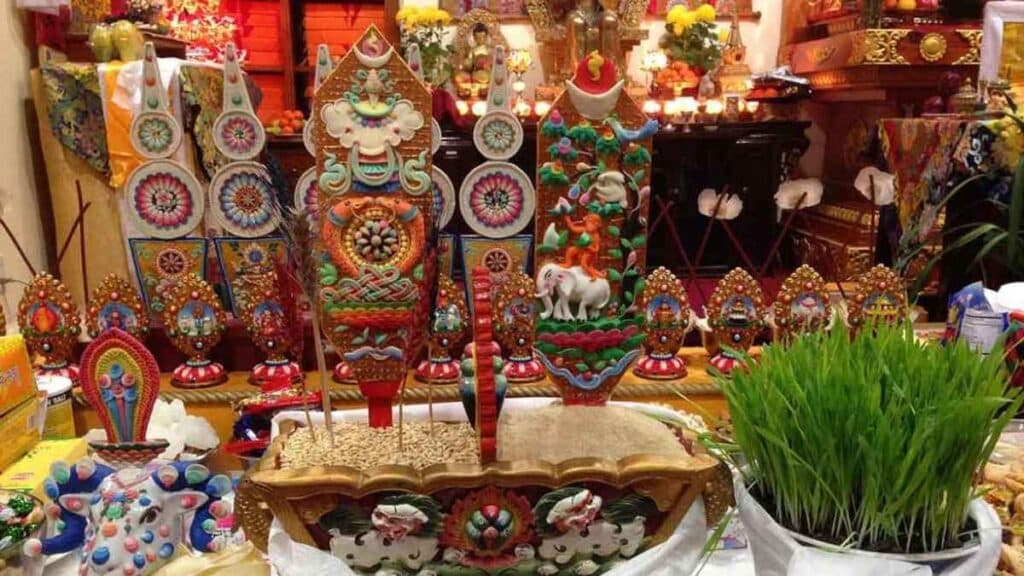
Losar prayers and rituals are performed to seek spiritual purification, protection, blessings, and merit accumulation for the year ahead. The religious observances span from New Year’s Eve through the 15-day celebration period, with varying intensity at home and in monasteries.
Gutor (New Year’s Eve) Rituals
Exorcism Ceremony: The night before Losar brings powerful purification rituals:
- Male head of household lights a torch and walks through every room
- Shouts “Get out! Get out!” (driving away negative forces, illness, misfortune)
- Carries “ghost food” (special mixture of unwanted items representing negativity)
- Throws both torch and food at a crossroads
- Does not look back while returning home (prevents negative forces from following)
Gutu Dough Ball Divination: Families gather for a special soup containing nine ingredients plus symbolic dough balls:
- Each person receives a bowl with hidden objects in dough balls
- Rice = good fortune; Salt = prosperity; Chili = sharp tongue; Wool = kind heart; Coal = black heart (meant humorously)
- Laughter, predictions, and family bonding
Home Observances
Altar Preparation (Pre-Losar): Families create or refresh home altars with:
- Fresh offering bowls (typically seven bowls of clean water)
- Torma (ritual cakes made from barley flour and butter)
- Flowers, incense, butter lamps
- Images of His Holiness the Dalai Lama, Buddhist deities, personal teachers
- Tsampa (roasted barley flour) and fruit offerings
- Yoemar display (decorated barley in wooden containers)
Daily Morning Rituals:
- Light butter lamps and incense before dawn
- Recite refuge prayer: “I take refuge in the Buddha, Dharma, and Sangha”
- Perform prostrations (traditionally 108)
- Replace water bowl offerings daily
- Recite mantras, especially Om Mani Padme Hum (ཨོཾ་མ་ཎི་པདྨེ་ཧཱུྃ)
Temple and Monastery Observances
Monastic Losar Schedule:
Pre-Losar Preparation:
- Deep cleaning of temple grounds and assembly halls
- Elaborate torma (ritual cake) creation
- Rehearsal of ceremonial Cham (masked dances)
- Decoration with fresh thangkas (Buddhist scroll paintings)
Losar Day at Monasteries:
Dawn Puja (4:00-7:00 AM):
- Monks gather for special New Year prayers
- Recitation of auspicious sutras
- Long-life prayers for His Holiness the Dalai Lama and spiritual teachers
- Dedication of merit to all sentient beings
Morning Ceremonies (8:00-11:00 AM):
- Public teachings by senior lamas
- Butter lamp offerings by laypeople
- Prostrations in temple courtyards
- Distribution of blessed protection strings
Afternoon Activities:
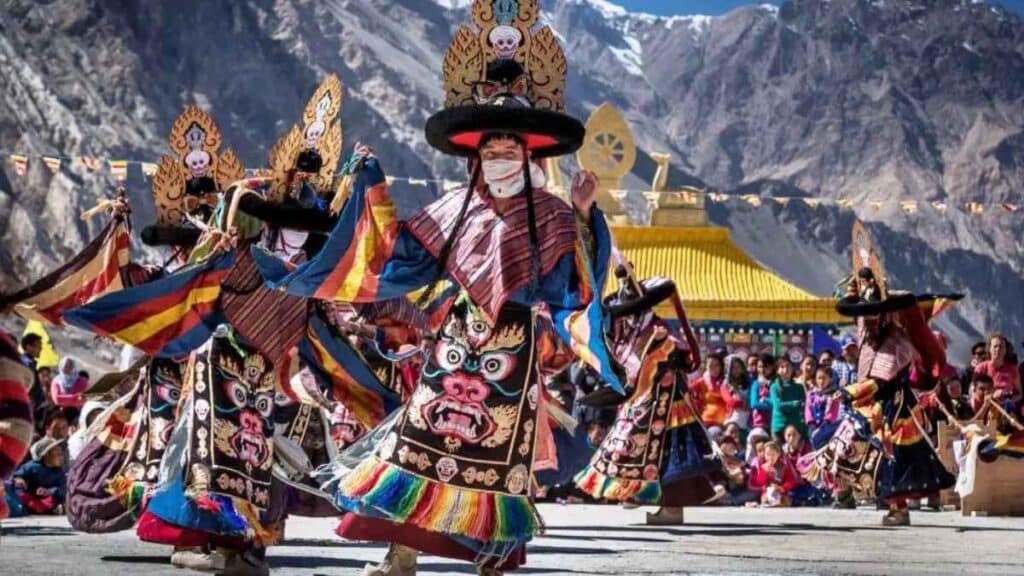
- Monks perform Cham (ritual masked dances depicting Buddhist teachings)
- Laypeople circumambulate the temple
- Community offerings presented to monastic sangha
Major Temples for Losar in India:
- Tsuglagkhang Temple, Dharamshala (Himachal Pradesh) — Main temple of His Holiness the Dalai Lama
- Namdroling Monastery, Bylakuppe (Karnataka) — Largest Tibetan settlement in India
- Rumtek Monastery, Sikkim — Important Karma Kagyu lineage center
- Tawang Monastery (Arunachal Pradesh) — India’s largest monastery
Important Mantras and Prayers
Core Mantras Recited:
Om Mani Padme Hum (ཨོཾ་མ་ཎི་པདྨེ་ཧཱུྃ)
- Mantra of Avalokiteshvara (Chenrezig), Buddha of Compassion
- Recited thousands of times during Losar
- Written on prayer flags raised during the festival
Tashi Delek Prayer:
བཀྲ་ཤིས་བདེ་ལེགས་ཕུན་སུམ་ཚོགས་པར་ཤོག
“May there be happiness, good fortune, and prosperity”
Long-Life Prayer for His Holiness:
གངས་རི་ར་བའི་འཁོར་ལོའི་དབུས།
“In the land encircled by snow mountains…”
Dedication Prayer:
“May the merit of this practice benefit all sentient beings”
Prayer Flags: Moving Prayers
Raising Prayer Flags (Day 3 – Yosei):
- Fresh flags raised at dawn on rooftops, mountains, high places
- Five colors represent elements: Blue (sky), White (air), Red (fire), Green (water), Yellow (earth)
- Printed with mantras and sacred symbols
- Each flutter sends prayers outward
- Fading represents prayers being released (not disrespect)
- Old flags burned respectfully; new flags raised annually
Whether at home or temple, Losar rituals emphasize devotion, gratitude, purification, and spiritual renewal—making the celebration both joyous and profoundly meaningful.
How Losar Is Celebrated Across India

While the essence of Losar remains consistent across India, regional expressions vary based on local Tibetan populations, indigenous Himalayan communities, and cultural adaptations.
Himachal Pradesh (Dharamshala, McLeod Ganj)
Heart of Tibetan Exile Community
Dharamshala, home of His Holiness the Dalai Lama, becomes the epicenter of Losar celebrations:
Unique Features:
- Special teachings from His Holiness the Dalai Lama at Tsuglagkhang Temple
- International gathering of Tibetans and Buddhist practitioners
- Elaborate three-day public celebrations with Tibetan opera (Lhamo) performances
- Community feasts organized by Tibetan Government-in-Exile
- Political dimension: prayers and vigils for Tibet’s freedom
- Interfaith participation from local Indian Hindu communities
Karnataka (Bylakuppe, Hunsur)
Largest Tibetan Settlement in India
Home to over 40,000 Tibetans, Bylakuppe hosts grand celebrations:
Unique Features:
- Namdroling Monastery’s spectacular ceremonies with thousands of monks
- Sera Jey and Sera Mey monasteries hold competitive debate sessions
- Agricultural blessings reflecting Karnataka’s farming community
- Professional Tibetan artists perform traditional opera
- Integration with local Kannadiga community (neighbors invited)
Special Events:
- Butter sculpture competitions among monasteries
- Football tournaments (popular local sport)
- Tibetan markets selling special Losar goods
- Extended 15-day celebrations with daily activities
Sikkim
Official State Recognition
Sikkim’s indigenous Bhutia (Tibetan-origin) population makes Losar a state festival:
Unique Features:
- Official public holiday declared by state government
- Bumchu Ceremony at Tashiding Monastery (unique to Sikkim): sacred pot opened to predict year’s fortune
- Elaborate Cham dances at Rumtek and Pemayangtse monasteries
- Traditional archery competitions
- Statewide participation including Nepali and Lepcha communities
Cultural Elements:
- Exchange of white khada scarves widespread
- Traditional Bhutia homes prepare special khapse (cookies)
- Chief Minister’s official greetings
- Government-sponsored cultural programs
Arunachal Pradesh (Tawang, West Kameng)
Monpa Indigenous Celebration
The Monpa people, followers of Tibetan Buddhism, celebrate with distinct regional flavor:
Unique Features:
- Tawang Monastery (India’s largest) hosts grand multi-day festival
- Monpa cultural elements blend with Tibetan traditions
- Traditional yak dances unique to region
- Local arak (millet alcohol) served alongside Tibetan chang
- Border context adds subtle political significance
Regional Customs:
- Monpa-style khapsay (slightly different recipe)
- Community bonfire gatherings in villages
- Local deities honored alongside Buddhist practices
- Integration of indigenous and Buddhist elements
Ladakh (Leh, Kargil)
High-Altitude Desert Celebration
Ladakh’s indigenous Tibetan Buddhist population celebrates adapted to harsh climate:
Unique Features:
- Monastery circuit: devotees visit multiple monasteries (Thikse, Hemis, Alchi)
- Metok Ceremony unique to Ladakh (special flower offerings)
- Traditional Ladakhi polo matches organized
- Gurgur cha (butter tea) central to hospitality
- Ice hockey on frozen ponds (modern addition)
Winter Adaptations:
- Indoor ceremonies due to extreme cold
- Emphasis on community warmth and gathering
- Traditional goncha (Ladakhi dress) worn
- Archery contests with traditional bows
Uttarakhand (Dehradun, Clement Town)
Smaller Community Celebrations
Tibetan settlements in Uttarakhand focus on cultural preservation:
Features:
- Mindrolling Monastery offers Losar teachings
- Integration with Garhwali Hindu culture
- Tibetan schools organize cultural programs
- Emphasis on teaching traditions to youth
- Smaller, intimate community gatherings
Food, music, shared participation, and spiritual devotion remain central to Losar celebrations throughout India, creating unity within diversity.n central everywhere.
Participation Across Religions in India
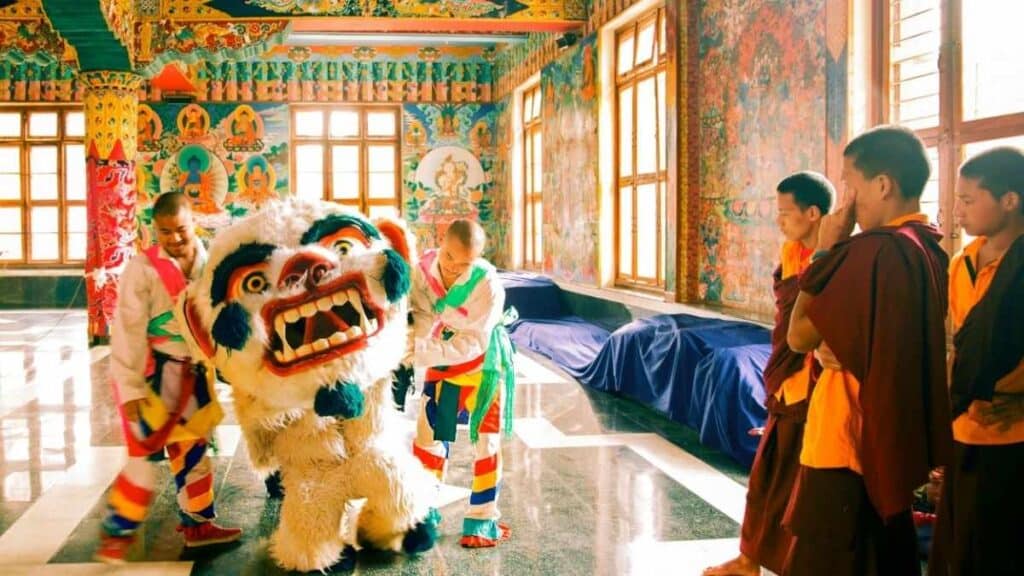
Losar, celebrated primarily by Tibetan Buddhists, reflects India’s pluralistic spirit through its strong interfaith participation—especially in Himalayan regions where Tibetan communities live alongside Hindu, Muslim, and Sikh populations.
Interfaith Participation
Hindu Participation
In Himachal Pradesh, Uttarakhand, Ladakh, and Sikkim, Hindu neighbors often join Losar celebrations. Shared beliefs in karma, dharma, and cyclical time create natural resonance. Hindus visit monasteries for blessings, attend cultural performances, share meals, and exchange “Tashi Delek” greetings, while Tibetan families participate in festivals like Diwali and Holi.
Muslim Participation
In Ladakh, Losar is widely respected as part of the region’s cultural heritage. Some Muslim shopkeepers close their businesses on the first day of Losar, and many attend public cultural events and performances.
Sikh Participation
In Punjab and diaspora communities, Sikhs participate in Losar events at Buddhist centers. Shared values of community service, equality, and generosity foster mutual respect and participation in cultural programs and communal meals.
How Losar Is Celebrated Outside India
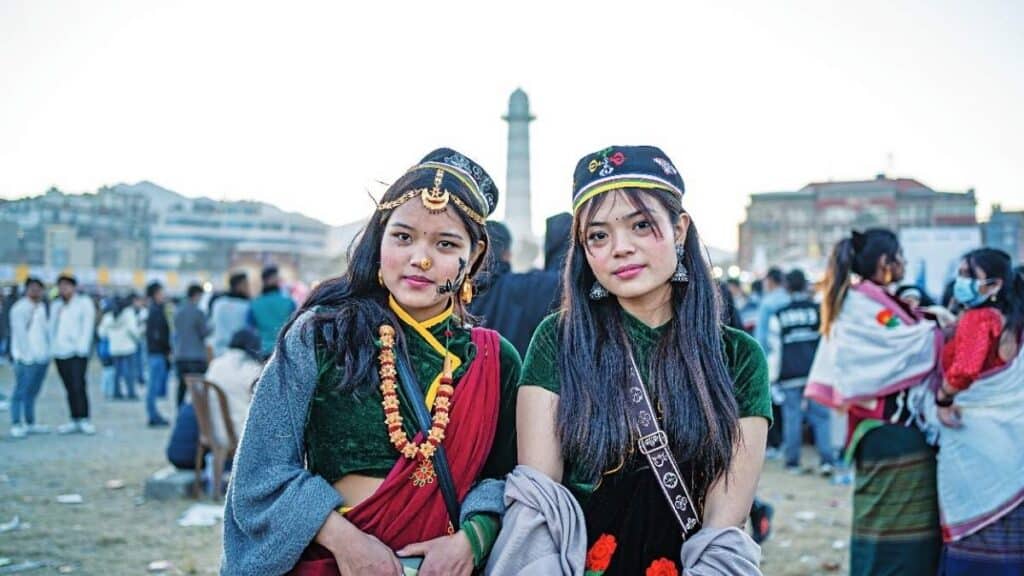
Tibetan diaspora communities across the world celebrate Losar with deep commitment, preserving core traditions while adapting to local cultures. The festival plays a vital role in maintaining Tibetan identity and passing traditions to younger generations.
United States & Canada
Major Tibetan communities in cities like New York, San Francisco, Toronto, and Vancouver celebrate Losar through weekend-focused events at community centers and Buddhist institutions. Celebrations include prayers, cultural performances, traditional food, and youth programs, often combined with social and cultural awareness activities. Bilingual events and digital connections help second-generation Tibetans stay engaged.
United Kingdom & Europe
In the UK, Germany, Switzerland, and France, Losar is observed through cultural gatherings at Tibet Houses and Buddhist centers. Events often blend celebrations with educational talks, exhibitions, and community meals, supported by strong cultural preservation efforts and academic interest.
Australia & New Zealand
Losar is celebrated mainly through weekend ceremonies and outdoor gatherings at Buddhist centers, parks, or beaches. Pleasant summer weather encourages picnics and community meals, with a strong focus on youth participation and cultural education.
Nepal & Bhutan
- Nepal (Kathmandu, Boudhanath): Hosts one of the largest and most traditional Losar celebrations outside Tibet, including extended rituals, monastery visits, and international participation.
- Bhutan: Celebrates Losar as a national holiday, blending Tibetan traditions with distinct Bhutanese customs and royal participation.
Middle East & Southeast Asia
In countries like the UAE, Qatar, and Singapore, Losar is observed through private community gatherings at cultural or religious centers, emphasizing social bonding and shared meals within local regulations.tay connected to their cultural roots while introducing non-Indians to Indian traditions.
Traditional Losar Foods and Delicacies
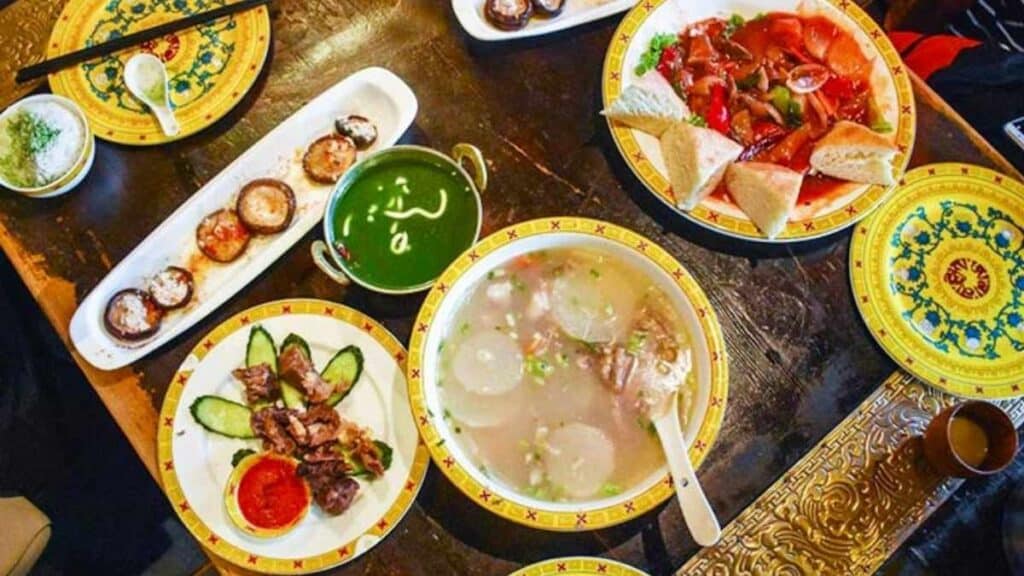
Food is central to Losar, symbolizing abundance, renewal, hospitality, and shared joy. Each dish carries cultural meaning and brings families together in celebration.
Signature Losar Dishes
Guthuk (New Year’s Eve Soup)
A hearty soup eaten on Gutor night, featuring symbolic dough balls that reveal playful “fortunes.” It marks cleansing of the old year and is enjoyed with laughter and family bonding.
Khapse (Fried Festive Cookies)
Crispy, deep-fried cookies made in decorative shapes and prepared weeks in advance. Khapse symbolizes prosperity and festivity and is the most iconic Losar sweet.
Desi (Sweet Rice)
Rice cooked with butter, sugar, and dried fruits, traditionally eaten on New Year’s morning to invite sweetness into the year ahead.
Yoemar (Barley Offering)
A roasted barley display placed on altars, symbolizing harvest abundance and prosperity throughout the festival.
Common Losar Foods
- Tsampa: Roasted barley flour, a staple food and ritual offering
- Po Cha (Butter Tea): A warm, salty tea served continuously to guests as a sign of hospitality
- Momos: Steamed or fried dumplings, popular at community gatherings
- Thukpa: Comforting noodle soup
- Shabalay: Fried meat or vegetable pies
Losar: Music, Art, and Cultural Expression

Music, art, and performance bring Losar to life, turning the Tibetan New Year into a vibrant, multisensory celebration of culture, spirituality, and community.
Music & Performance
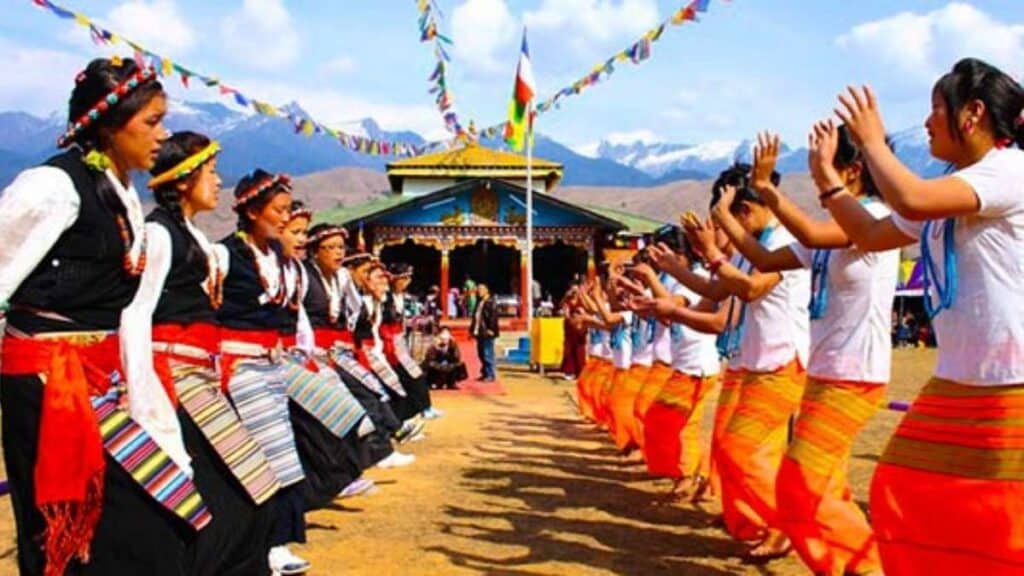
Traditional forms like Tibetan opera (Lhamo), folk songs, and circle dances fill villages, monasteries, and community spaces. Guozhuang dances invite everyone to join, while classical styles such as Nangma and Töshe add a meditative tone. Monastic chants with horns, drums, and cymbals create a powerful spiritual atmosphere.
Ritual Cham (masked) dances, performed in monasteries, are a highlight of Losar. These symbolic performances bless the community, dispel negativity, and convey Buddhist teachings through dramatic movement and costume.
Contemporary Expressions
Modern Tibetan artists release Losar-themed music, blending traditional instruments with pop, fusion, and even hip-hop styles. In diaspora communities, performances often mix traditional dances with contemporary influences, keeping the culture relevant for younger generations.
Visual Arts & Crafts
Homes and monasteries display thangkas, butter sculptures, prayer flags, and ritual offerings, all symbolizing renewal, impermanence, and prosperity. These art forms are both devotional and educational, preserving centuries-old craftsmanship.
Through these creative expressions, Losar remains a living tradition—connecting Tibetans across borders while inviting the wider world to experience its beauty and meaning.
Losar in the Modern World
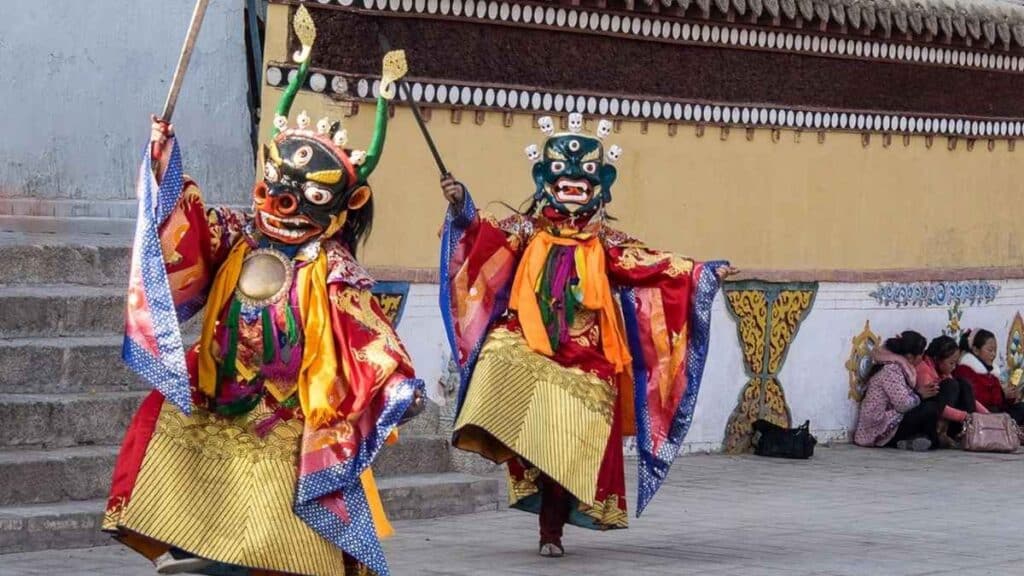
Losar continues to evolve, balancing ancient traditions with modern lifestyles while preserving its core values of renewal, community, and cultural identity.
Modern Adaptations
Today, many families celebrate Losar on weekends to accommodate work and school, combining traditional monastery rituals with flexible home gatherings. Digital tools—livestreamed ceremonies, video calls, and social media—connect Tibetan communities across continents, while simplified home altars and adapted ingredients make celebrations accessible in urban and diaspora settings.
Greetings & Participation
The traditional greeting “Tashi Delek”—meaning good luck and happiness—remains central, alongside “Losar Tashi Delek” for New Year wishes. Losar celebrations are open to all, encouraging respectful interfaith and cross-cultural participation.
Why Losar Still Matters
In a fast-changing world, Losar serves as a powerful reminder that culture can adapt without losing its soul. For Tibetans at home and abroad, it strengthens community bonds, preserves heritage, and ensures traditions continue to thrive across generations.
Losar 2026 arrives at a critical moment—the Fire Horse year offering both reminder and opportunity. This is not about preserving culture in amber, but keeping it alive, breathing, adapting—recognizably continuous with its past while courageously embracing its future.
The festival demonstrates that culture requires active practice, not passive inheritance. It needs participants, not just observers. It needs both reverence for tradition and courage to evolve.
Tashi Delek. May you have auspiciousness, happiness, and prosperity. May the Fire Horse year bring courage to release what no longer serves and momentum to gallop toward highest potential. May culture survive and thrive—not frozen in nostalgia but alive in practice, generation after generation.