


There’s something about new year celebrations that feels universal—the cleaning, the family gatherings, the hope tucked into resolutions we make in those first quiet hours. But if you’ve grown up between cultures, you know that “new year” doesn’t always arrive on the same date for everyone.
For Tibetan families scattered across India, Nepal, Bhutan, and diaspora communities worldwide, the real new year arrives with Losar—a celebration so layered with meaning that it carries the weight of centuries in every ritual, every prayer flag raised against mountain winds.
In 2026, Losar lands on February 18, and it’s not just any new year. It’s the Year of the Fire Horse, a rare convergence that happens once every sixty years. The last time? 1966. The next? 2086.
Losar at a Glance: Quick Facts
| Detail | Information |
|---|---|
| Date in 2026 | February 18 |
| Duration | 15 days (1st to 15th of Tibetan lunar month) |
| Tibetan Name | Losar (Lo = Year, Sar = New) |
| 2026 Significance | Year of the Fire Horse (once in 60 years) |
| Main Locations | Lhasa, Dharamshala, Bylakuppe, Sikkim, global diaspora |
| Religious Roots | Bon traditions + Tibetan Buddhism |
| Key Themes | Purification, renewal, family reunion, spiritual merit |
What Makes the Fire Horse Year Special?
Here’s where things get interesting for anyone who’s ever consulted a pandit about auspicious timing or checked their rashi before making big decisions.
Tibetan astrology operates on a sixty-year cycle combining twelve animals with five elements: Wood, Fire, Earth, Metal, and Water. Each year carries the energy signature of both its animal and element.
The Fire Horse Combination:
Fire = Purification, transformation, illumination, burning away ignorance
Horse = Movement, freedom, endurance, carrying prayers forward
Together they create a spiritual accelerator—a year when actions yield multiplied results.
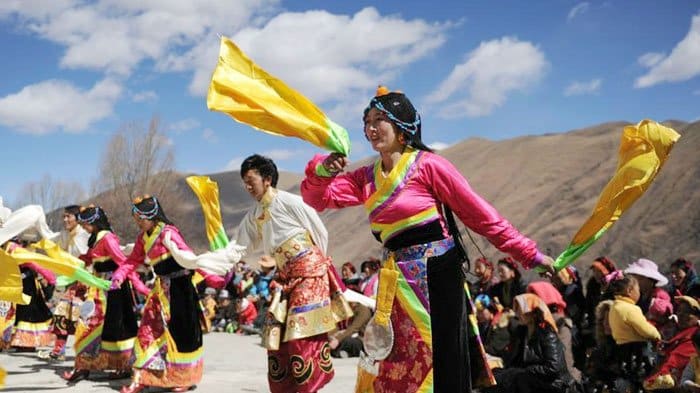
Why Tibetans Are Calling 2026 a Once-in-a-Lifetime Year
- Amplified merit: Pilgrimages, prayers, and charity during Fire Horse years are believed to carry 12x the spiritual benefit
- Karmic cleansing: The Fire element burns away past karma faster than ordinary years
- Mount Kailash kora: One circumambulation in a Fire Horse year equals multiple rounds in regular years
- Transformation timing: Ideal for major life changes, new spiritual practices, or releasing old patterns
The mythology goes deeper than astrology. In Bon cosmology, the Horse connected humans to divine forces. In Buddhist understanding, Fire burns away ignorance while the Horse propels practitioners toward wisdom. This year isn’t just about celebration—it’s about acceleration.
The Losar Countdown: How It Actually Unfolds
Preparation Phase (Mid-December onwards)
Walking through a Tibetan neighborhood in December—whether in Lhasa or Little Tibet in Delhi—you’d notice the shift:
✓ Deep cleaning of entire homes, especially kitchens (removing old year’s bad luck)
✓ Altars set up with tsampa, fried wheat, ghee, highland barley
✓ Bowls of barley seeds soaked in water to sprout by New Year (literal new growth)
✓ Chimneys swept completely clean
✓ Traditional foods prepared in advance
New Year’s Eve: The Night of Gutu
The night before Losar brings one of the most charming traditions: Gutu—dough ball divination that’s equal parts fortune-telling and family entertainment.
Inside the Gutu Dough Balls:
- Rice = Good fortune coming
- Salt = Luck and prosperity
- Chili = Sharp tongue (watch your words!)
- Wool = Kind-hearted nature
- Coal = Black heart (meant to make everyone laugh)
After the Gutu feast, the male head of household performs exorcism rituals—lighting a torch, walking through every corner shouting “Get out, get out!” He’s banishing disappointments, illnesses, failed crops, broken promises. At the crossroads, he throws both torch and “ghost food” to appease lingering spirits.
Tibetan Buddhism doesn’t shy away from acknowledging negative energies. Sometimes you need to actively expel them rather than passively hoping they’ll leave.
The 3-Day Celebration Breakdown
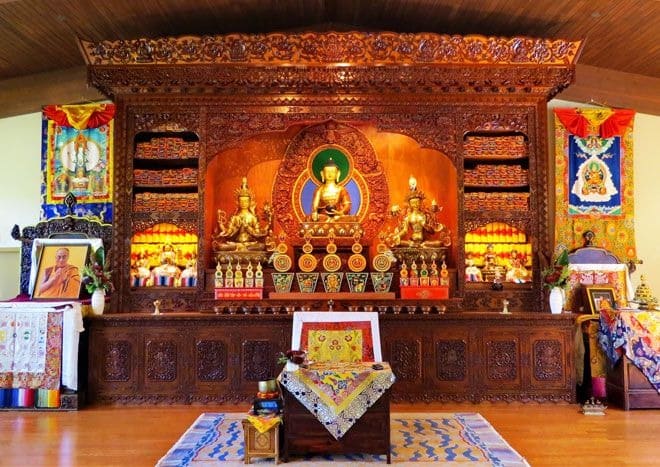
Day 1: Golden Water & First Blessings
Before sunrise:
- Household woman rushes to fetch first bucket of water = “golden water” (most auspicious)
- Second person gets “silver water”
- Both mean wealth and luck flowing into the home
After sunrise:
- Everyone dresses in finest traditional clothing
- Festive foods eaten in age order (respecting hierarchy)
- Neighbors visit carrying Chema (wooden box with tsampa and roasted barley)
- Endless repetitions of “Tashi Delek” (blessings for health, happiness, harmony)
- White khatas draped over necks until people look like they’re wearing clouds
- Religious families visit Jokhang Temple or local monasteries
Day 2: The Extended Family Circle
Friends and relatives begin visiting, the pattern repeating with genuine warmth:
The Ritual:
- Guest arrives, exchanges “Tashi Delek” with host
- Host presents Chema box
- Guest pinches barley/tsampa, tosses skyward (offerings to heaven, earth, gods)
- Guest tastes a pinch
- Highland barley wine (chang) served
- Three drinks required—must drain glass on third round
- If guest can’t finish? Host’s relatives sing to convince them (peer pressure wrapped in melody)
In squares and open spaces, you’ll find people in traditional costumes dancing Guozhuang and Xianzi—circle dances that celebrate community and renewal.
Day 3: Prayer Flags & High Places
Called “Yosei” (offerings at high places), this day involves:
- Climbing to rooftops or mountains
- Burning incense
- Raising fresh prayer flags
- Each flutter of fabric = prayers sent outward
- Community gatherings at temples and sacred mountains
In Lhasa: Crowds at Jokhang Temple, Baoping Mountain, Yaowang Mountain
In diaspora: Apartment rooftops, nearby hills, park overlooks—any high ground works
Losar vs. Other New Year Celebrations
| Aspect | Losar | Chinese New Year | Indian Diwali |
|---|---|---|---|
| Duration | 15 days | 15 days | 5 days |
| Calendar | Tibetan lunar | Chinese lunar | Hindu lunar |
| Timing | Mid-February (varies) | Late Jan-Feb | Oct-Nov |
| Focus | Spiritual purification | Family reunion, prosperity | Victory of light over darkness |
| Unique Element | Prayer flags, exorcism rituals | Red envelopes, fireworks | Diyas, rangoli, sweets |
| Religious Component | Tibetan Buddhist ceremonies | Ancestral worship | Lakshmi puja |
Why This Matters Beyond Tibet
If you’re reading this from Mumbai or New Jersey, you might wonder why a Tibetan festival deserves this much attention. Here’s why it matters:
India has hosted Tibetan refugees since 1959, with major settlements in Dharamshala, Bylakuppe, and Sikkim. These communities haven’t just survived—they’ve maintained cultural practices with a determination that teaches something about preserving identity under pressure.
For Indian families, especially those in the northeast or Himalayan regions, Tibetan culture isn’t exotic or foreign—it’s part of the neighborhood, the schoolmate’s family, the monastery down the road. Understanding Losar means understanding your neighbors, the shop owner who closes for fifteen days, the colleague who requests time off not just for a holiday but for something spiritually essential.
The Fire Horse year specifically draws global attention because Mount Kailash—sacred to Hindus, Buddhists, Jains, and Bon followers—becomes a pilgrimage destination of even greater significance. Indian pilgrims making the Kailash Mansarovar Yatra in 2026 will be participating in this amplified spiritual moment, whether they realize it or not.
There’s also something to learn from how Losar balances joy with solemnity, community with spirituality, ancient tradition with present practice. In an age when cultural celebrations often get commercialized beyond recognition, Losar remains stubbornly meaningful—focused on purification, connection, and renewal rather than consumption.
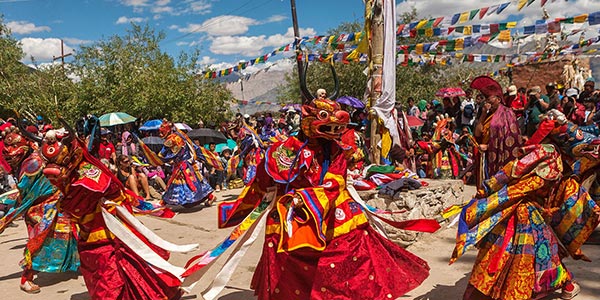
The Diaspora Experience: Losar Away From Home
For Tibetan families living outside traditional regions, Losar carries extra emotional weight. It’s not just celebration—it’s anchor, proof that geography can’t erase identity.
In cities like Toronto, San Francisco, and London, Tibetan community centers become packed during Losar. Families who might see each other only occasionally throughout the year make this gathering non-negotiable. The same rituals happen—Gutu, Chema, chang—but they happen in rented halls and apartment complexes instead of courtyard homes.
There’s adaptation, too. When you can’t easily find yak butter, you substitute. When raising prayer flags on a rooftop might confuse neighbors or violate lease agreements, you improvise. The spirit persists even when the setting changes.
Young Tibetans born in diaspora navigate particularly interesting territory. They might speak English or Hindi more fluently than Tibetan, might feel more comfortable in jeans than chubas (traditional dress), but Losar pulls them back to roots, reminds them of what their grandparents carried when they carried nothing else across mountain passes.
The Fire Horse Invitation: What It Asks of You
Beyond specific traditions, the Fire Horse year offers something anyone can engage with:
What Fire Does:
- Burns away what’s dead
- Removes what’s holding you back
- Purifies what you’ve carried too long
What Horse Does:
- Moves forward without dwelling
- Doesn’t stagnate
- Gallops toward new horizons
Together They Ask:
- What needs releasing?
- Where does courage need to carry you?
- What transformation are you avoiding?
Practical Ways to Engage with Fire Horse Energy (Any Background)
Even if you’re not Tibetan Buddhist, you can work with these principles:
- Spiritual Practice: Deepen meditation, prayer, or contemplative routines
- Physical Purification: Deep clean your space with intention (not just surface tidying)
- Release Rituals: Write down what you’re letting go, burn it safely
- Pilgrimage: Visit a sacred site meaningful to your tradition
- Symbolic Action: Raise prayers in whatever form fits your belief system
- Generosity: Acts of charity carry amplified merit this year
- Courage: Take the bold step you’ve been postponing
The Fire Horse doesn’t guarantee easy transformation—fire burns, horses can be wild. But it promises that the work you do now carries forward with unusual momentum.
Losar 2026 isn’t just another cultural festival to note on the calendar. It’s a window into how people keep faith alive across borders, how ancient wisdom adapts without diluting, how community sustains itself through deliberate ritual and genuine connection.
For Tibetan families, it’s homecoming wrapped in prayer flags. For spiritual seekers, it’s a rare alignment worth honoring. For the rest of us, it’s a reminder that transformation requires both fire and movement—the willingness to burn away the old and the courage to gallop toward what comes next.
