

Mother’s Day is one of the most universally cherished celebrations in the world, observed as a heartfelt tribute to mothers, maternal figures, and the enduring bond between a mother and her child. Celebrated every year on the second Sunday of May across India and more than 40 countries, Mother’s Day is a day to pause, reflect, and express the love and gratitude we hold for the women who shaped our lives.
Unlike many traditional festivals rooted in a single religion or region, Mother’s Day transcends cultural and religious boundaries. In India, it resonates deeply with the ancient value of Matru Devo Bhava — “the mother is God” — a principle embedded in Hindu philosophy that has guided Indian culture for millennia. Whether observed through a home-cooked meal, a heartfelt card, a bouquet of flowers, or a long-distance phone call, Mother’s Day is a celebration of the most fundamental human relationship.
Though it originated in the United States in the early 20th century, Mother’s Day has been wholeheartedly embraced by Indian families both in India and across the global diaspora. Today, it is celebrated with equal warmth in Mumbai and Melbourne, Delhi and Dubai, Chennai and Chicago — a truly universal occasion that speaks to something common in all of us.
When Is Mother’s Day Celebrated in 2026?
Mother’s Day is celebrated on the second Sunday of May each year. In 2026, that date falls on Sunday, May 10, 2026.
Mother’s Day 2026 Date in India
Mother’s Day 2026: Sunday, May 10, 2026
The date is not fixed — it shifts each year based on which Sunday is the second Sunday of May. In 2026, May 1 falls on a Friday, making May 3 the first Sunday and May 10 the second Sunday.
Table of Contents
Mother’s Day In USA, Canada, Australia, New Zealand, UK, UAE, Singapore 2026 Dates
- Mother’s Day on Sunday, May 10, 2026
- Mother’s Day on Sunday, May 10, 2026
- Mother’s Day on Sunday, May 10, 2026
- Mother’s Day on Sunday, March 15, 2026
- Mother’s Day on Sunday, May 10, 2026
- Mother’s Day on Sunday, May 10, 2026
Why Do Mother’s Day Dates Change Every Year?

Mother’s Day follows the Gregorian solar calendar, not a lunar calendar. It is always the second Sunday of May, which means:
- The date moves between May 8 and May 14 each year
- It is always a Sunday, but never the same calendar date twice in a row
- No planetary or lunar calculation is involved — only the day-of-week structure of the May calendar
The UK’s Mothering Sunday is different — it follows the Christian liturgical calendar and is tied to the fourth Sunday of Lent, which itself moves based on the date of Easter. This is why the UK celebrates on a separate date entirely.
Mother’s Day Other Names and Regional Identities

Mother’s Day is known by many names across India’s languages, communities, and diaspora populations:
In Indian Languages
- Hindi — Maa Diwas / Matri Diwas (माँ दिवस / मातृ दिवस)
- Tamil — Thāy Dinam (தாய் தினம்)
- Telugu — Ammala Roju (అమ్మల రోజు)
- Kannada — Tāyi Dina (ತಾಯಿ ದಿನ)
- Malayalam — Ammayude Divasam (അമ്മയുടെ ദിവസം)
- Bengali — Mā Dibôs (মা দিবস)
- Marathi — Matru Din (मातृ दिन)
- Gujarati — Mā no Divas (માઁ નો દિવસ)
- Punjabi — Maa Diwas (ਮਾਂ ਦਿਵਸ)
Regional and Traditional Names
- Nepal — Mata Tirtha Aunsi / Aama ko Mukh Herne Din (“Day to See Mother’s Face”)
- Germany — Muttertag
- France — Fête des Mères
- Arab world / UAE — Eid Al Umm (عيد الأم)
- UK — Mothering Sunday
Diaspora Naming
In the Indian diaspora across the USA, UK, Canada, Australia, and the Gulf, the day is referred to simply as Mother’s Day, though social media has popularised Hindi expressions like Maa Ka Din and Happy Maa Day among second-generation communities who blend both languages naturally.
The Origins, History, and Legends of Mother’s Day

The impulse to honour mothers has ancient roots. The Greeks celebrated Cybele, the mother goddess; the Romans held the festival of Hilaria in honour of Rhea; and the Christian tradition of Mothering Sunday arose in medieval Europe, where people would return to their “mother church” on the fourth Sunday of Lent — a practice that evolved into visiting one’s own mother and bringing her gifts.
The modern Mother’s Day as celebrated globally today was founded by Anna Jarvis of West Virginia, USA. After her mother Ann Reeves Jarvis — a peace activist and public health campaigner — died in 1905, Anna was determined to create a day that honoured all mothers. On May 10, 1908, she organised the first official Mother’s Day service at Andrews Methodist Episcopal Church in Grafton, West Virginia, which today serves as the International Mother’s Day Shrine. By 1911, every U.S. state observed the occasion, and in 1914, President Woodrow Wilson officially proclaimed the second Sunday of May as a national holiday.
In a fascinating historical twist, Jarvis herself later grew bitterly opposed to the commercialisation of the holiday she had created. She had envisioned Mother’s Day as a deeply personal occasion — expressed through handwritten letters, not purchased cards or merchandise. She organised boycotts of florists and candy makers, threatened lawsuits against companies that used the name commercially, and expressed profound regret that her intention had been misrepresented. She never profited from the holiday and died in 1948 having spent much of her later years fighting to undo its commercial transformation.
In India and Nepal, an older tradition of honouring mothers exists through Mata Tirtha Aunshi, a Hindu observance celebrated on the new moon day of the month of Baisakh (April/May). Families make pilgrimages to the Mata Tirtha ponds near Kathmandu, believed to reveal the face of one’s deceased mother in the water, and offer flowers, fruits, and prayers. This tradition predates the American Mother’s Day by centuries and remains a living observance in Nepal.
Mother’s Day: Cultural and Spiritual Significance

Few relationships hold as central a place in Indian culture as the bond between mother and child. The Vedic declaration Matru Devo Bhava — the mother is God — is not merely a saying but a lived value, embedded in daily rituals, classical literature, and the way Indian families are structured. Across the Puranas and epics, the mother is celebrated as the first teacher, the first home, and the source of both physical and spiritual life.
Spiritually, almost every major Indian religion elevates the status of the mother. In Hinduism, the divine feminine — Durga, Amba, Lakshmi, Saraswati — is a maternal archetype of protection, abundance, and wisdom. In Islam, the Prophet Muhammad declared that “Paradise lies beneath the mother’s feet,” and the Quran places special responsibility on children to honour their mothers above all. In Sikhism, the Guru Granth Sahib celebrates the selfless love of a mother as an expression of divine grace. In Buddhism, the story of Maudgalyayana — a disciple who descended into the realm of suffering to rescue his mother — enshrines filial devotion as a spiritual practice.
Mother’s Day endures across cultures because it gives modern families a structured, annual moment to express what is often assumed but rarely spoken aloud: profound, lifelong gratitude for the person who gave everything so that others could thrive.
Mother’s Day Prayers and Religious Observances
For many families, Mother’s Day carries a devotional dimension alongside its personal celebrations. In Hindu households, the day often begins with charan sparsh — touching the mother’s feet as a gesture of reverence and seeking her blessings. Families may offer prayers at the household altar, present flowers, or visit a temple dedicated to Durga, Amba, or the family deity.
Christian families, particularly in Goa, Kerala, and the Northeast, attend special church services and carry flowers as offerings. In many congregations, Mother’s Day sees some of the highest church attendance of the year. Muslim families offer special duas (prayers) for their mothers and may recite Quranic verses that speak of honouring parents. Sikh families may visit the gurdwara for ardas and express gratitude for their mothers in community prayers.
In Nepal, the Mata Tirtha Aunshi observance includes pilgrimage to the Mata Tirtha ponds, ritual bathing, and the offering of food and flowers to honour both living and deceased mothers. The belief that one can see the face of a deceased mother reflected in the water makes this one of the most emotionally profound Mother’s Day traditions anywhere in the world.
Whether observed through formal prayer, a temple visit, or a simple moment of gratitude at home, Mother’s Day rituals across all faiths share the same core — love, honour, and remembrance.
How Mother’s Day Is Celebrated Across India
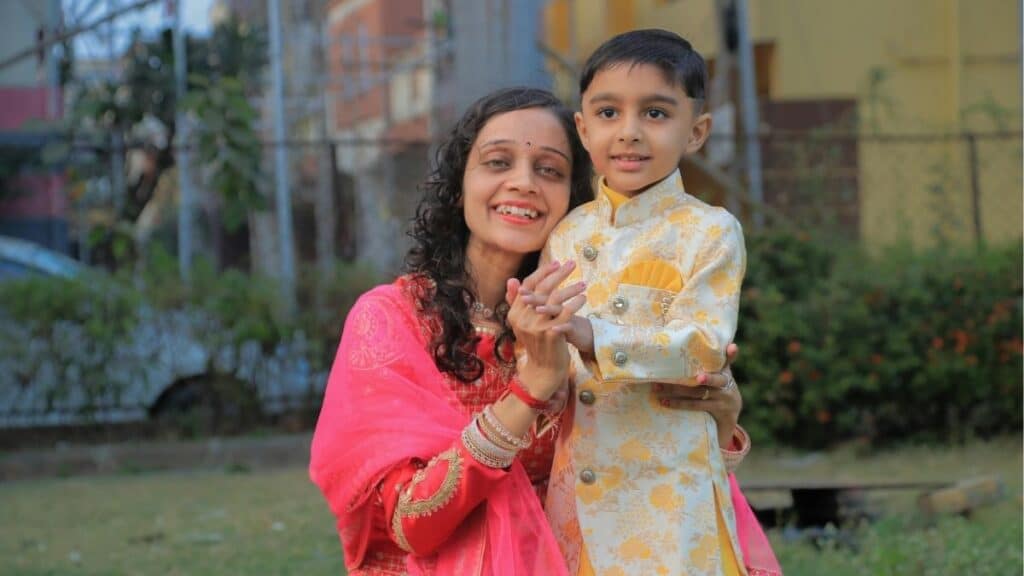
Mother’s Day has been warmly embraced in urban India over the past two decades. While it is not a public holiday, it is widely observed with family celebrations, school events, and restaurant outings.
In metro cities — Mumbai, Delhi, Bengaluru, Chennai, Hyderabad, Pune — the weekend of Mother’s Day sees restaurants and hotels run special brunch and dinner menus. Malls host photo booths, craft activities for children, and gift promotions. Schools and nurseries often dedicate the week before Mother’s Day to children making handmade cards, rehearsing songs, and preparing short performances for their mothers.
In South India, the occasion is typically marked with a home-cooked special meal prepared by other family members — giving the mother a full day of rest and recognition. In Gujarat and Maharashtra, daughters often return to their maternal homes (maher) for the occasion. In Punjab, a family feast and the gifting of sarees or suits remains the tradition. In West Bengal, where the weather turns pleasant in May, afternoon gatherings with mishti and tea are common.
In Tier-2 and Tier-3 cities, Mother’s Day has grown significantly in visibility as digital platforms, e-commerce, and social media bring urban traditions into smaller towns. Video calls from children studying or working away from home, online-ordered flowers, and WhatsApp tributes have made the celebration a nationwide phenomenon.
Participation Across Religions in India
One of the defining qualities of Mother’s Day in India is its universality. Unlike many religious festivals, it carries no caste markers, no community-specific rituals, and no exclusions — making it one of the most genuinely inclusive celebrations on the Indian calendar.
Hindu, Muslim, Sikh, Christian, Jain, and Buddhist families all celebrate. Hindu families align the occasion with their tradition of maternal reverence; Christian families in Kerala and Goa observe it closely in church; Sikh families gather for family meals and expressions of gratitude; Muslim families treat it as an opportunity to publicly affirm what the Quran already teaches about honouring one’s mother. Jain communities, with their strong emphasis on family values and ahimsa, celebrate with floral offerings and vegetarian feasts.
This shared participation reflects something fundamental about India’s pluralistic cultural fabric — the capacity for joy and reverence to be experienced together, across every boundary..
How Mother’s Day Is Celebrated Outside India

For the Indian diaspora across more than 100 countries, Mother’s Day is a particularly resonant occasion — a day when the distance from home is bridged by flowers delivered to India, long video calls, and the shared cooking of a familiar recipe across two continents.
Indian diaspora communities celebrate through:
- Family brunches and dinners at Indian restaurants and homes
- Temple and gurdwara programs with devotional songs and cultural performances
- Community events organised by Indian associations and cultural groups
- School events where children present cultural programs honouring mothers
- Social media tributes, photo montages, and virtual celebrations connecting families across time zones
In the USA, the 4-million-strong Indian-American community celebrates with both Western traditions and Indian customs — restaurant outings alongside aarti, flower bouquets alongside seeking blessings. In Canada, the Indo-Canadian community in Toronto, Vancouver, and Calgary organises large community events. In the UK, many British-Indians celebrate both Mothering Sunday in March and Mother’s Day in May — honouring both the country they live in and the traditions they carry. In the UAE, Indian expats participate in the Arab Mother’s Day on March 21 and again observe May 10 with their families. In Australia and New Zealand, Indian temples and cultural organisations host morning prayers followed by festive gatherings.
Mother’s Day Gifting Traditions
The tradition of gifting on Mother’s Day carries the same spirit Anna Jarvis originally envisioned — personal, thoughtful, and from the heart. While she advocated handwritten letters over purchased gifts, gifting has evolved into a rich tradition that spans cultures and generations.
Flowers remain the most universal gift. Carnations are traditional in the US and Japan; white chrysanthemums are preferred in Australia; in India, roses, marigolds, and jasmine garlands are popular, often carrying the additional significance of flowers used in worship. Sweets and mithai — especially boxes of ladoos, barfi, or kaju katli — are commonly exchanged in Indian households.
In Indian families, sarees, salwar suits, gold jewellery (earrings or bangles), spa vouchers, personalised photo albums, and quality kitchen items remain beloved choices. Cooking a special meal — or explicitly taking over all cooking and housework for the day — is perhaps the most cherished gift of all, requiring no spending but meaning everything.
Among the diaspora, digital gifting has grown significantly — curated subscription boxes, wellness packages, and online-ordered flowers sent to India allow families to celebrate across borders. Experiential gifts — spa days, mother-daughter outings, cooking classes, or travel — are increasingly popular as families seek to give the gift of shared memory over material objects.
Mother’s Day Foods and Culinary Traditions
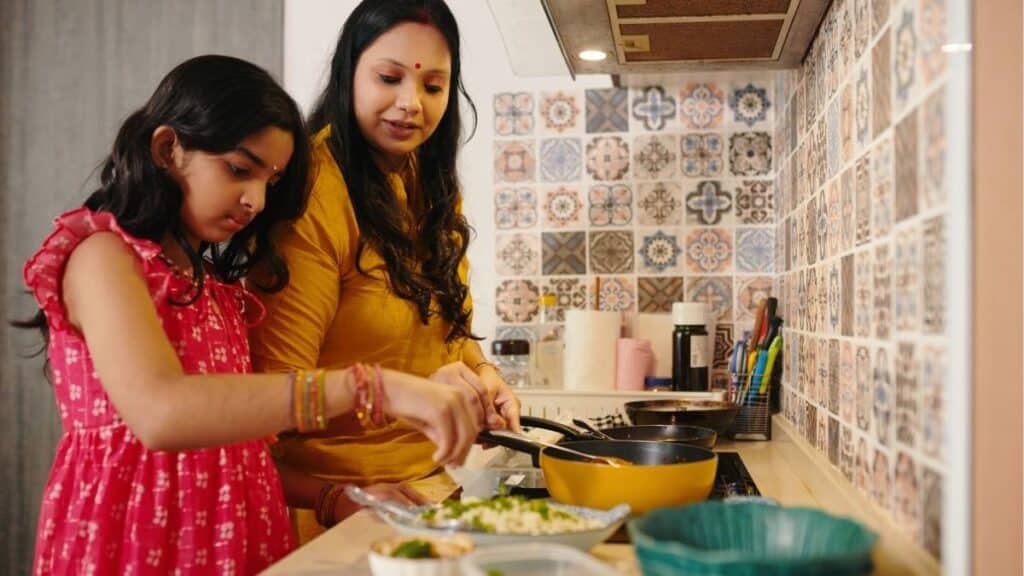
Food is at the heart of every Indian celebration, and Mother’s Day is no exception. Across cultures, cooking for one’s mother — or taking her out for a special meal — is one of the most meaningful ways to honour the day.
In Indian households, children and spouses attempt to cook the mother’s favourite dishes, turning the kitchen into a space of love. Popular choices include biryani, rajma-chawal, aloo puri, dal makhani, and freshly made mithai. In South India, a traditional banana-leaf meal with rice, sambar, rasam, aviyal, and payasam makes for a festive spread. In Bengal, mishti doi and rasgulla are essential.
In Australia and New Zealand, the tradition is breakfast in bed — pancakes, eggs, fruit, and tea. In Canada and the US, Sunday brunch is the central meal, and Indian-run restaurants offer fusion menus blending the best of both traditions.
For diaspora families celebrating at a distance, cooking the same recipe as their mother back in India — while on a video call — has become one of the most touching new traditions of the digital era.
Mother’s Day: Music, Art, and Cultural Expression
The theme of the mother is among the most celebrated in Indian music, film, and art. Bollywood has produced some of India’s most beloved songs on this theme — from timeless compositions to contemporary soundtracks — that are played at school programs and family gatherings every Mother’s Day. Indian classical music honours the maternal figure through bhajans dedicated to Amba and Durga, and Bharatanatyam and Odissi performances frequently incorporate abhinaya pieces depicting divine motherhood.
School celebrations across India involve children creating handprint art, painted flower pots, illustrated cards, and short poetry — humble, handmade gestures that carry on the spirit of Anna Jarvis’s original vision.
Globally, Mother’s Day has inspired a vast cultural output — from viral social media campaigns to brand storytelling that captures the complexity and selflessness of motherhood. In Mexico, the day begins with Las Mañanitas, a serenade tradition that has its Indian equivalent in the school song performances that have become standard across the subcontinent.
Mother’s Day in the Modern World

Mother’s Day in 2026 reflects a celebration that has grown both more visible and more intentional. Social media has transformed it into a shared public occasion — Instagram, Facebook, and WhatsApp flood with photographs, tribute videos, and messages on the second Sunday of May. Many families use the day to create content honouring their mothers, extending the celebration into a week-long public expression of love.
Environmental awareness is reshaping gifting: potted plants rather than cut flowers, handmade gifts over plastic-wrapped products, organic skincare sets, and experience vouchers are increasingly the preferred choices of conscious consumers in both India and the diaspora.
The most significant shift, however, is attitudinal. The growing recognition that one day is not enough — that the spirit of Mother’s Day should inspire a daily practice of presence, gratitude, and care — is perhaps the most meaningful evolution of the celebration.
How to wish your mother on Mother’s Day 2026: A sincere message is always enough. “Happy Mother’s Day, Maa — your love is my greatest strength.” In Hindi: “Happy Mother’s Day, Maa. Aapka pyaar meri sabse badi taakat hai.” A phone call, a home-cooked meal, or a handwritten note will always mean more than any store-bought gift.
Cultural Reflection
Mother’s Day endures because it speaks to something universal: the irreplaceable place that mothers hold in every human life, across every culture, religion, and generation. For the Indian community — both in India and around the world — this resonance runs especially deep, affirming values of filial devotion and maternal sacrifice that have been at the heart of Indian civilisation for thousands of years.
Whether celebrated with a temple visit in Chennai, a Sunday brunch in Toronto, a video call from Dubai, or a breakfast-in-bed surprise in Melbourne, Mother’s Day 2026 is a moment to pause and let the most important person in your life know exactly how much she means to you. Because some things — like a mother’s love — are simply beyond measure.