
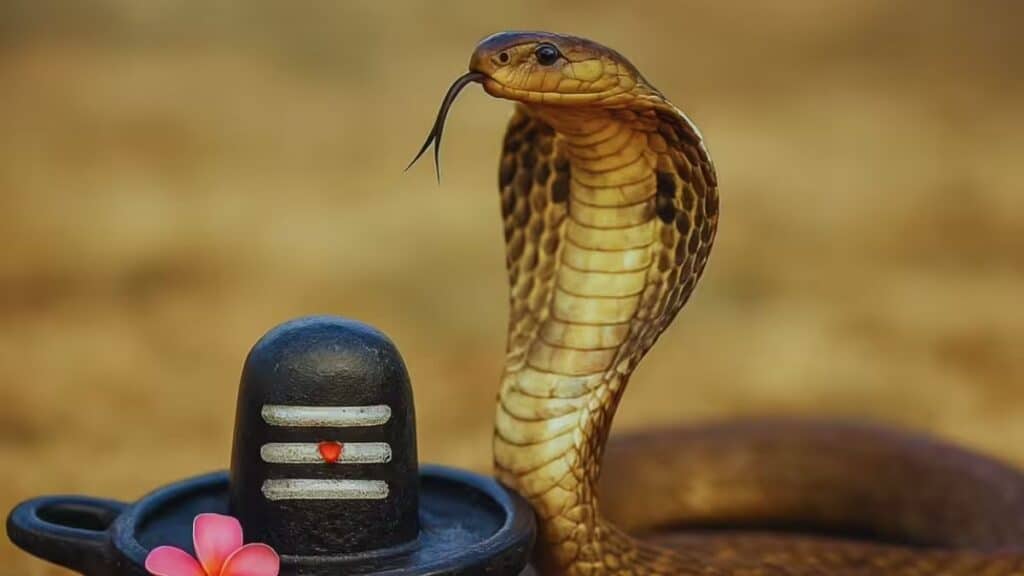
Nag Panchami is one of the most ancient and revered festivals of India, dedicated to the worship of Nagas — the sacred serpents of Hindu mythology. Celebrated with deep devotion across the country, the festival honors snakes as divine beings associated with protection, fertility, cosmic power, and the forces of nature. Rooted in Vedic traditions and Puranic legends, Nag Panchami reflects the unique relationship between Indian culture and the natural world, where serpents have long been venerated as symbols of life, death, and regeneration.
The spiritual significance of Nag Panchami is drawn from Hindu scriptures and mythology, where serpents hold a revered place. Lord Shiva wears snakes around his neck, Lord Vishnu rests on the cosmic serpent Adi Shesha, and the Nagas are regarded as powerful beings capable of bestowing blessings or misfortune. Worshipping snakes on this auspicious day is believed to protect families from snake bites, bring prosperity, remove obstacles, and invoke divine grace. The festival also reflects a deep cultural respect for nature and all living beings.
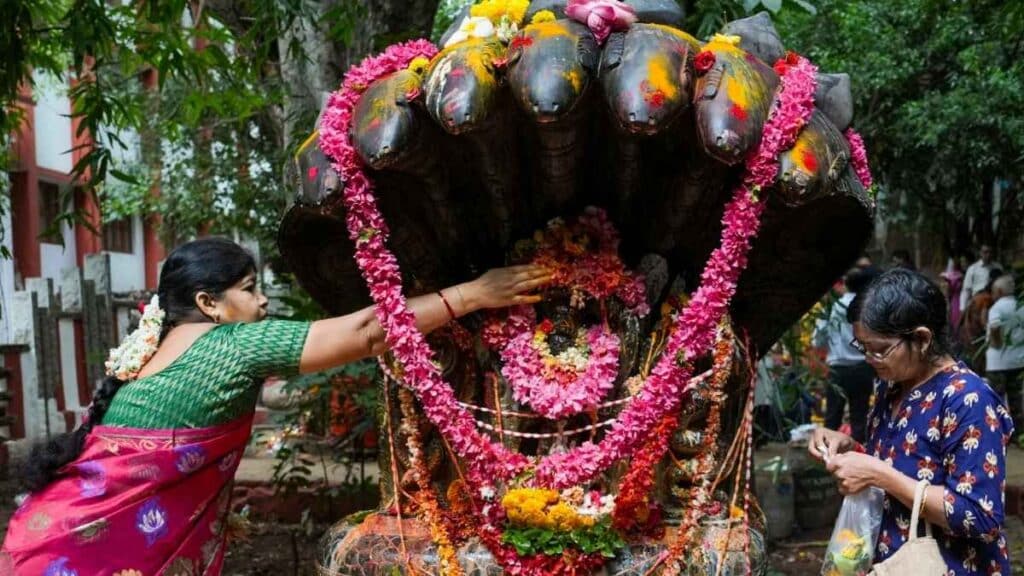
Nag Panchami is observed with offerings of milk, flowers, and prayers made at snake anthills, temples, and images of serpents. Women, in particular, play a central role in these rituals, praying for the well-being and protection of their families. Beyond its religious observance, Nag Panchami is a celebration of India’s ancient traditions, folk beliefs, and the timeless human reverence for the mysteries of nature.
When Is Nag Panchami Celebrated in 2026?
Nag Panchami falls on the fifth day (Panchami Tithi) of the bright fortnight (Shukla Paksha) of the Hindu lunar month of Shravana, which typically corresponds to July or August in the Gregorian calendar.
Nag Panchami 2026 Date: August 17, 2026 (Monday / सोमवार)
Nag Panchami Puja Muhurat: 05:51 AM to 08:29 AM (Duration: 2 Hours 37 Minutes)
- Panchami Tithi Begins: 04:52 PM on August 16, 2026
- Panchami Tithi Ends: 05:00 PM on August 17, 2026
The exact date varies each year based on the Hindu lunar calendar. Notably, in Gujarat, Nag Panchami — locally known as Nag Pancham — is observed on Tuesday, September 1, 2026, following the regional Gujarati calendar tradition.
Table of Contents
Nag Panchami In USA, Canada, Australia, New Zealand, UK, UAE, Singapore 2026 Dates
Nag Panchami on Sunday, August 16, 2026
- Nag Panchami Puja Muhurat – 07:22 AM to 08:52 AM
- Duration – 01 Hour 30 Mins
Nag Panchami on Sunday, August 16, 2026
- Nag Panchami Puja Muhurat – 07:22 AM to 09:11 AM
- Duration – 01 Hour 49 Mins
Nag Panchami on Monday, August 17, 2026
- Nag Panchami Puja Muhurat – 06:43 AM to 08:53 AM
- Duration – 02 Hours 10 Mins
Nag Panchami on Monday, August 17, 2026
- Nag Panchami Puja Muhurat – 05:49 AM to 08:43 AM
- Duration – 02 Hours 54 Mins
Nag Panchami on Monday, August 17, 2026
- Nag Panchami Puja Muhurat – 05:54 AM to 08:30 AM
- Duration – 02 Hours 36 Mins
Nag Panchami on Monday, August 17, 2026
- Nag Panchami Puja Muhurat – 07:04 AM to 09:30 AM
- Duration – 02 Hours 26 Mins
Why the Date Changes Every Year
Nag Panchami is observed according to the Hindu lunar calendar, not the Gregorian calendar. It falls on the Panchami (fifth day) of Shukla Paksha in the month of Shravana. Since lunar months are shorter than solar months, the corresponding Gregorian date shifts by several days or even weeks from year to year.
The precise timing of rituals is also governed by the Tithi (lunar day), which may begin and end at different hours depending on the year and geographical location.
Other Names and Regional Identities
Nag Panchami is known by various names across India’s diverse cultural landscape:
Standard Names
- Nag Panchami — The most widely used name across India
- Naga Panchami — Sanskrit variant used in scriptures and South India
Regional Names
- Garuda Panchami — Observed in parts of Karnataka, where the day also honors Garuda, the divine eagle and natural enemy of serpents
- Naga Chaturthi / Naga Pooja — Regional variations in Andhra Pradesh and Telangana
- Bhratru Panchami — In some communities in Maharashtra, where brothers seek blessings and sisters pray for their brothers’ protection
- Vishari Puja — A folk name used in parts of Bengal and Eastern India where snake goddess worship takes a distinct form
Diaspora / International Naming In Indian communities abroad, the festival is generally referred to as Nag Panchami or Naga Panchami. It is observed privately at home or at local Hindu temples and is sometimes incorporated into broader Shravana month observances.
Origins, History, and Legends of Nag Panchami
Nag Panchami is among the oldest festivals of the Indian subcontinent, with references found in the Puranas, the Mahabharata, and various regional scriptures. The veneration of serpents is one of the most ancient forms of worship in Indian civilization, predating even the Vedic period and finding expression across Hindu, Jain, and Buddhist traditions.
Several legends are associated with the origin of Nag Panchami:
The most widely recounted is from the Mahabharata, where King Janmejaya performed a massive yajna (fire sacrifice) to avenge his father Parikshit’s death by snakebite, intending to destroy all serpents. The sage Astika intervened and stopped the yajna, saving the Nagas. This moment of salvation occurred on Panchami Tithi of Shravana Shukla Paksha, and the day has been observed as Nag Panchami ever since.
Another popular legend involves Lord Krishna and the serpent Kaliya. The young Krishna danced on the hoods of the venomous Kaliya who had polluted the Yamuna River, ultimately subduing him and restoring the river’s purity. This victory is celebrated as a symbol of courage, divine power, and the restoration of harmony between humans and nature.
In folk traditions across Maharashtra, a young farmer is said to have accidentally killed baby serpents while plowing his field. When their mother serpent sought vengeance, the farmer’s sister appeased her with devotion and offerings of milk and sweets, earning the serpent’s forgiveness and blessing. This story forms the basis of the festival’s practice of women offering milk to snakes and praying for familial protection.
Over centuries, Nag Panchami evolved from an ancient nature-worship practice into an integrated religious festival observed with elaborate rituals, temple ceremonies, fairs, and folk celebrations.
Cultural and Spiritual Significance
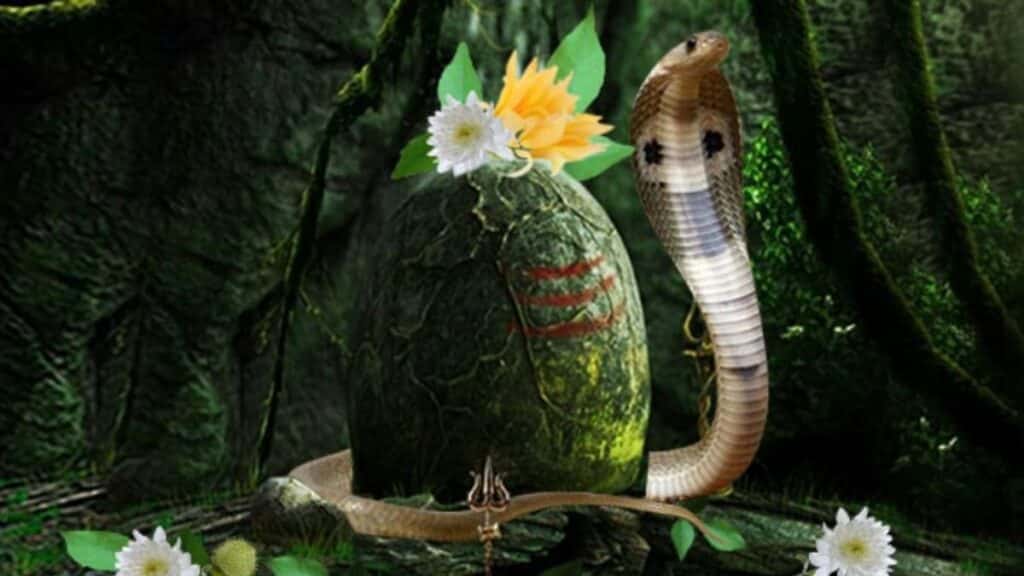
In Hindu philosophy, serpents occupy a unique space — they are simultaneously feared and revered, representing both danger and divine protection. Nagas are considered guardians of water, earth, and the underworld, and are associated with fertility, rain, and the cosmic cycles of creation and destruction.
Worshipping serpents on Nag Panchami is believed to bring protection from snakebites, ward off evil, and invite blessings of prosperity and good health. For farmers, the festival carries agricultural significance, as snakes are seen as protectors of crops by controlling pests. The festival also reinforces the Hindu principle of ahimsa (non-violence), as harming snakes during this period is considered a grave sin.
Spiritually, Nag Panchami connects devotees to the cosmic energy that serpents represent — the Kundalini energy in yoga traditions, the Adi Shesha that sustains existence, and the serpents that adorn the divine forms of Shiva and Vishnu. The festival is thus both a practical act of gratitude to nature and a profound spiritual observance.
Nag Panchami Prayers and Religious Observances
Nag Panchami rituals are among the most distinctive in the Hindu calendar. Key observances include:
Offerings to Serpents: Devotees offer milk, flowers, turmeric, sandalwood paste, and uncooked rice to live snakes, snake anthills, and clay or metal images of serpents. Offering milk to snakes is the most iconic ritual of the festival.
Temple Visits: Temples dedicated to Nagas — such as the Nag Chandreshwar temple in Ujjain (open to the public only on this day), Mannarasala in Kerala, and Nagoba temples across South India — draw massive crowds of pilgrims.
Fasting and Prayer: Many devotees, especially women, observe a partial or full fast on this day and pray for the protection of their family members, particularly their brothers and children.
Drawing of Serpent Images: In many homes, images of snakes are drawn on the walls or floors near the main entrance using turmeric or cow dung paste as part of the ritual worship.
Mantras and Puja: Specific Naga mantras and Vedic hymns are chanted during puja, invoking the blessings of the Nava Nagas — the nine sacred serpents of Hindu tradition
Nag Panchami Puja Mantra
सर्वे नागाः प्रीयन्तां मे ये केचित् पृथ्वीतले।
ये च हेलिमरीचिस्था येऽन्तरे दिवि संस्थिताः॥
ये नदीषु महानागा ये सरस्वतिगामिनः।
ये च वापीतडगेषु तेषु सर्वेषु वै नमः॥
Mantra Translation – May the snakes who are staying in this world, sky, heaven, sun-rays, lakes, wells, ponds etc. bless us and we all salute them.
How Nag Panchami Is Celebrated Across India
While the spirit of reverence for serpents unites all observances, the character of celebrations varies significantly by region.
In Maharashtra, Nag Panchami is one of the most enthusiastically celebrated festivals of the Shravana month. Fairs are held in villages, snake charmers are sought out for darshan, and elaborate household rituals mark the day.
In Karnataka and Andhra Pradesh, temples dedicated to Nagas become centers of major pilgrimage activity. The Subramanya temple in Karnataka, associated with serpent worship, sees thousands of devotees. The day is also tied to local folk theatre and art forms.
In Rajasthan, the Nag Panchami fair at Jodhpur and similar events across the state draw large crowds and feature traditional music, snake charmer performances, and community feasts.
In Kerala, Naga worship is deeply woven into the cultural fabric. Sacred serpent groves called Sarpa Kavu are found across the state, and communities perform elaborate serpent rituals during the Shravana season, with Nag Panchami being a significant occasion.
In North India, especially in Uttar Pradesh and Bihar, women perform household pujas in the morning and visit nearby Naga temples. The festival coincides with the Shravana month’s general festive atmosphere, with fairs and community gatherings adding to the celebratory mood.
Participation Across Communities
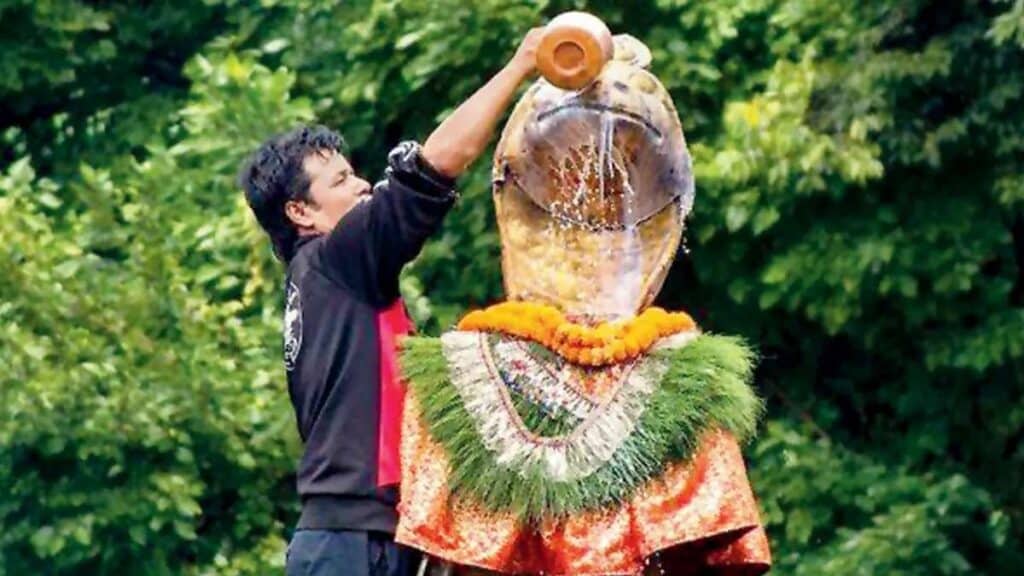
While Nag Panchami is rooted in Hindu religious traditions, it holds cultural resonance across communities in India. In many villages and semi-urban areas, people of different faiths participate in the community fairs and festive gatherings that accompany the festival. The respect for nature and serpents as part of the ecosystem is a shared value that transcends religious boundaries.
In tribal communities across central and northeastern India, serpent worship takes distinctly local forms, but the underlying reverence for snakes as divine and powerful creatures connects these traditions to the broader spirit of Nag Panchami.
How Nag Panchami Is Celebrated Outside India
For the Indian diaspora, Nag Panchami is observed primarily through:
- Temple ceremonies and community pujas organized by local Hindu cultural organizations
- Home-based rituals where families offer prayers to images or idols of serpents
- Cultural programs during the Shravana month that include Nag Panchami observances
- Community gatherings in regions with significant Indian populations such as the USA, Canada, UK, UAE, Australia, and Singapore
The festival helps diaspora families maintain their cultural and spiritual connection while introducing younger generations to the significance and traditions of India’s ancient festival calendar.
Traditional Foods and Offerings
Food plays an important role in Nag Panchami, both as ritual offerings and as festive community meals. Key foods associated with the festival include:
- Milk and milk-based sweets — Offered to serpents as the primary ritual offering; also consumed as prasad
- Kheer (rice pudding) — Prepared and offered during puja; widely shared among families
- Lahi (puffed rice) and seasonal fruits — Offered to the serpent deity as part of household rituals
- Panchamrut — A sacred mixture of milk, curd, honey, ghee, and sugar used in the puja
In many communities, cooking on the hearth is avoided on Nag Panchami as it is believed that digging or agitating the earth on this day may harm serpents living underground. Meals are often prepared a day in advance.
Nag Panchami in the Modern World
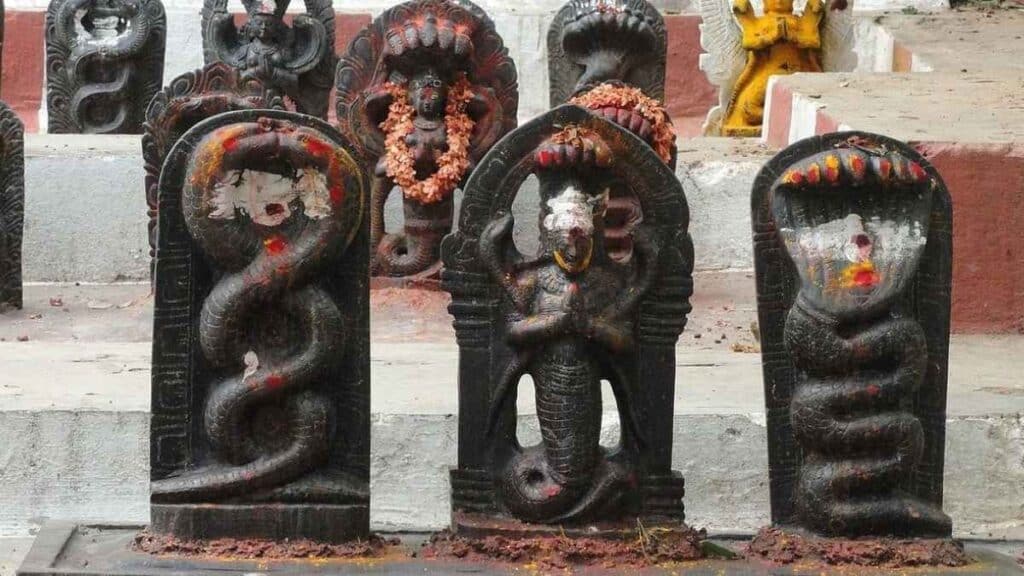
In recent times, Nag Panchami has come under renewed attention in the context of wildlife conservation. The use of live snakes in rituals, particularly by snake charmers, has raised animal welfare concerns, prompting many communities to shift toward clay idols, photographs, and painted images for worship.
This transition reflects the adaptability of Indian festival traditions — honoring the spiritual essence of the practice while aligning with modern values of compassion and environmental responsibility. Many wildlife organizations work during Nag Panchami to educate communities about snake conservation, turning the festival into an opportunity to foster coexistence between humans and snakes.
For Indian communities both at home and abroad, Nag Panchami remains a powerful reminder of humanity’s ancient bond with nature. It is a day to honor the living world with reverence, to seek protection through devotion, and to celebrate one of India’s most unique and enduring cultural traditions.kware while maintaining ingredient authenticity, accepting gas stoves when wood is unavailable.