


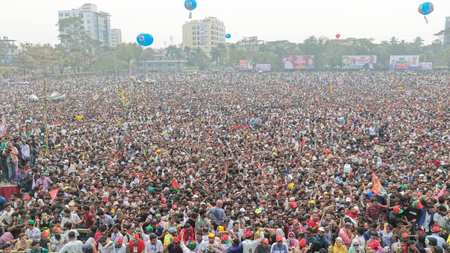
The campaign for the February 12 Bangladesh elections concludes today amidst chaos following Sheikh Hasina’s removal, with minority Hindus facing radical Islamist violence under the Muhammad Yunus-led interim government. Hindu votes hold significant sway in these elections, potentially acting as a decisive factor in the closely fought contest. Both the Jamaat-e-Islami and the Bangladesh Nationalist Party (BNP) are actively courting Hindu voters, recognizing their pivotal role in the electoral outcome.
For Hindus in Bangladesh, ensuring their safety remains a top priority amid escalating atrocities and targeted violence against them, including documented brutal killings. Human rights groups have raised concerns over the institutionalized nature of these attacks, urging authorities to safeguard the Hindu community from further harm. The declining Hindu population due to prolonged persecution underscores the urgent need for protection and security measures to prevent property seizures, assaults, and killings.
Political parties like the Jamaat and BNP acknowledge the strategic importance of the Hindu vote, with opinion polls indicating a neck-and-neck race between the two contenders. Initially expected to dominate, the BNP now faces a resilient Jamaat supported by Yunus, narrowing the electoral gap. Both parties have made concerted efforts to engage with the Hindu community, visiting temples and pledging to ensure their well-being and rights.
While both parties vie for Hindu support, indications suggest that the BNP may secure a larger share of the Hindu vote compared to the Jamaat, given the latter’s perceived hardline stance and historical associations with anti-India sentiments. The BNP’s relatively stronger rapport with the Hindu community, coupled with past grievances against the Jamaat for its alleged role in persecution, further tilts the scales in favor of the former. Experts point to the International Crimes Tribunal’s 2013 indictment of Jamaat members for war crimes against Hindus during the 1971 atrocities as a significant factor influencing Hindu voting preferences.
Amid ongoing persecution of Hindus in Bangladesh, the upcoming elections present a critical juncture for the community to assert its electoral influence and safeguard its interests. The evolving demographic landscape, as reflected in successive census data, underscores the demographic significance of Bangladeshi Hindus and their evolving political role as swing voters. The absence of Sheikh Hasina’s Awami League from the electoral fray raises expectations of a substantial Hindu vote shift towards the BNP, underscoring the community’s cautious approach towards choosing a political representative.
