


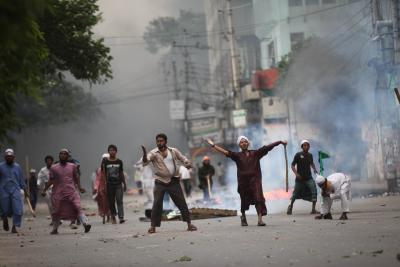
As Bangladesh approaches the February 12 elections, there is growing uncertainty, particularly for minorities who may face challenges under a government that does not treat them as equal citizens. The interim government led by Muhammad Yunus is criticized for its handling of the transition, which has negatively impacted the economy, targeted business groups unlawfully, allowed attacks on minorities, deepened divisions, and overlooked the Islamist threat.
A recent report highlighted by the Brussels-based news website ‘EU Reporter’ revealed a leaked audio where a US diplomat in Dhaka expressed interest in fostering a relationship with Jamaat-e-Islami, Bangladesh’s largest Islamist party. Despite being banned by Russia for two decades as a designated terrorist organization, Jamaat is currently the second-largest party in Bangladesh, raising concerns about the US’s potential support for it.
Jamaat-e-Islami, born out of opposition to the creation of Bangladesh and influenced by the Muslim Brotherhood, aligned with Pakistan during the country’s independence. The party was involved in brutal activities during the Bangladesh War of Independence, targeting civilians who opposed the nation’s freedom. Despite losing its electoral registration years ago due to anti-Hindu violence, Jamaat has regained political status and is gaining influence in Bangladesh’s political landscape.
Following the removal of former Prime Minister Sheikh Hasina in 2024, Jamaat’s ban was lifted through executive action, and its political party status was restored by a Bangladeshi court in 2025. The resurgence of Jamaat has raised concerns about the growing influence of conservative Islamic ideologies in Bangladesh, especially amidst societal divisions and escalating violence, including attacks on women, cancellation of girls’ sports events, and disturbing cases of rape.
Amidst ongoing tensions and challenges, including the Rohingya refugee crisis and strained relations with India, the upcoming elections in Bangladesh are viewed with skepticism. The country, known for its female leadership, is witnessing a concerning regression in women’s rights and societal harmony, with deep religious divides posing significant challenges for the future.
