


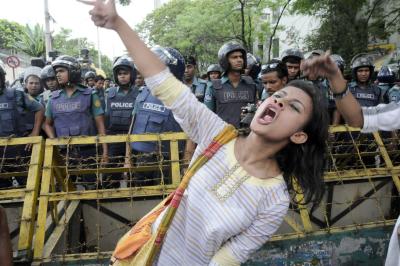
Bangladesh continues to grapple with increasing violence against women and children, as highlighted by the Awami League. Despite the presence of strict laws like the ‘Women and Children Repression Prevention Ordinance,’ concerns persist over the lack of improvement in the situation. Critics pointed out that 776 rape cases were reported in the 13 months leading up to February 2026, raising alarm about public safety.
Observers have criticized both the former Muhammad Yunus-led interim government and the ruling Bangladesh Nationalist Party (BNP) government for their failure to effectively address the issue. They noted that while the Yunus-led administration had advocated for stronger protections for women, the enforcement of laws fell short once they came into power.
The state of ‘one-stop crisis’ centers, previously crucial during the Awami League government’s tenure, is now reportedly struggling to operate effectively. Law enforcement has also faced scrutiny, with critics pointing out a lack of accountability following attacks on police during the July 2024 demonstrations.
The Awami League raised concerns about individuals linked to the BNP government holding influential positions within the police and judiciary, questioning their effectiveness in upholding the rule of law. In some regions, cases of violence against women are being resolved through informal village arbitration systems instead of formal judicial processes, raising doubts about accountability and justice.
Analysts emphasize a significant gap between tough legal provisions and their implementation, warning that such discrepancies may have led to preventable tragedies. The escalating violence against women and children in Bangladesh underscores broader issues of governance, accountability, and political will required to combat this alarming trend.
