


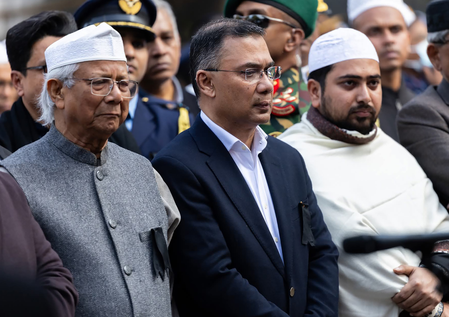
Around 68% of Bangladeshi citizens voted ‘yes’ in the July Charter referendum held alongside the 13th Parliamentary elections, as reported by local media. The Election Commission revealed that 4,80,74,429 people supported the ‘yes’ option, while 2,25,65,627 individuals chose ‘no’. The voter turnout for the parliamentary election was 59.44%, with referendum participation at 60.26%.
The Awami League party criticized the referendum conducted by an interim government led by Muhammad Yunus, labeling it as illegal and a deliberate attempt to deceive the public. They described the referendum as a sham orchestrated by the Yunus government, tarnishing the nation’s constitutional history. The party accused the interim government of making decisions without popular support and lacking transparency.
In unofficial results, the Bangladesh Nationalist Party (BNP) and its alliance emerged victorious in the 13th parliamentary elections, securing 210 seats. This outcome paves the way for Tarique Rahman, the BNP chairman and son of late Prime Minister Khaleda Zia, to potentially become Bangladesh’s first male Prime Minister in nearly 35 years. Following his mother’s passing, Tarique assumed leadership of the BNP and is poised to lead the country.
The political landscape in Chittagong and the Hill Tracts underwent a significant transformation during the 13th National Parliament elections. BNP clinched 21 out of 23 parliamentary seats in Chittagong district, Cox’s Bazar, and the three Hill Tracts districts, while Jamaat-e-Islami secured only two seats. Notably, the majority of ‘no’ votes in the referendum were cast in these districts.
