


Bangladesh’s recent elections highlighted how political engagement with historical events, particularly the 1971 Liberation War, influenced voter behavior. Parties associated with upholding the legacy of the Liberation War garnered support from voters with strong ties to that period. Conversely, parties linked to anti-liberation forces faced rejection by these voters.
In the lead-up to the 2026 parliamentary elections, the Bangladesh Nationalist Party (BNP) strategically invoked the 1971 Liberation War in its campaigns. This move aimed to draw attention to the controversial role of Jamaat-e-Islami (JI) during that critical period. Historically, the BNP had formed alliances with JI in past elections, despite JI’s opposition to Bangladesh’s independence.
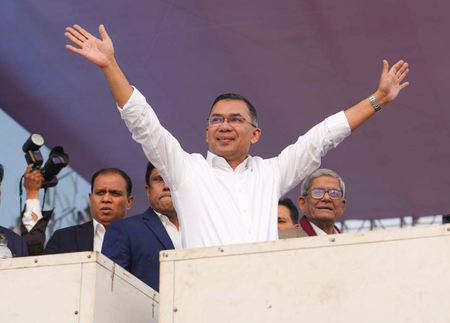
During an election rally in Sylhet on January 22, Bangladesh’s Prime Minister and BNP chairman Tarique Rahman emphasized JI’s opposition to the Liberation War. This stance was echoed by other senior BNP leaders, including Secretary General Mirza Fakhrul Islam Alamgir, who questioned whether individuals who opposed the country’s independence could be trusted to govern.
BNP leaders framed their criticism of JI as a principled defense of the Liberation War and its heroes. They clarified that their past alliances with JI were strategic and electoral, not indicative of support for JI’s controversial history. By emphasizing JI’s historical opposition to independence, the BNP sought to position itself as a champion of the Liberation War, casting JI as an ideological adversary in the absence of the Awami League.
Election results underscored that voters strongly identifying with the 1971 Liberation War largely supported the BNP, contributing significantly to its electoral success. Commentators noted that these voters viewed the BNP as safeguarding the values and legacy established during the Liberation War, fearing that a JI-led government could undermine these foundational principles.
