


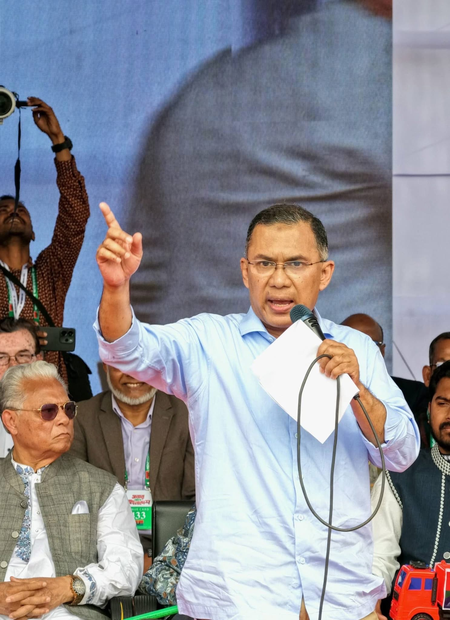
With the recent election win for the Bangladesh Nationalist Party (BNP), Tarique Rahman is poised to become the Prime Minister, sparking interest in his persona and political career. Rahman, known for his prolonged absence from Bangladesh and involvement in behind-the-scenes activities, has been captured in various video clips displaying different facets of his personality. These clips show him discouraging excessive adulation from followers, reprimanding supporters for their behavior, and even stopping at a traffic signal despite being urged to move ahead.
Tarique Rahman, the son of former President Ziaur Rahman and former Prime Minister Khaleda Zia, climbed the party ranks in the 1990s and early 2000s, establishing himself as a significant figure operating discreetly. Despite spending around 17 years in exile in London due to legal and political pressures in Bangladesh, he continued to steer the party’s strategies and wield influence over BNP members. His return to active politics in December marked a remarkable comeback for the party.
Referred to as the “dark prince” for his inclination towards operating in the shadows, Rahman has faced multiple legal challenges and convictions in Bangladesh, with his supporters attributing them to political vendettas while critics point to corruption and abuse of power. These legal battles, which influenced his exile years, remain a contentious aspect of his public image. As Rahman prepares to take office, he faces the immediate tasks of consolidating political power, recalibrating diplomatic relations, stabilizing the economy, managing extremist pressures, and restoring law and order and institutional trust.
The incoming government’s key objectives include translating electoral success into effective governance, steering clear of divisive actions that could incite unrest, forming a competent cabinet, strengthening party structures post-exile or factionalism, and demonstrating a commitment to inclusive governance to allay public concerns. Rebuilding diplomatic ties with India emerges as a crucial priority, with New Delhi expressing willingness to engage while monitoring Dhaka’s stance on sensitive issues like the status of exiled political figures and engagement with Pakistan.
