


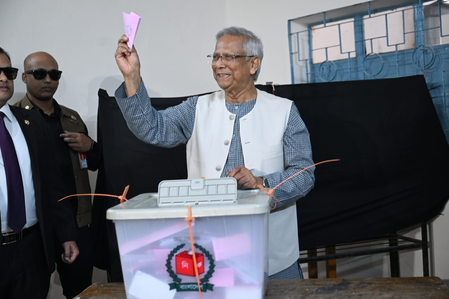
Bangladesh’s Chief Advisor Muhammad Yunus participated in the 13th parliamentary elections, describing it as a moment of joy and the birth of a new Bangladesh. He emphasized the importance of citizen involvement in both the parliamentary election and the referendum. Yunus highlighted the significance of the election as a critical moment in the country’s political history.
Yunus, addressing reporters after casting his vote in Dhaka, emphasized the unique and significant chapter the referendum and national parliamentary election represent in Bangladesh’s political history. The elections come after the collapse of former Prime Minister Sheikh Hasina’s 15-year rule, leading to an interim government under Yunus.
The parliamentary elections in Bangladesh, held after 18 months of interim governance, have seen ongoing protests, the emergence of hardline Islamic groups, and increased violence against minorities. International human rights organizations have criticized the interim government’s tenure for the collapse of law and order, lack of reforms, and growing instability in the country.
Over 127 million voters are expected to participate in the parliamentary election and a nationwide referendum that could bring significant changes to Bangladesh’s constitutional framework. The voter turnout includes 62.88 million women and a notable increase in first-time women voters compared to men. However, female representation among candidates remains low, with only around four percent of candidates being women.
To ensure a secure electoral process, authorities have deployed nearly a million security personnel across the country, with a focus on sensitive areas. Additionally, over 100,000 army personnel are stationed to maintain law and order during the polling. Political parties in Bangladesh are optimistic about forming a new government despite concerns about the fairness of the voting process.
The Awami League has raised concerns about the elections, calling them a “sham” and appealing to the international community to prevent the country from collapsing. The party criticized the exclusion of several political parties opposing radical ideologies and advocating for a liberal Bangladesh. Amid escalating political conflicts, there are fears that a change in power could fuel Islamist extremism.
