


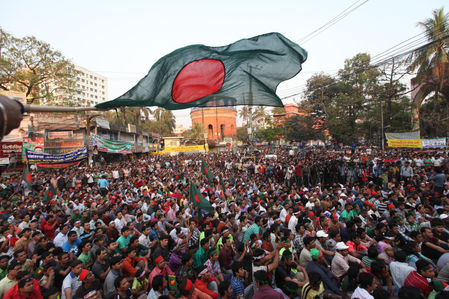
The interim government in Bangladesh, led by Muhammad Yunus, has announced the scheduling of the much-anticipated elections for February 12. However, the political landscape is tumultuous, with shifting alliances and a backdrop of violence. The National Citizens Party (NCP), born out of student protests against Sheikh Hasina, is currently facing internal disarray.
The NCP, initially aligned with Jamaat-e-Islami, is now experiencing internal divisions. While some members advocate realigning with Jamaat before the elections, others prefer the Bangladesh Nationalist Party (BNP). Conversely, a faction within the party aims to contest the elections independently, distancing themselves from both major parties.
Observers suggest that the move away from Jamaat has been gradual, driven by concerns that Jamaat’s influence could lead to unfavorable outcomes for Bangladesh. The perceived alignment with Pakistan, including welcoming the ISI, relaxing visa regulations, and opening sea routes, has raised apprehensions about potential security risks posed by turning Bangladesh into a base for anti-India activities.
Experts note a shift in perception among former student protesters who initially opposed Sheikh Hasina but now fear that a Jamaat-led government would exacerbate the country’s challenges. Criticisms of the failing economy, pro-Pakistan stance, minority targeting, and ongoing violence have fueled concerns that a Jamaat-led administration could perpetuate stagnation and push for Sharia law implementation.
Apart from ideological disparities, political disagreements have emerged within the NCP. Discontent grew when the Jamaat offered the NCP a mere 30 seats out of 350 in the Jatiya Sangsad, signaling a subordinate role. The NCP’s future appears uncertain, with internal conflicts, resignations, and contentious negotiations threatening its cohesion before the elections.
