


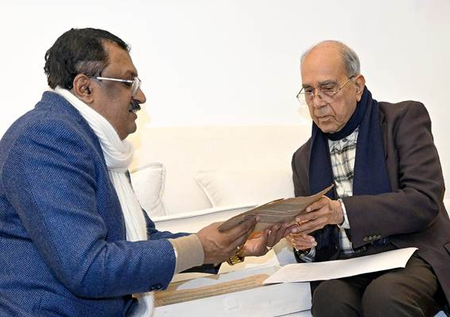
In a significant cultural event, the Central Sanskrit University handed over a 233-year-old Sanskrit manuscript of Valmiki Ramayana to Nripendra Misra at Teen Murti. This valuable manuscript, previously on loan at Rashtrapati Bhavan, is now a permanent gift to the International Ram Katha Museum in Ayodhya, Uttar Pradesh. The manuscript, authored by Adi Kavi Valmiki with a classical commentary by Maheshvara Tīrtha, is written in Sanskrit.
Nripendra Misra, Chairman of the Executive Council of Prime Ministers’ Museum and Library, expressed that this donation marks a pivotal moment for Ram devotees and the Ayodhya temple complex. He highlighted the manuscript’s historical significance, dating back to Vikrama Samvat 1849 (1792 CE), and its representation of the Rāmayaṇa’s textual tradition. The manuscript contains five principal kaṇḍas of the epic, reflecting its narrative and philosophical depth.
The donation of the Valmiki Ramayana manuscript to the Ram Katha Museum is part of Misra’s efforts to transform the museum into a modern, interactive space blending heritage with technology. This initiative aims to narrate Lord Ram’s life, Ayodhya’s importance, and the global impact of the Ramayana. University Vice Chancellor Shrinivasa Varakhedi emphasized that this gesture immortalizes the wisdom of Valmiki Ramayana for scholars, devotees, and visitors worldwide.
The Ram Katha Museum, established in 1988, collects and preserves artifacts related to Ram Katha, including manuscripts, sculptures, and art forms. With a focus on safeguarding cultural heritage, the museum displays archaeological remains and artworks from the Ayodhya region. The museum also hosts a reference library and educational activities to promote the understanding and appreciation of Ram Katha.
