


The Centre for Wildlife Rehabilitation and Conservation (CWRC) in Assam’s Kaziranga National Park and Tiger Reserve has saved and cared for 7,397 wild animals from 357 species. Established in 2002, CWRC, a joint effort of the Assam Forest Department, Wildlife Trust of India (WTI), and International Fund for Animal Welfare (IFAW), focuses on rescuing flood-affected and orphaned animals, particularly during the monsoon season.
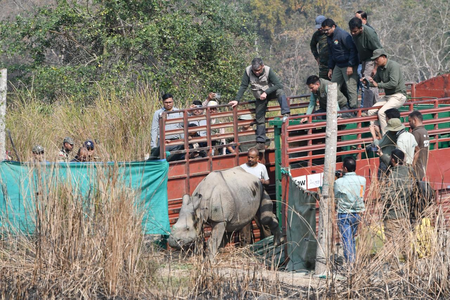
Approximately 65% of the rescued animals, totaling around 4,490, have been successfully released back into their forest habitats after receiving treatment. Notably, the CWRC has hand-raised and released 25 greater one-horned rhinoceroses, with some being relocated to Manas National Park and Kaziranga. Recently, two male rhinos aged around four to five years were safely moved to Kaziranga National Park following established conservation guidelines.
The translocation of these rhinos was conducted under the Wildlife (Protection) Act after approval from the Chief Wildlife Warden, Assam. The animals were acclimatized to natural conditions in pre-release enclosures before their final release into the park. This meticulous process was overseen by a team of veterinarians and park officials, ensuring the well-being and successful rehabilitation of the rhinos.
Officials emphasize that the transfer of rhinos showcases the scientific wildlife management and rehabilitation practices at KNPTR, enabling rescued animals, including the iconic greater one-horned rhinoceros, to return to their natural environment post-calamities like floods. Kaziranga National Park, a UNESCO World Heritage Site and home to the ‘Big Five,’ boasts a significant population of various endangered species, including greater one-horned rhinoceroses, Bengal tigers, Asian elephants, wild water buffaloes, and eastern swamp deer.
