


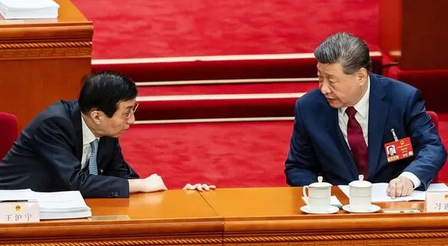
China’s 15th Five-Year Plan for 2026-2030, a 141-page strategic blueprint, was officially adopted during the National People’s Congress in early March 2026. This plan is seen as a move to enhance Beijing’s influence in the developing world, particularly in South Asia.
The Two Sessions, comprising the NPC and the Chinese People’s Political Consultative Conference, play a crucial role in translating political priorities into enforceable policies under Chinese Premier Xi Jinping. Recent documents emphasize technological self-reliance, national security, and state-led economic guidance.
Observers predict that South Asia will experience significant impacts over the next five years due to China’s strategic planning. Beijing aims to strengthen its Global Governance and Global Development Initiatives in collaboration with countries in the Global South.
Notably, South Asian nations, excluding India, may find it challenging to resist China’s offers. These countries face substantial infrastructure financing needs, lack the capacity for independent AI governance frameworks, and encounter slow processes and political conditions with traditional lenders.
China’s approach, perceived as quicker and less costly in the short term, is framed in terms of South-South cooperation and mutual development. The 15th Five-Year Plan and the Two Sessions reflect a nuanced shift in China’s South Asia strategy towards technology-intensive engagements that are less reversible.
The media report highlights that countries like Dhaka, Colombo, Kathmandu, and Islamabad are urged to focus on building institutional capabilities to negotiate terms with China. The current pace of progress suggests that many nations are not adequately prepared to address these challenges within the next five years.
