
Close Menu
  • Indian Festivals 2026
  • Movie & OTT Releases This Week
  • News
  • Entertainment
  • NRI Life
  • Research
  • Advertise with us
Facebook X (Twitter) Instagram YouTube
  • Download Indian Community App
  • Advertise Here
Facebook X (Twitter) Instagram
Indian CommunityIndian Community
Trending
  • Terror (2026) Kannada Movie Review: Dushyanth Adithya Delivers a Gripping Patriotic Action Thriller
  • Toh Ti Ani Fuji Review: A Quietly Devastating Love Story That Lingers Long After It Ends
  • The Trap (2026) Review: A Gripping Marathi Psychological Thriller That Pulls You Into Its Dark Web
  • TN 2026 Movie Review: A Politically Charged Tamil Satire That Demands Attention
  • Manithan Deivamagalam Movie Review: A Heartfelt Rural Drama Rooted in Courage and Community
  • Mohiniyattam (2026) Review: A Superior Sequel That Nails the Dark Comedy Transition
  • LIK: Love Insurance Kompany Review — When the Heart Knows Better Than the Algorithm
  • Kaakee Circus Review: A Charming Cop Comedy Bursting with Heart and Humour
  • Indian Festivals 2026
  • News
    • National
    • International
    • Entertainment
    • Achievements
    • Scam Alerts
    • Business
    • Health & Medicine
    • Science & Technology
    • Sports
  • Entertainment
  • Latest Movie Releases
    • Latest OTT Releases
  • NRI Life
  • India & Culture
  • Health & Wellness
  • Research
Indian CommunityIndian Community
Home » News » International
International

China’s Incentive Measures for Taiwan Raise Concerns, Report Warns

Indian Community Editorial TeamBy Indian Community Editorial TeamApril 13, 20262 Mins ReadNo Comments Add us to Google Preferred Sources
China’s Incentive Measures for Taiwan Raise Concerns, Report Warns
Share
Facebook Twitter LinkedIn Pinterest Email

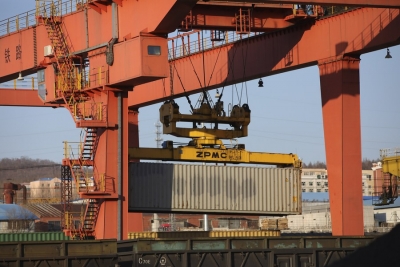
China’s recent announcement of 10 “incentive measures” for Taiwan has raised concerns about the potential blurring of lines between politics and business. A report from Taipei Times highlighted that while these incentives cover various areas such as sales of Taiwanese agricultural products, investments in China, and travel resumption to Taiwan, they come with political prerequisites. According to the report, these frameworks are seen as a way to exert pressure on the Taiwanese government rather than fostering genuine cooperation.

The report cited the deputy executive director of Tunghai University Cross-Strait Research Center, Hung Pu-chao, who expressed skepticism about the true intentions behind these incentives. He suggested that the political demands accompanying the incentives could lead to arbitrary rejections of Taiwanese agricultural products by China. This, in turn, may pose challenges for Taiwanese businesses looking to engage with the Chinese market.

Following a meeting between Chinese Nationalist Party Chairwoman Cheng Li-wun and Chinese President Xi Jinping in Beijing, these incentive measures were unveiled. The report also highlighted concerns raised by Feng Chia University international business professor Yang Ming-hsien regarding the political prerequisites imposed by China. Yang emphasized that these prerequisites, such as adherence to the “1992 consensus” and opposition to “Taiwanese independence,” could complicate trade relations between the two regions.

Yang further pointed out the potential implications of China’s new policy on Taiwanese enterprises, suggesting that Beijing may push for registration of Taiwanese businesses in China. With no existing investment protection agreement between Taiwan and China, issues related to labor recruitment, profit distribution, and stakeholder interests could remain unresolved. In light of these challenges, Yang advised Taiwanese agricultural traders to diversify their markets to mitigate risks associated with China’s political demands.

The report also underscored concerns about China’s motives behind these incentives, with a focus on creating a narrative that portrays the Taiwanese government as an obstacle to exchanges and development. Hung, as cited in the report, warned that China’s strategy aims to sideline Taiwan’s democratically elected government by promoting alternative channels for cross-strait interactions. This, if successful, could have broader implications on Taiwan’s representation in international affairs and raise national security concerns.

Hung further cautioned against the potential infrastructural developments linking China to Kinmen and Lienchiang (Matsu), emphasizing the need to assess the impact of deeper connectivity on Taiwan’s governance and national security landscape. The report highlighted the intricate dynamics at play as China’s incentives unfold and their broader implications for Taiwan’s political and economic landscape.

1992 Consensus China Chinese Nationalist Party Feng Chia University Hung Pu-chao Kinmen Lienchiang Matsu Taipei Times Taiwan Tunghai University Cross-Strait Research Center Xi Jinping Yang Ming-hsien
Add us to Google Preferred Sources
Indian Community Editorial Team

The Indian Community Editorial Team curates, verifies, and publishes stories that matter to Indians worldwide. From culture and community to business and innovation, our mission is to spotlight voices, ideas, and events that bring our global community closer together. Have news or a story to share? Submit it to us at [email protected].

Add A Comment

BCCI Swaps IPL 2026 Fixtures Between Gujarat Titans and Chennai Super Kings

April 13, 2026

Maharashtra to Establish Music Institute in Memory of Asha Bhosle

April 13, 2026

Sheikh Hasina Extends Pohela Boishakh Greetings, Highlights Festival’s Significance

April 13, 2026

Jaishankar Discusses Regional Situation with Kuwaiti Foreign Minister

April 13, 2026
  • Facebook
  • Twitter
  • Pinterest
  • Instagram
About Us
  • About Us
  • Contact Us
  • Terms of Service
Corporate
  • Download Indian Community App
  • Advertise Here
Facebook X (Twitter) Instagram
  • About Us
  • Contact Us
  • Terms of Service
© 2026 Designed by CreativeMerchants.

Type above and press Enter to search. Press Esc to cancel.