


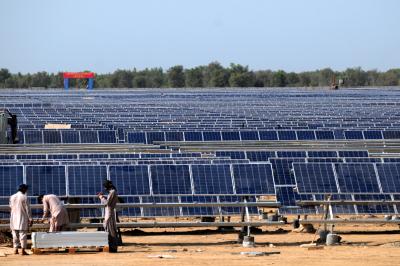
China’s efforts to establish itself as a major global supplier of renewable energy technology are facing backlash from Africa, South Asia, and Latin America. A recent report highlighted concerns over the quality and suitability of Chinese solar panels, wind turbines, and batteries for local conditions. The report, released by Nepal Aaja, also raised issues about the financing model associated with these projects, which allegedly create long-term dependencies.
According to the report, China’s financing approach often links loans to technology imports, compelling recipient countries to purchase Chinese equipment. This practice results in nations becoming reliant not just on Chinese hardware but also on Chinese spare parts, technicians, and after-sales services. While China’s renewable energy exports benefit from state-subsidized overcapacity, they often fail to meet the enduring requirements of recipient nations.
Countries in Africa and Southeast Asia that have adopted Chinese equipment have reported frequent breakdowns and short lifespans, with solar panels unable to withstand local weather conditions, thus impeding electrification initiatives. Similarly, in Latin America, Chinese-imported wind turbines have been criticized for their limited lifespan compared to European alternatives.
Despite positioning itself as a crucial provider of renewable technology, China is accused of aiming to create asymmetric dependencies with the Global South, limiting technology transfer opportunities. This reliance on Chinese energy solutions restricts nations’ strategic flexibility in a multipolar world, preventing them from balancing relationships with China, Western countries, and regional powers effectively.
Leaders in Africa and Latin America have characterized their energy ties with China as a form of neo-mercantilist exploitation, where energy cooperation is leveraged to secure broader political advantages. China’s influence has been wielded in various spheres, including UN voting alignments, Belt and Road initiatives, and bilateral trade talks.
