


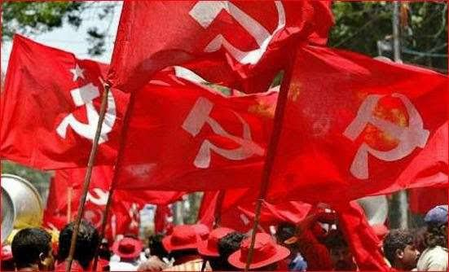
In a significant turn of events in Tamil Nadu’s political landscape, Coimbatore district is set to experience Assembly elections without any Left party candidates, breaking a long-standing electoral tradition dating back to India’s first elections. This absence signals a notable shift in the district’s political dynamics leading up to the 2026 polls. The change reflects evolving socio-economic conditions and political realignments within the state.
Once a stronghold for communist parties, Coimbatore has seen a gradual decline in factors that historically supported Leftist influence, particularly in terms of organized labor movements. The decline of the textile industry, which was once the economic backbone of the region, has played a pivotal role in this transformation. The closure of major mills, including those under the National Textile Corporation (NTC), post the Covid-19 pandemic, has weakened the trade unions that traditionally backed Left parties in the area.
The diminishing presence of industrial labor and union networks has resulted in a gradual decline in the electoral prowess of parties like the CPI and the CPI(M), limiting their capacity to independently contest and secure seats in the district. A senior CPI official highlighted that the waning strength of labor unions has directly impacted the electoral fortunes of Left parties. The official noted that since the inception of Assembly elections in 1952, Left parties have consistently participated in Coimbatore, either on their own or as part of coalitions, and have clinched victories in crucial constituencies. However, the weakening of unions has altered this historical trend.
Historically, the CPI(M) has seen success in constituencies like Coimbatore East, securing five victories, while Perur and Singanallur have each delivered two wins. On the other hand, the CPI emerged victorious in the Valparai Assembly seat in 1980 and 2011. At the national level, the CPI has triumphed in the Coimbatore Lok Sabha constituency five times, while the CPI(M) has claimed victory thrice. Observers attribute the absence of Left candidates in the 2026 elections largely to seat-sharing agreements within the DMK-led alliance.
Despite not fielding candidates directly in the district’s electoral race, Left parties have redirected their efforts towards bolstering the prospects of the DMK-led alliance. Leaders have indicated a focus on mobilizing cadres and conducting grassroots campaigns across all constituencies.
