


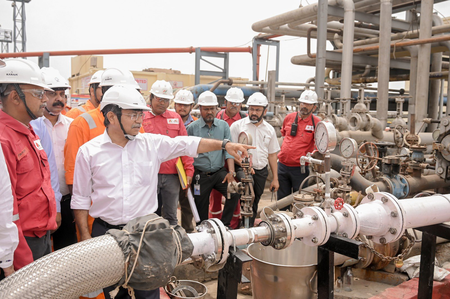
Deendayal Port Authority, also known as Kandla Port, has enhanced its methanol bunkering capabilities, aligning with India’s push for cleaner energy in the maritime sector. The move supports the industry’s target of achieving net-zero emissions by 2050 by adopting low-carbon fuels like e-methanol and e-ammonia to reduce greenhouse gas intensity in shipping. This development positions Kandla Port as a significant player in India’s energy transition efforts and global green shipping corridors.
Union Minister of Ports, Shipping, and Waterways, Sarbananda Sonowal, emphasized the importance of this milestone at Kandla Port in leading the global shift towards green shipping. By embracing cleaner fuels like methanol and investing in future-ready infrastructure, India aims to align its maritime sector with international sustainability goals while enhancing efficiency and competitiveness. This strategic move is a crucial step towards India’s goal of becoming a prominent maritime nation globally.
Situated on India’s western coast, Kandla Port has a history of handling grey methanol as cargo and already possesses the necessary infrastructure for methanol bunkering, including tank storage, pipelines, and jetties. The port is now actively working on developing dedicated methanol bunkering capabilities to support its green shipping initiatives.
To ensure readiness, Kandla Port engaged DNV Maritime Advisory Services to evaluate its infrastructure and regulatory frameworks. Following the assessment, the port achieved a Level 6 rating on the International Association of Ports and Harbours (IAPH) Port Readiness Level (PRL) scale for methanol bunkering.
Recently, on April 2, Kandla Port successfully conducted a trial shore-to-ship methanol fuelling operation in collaboration with industry partners like Stolt Tankers, J.M. Baxi, Aegis Vopak, Indian Oil Corporation Ltd., and Deendayal Port Authority. The trial validated key operational aspects such as bunker transfer processes, safety systems, and regulatory compliance, aligning with global best practices for methanol bunkering.
Kandla Port is now focused on ensuring the availability of approximately 500 KTPA of Renewable Fuels of Non-Biological Origin (RFNBO)-compliant e-methanol by 2028-29. This supply is intended to support deep-sea, dual-fuel vessels operating along the Asia-Europe trade corridor. The port plans to expand its operational capabilities by moving towards ship-to-ship methanol bunkering in the next phase, further solidifying its position in green shipping corridors.
