


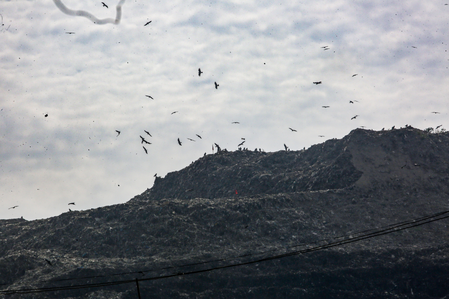
The Central Pollution Control Board (CPCB) informed the National Green Tribunal (NGT) that Delhi produces 11,852 tonnes of municipal solid waste every day. However, the city only processes 7,611 tonnes, resulting in a daily gap of 4,241 tonnes that is disposed of at dumpsites in Bhalswa and Ghazipur. The CPCB revealed this information in an affidavit submitted in response to a media report highlighting the garbage crisis in areas like Shaheen Bagh and Sarita Vihar.
Referring to the annual report by the Delhi Pollution Control Committee (DPCC) for 2024–25, the CPCB stated that Delhi’s processing capacity is 8,173 tonnes per day, but the actual processing is 7,611 tonnes per day, which is 64.2% of the capacity. Due to this gap in waste management, around 4,241 tonnes per day, or 35.8% of the waste, ends up at dumpsites in Delhi.
The CPCB mentioned plans to increase the processing capacity by 7,750 tonnes per day between 2025 and 2028 to address the waste management shortfall in the national capital. According to the Solid Waste Management Rules of 2016, the Municipal Corporation of Delhi (MCD) is primarily responsible for waste collection, segregation, transportation, and processing, while the enforcement of rules falls under the purview of the DPCC.
An order from February 16, 2023, saw the NGT establish a Solid Waste Monitoring Committee for Delhi, chaired by the Lieutenant Governor, to oversee waste management matters, including the development of new processing facilities and the cleanup of existing dumpsites. The NGT initiated action on this issue in July after reports of garbage accumulation in Southeast Delhi, leading to health concerns and foul odors. The green tribunal issued notices to the CPCB, DPCC, MCD, and the District Magistrate of South East Delhi, citing violations of environmental protection laws.
