


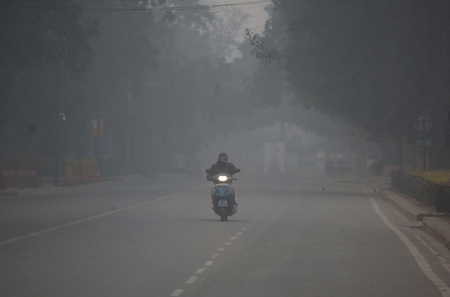
The Delhi-National Capital Region (NCR) is currently experiencing a harsh winter spell, leading to bone-chilling cold wave conditions that are impacting both the weather and air quality in the area. The Air Quality Index (AQI) has surged past 350 in various locations, categorizing the air quality as ‘very poor’ to ‘severe’. In Chandni Chowk, the AQI reached 384, while Ashok Vihar recorded 376, and Bawana reported 373, all falling under the concerning air quality categories.
The situation is no better in other parts of Delhi-NCR, with areas like Punjabi Bagh, Okhla Phase-2, and Pusa registering AQI levels of 386, 383, and 399 respectively. Nehru Nagar faced an AQI of 397, classified as ‘very severe’. Meanwhile, Anand Vihar and Alipur recorded AQI levels of 345 and 332, indicating very poor air quality conditions.
In Noida, the air quality remained consistently poor across various monitoring stations. Sectors like Sector-1, Sector-125, Sector-116, and Sector-62 reported AQI levels of 359, 352, 347, and 342, highlighting the prevalent toxic air conditions. Although some areas like Mathura Road showed relatively lower AQI levels at 259, the air quality still remained in the poor category.
Ghaziabad also grapples with high pollution levels, with Sanjay Nagar recording an AQI of 312 and Indirapuram at 282, posing serious health risks to residents in the NCR. The region is not only battling deteriorating air quality but also facing challenges due to adverse weather conditions.
The Delhi-NCR region continues to be blanketed by dense fog, severely impacting visibility and disrupting daily life. The ongoing cold wave has further intensified the winter conditions, with the India Meteorological Department (IMD) issuing a yellow alert for Delhi, cautioning about cold wave conditions at isolated places. Residents are advised to remain vigilant as the cold weather and dense fog are expected to persist.
