


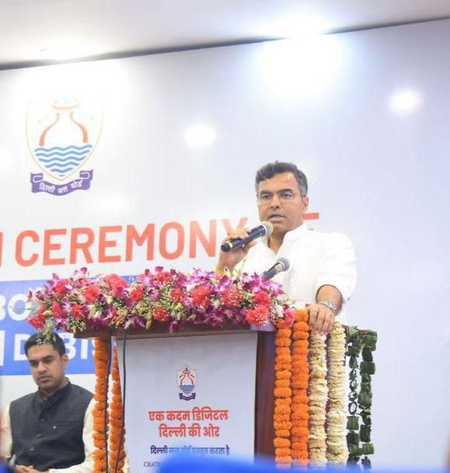
In a move to enhance Delhi’s water supply, sewer management, and Yamuna rejuvenation efforts, Water Minister Parvesh Verma introduced the Summer Action Plan 2026–27 at the Delhi Jal Board headquarters. The plan includes initiatives like a Chatbot, Advanced CRM system, and the DJB 1916 Mobile App to promote transparency and citizen engagement in water governance. Verma emphasized the urgency and responsibility required to address Delhi’s water challenges effectively.
Key aspects of the Summer Action Plan involve boosting water production and supply to achieve a peak water production of approximately 1,002 MGD during the summer of 2026. Verma highlighted the operational status of major Water Treatment Plants and stressed the responsibility to ensure adequate water supply to every citizen. The plan also focuses on expanding the city’s tube-well infrastructure and improving distribution and leak management in water-deficient areas.
The Summer Plan outlines a water tanker deployment schedule, with around 1,221 tankers per month set to be deployed during peak summer, including hired and departmental tankers. It also includes GPS-based tracking and geo-tagging to monitor tanker movements in real-time and eliminate misuse. Verma emphasized the need to make the tanker system transparent and accountable while working on strengthening pipeline infrastructure for a long-term solution.
The Minister unveiled a new digital ecosystem to enhance service delivery and citizen engagement, featuring an Advanced CRM System for complaint tracking, the DJB 1916 Mobile App for real-time complaint registration, an AI-powered Chatbot for instant grievance support, and a WhatsApp-based complaint interface. He highlighted the modernization of complaint redressal mechanisms, ensuring 24×7 call center operations, automatic escalation, real-time updates for citizens, and time-bound resolutions under strict monitoring. Verma also shared plans for structural reforms, including pipeline replacement and upgradation, infrastructure development across constituencies, and modernization efforts at the Chandrawal Water Treatment Plant.
