


Several European politicians and campaigners at the UN Human Rights Council session in Geneva are urging closer examination of Pakistan’s special trade status under the EU’s Generalised Scheme of Preferences Plus (GSP Plus). Concerns are raised over Pakistan’s deteriorating human rights situation, including allegations of religious persecution, political repression, enforced disappearances, and the failure to protect basic rights.
Greek parliamentarian Nikolaos Vrettos emphasized the challenges faced by religious minorities in Pakistan, particularly Christians, pointing out the misuse of blasphemy laws leading to violence, imprisonment, and fear. Vrettos stressed the need for attention to Pakistan’s situation due to embedded violence and impunity in existing laws and policies that remain unaddressed.
During the session, Kasim Khan, son of former Pakistani Prime Minister Imran Khan, spoke about his father’s prolonged detention, describing harsh conditions in confinement. Kasim highlighted a broader pattern of repression in Pakistan since 2022, citing issues such as arbitrary detention, lack of medical care, and trials of civilians in military courts, which he deemed incompatible with Pakistan’s obligations under the GSP+ framework.
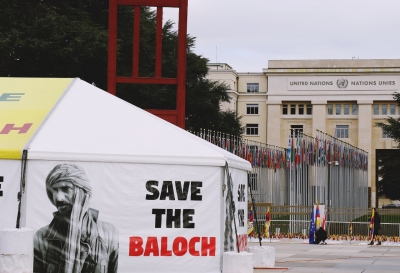
Geopolitical analyst Raphael Kalyviotis focused on the persecution of Christians in Pakistan and the impact of blasphemy laws on global peace, calling it a significant challenge. Naseem Baloch, chairman of the Baloch National Movement, expanded the discussion to include human rights violations in Balochistan, highlighting enforced disappearances, extrajudicial killings, arbitrary detention, and torture. Naseem underscored the persistent repression in Balochistan across different administrations, noting the continuation of abuses even during Imran Khan’s tenure.
